Heat oven to 350°. Line two cookie sheets with parchment paper or silicone baking mats.: The kitchen will warm and you may notice a subtle oven hum as it preheats, which is your cue that the baking environment is stabilizing. A properly preheated oven ensures the cookies begin setting immediately on the hot sheet, which helps hold the thumbprint shape. If the oven is not up to temperature, cookies can spread too much and lose their indentation, so use an oven thermometer if yours runs cool.
Beat brown sugar, butter, egg, and vanilla at medium speed (using a hand or stand mixer) until creamy. Reduce speed to low; add flour, baking powder, and salt. Beat until well mixed.: You should see the mixture lighten in color and become glossy, and you may hear the mixer change tone as the texture smooths. Creaming incorporates air and dissolves sugar, which contributes to tenderness. Over beating can make the dough too loose, so stop once it looks uniform and fluffy.
Shape dough into 2 tablespoon balls. Place 2 inches apart onto parchment lined cookie sheets. Make an indentation in each cookie with your thumb or the back of a wooden spoon, rotate it to hollow the cookie out slightly.: The dry ingredients should be gently incorporated to avoid developing gluten, which keeps cookies tender rather than tough. Add just until the streaks disappear, and you will feel the mixture become slightly thicker and quieter in the bowl. A common error is over mixing here, which creates a dense bite rather than a delicate shell.
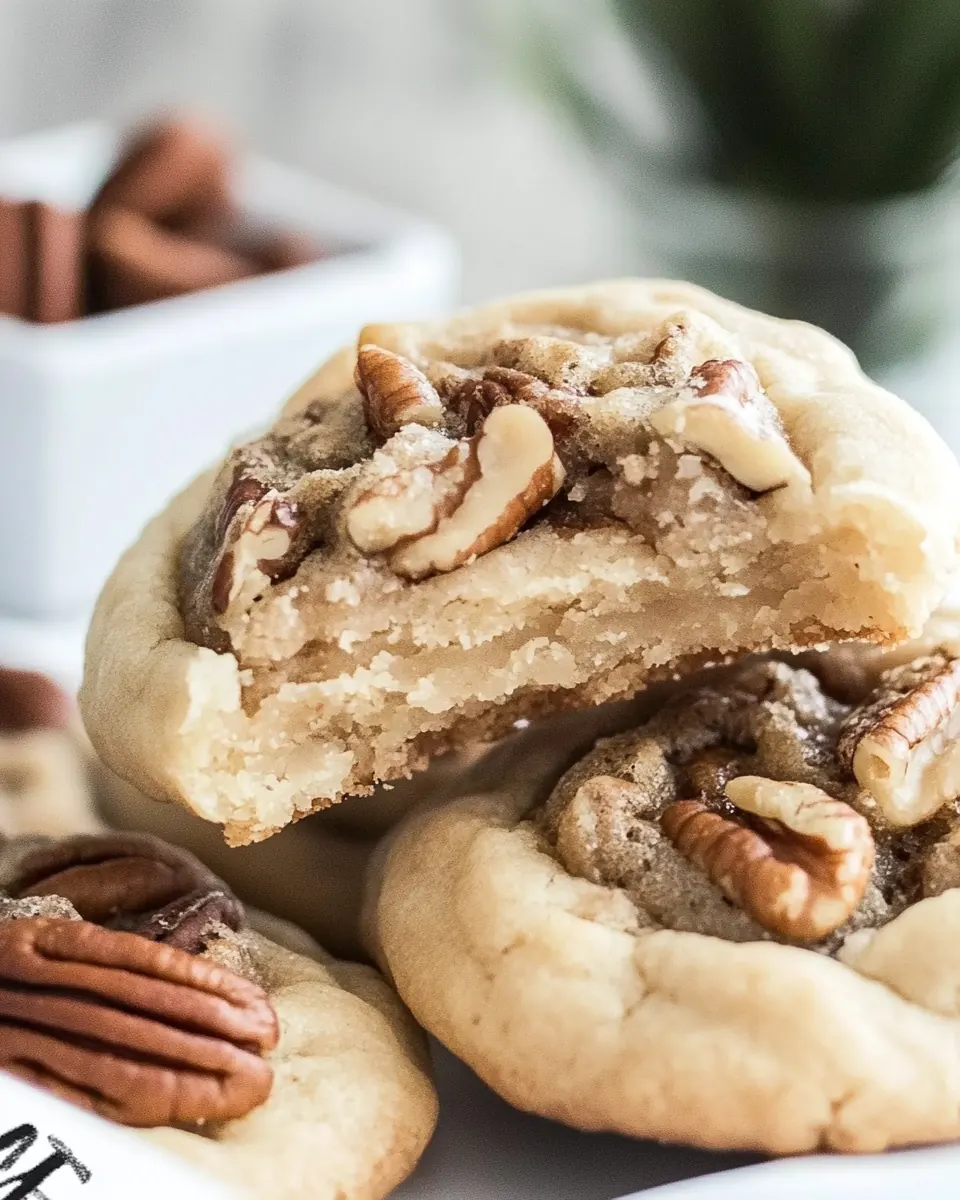
Make the filling: stir pecans, brown sugar, salt, and vanilla. Add 2 tablespoons whipping cream or milk. Stir until thick mixture forms, adding a bit more cream or milk as necessary. (If you use milk, you’ll need only about 2 tablespoons. If you use cream you might need more.) It should be too wet, just a thick mixture.: You will notice the dough hold together easily when it has the right moisture. Rolling into 2 tablespoon balls helps them bake evenly. Place them on the prepared sheets with space around them because they will spread a touch; if they are too close they can join and disrupt the hollow for the filling.
Scoop about 1 rounded teaspoon of mixture into the center of each cookie. Chill 20 minutes.: The parchment prevents sticking and encourages even browning on the bottom. Two inches gives each cookie room to expand slightly without crowding, so their edges can turn golden instead of merging. If you skip lining the pan, cookies may brown too quickly on the bottom and stick, making removal tricky.
Bake for 10-12 minutes, or until the cookies are baked and just starting to turn golden. Cool slightly before removing from cookie sheet.: The tactile action of creating a well gives a visual cue that the cookie is ready for filling. You should feel a soft give but a defined rim around the indentation, which will help hold the filling. If you press too hard, the cookies can become too thin and crisp, leading to spills during baking.
Store in an airtight container for up to three days or freeze for up to one month.: stir pecans, brown sugar, salt, and vanilla : The mixture will smell toasty and sweet as you combine flavors, with the pecans releasing their nutty aroma. Stirring by hand lets you judge texture; you want a grainy, dense mixture before adding cream. Rushing this step can yield uneven flavor distribution, so scrape the bowl edges to ensure everything is uniform.
Add 2 tablespoons whipping cream or milk: Start with the smaller amount and add more if needed until the filling is thick and scoopable, you will see the mixture come together and glisten slightly. The dairy binds the brown sugar and chopped pecans , shaping a cohesive filling that will remain in the thumbprint. If you add too much at once, the filling can become runny and spill over during baking.
Stir until thick mixture forms, adding a bit more cream or milk as necessary: The mixture should cling to a spoon and fall slowly when lifted, with a glossy sheen from the dairy and a crunchy texture from the pecans . This step matters because the right consistency prevents the center from soaking into the cookie base, keeping both textures distinct. If it looks soupy, refrigerate briefly to firm up before filling.
Scoop about 1 rounded teaspoon of mixture into the center of each cookie: As you drop the filling, listen for the faint thud and watch that the mixture nestles into the well without overflowing. The contrast between the pale cookie rim and the darker filling should be visible. Overfilling results in spillover and sticky trays, so be conservative and reserve any extra to top later if needed.
Chill 20 minutes: Cooling the filled cookies firms the dough and filling, so they hold shape in the oven. You will feel the filling become less glossy and the dough slightly firmer to the touch. Skipping chill time can cause the cookies to flatten and the centers to run, changing both texture and appearance.
Bake for 10 to 12 minutes, or until the cookies are baked and just starting to turn golden: Watch the edges for a subtle golden tinge and the centers for a tiny, glossy bubble as signals of doneness. The smell will be a warm, nutty caramel note, and the sound is a quiet oven hush rather than crackling. Over baking dries the cookie and makes the filling too hard, so remove when the edges are set but the center still has a slight give.
Cool slightly before removing from cookie sheet: Letting them rest for a few minutes lets the filling set just enough to avoid breakage when transferring. You will notice the filling lose some gloss and the cookie edge firm up to a pleasant bite. If you try to remove them too soon, they may tear or lose filling, so use a thin spatula and patience.
Store in an airtight container for up to three days or freeze for up to one month: Room temperature storage keeps the cookie texture at its best, preserving the tender shell and chewy center. For freezing, layer with parchment to avoid sticking, and thaw at room temperature before serving so the filling regains its moisture. Freezing can slightly mute the flavors, so bring them back to room temperature to revive aroma.