Preheat oven to 350 degrees (F). Line two large baking sheets with parchment paper and set them aside.: The warm oven smell and the sight of parchment-lined trays always kickstart my baking mood, and ensuring the oven is at exactly 350 degrees F gives consistent rise and set. You should hear the faint hum of the oven coming up to temperature, and the air should feel steady rather than fluctuating, which signals even heat. This matters because cookies baked at an incorrect temperature will spread too much or not set at the edges. A common mistake is not letting the oven fully preheat, leading to uneven texture; wait until the indicator shows full temperature before baking.
In a medium mixing bowl, whisk together the cocoa powder, flour, espresso powder, baking powder, and salt until well combined. Set aside.: As you sift and whisk, you should notice the dry mix take on a uniform color and texture, the cocoa powder blending into the flour so there are no streaks. This step ensures even distribution of leavening and espresso so each cookie tastes consistent. The dry aroma will be chocolaty with a roasted hint from the espresso powder . If you skip thorough whisking, pockets of baking powder can create odd bumps in the cookies, so take the extra minute to combine well.
In the bowl of a stand mixer fitted with the paddle attachment, or in a large bowl using a handheld electric mixer, combine the shortening and brown sugar and beat on medium-high speed until light and fluffy, about 3 minutes, scraping down the sides of the bowl as needed. Beat in the eggs, peppermint extract, and milk. Reduce the mixer speed to low and gradually beat in the flour, mixing just until combined. Finally, beat in the chocolate until just combined.: When you cream the shortening with light brown sugar , watch as the mixture becomes paler and slightly aerated, which helps create tender cookies. After adding the eggs , peppermint extract , and milk , the batter will smell faintly minty and sweet. Lowering the mixer to add the dry mix prevents overworking the gluten in the flour , which keeps the cookies tender. Fold in the melted semi-sweet chocolate last so it streaks into the dough and adds pockets of rich flavor. A frequent error is overmixing once the flour is added, which creates dense cookies; stop as soon as the ingredients are integrated.
Scoop level 1/4 cupfuls of the batter onto the prepared baking sheets, leaving 2 inches between for spreading. The batter will be very sticky, so don't try to handle it with your hands.: Using a 1/4 cup scoop gives generous, bakery style cookies that bake into rounded, slightly domed shapes. The batter's stickiness means it will spread less if you refrigerate briefly, but spacing them about 2 inches allows for natural spreading without merging. Expect the raw dough to be glossy from the chocolate and slightly dense to the touch. Attempting to pat or shape sticky dough by hand can compress air pockets and affect texture, so resist the urge to manipulate them manually.
Bake, one tray at a time, for 9 to 10 minutes, or until the cookies are set at the edges and slightly puffed. Place the baking pan on a wire rack and allow the cookies to cool completely; about 30 minutes.: While baking you will notice the smell deepen into a warm, chocolate perfume. The edges should look set and slightly firm, while the centers remain just soft to the touch, signaling a chewy interior once cooled. Removing one tray at a time helps maintain even oven temperature for each batch. A common pitfall is overbaking; cookies continue to set as they cool, so err on the shorter end to preserve chewiness.
Fill a medium pot one-third full with water and bring it to a low simmer over medium heat. Place a heatproof bowl that will fit on top of the pan snugly, but will not touch the simmering water, on top of the pan. Reduce the heat to low and add the chopped chocolate into the bowl over the pot. Heat until the chocolate is completely melted, stirring occasionally with a silicon spatula. Once the chocolate is completely melted, carefully remove the bowl from the heat and pour it into a liquid measuring cup.: Melting the semi-sweet chocolate in a double boiler yields a glossy, smooth texture ideal for dipping. You'll see the chocolate transform from opaque to a shiny, pourable liquid, and the aroma will be richer and less grainy than microwaved chocolate. Keep the water at a gentle simmer to prevent steam from seizing the chocolate. A common error is letting water splash into the bowl; even a small amount of moisture will seize the chocolate into a grainy paste, so be cautious when stirring and removing the bowl.
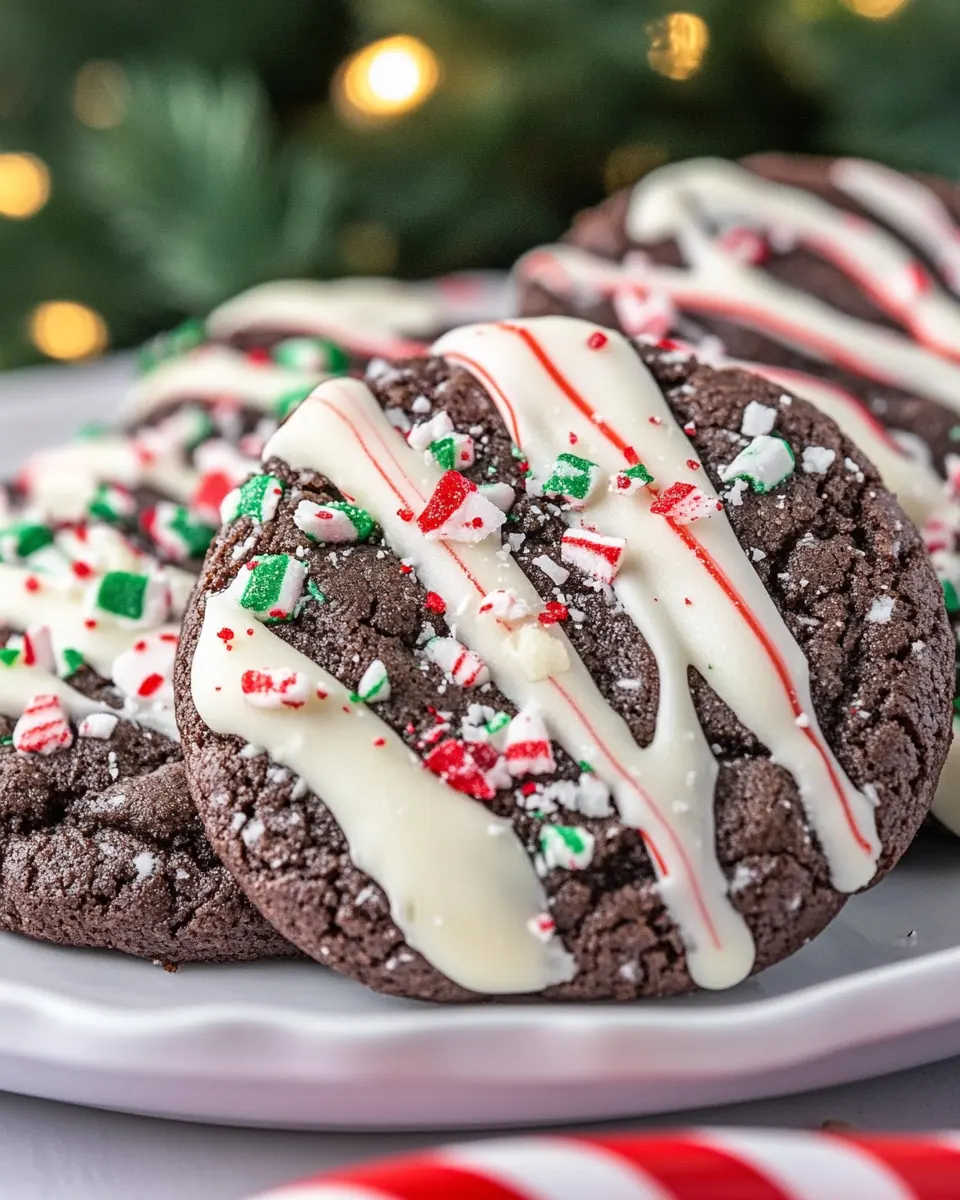
Dip one half of each cookie in the melted chocolate, then place it back on the parchment paper lined baking sheet and sprinkle with crushed candy canes. Set aside and allow the chocolate to set, about 1 hour.: As you dip, the glossy chocolate should coat neatly, creating a smooth, reflective surface that contrasts with the cookie's matte crumb. Sprinkling crushed candy canes immediately gives them something to adhere to and introduces a bright, crunchy element. The temperature of the chocolate matters; if it is too hot it may melt the cookie surface, and if it is too cool it will clump. Allowing cookies to set on parchment prevents sticking and keeps the bottoms tidy. Avoid stacking cookies until the chocolate is fully firm, or the decorations will smear.
Store cookies in an airtight container, at room temperature, for up to 2 days.: Once the chocolate has set, the cookies can be stacked in a single layer or separated with parchment to retain the peppermint crunch. At room temperature they keep their intended texture for a couple of days, after which the candy canes may soften and the cookies can lose their freshly baked snap. If you want to keep them longer, freezing is an option, but be mindful that the peppermint topping can become sticky when thawed if exposed to humidity. The most common mistake is storing them in a warm place, which will soften the chocolate and reduce the crunch.