Using a permanent marker, draw 2-inch circles 1 inch apart on 2 sheets of parchment paper (24 per sheet). Place parchment, marker side down, on 3 rimmed baking sheets.: The tactile action of drawing templates sets the pace, and you can hear the pen on the paper as you create uniform guides. This visual consistency matters because it makes piping predictable, which leads to even baking and matching halves. A common oversight is piping without a template, which produces mismatched sizes and inconsistent bake times. Make sure the marker sits underneath the parchment to avoid ink transfer to the shells.
In a medium bowl, sift together flour and confectioners' sugar.: As you sift, you will see a fine pale cloud fall into the bowl, and the aroma of the almond flour will deepen as air is incorporated. Sifting removes clumps and helps the dry mix integrate smoothly into the meringue, preventing heavy pockets that deflate the batter. Skipping this step often yields shells with uneven texture or visible graininess. Use a fine mesh sifter and take your time to ensure an even, aerated mix.
In the heatproof bowl of a stand mixer, whisk together egg whites and granulated sugar by hand until frothy. Place bowl over a small saucepan of simmering water. Cook, whisking constantly, until sugar completely dissolves, mixture is warm to the touch, and a candy thermometer registers 160°F (71°C), about 2 minutes.: The warm sugar bath is a sensory check and gives the meringue stability; you will feel the bowl warming and hear the steady whisking. The dissolved sugar prevents gritty meringue and helps create a sheen and strength for the final peaks. A common mistake is overheating which can cook the whites; keep the water at a gentle simmer and whisk constantly to avoid scrambled texture.
Carefully return bowl to stand mixer. Using the whisk attachment, beat at high speed until stiff peaks form. Add a small amount of food coloring, beating until desired color is reached. Fold in flour mixture. (Mixture should be thick and slowly but freely fall off the spatula in a 'V' shape, and when you drag the spatula through the batter, it should move like lava and slowly come back together.): The whipping stage is noisy with the mixer, and visually you will watch glossy peaks form that hold their shape. Adding gel food coloring at this stage prevents overworking the batter later. The fold in of the dry ingredients should be patient and rhythmic; you will feel the batter change from airy to ribbon like. Overbeating at this point will deflate the air and create flat shells; underbeating will leave batter too stiff to spread properly.
Transfer batter to a pastry bag fitted with a medium round piping tip (Ateco #803). Holding piping tip perpendicular to pans, apply pressure to bag, leaving tip stationary, and pipe batter onto drawn circles until batter just reaches drawn circle. Move and lift tip in a quick circular motion as you finish piping each macaron shell to prevent points from forming on top of shells. Firmly tap pans vigorously on counter 5 to 7 times to release air bubbles. Sprinkle with pistachios. Let stand at room temperature until a skin forms on top, 1 to 2 hours. (Batter should feel dry to the touch and should not stick to your finger.): The act of piping has a satisfying rhythm, and you will see smooth domes forming on each circle. Tapping the pans produces a hollow thud that expels trapped air and smooths the tops; this is crucial for even feet during baking. The drying period is a visual test, when the surface becomes matte and no longer tacky; rushing this step can cause cracking in the oven. If you notice too many air pockets after tapping, you can gently pop them with a toothpick.
Preheat oven to 300°F (150°C).: Preheating delivers the correct ambient environment so shells develop feet and cook through evenly; you may hear the oven fan and feel the warmth when you open the door. An incorrect oven temperature will lead to overbrowned bottoms or underdeveloped feet, so use an oven thermometer if possible. Avoid opening the door during the bake because temperature fluctuations can collapse the shells.
Bake, one pan at a time, until firm but wobbles slightly at the touch, 20 to 25 minutes. Let cool completely on pans.: As they bake, you will notice feet forming and a faint almond aroma drifting from the oven. The shells should feel set yet slightly jiggly in the centre, which indicates proper internal structure. Overbaking will dry them out and remove the chewy interior; underbaking makes them sticky and hard to remove. Let them cool fully on the pan to firm up, which helps prevent tearing when you lift them.
Remove cooled macaron shells from pans. Turn half of shells flat side up.: When you separate shells, you may hear a delicate snap; that is a good sign of correct structure. Turning half the shells flat side up prepares them for filling and presentation alignment. Forcing shells off the parchment before they are fully cool often results in broken or deformed halves.
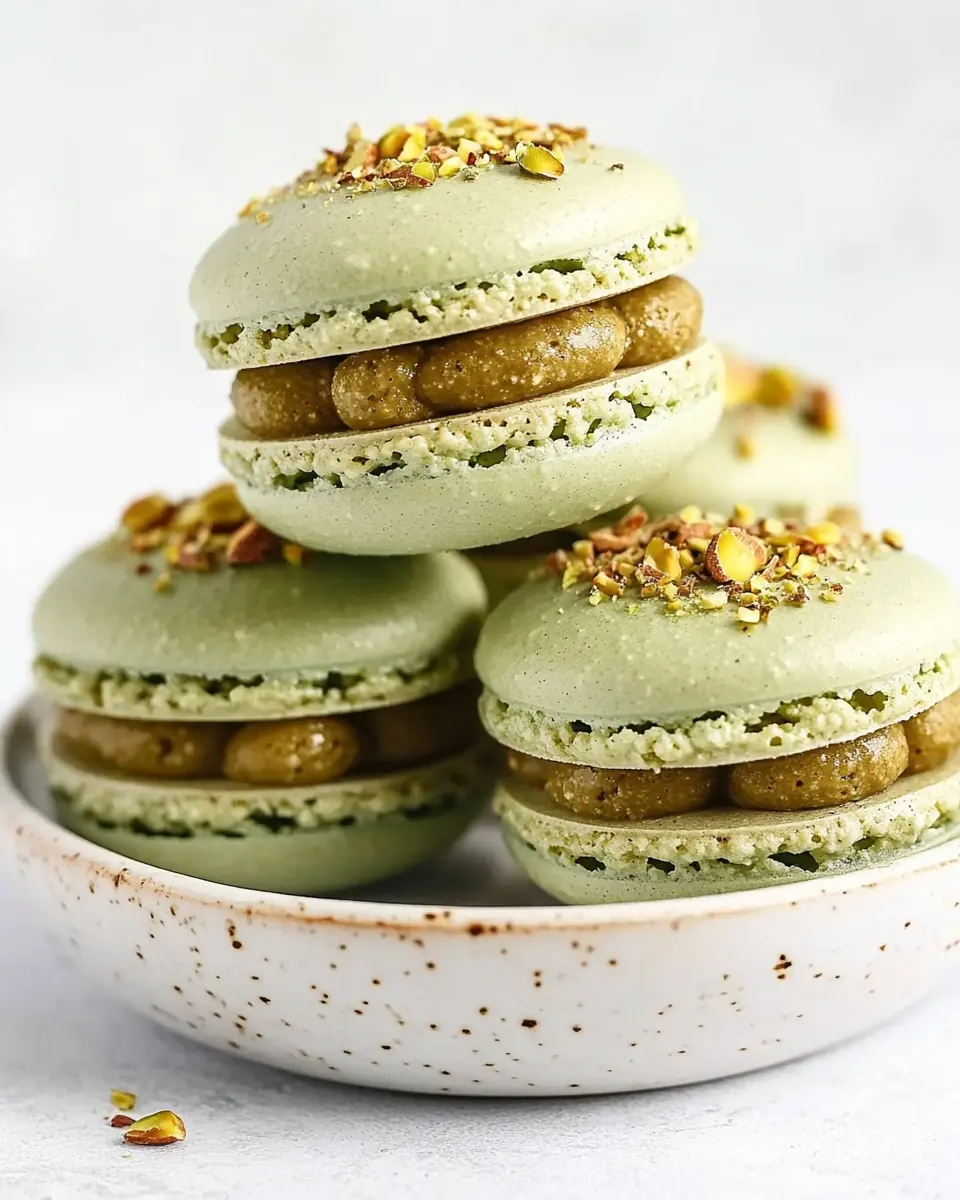
Spoon Pistachio Buttercream into a pastry bag fitted with a 1/4-inch round piping tip. Pipe a border of buttercream (about a heaping 1 tablespoon or 9 grams) onto shells with flat side up.: The buttercream should feel silky as it flows through the bag, and piping a border creates a small moat to hold the curd. The tactile pressure needed on the bag controls portion size, and the contrast of the creamy butter against the crisp shell is immediate. If your buttercream is too warm it will flatten and not hold shape; too cold and it will be lumpy when piping.
Spoon Raspberry Curd into a pastry bag; cut a 1/2-inch opening in tip. Fill center of buttercream border with curd (about 3 grams each). Gently top with remaining shells, flat side down. (Use light pressure to avoid cracking). Best served same day. Refrigerate in an airtight container for up to 3 days.: The bright, glossy curd feels cool against the warm buttercream and offers a tangy scent. Using a small opening controls the amount of curd and prevents seeping. Pressing the top shell gently keeps the sandwich intact without cracking; applying too much pressure will split the shell. If curd oozes, it may mean you piped too much or the buttercream border is insufficient.
In the bowl of a stand mixer fitted with the paddle attachment, beat butter at medium speed until creamy, 2 to 3 minutes. Gradually add confectioners' sugar, pistachios, and salt, beating until smooth, stopping to scrape sides of bowl. Add a small amount of food coloring; beat until well combined, light, and fluffy, about 2 minutes. Use immediately.: When kept in an airtight container the macarons maintain texture, and chilling slightly melds flavors without ruining the shell if not overly moist. Refrigeration will slightly soften the shell and intensify the buttercream flavor. Storing them too long causes sogginess, so try to enjoy within the suggested window for best texture.
In a medium saucepan, bring raspberries, sugar, and lemon zest and juice to a boil over medium heat, stirring occasionally until sugar dissolves. Reduce heat, and simmer for 5 minutes. Transfer mixture to the container of a blender, and blend until smooth. Strain mixture through a fine-mesh sieve, discarding solids. Return mixture to saucepan, and heat over medium heat.: As you beat, the butter transforms from dense to airy, taking on a pale color and a soft, spreadable texture. Gradual addition of the confectioners' sugar prevents dust clouds and ensures a smooth emulsion. If the mixture breaks or looks curdled, chilling briefly and rebeating can help. Avoid overbeating which can introduce too much air and change texture when piped.
In a medium bowl, whisk together egg yolks, cornstarch, and salt. Add about one-fourth of hot raspberry mixture to egg yolk mixture, whisking constantly. Whisk egg yolk mixture into remaining hot raspberry mixture in pan. Cook over medium-high heat, whisking constantly, until thickened, 5 to 7 minutes. Remove from heat; whisk in butter 1 tablespoon (14 grams) at a time, until melted and smooth after each addition. Cover and refrigerate until thick and cold before using, at least 2 hours or up to 1 week.: The raspberries will bubble and release a vivid aroma that brightens the kitchen. Blending and straining removes seeds and creates a satin puree ready for curd. If seeds remain, your curd will have texture and may not set as smoothly. Maintain a gentle simmer to avoid scorching and stirring frequently helps even cooking.
In a medium bowl, whisk together egg yolks, cornstarch, and salt. Add about one fourth of hot raspberry mixture to egg yolk mixture, whisking constantly. Whisk egg yolk mixture into remaining hot raspberry mixture in pan. Cook over medium high heat, whisking constantly, until thickened, 5 to 7 minutes. Remove from heat; whisk in butter 1 tablespoon (14 grams) at a time, until melted and smooth after each addition. Cover and refrigerate until thick and cold before using, at least 2 hours or up to 1 week.: The thickening stage is dramatic, as the curd moves from glossy liquid to a spoonable custard and releases an intensified fragrant steam. Tempering the yolks prevents scrambling, and whisking continuously gives a silken finish. A common pitfall is not whisking enough which yields lumps; if that happens, strain again and whisk vigorously or use an immersion blender for rescue. Cooling fully ensures the curd holds shape when assembled.