Preheat the oven to 400°F. In a medium saucepan over medium heat, melt the butter. Add the diced onion and minced garlic. Cook until softened, about 2 minutes.: The kitchen fills with warm anticipation as the oven comes to temperature, and you want it fully hot so the puff pastry begins to rise immediately when it goes in. A properly preheated oven creates that dramatic puff and golden hue. If you skip preheating, the pastry may spread rather than rise, resulting in a denser top. A common mistake is placing the pie in a not fully heated oven, which dulls the pastry rise.
Whisk in the flour and cook for 30 seconds. Slowly incorporate the chicken broth and milk while continuously whisking. Bring the mixture to a boil, then let it simmer until it thickens, about 2 minutes.: As the butter melts, it should shimmer and spread, releasing a nutty scent that signals the start of a good roux. You want the heat moderate so the butter does not brown, maintaining a clean buttery base. If the butter browns, the sauce will take on a toasted flavor that can overpower subtle herbs. Avoid high heat which can scorch the butter quickly.
Take the saucepan off the heat. Add the garlic powder, onion powder, salt, pepper, dried thyme, oregano, and rosemary. Next, add the frozen peas and carrots along with the shredded chicken. Mix until everything is well incorporated.: The sound here is a soft sizzle as the onion hits the fat, and the aroma lifts quickly. Cook until the onion softens and becomes translucent, which takes about a couple of minutes, and the garlic mellows into sweet warmth. The aim is to soften and sweeten the aromatics, not to brown them, so stir often. A frequent error is letting garlic brown, which creates bitterness.
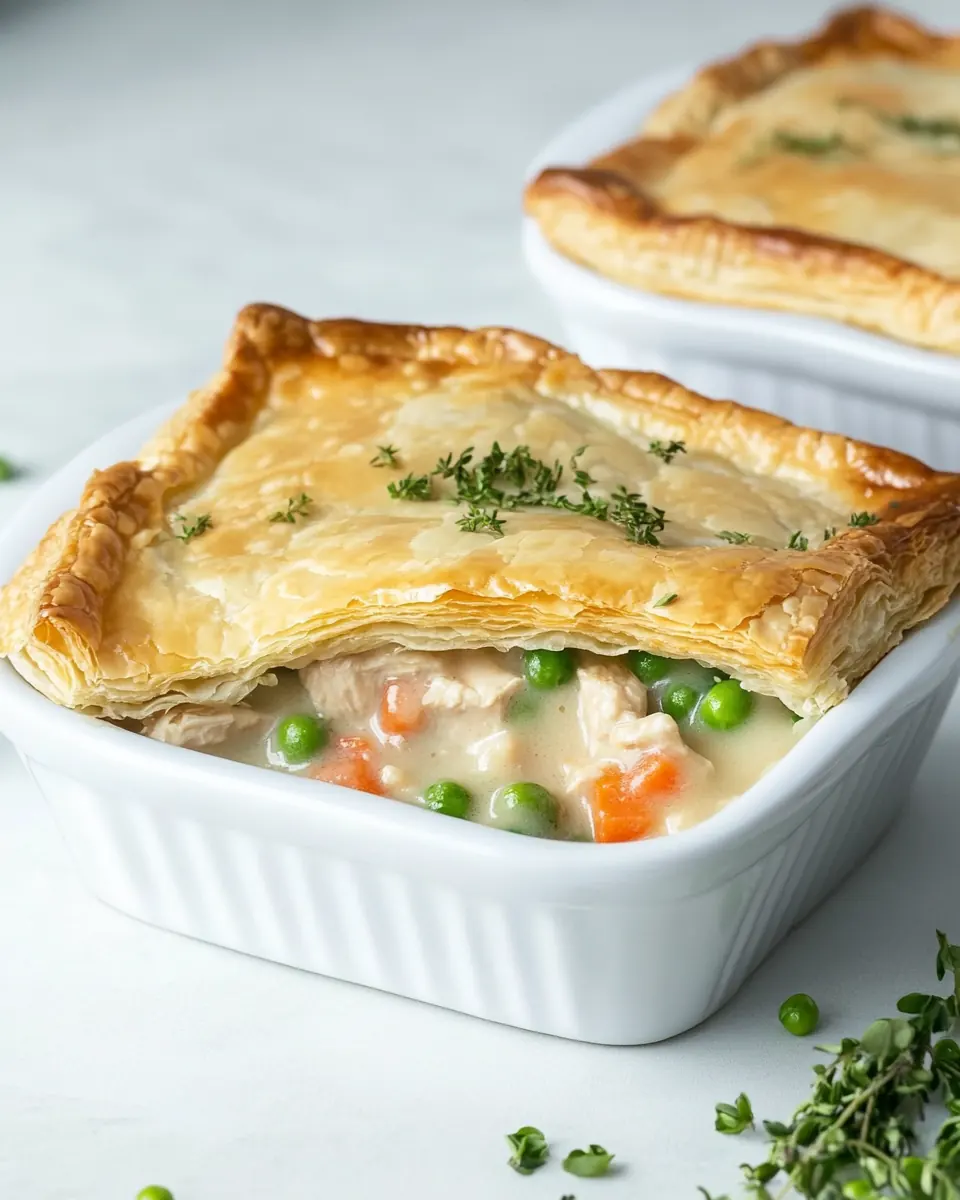
Spoon the chicken mixture into an 8-inch square casserole dish. Roll out the puff pastry over the dish, leaving about a 1/2-inch overhang to cover the top. Trim any excess pastry and create 4 slits in the middle of the top for steam to escape. Lightly brush the pastry with the egg wash.: When you sprinkle in the flour, whisk constantly to create a smooth paste; it should smell faintly toasted but not raw. This brief cook removes the starchy taste and prepares the roux to thicken the liquid evenly. If you undercook the flour, the final sauce can taste pasty; if you overcook, it could darken and alter flavor.
Bake for 30-35 minutes until the pastry is golden and puffed.: Pour the liquids in gradually while whisking to avoid lumps, and watch the mixture transform into a silky, cohesive sauce. Bring it to a boil so it activates the thickening power of the roux, then reduce to a simmer where it will gently thicken. The sauce should coat the back of a spoon when ready. Adding liquids too quickly or not whisking can create clumps, a common pitfall.
Let cool for 5 minutes before serving.: As it simmers, steam rises and the sauce takes on a glossy, clingy texture that will coat the chicken and vegetables. This moment is important to concentrate flavor and ensure the filling will not be watery once baked. If you stop too early, the filling will be runny; if you simmer too long it can become gluey.
Remove from heat and add seasonings: Taking the saucepan off the heat stops the cooking and lets you fold in the garlic powder , onion powder , salt , black pepper , dried thyme, oregano, and rosemary so their oils brighten without burning. This technique preserves the aromatic character of the herbs. A misstep is adding seasonings too early on high heat, which can mute their fresh notes.
Add the frozen peas and carrots and shredded chicken: Tossing in the frozen vegetables and cooked chicken brings immediate cooling and changes the texture of the sauce as the vegetables release a little moisture and the chicken soaks up flavor. Stir until everything is evenly coated and distributed. If the vegetables are crowded in a too cool sauce, they may not heat through; ensure the mixture is warm enough for the peas and carrots to defrost fully.
Spoon the chicken mixture into an 8-inch square casserole dish: As you fill the dish, notice how the glossy filling settles, filling corners and creating an even layer that will support the pastry top. Smooth the surface slightly so the pastry will sit evenly. Overfilling can cause spillage in the oven, while underfilling leaves gaps under the pastry that affect presentation.
Roll out the puff pastry over the dish with a 1/2-inch overhang: Lay the thawed puff pastry across the top so it covers the dish with a small overhang to crimp or tuck, which helps seal steam and gives a neat edge. Trim any excess and create four slits in the center so steam can escape. This venting prevents the pastry from bursting unpredictably. If pastry is too warm it will sag; keep it cool for optimal lift.
Brush the pastry with the egg wash: The egg wash gives the crust a rich, glossy, and deeply browned finish as it bakes, signaling doneness and adding an inviting sheen. Brush gently and evenly so the surface browns uniformly. A common error is applying too much wash which can pool and create soggy spots instead of crisp flakiness.
Bake for 30 to 35 minutes until the pastry is golden and puffed: During baking you will see the pastry rise and the color deepen to a warm golden brown, and you may hear a faint crackle as layers separate. The aroma of butter and herbs will fill the kitchen. Baking at the right temperature ensures flaky lift and a set filling. If the oven runs hot, the pastry can brown too quickly before the filling heats through, so tent with foil if needed.
Let cool for 5 minutes before serving: Allowing the pie to rest gives the sauce a chance to settle, so it will not pour out immediately when cut. The steam redistributes and the filling tightens slightly, making clean slices possible. Cutting too soon risks a runny filling and burned mouths from scalding steam.