Puff Pastry Chicken Pot Pie
Puff Pastry Chicken Pot Pie is one of those recipes I reach for when I want comfort without fuss, a golden crust that fl akes apart and a creamy, savory filling that feels like a warm hug on a chilly evening.
I remember the first time I made this version, standing in a tiny kitchen with steam fogging the window, stirring a velvety sauce and thinking how such simple pantry staples could transform into something so cozy. The combination of tender chicken, sweet peas and carrots, and an herbed, creamy sauce under a puffed, buttery top felt like celebration and weeknight dinner all at once. I love how the puff pastry puffs to create crisp layers while the filling stays silky beneath.
Over the years I learned small tricks that changed outcomes, like not rushing the roux and giving the filling a moment to rest so it sets up rather than running everywhere the moment it hits the plate. This recipe has become my fallback for when I want to impress without inventing, and family members always ask for seconds. I enjoy the contrast between flaky crust and silky filling, and the way aromas of garlic and dried herbs fill the kitchen as it bakes.
Recipe Snapshot
50 mins
10 mins
40 mins
Medium
400 kcal
American
Gluten-Free, Low FODMAP
Dinner
Medium saucepan, 8 inch square casserole dish, Whisk, Mixing spoon
Why You’ll Love This Puff Pastry Chicken Pot Pie
Comfort with minimal effort
I adore how Puff Pastry Chicken Pot Pie delivers big comfort while keeping the work straightforward. I can pull a few staples together and still create a dish that looks like I spent hours. That simplicity makes it a go to for busy evenings.
Crisp top, creamy center
The contrast between the flaky puff pastry and the smooth, savory filling is what keeps me coming back. When the pastry puffs and the filling becomes glossy and thick, every bite is layered and satisfying.
Flexible and forgiving
I like that this recipe forgives small mistakes. If the sauce is slightly thin, a few extra minutes of simmering fixes it. If the pastry is a touch overbrowned, the filling still shines. Those forgiving moments mean less stress when you cook.
Balanced aromatics and herbs
The seasoning mix of garlic powder, onion powder, and dried thyme, oregano, and rosemary gives warmth without overpowering the chicken and vegetables. I find it hits a comforting, familiar note that pleases both picky eaters and seasoned palates.
Great for sharing or leftovers
This dish reheats beautifully, so I often make it when I want dinner now and an easy lunch tomorrow. The pastry softens a bit but the filling remains flavorful, making it a reliable choice for planned leftovers.
Recipe Ingredients for Puff Pastry Chicken Pot Pie
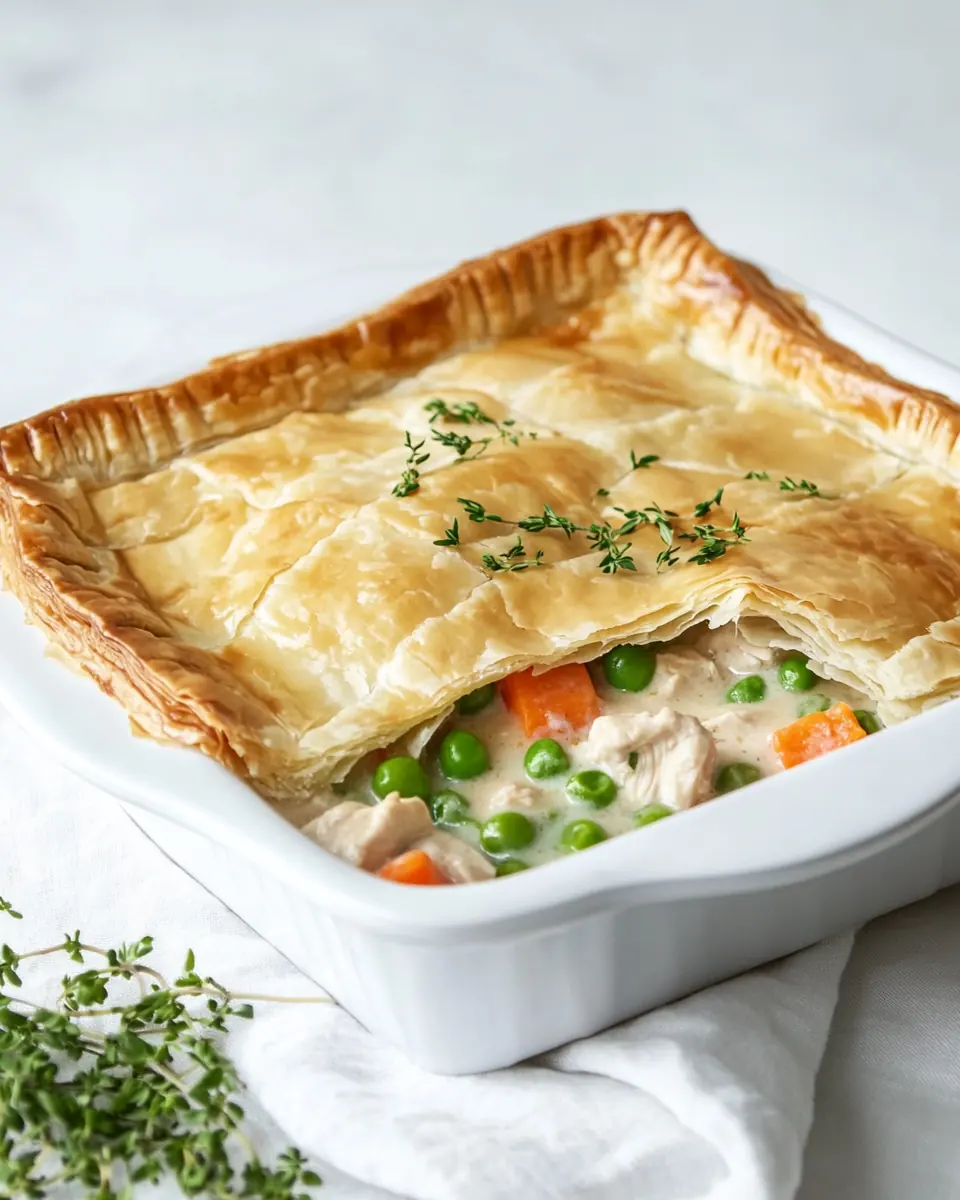
These ingredients are chosen to create a silky, herb scented filling that pairs perfectly with a crisp, buttery top. The key players are the roux made from butter and flour, the liquid body from chicken broth and milk, and the tender protein and vegetables that provide texture and heartiness.
- 5 tablespoons unsalted butter: Melted in the pan to create a rich base, unsalted butter helps sauté aromatics and build a silky roux for thickening the filling; adjust salt elsewhere because butter provides subtle richness without added sodium.
- 1 medium onion diced: Diced finely to release flavor and texture, onion contributes sweet, savory depth when softened and becomes part of the aromatic foundation that balances the creamy filling.
- 4 cloves garlic minced: Minced finely to infuse bright, pungent aroma and savory bite throughout the filling; garlic cooks quickly and enhances overall savory complexity when added to buttered aromatics.
- 5 tablespoons all-purpose flour: Sprinkled into melted butter to form a roux that thickens the sauce, all-purpose flour creates the creamy consistency that binds broth and milk into a velvety gravy.
- 2 cups low-sodium chicken broth: Simmered into the roux to build savory, chicken-forward liquid, low-sodium chicken broth supplies body and flavor while allowing salt control across the recipe.
- 3/4 cup milk low-fat, if desired: Stirred into the roux with broth to create a smooth, creamy sauce; low-fat milk contributes creaminess and lightness without overpowering fat content.
- 3/4 teaspoon garlic powder: Added as a seasoning to heighten roasted garlic nuance, garlic powder layers concentrated garlic flavor evenly throughout the filling without additional moisture.
- 1 teaspoon onion powder: Sprinkled for oniony, savory notes when fresh onions are insufficient, onion powder deepens overall umami and complements sautéed aromatics.
- 3/4 teaspoons salt: Measured to balance and bring out other flavors, salt seasons the filling so that herbs, vegetables, and chicken taste cohesive and well-rounded.
- 1/4 teaspoon black pepper: Ground and added sparingly to provide gentle heat and aromatic sharpness, black pepper brightens the savory profile and complements the herbs.
- 1/4 teaspoon dried thyme: Crumpled or pinched into the filling to add subtle lemony, woody notes; dried thyme contributes earthy brightness that pairs well with chicken.
- 1/2 teaspoon dried oregano: Sprinkled for Mediterranean herbal depth, dried oregano offers warm, slightly bitter undertones that enrich the savory sauce without overpowering it.
- 1/4 teaspoon dried rosemary: Crumpled fine to impart piney, woody aroma in small amounts; dried rosemary adds a savory resinous lift that complements poultry and vegetables.
- 1 15-ounce bag frozen peas and carrots: Kept frozen until needed and then combined into the filling, the frozen peas and carrots provide tender-sweet vegetable texture and color contrast.
- 2 cups chicken breast cooked and shredded: Cooked and shredded to deliver the primary protein, chicken breast adds substance, meaty flavor, and a pleasing texture that makes the pie hearty and satisfying.
- 1 sheet frozen puff pastry thawed: Thawed and used as the crust topping to provide flaky, buttery layers that puff and brown in the oven, creating an appealing contrast to the creamy filling.
- 1 large egg lightly beaten with 1 tablespoon water (for egg wash): Beaten with water and brushed on pastry edges and surface to create a glossy, golden finish that promotes even browning and helps seal seams.
Instructions for Puff Pastry Chicken Pot Pie
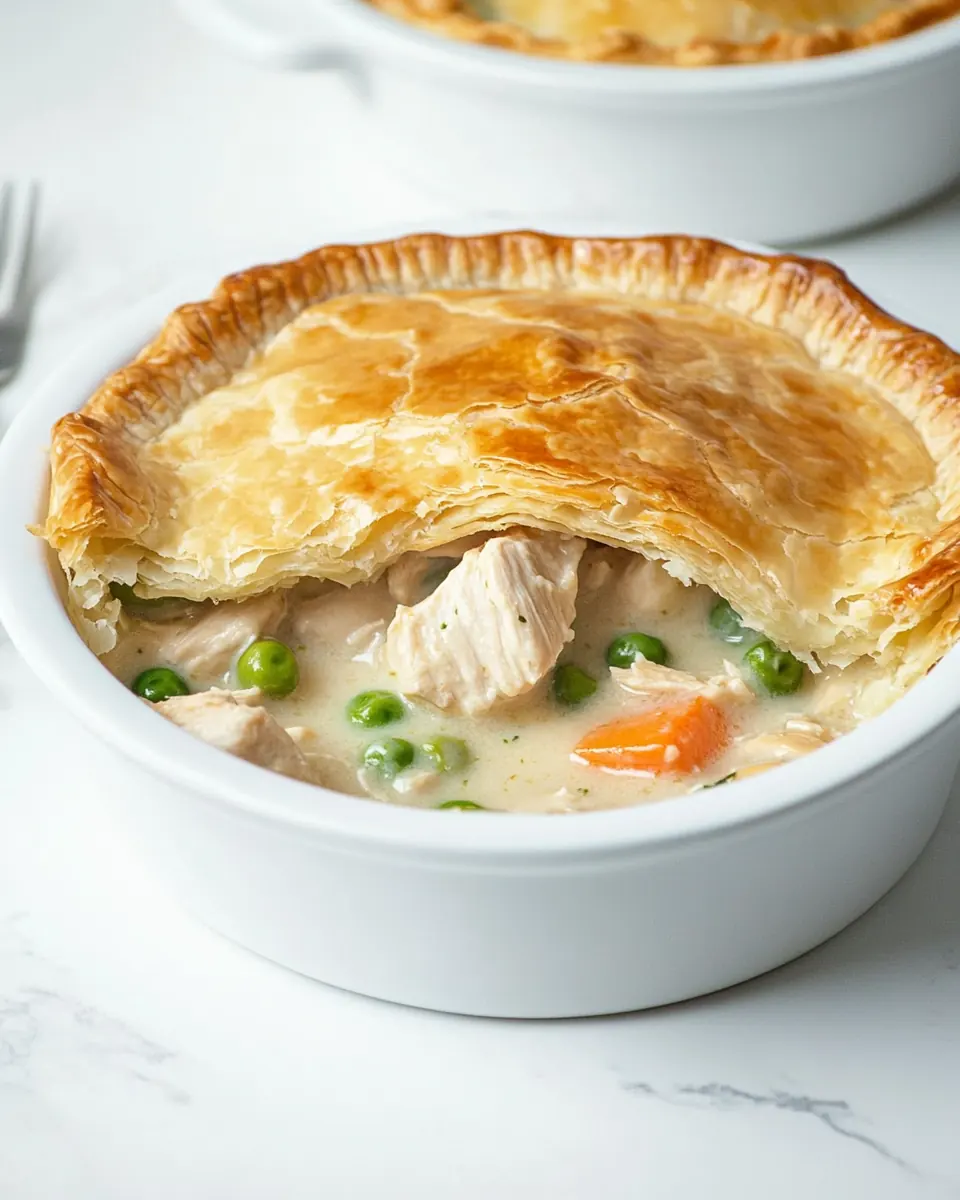
These instructions walk you through building a stable, silky filling and finishing with a puffed, golden crust. Take your time with the sauce so it thickens properly, and make sure the pastry is chilled enough to puff when it bakes.
- Preheat the oven to 400°F. In a medium saucepan over medium heat, melt the butter. Add the diced onion and minced garlic. Cook until softened, about 2 minutes.: The kitchen fills with warm anticipation as the oven comes to temperature, and you want it fully hot so the puff pastry begins to rise immediately when it goes in. A properly preheated oven creates that dramatic puff and golden hue. If you skip preheating, the pastry may spread rather than rise, resulting in a denser top. A common mistake is placing the pie in a not fully heated oven, which dulls the pastry rise.
- Whisk in the flour and cook for 30 seconds. Slowly incorporate the chicken broth and milk while continuously whisking. Bring the mixture to a boil, then let it simmer until it thickens, about 2 minutes.: As the butter melts, it should shimmer and spread, releasing a nutty scent that signals the start of a good roux. You want the heat moderate so the butter does not brown, maintaining a clean buttery base. If the butter browns, the sauce will take on a toasted flavor that can overpower subtle herbs. Avoid high heat which can scorch the butter quickly.
- Take the saucepan off the heat. Add the garlic powder, onion powder, salt, pepper, dried thyme, oregano, and rosemary. Next, add the frozen peas and carrots along with the shredded chicken. Mix until everything is well incorporated.: The sound here is a soft sizzle as the onion hits the fat, and the aroma lifts quickly. Cook until the onion softens and becomes translucent, which takes about a couple of minutes, and the garlic mellows into sweet warmth. The aim is to soften and sweeten the aromatics, not to brown them, so stir often. A frequent error is letting garlic brown, which creates bitterness.
- Spoon the chicken mixture into an 8-inch square casserole dish. Roll out the puff pastry over the dish, leaving about a 1/2-inch overhang to cover the top. Trim any excess pastry and create 4 slits in the middle of the top for steam to escape. Lightly brush the pastry with the egg wash.: When you sprinkle in the flour, whisk constantly to create a smooth paste; it should smell faintly toasted but not raw. This brief cook removes the starchy taste and prepares the roux to thicken the liquid evenly. If you undercook the flour, the final sauce can taste pasty; if you overcook, it could darken and alter flavor.
- Bake for 30-35 minutes until the pastry is golden and puffed.: Pour the liquids in gradually while whisking to avoid lumps, and watch the mixture transform into a silky, cohesive sauce. Bring it to a boil so it activates the thickening power of the roux, then reduce to a simmer where it will gently thicken. The sauce should coat the back of a spoon when ready. Adding liquids too quickly or not whisking can create clumps, a common pitfall.
- Let cool for 5 minutes before serving.: As it simmers, steam rises and the sauce takes on a glossy, clingy texture that will coat the chicken and vegetables. This moment is important to concentrate flavor and ensure the filling will not be watery once baked. If you stop too early, the filling will be runny; if you simmer too long it can become gluey.
- Remove from heat and add seasonings: Taking the saucepan off the heat stops the cooking and lets you fold in the garlic powder , onion powder , salt , black pepper , dried thyme, oregano, and rosemary so their oils brighten without burning. This technique preserves the aromatic character of the herbs. A misstep is adding seasonings too early on high heat, which can mute their fresh notes.
- Add the frozen peas and carrots and shredded chicken: Tossing in the frozen vegetables and cooked chicken brings immediate cooling and changes the texture of the sauce as the vegetables release a little moisture and the chicken soaks up flavor. Stir until everything is evenly coated and distributed. If the vegetables are crowded in a too cool sauce, they may not heat through; ensure the mixture is warm enough for the peas and carrots to defrost fully.
- Spoon the chicken mixture into an 8-inch square casserole dish: As you fill the dish, notice how the glossy filling settles, filling corners and creating an even layer that will support the pastry top. Smooth the surface slightly so the pastry will sit evenly. Overfilling can cause spillage in the oven, while underfilling leaves gaps under the pastry that affect presentation.
- Roll out the puff pastry over the dish with a 1/2-inch overhang: Lay the thawed puff pastry across the top so it covers the dish with a small overhang to crimp or tuck, which helps seal steam and gives a neat edge. Trim any excess and create four slits in the center so steam can escape. This venting prevents the pastry from bursting unpredictably. If pastry is too warm it will sag; keep it cool for optimal lift.
- Brush the pastry with the egg wash: The egg wash gives the crust a rich, glossy, and deeply browned finish as it bakes, signaling doneness and adding an inviting sheen. Brush gently and evenly so the surface browns uniformly. A common error is applying too much wash which can pool and create soggy spots instead of crisp flakiness.
- Bake for 30 to 35 minutes until the pastry is golden and puffed: During baking you will see the pastry rise and the color deepen to a warm golden brown, and you may hear a faint crackle as layers separate. The aroma of butter and herbs will fill the kitchen. Baking at the right temperature ensures flaky lift and a set filling. If the oven runs hot, the pastry can brown too quickly before the filling heats through, so tent with foil if needed.
- Let cool for 5 minutes before serving: Allowing the pie to rest gives the sauce a chance to settle, so it will not pour out immediately when cut. The steam redistributes and the filling tightens slightly, making clean slices possible. Cutting too soon risks a runny filling and burned mouths from scalding steam.
Substitutions and Tips
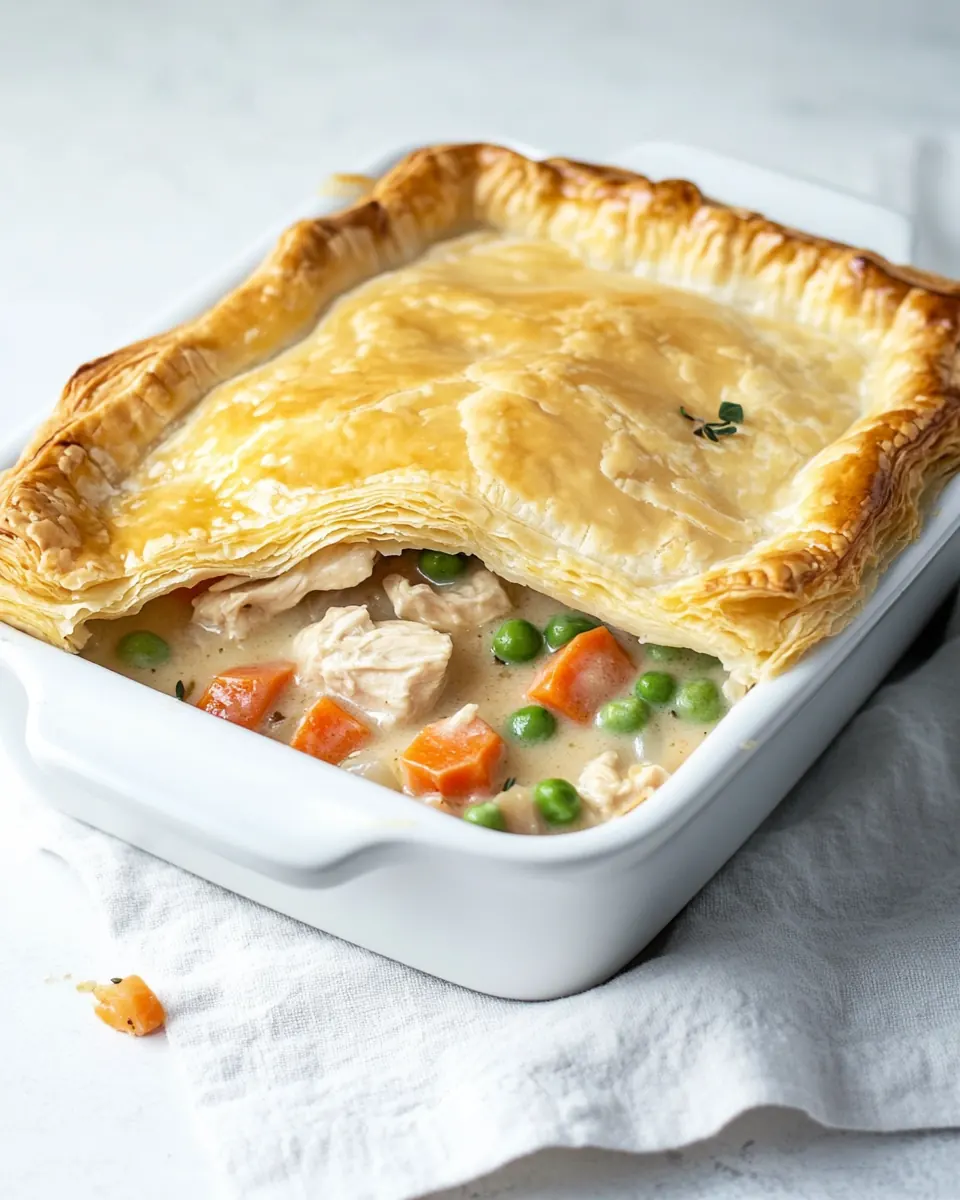
This section expands on handy swaps and practical advice that help you personalize Puff Pastry Chicken Pot Pie while keeping the essence intact. I detail choices that map to common pantry items and methods to rescue the filling if it needs adjustment.
- Use rotisserie chicken: If you want to save time, shredded rotisserie chicken works well, just ensure pieces are evenly shredded so they heat through consistently.
- Adjust dairy: If you prefer a lighter sauce, use low-fat milk as noted, but expect a slightly thinner finish; simmer a bit longer to concentrate it if needed.
- Vegetable swaps: If you do not have the frozen peas and carrots, use similar frozen mixed vegetables, but keep an eye on water content so the filling does not become diluted.
- Egg wash alternatives: If you cannot use an egg wash, brush with a little melted butter for color, though it will not be as glossy as egg.
- Thickening fixes: If the filling is too thin, simmer it a little longer, or mix a small slurry of flour and cold water and whisk it in off heat to avoid lumps.
- Prevent soggy bottoms: Bake on a preheated baking sheet to give the base of the dish more direct heat, helping the pastry edge crisp better.
Perfect Pairings for Puff Pastry Chicken Pot Pie
This dish shines with simple sides and seasonal accompaniments that complement its rich, savory nature. Below are ideas for pairing, occasions to serve it, and storage guidance presented in list form for easy reference.
- Light green salad: A crisp salad with a lemony vinaigrette cuts through the richness, providing a bright, contrasting bite that refreshes the palate.
- Roasted root vegetables: Oven roasted carrots and parsnips with a touch of olive oil provide a caramelized, earthy side that echoes the warmth of the filling.
- Simple steamed greens: Quick steamed green beans or broccoli bring color and a clean texture that balances the creamy pie.
- Occasions: Perfect for cozy family dinners in winter, casual weekend lunches, or when you want a comforting main that reheats well for next day meals.
- Serving style: Serve hot from the oven with a small ladle on the side for owners of deeper dishes, or slice into portions for a shared, family style presentation.
- Storage tips: Refrigerate leftovers in an airtight container for up to three days, reheat in a moderate oven to revive some crispness in the pastry, or microwave gently for a quick lunch.
- Seasonal pairing: In winter, pair with a warm apple compote or braised greens to keep the meal hearty and seasonal.
- Make ahead: You can prepare the filling a day ahead and cover it in the dish, then add the pastry and bake when ready to serve for fresher puff.
- Portion ideas: For smaller servings, bake in individual ramekins for charming personal pies that are great for entertaining.
- Presentation tip: After baking, allow the pie to rest briefly and then wipe the dish rim clean for a tidy serving presentation.
FAQ
Conclusion
Puff Pastry Chicken Pot Pie stands out for its comforting balance of flaky pastry and a creamy, herb scented filling that feels both homey and a touch special. Give it a try when you want a satisfying meal that comes together from pantry staples and yields bakery worthy results. I hope you enjoy the warm aromas, the crisp top, and the cozy satisfaction of every spoonful, and that it becomes a trusted favorite in your weeknight rotation.
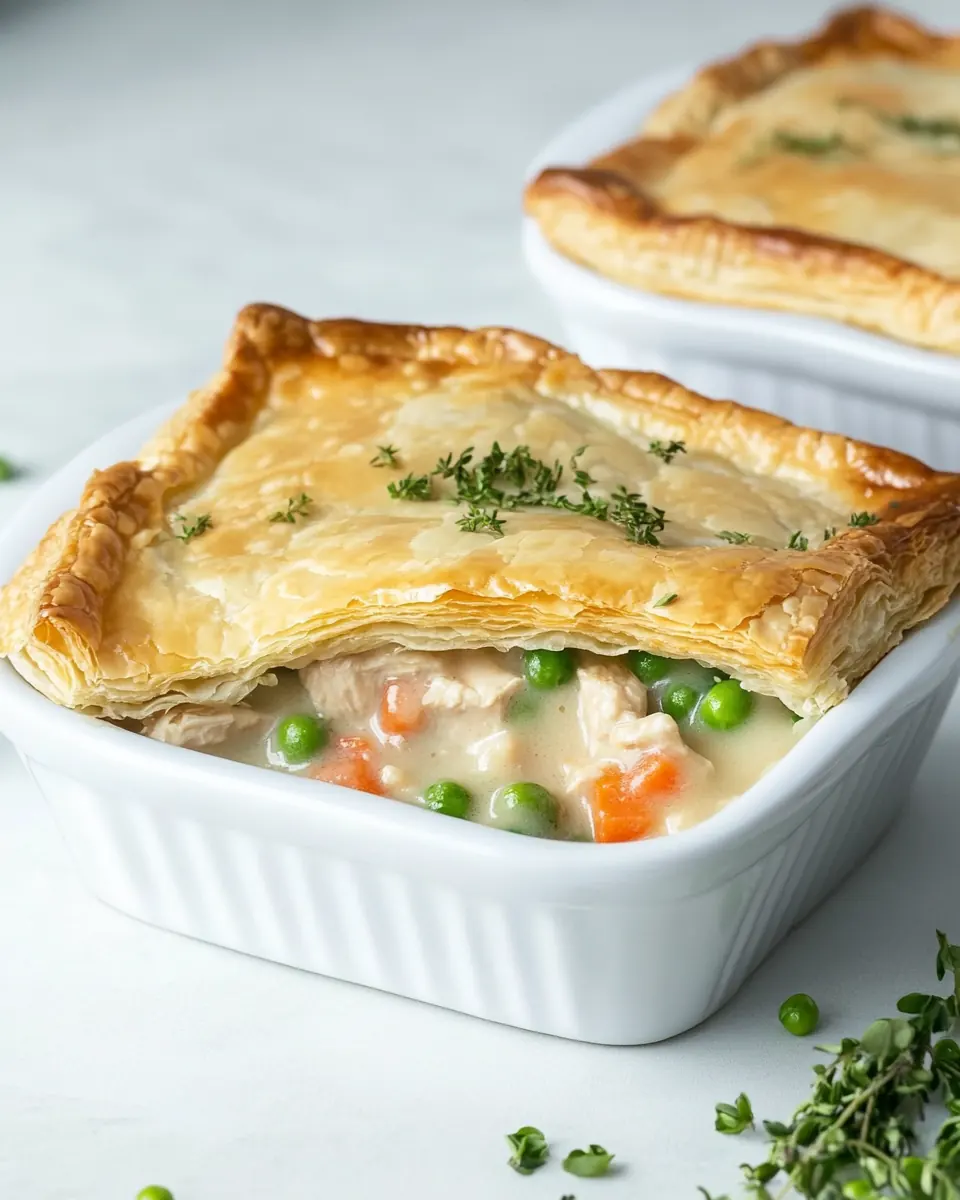
Puff Pastry Chicken Pot Pie
Ingredients
Equipment
Method
- Preheat the oven to 400°F. In a medium saucepan over medium heat, melt the butter. Add the diced onion and minced garlic. Cook until softened, about 2 minutes.: The kitchen fills with warm anticipation as the oven comes to temperature, and you want it fully hot so the puff pastry begins to rise immediately when it goes in. A properly preheated oven creates that dramatic puff and golden hue. If you skip preheating, the pastry may spread rather than rise, resulting in a denser top. A common mistake is placing the pie in a not fully heated oven, which dulls the pastry rise.
- Whisk in the flour and cook for 30 seconds. Slowly incorporate the chicken broth and milk while continuously whisking. Bring the mixture to a boil, then let it simmer until it thickens, about 2 minutes.: As the butter melts, it should shimmer and spread, releasing a nutty scent that signals the start of a good roux. You want the heat moderate so the butter does not brown, maintaining a clean buttery base. If the butter browns, the sauce will take on a toasted flavor that can overpower subtle herbs. Avoid high heat which can scorch the butter quickly.
- Take the saucepan off the heat. Add the garlic powder, onion powder, salt, pepper, dried thyme, oregano, and rosemary. Next, add the frozen peas and carrots along with the shredded chicken. Mix until everything is well incorporated.: The sound here is a soft sizzle as the onion hits the fat, and the aroma lifts quickly. Cook until the onion softens and becomes translucent, which takes about a couple of minutes, and the garlic mellows into sweet warmth. The aim is to soften and sweeten the aromatics, not to brown them, so stir often. A frequent error is letting garlic brown, which creates bitterness.
- Spoon the chicken mixture into an 8-inch square casserole dish. Roll out the puff pastry over the dish, leaving about a 1/2-inch overhang to cover the top. Trim any excess pastry and create 4 slits in the middle of the top for steam to escape. Lightly brush the pastry with the egg wash.: When you sprinkle in the flour, whisk constantly to create a smooth paste; it should smell faintly toasted but not raw. This brief cook removes the starchy taste and prepares the roux to thicken the liquid evenly. If you undercook the flour, the final sauce can taste pasty; if you overcook, it could darken and alter flavor.
- Bake for 30-35 minutes until the pastry is golden and puffed.: Pour the liquids in gradually while whisking to avoid lumps, and watch the mixture transform into a silky, cohesive sauce. Bring it to a boil so it activates the thickening power of the roux, then reduce to a simmer where it will gently thicken. The sauce should coat the back of a spoon when ready. Adding liquids too quickly or not whisking can create clumps, a common pitfall.
- Let cool for 5 minutes before serving.: As it simmers, steam rises and the sauce takes on a glossy, clingy texture that will coat the chicken and vegetables. This moment is important to concentrate flavor and ensure the filling will not be watery once baked. If you stop too early, the filling will be runny; if you simmer too long it can become gluey.
- Remove from heat and add seasonings: Taking the saucepan off the heat stops the cooking and lets you fold in the garlic powder , onion powder , salt , black pepper , dried thyme, oregano, and rosemary so their oils brighten without burning. This technique preserves the aromatic character of the herbs. A misstep is adding seasonings too early on high heat, which can mute their fresh notes.
- Add the frozen peas and carrots and shredded chicken: Tossing in the frozen vegetables and cooked chicken brings immediate cooling and changes the texture of the sauce as the vegetables release a little moisture and the chicken soaks up flavor. Stir until everything is evenly coated and distributed. If the vegetables are crowded in a too cool sauce, they may not heat through; ensure the mixture is warm enough for the peas and carrots to defrost fully.
- Spoon the chicken mixture into an 8-inch square casserole dish: As you fill the dish, notice how the glossy filling settles, filling corners and creating an even layer that will support the pastry top. Smooth the surface slightly so the pastry will sit evenly. Overfilling can cause spillage in the oven, while underfilling leaves gaps under the pastry that affect presentation.
- Roll out the puff pastry over the dish with a 1/2-inch overhang: Lay the thawed puff pastry across the top so it covers the dish with a small overhang to crimp or tuck, which helps seal steam and gives a neat edge. Trim any excess and create four slits in the center so steam can escape. This venting prevents the pastry from bursting unpredictably. If pastry is too warm it will sag; keep it cool for optimal lift.
- Brush the pastry with the egg wash: The egg wash gives the crust a rich, glossy, and deeply browned finish as it bakes, signaling doneness and adding an inviting sheen. Brush gently and evenly so the surface browns uniformly. A common error is applying too much wash which can pool and create soggy spots instead of crisp flakiness.
- Bake for 30 to 35 minutes until the pastry is golden and puffed: During baking you will see the pastry rise and the color deepen to a warm golden brown, and you may hear a faint crackle as layers separate. The aroma of butter and herbs will fill the kitchen. Baking at the right temperature ensures flaky lift and a set filling. If the oven runs hot, the pastry can brown too quickly before the filling heats through, so tent with foil if needed.
- Let cool for 5 minutes before serving: Allowing the pie to rest gives the sauce a chance to settle, so it will not pour out immediately when cut. The steam redistributes and the filling tightens slightly, making clean slices possible. Cutting too soon risks a runny filling and burned mouths from scalding steam.
Notes
- Use rotisserie chicken: If you want to save time, shredded rotisserie chicken works well, just ensure pieces are evenly shredded so they heat through consistently.
- Adjust dairy: If you prefer a lighter sauce, use low-fat milk as noted, but expect a slightly thinner finish; simmer a bit longer to concentrate it if needed.
- Vegetable swaps: If you do not have the frozen peas and carrots, use similar frozen mixed vegetables, but keep an eye on water content so the filling does not become diluted.
- Egg wash alternatives: If you cannot use an egg wash, brush with a little melted butter for color, though it will not be as glossy as egg.
- Thickening fixes: If the filling is too thin, simmer it a little longer, or mix a small slurry of flour and cold water and whisk it in off heat to avoid lumps.
- Prevent soggy bottoms: Bake on a preheated baking sheet to give the base of the dish more direct heat, helping the pastry edge crisp better.