Bring a pot of salted water to a boil and prepare the pasta according to the package directions. Once the pasta has cooked, you want to make sure to reserve 2 cups of the pasta water.: The steam, rising and hot, signals the start of the ritual, and the kettle like hiss of boiling water sets the pace. You will smell soon the faint wheat scent as the pasta softens, and the surface should swirl gently when it is nearly ready. Reserving the pasta water while you drain gives you the starchy liquid you need for a silky sauce, so measure out about 2 cups into a bowl before you tip the noodles into a colander. If you skip reserving that water you can end up with a grainy sauce that will not bind to the pasta . A common misstep is rinsing the pasta under cold water which washes away the starch, so avoid that to keep the sauce glossy.
While the water is boiling/pasta is cooking, heat a large skillet over medium-low heat and add the oil and 2 tablespoons of butter. Once the butter melts, stir in the garlic with a pinch of salt and all of the pepper. Toast for 1 to 2 minutes. Stir in the pumpkin puree until combined.: The sizzle when the butter and olive oil meet the pan is immediate and comforting, and you will notice the butter bubbling softly and turning a pale gold. When you add the minced garlic , the aroma shifts to fragrant and savory, and the tiny flecks of black pepper will bloom, releasing sharp, citrusy notes. Stir for a minute or two until the garlic loses its raw edge but does not brown, because browned garlic tastes bitter. Then fold in the smooth pumpkin puree so it warms and loosens slightly, taking on a glossy sheen. If the pan is too hot, the garlic will burn quickly, so keep the heat steady and moderate. One trap is to rush this step on high heat, which risks a bitter base and an uneven flavored sauce.
Stir in 1 cup of the reserved pasta water. Stir in the remaining 2 tablespoons of butter and the nutmeg and bring the mixture to a simmer. Add in the pasta and toss it together. Reduce the heat to low and stir in the parmesan and pecorino. Toss until the cheese is melted and becomes somewhat of a sauce with the water and the pasta. If needed, you can add in more of the reserved pasta water to thin out the sauce.: The first ladle of hot pasta water will hiss slightly as it hits the warm pumpkin, and the sauce will loosen into a velvety puddle. Adding the remaining butter now enriches the sauce and gives it a silky texture, while a tiny pinch of nutmeg adds a subtle lift to the aroma. When the mixture comes to a gentle simmer, the surface will show small, steady bubbles and a fragrant steam. As you add the pasta , the dish will begin to sing, the sauce clinging and coating each piece. Lowering the heat before you add the grated parmesan and pecorino is crucial because heat that is too high can make the cheeses seize into grainy clumps instead of melting into a smooth emulsion. Toss until the sauce becomes glossy and unified, adding more hot pasta water by the tablespoon if the mixture feels stiff. A typical mistake is dumping all the cheese in at once or at high heat, which leads to separation; temper the cheeses gently and add them gradually for the creamiest finish.
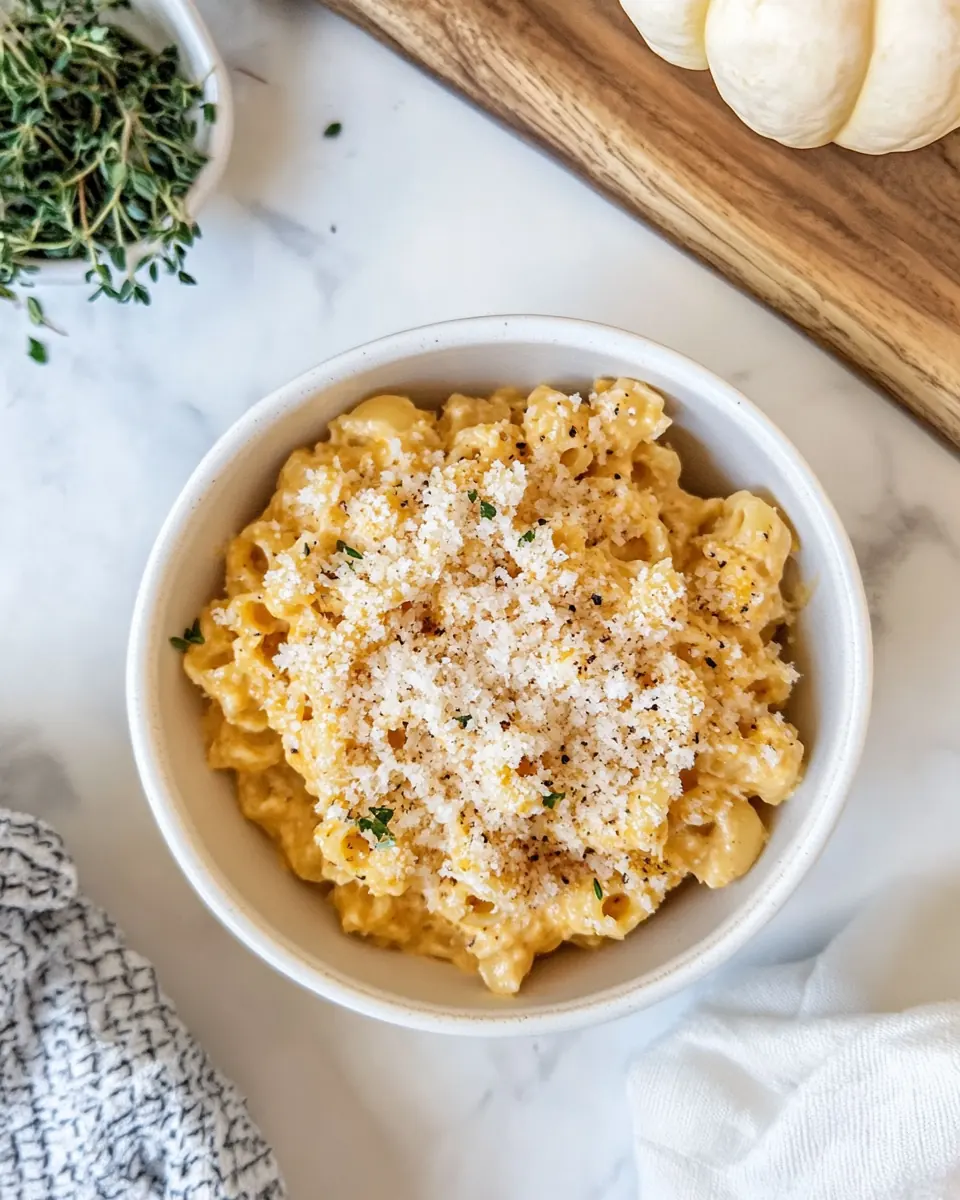
Serve immediately with extra parmesan shavings and freshly cracked black pepper.: You will notice steam rising with a rich, savory aroma, and the first forkful should reveal a sauce that clings and coats rather than pools. The finishing parmesan shavings add a pleasing texture contrast and a burst of sharp saltiness, and the extra cracked black pepper on top gives that bright, stinging note that defines cacio e pepe. Plate promptly so the pasta does not sit and thicken, and if the sauce tightens while waiting, loosen it with a splash of warm reserved pasta water . A common oversight is letting the dish rest too long before serving, which allows the sauce to set and lose its glossy finish, so serve while hot for the best mouthfeel.