Preheat the oven to 350 degrees F. Spray a 9 x 13 inch baking dish with nonstick baking spray.: The oven will begin to fill the room with a faint dry warmth that promises browning, and preheating ensures the batter starts rising immediately when it hits the heat. You should hear a quiet hum from the oven and feel steady heat if you hold your hand nearby, without touching. Preparing the pan with nonstick spray creates a thin protective layer so the cake releases cleanly, saving you a lot of frustration later. A common mistake is putting the batter in before the oven reaches temperature, which can make the cake dense and uneven. If your oven runs hot or cool, use an oven thermometer to confirm accuracy.
In a bowl, whisk together the flour, baking soda, cinnamon, salt and nutmeg. Note: If you LOVE spice, feel free to add some extra spice in here (pumpkin! allspice! more cinnamon! - you can add another 1/2 to 1 teaspoon if you'd like) as this isn't overly spiced.: As you whisk the dry mix, you will see the pale all purpose flour take on warm flecks of cinnamon and nutmeg , and the mixture smells subtly spicy and dry. Combining the baking soda uniformly with the flour prevents pockets of chemical leavener that can create odd flavor or texture. Whisk briskly until evenly blended so the batter will rise consistently. Avoid over-handling the mixture, which can develop gluten and toughen the cake. I often sift the flour and spices together to ensure the spices are evenly distributed throughout every bite.
In a large bowl, whisk together the pumpkin, sugar, yogurt and oil. Once smooth and combined, whisk in each egg one at a time. Whisk in the vanilla extract.: The wet ingredients will transform visually as you whisk, starting as a thick orange puree and turning glossy as the vegetable oil and yogurt emulsify. Adding the eggs one at a time helps the batter stay smooth and prevents curdling, and you will notice a silkier sheen with each addition. When the vanilla extract goes in, the aroma blossoms and smells more bakery like. A frequent error here is adding cold eggs to the mix, which can cause the batter to seize and look lumpy, so bring ingredients to room temperature when possible. The texture should finish velvety and pourable, not grainy.
Add the dry ingredients to the wet, mixing until combined and no large lumps remain.: As you incorporate the dry mix, the batter will thicken and take on a uniform, speckled color. Use gentle folding or slow mixing to combine, watching for any streaks of flour which mean under mixing. The goal is a smooth batter with small air pockets that will expand in the oven. Overmixing at this stage creates gluten and yields a denser cake, so stop once you no longer see large dry patches. If you notice the batter is too stiff, a tablespoon of milk can loosen it slightly, but usually the balance here is just right.
Pour the batter into the greased baking dish. Bake for 30 to 40 minutes, or until a tester inserted in the center of the cake comes out clean.: When the batter goes into the pan, it will settle into a glossy, even surface. During baking you will smell the spices intensify and the kitchen will warm nicely, with faint caramel notes appearing as the sugars brown. Tap the pan gently to see whether it trembles in the center, and use a toothpick or tester to check doneness; it should come out clean or with a few moist crumbs. A typical pitfall is opening the oven too early which causes the cake to sink in the middle, so try to resist peeking until near the lower end of the time range. The cake edges will pull away slightly from the pan and develop a light golden hue when ready.
Note: every time I’ve made this cake, it has smelled “eggy” in the oven which has scared me. No worries - once the cake comes out and cools, it does not taste eggy!: That temporary scent is normal and will dissipate as the cake cools, leaving a rounded, spiced aroma. Cooling lets excess steam escape so the crumb sets properly; the first few minutes after removal are crucial because the cake continues to cook slightly from residual heat. Avoid slicing while the cake is very warm as you may get a gummy texture and messy slices, so patience here rewards you with clean pieces. If you detect a persistent eggy flavor after cooling, it usually means the eggs used were overly dominant in the batter or the oven was too hot, so double check measurements and oven calibration next time.
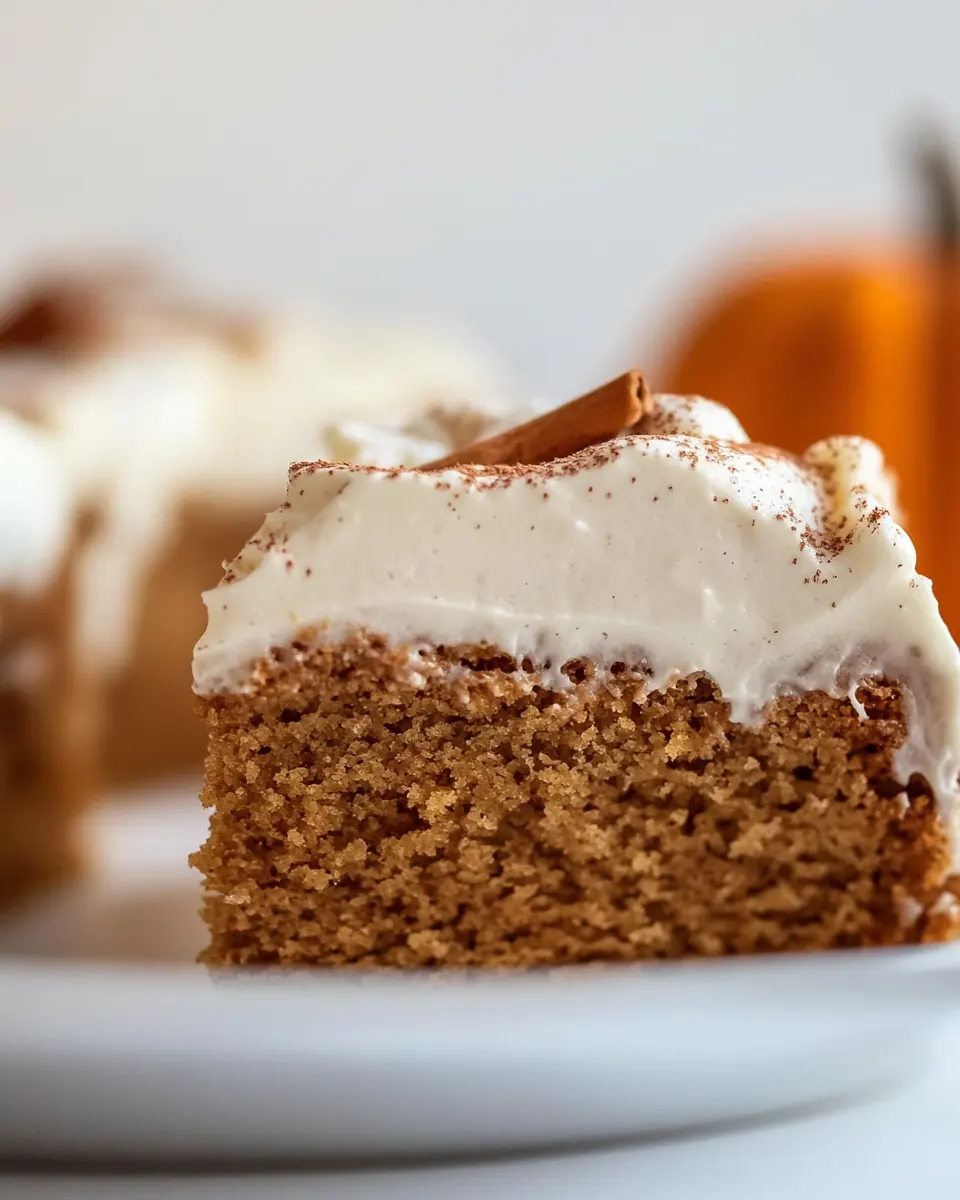
Cool the cake completely. Once the cake has cooled, frost with the cream cheese frosting. Slice and serve!: Cooling transforms the texture from fragile to sliceable, and the surface will become matte and stable under the frosting. The cream cheese frosting spreads smoothly onto a cool cake, and the contrast between the chilled frosting and the slightly warmer cake is delightful. If you frost prematurely, the frosting will melt and slide, so always wait. A common mistake is leaving the frosted cake at room temperature too long if it will be kept more than a day, since the cream cheese benefits from refrigeration for safety and texture.
Beat the cream cheese and butter together until creamy. Beat in the sugar and cinnamon until combined. Beat in the vanilla extract. Frost the cooled cake! I like to keep the cake in the fridge because of the cream cheese frosting, plus we love cold cake!: The frosting should be whipped until airy and pale, with the cream cheese and unsalted butter blending into a silky base. As you beat in the powdered sugar , the mixture thickens into a spreadable frosting that holds peaks but is still soft enough to smooth. The cinnamon and vanilla extract round the flavor, and the aroma is rich and inviting. Overbeating once the sugar is added can whip too much air and create a fluffy, unstable frosting that weeps, so stop once it is smooth and homogenous. Chill the frosted cake for at least an hour for a firmer slice, and store covered in the refrigerator for freshness and food safety.