Preheat oven to 400 degrees and lightly oil a rimmed baking sheet.: At this stage you will notice the oven beginning to hum and warm, filling the kitchen with dry heat. Preheating to 400 degrees ensures the pumpkin roasts evenly, developing slightly caramelized edges rather than steaming. Lightly oiling the rimmed baking sheet prevents the tender flesh from sticking and makes cleanup simpler. A typical error here is skipping the preheat, which leads to uneven roast times and potentially mushy texture. If your oven runs hot or cool, use an oven thermometer to confirm the temperature.
Wash the pumpkin to remove any dirt or grit from the outside of the pumpkin.: Rinsing the pumpkin under cool water and scrubbing gently removes soil that could transfer into the flesh when you cut it. The skin might have a dusty texture that disappears after cleaning, and this small step keeps your work area cleaner. Avoid soaking the pumpkin for long periods, because the skin can absorb water and make slicing trickier. A slip while cutting is the main hazard here, so stabilize the pumpkin on a damp towel before slicing.
Cut the pumpkin in half. It’s easiest to cut through the middle from the bottom of the pumpkin first that way you cut through the stem on the bottom. If the stem is too big, feel free to cut it off beforehand.: As you slice, you will feel the resistance of the outer shell give way to dense orange flesh, and cutting from the bottom can be easier because you avoid the tough stem. If the stem is large, removing it first helps create a flat surface for a safe cut. The flesh should reveal a glossy cavity studded with seeds and fibers. Common mistakes include using a dull knife, which increases risk of slipping, so ensure your blade is sharp and steady it on a cutting board with a towel under it.
Scoop out the pumpkin seeds into a bowl, reserve for another use, or discard.: Scooping is tactile and slightly messy, strings clinging to your fingers as you pull out seeds and fibers. The seeds are valuable for roasting, but if you choose not to save them, removing them thoroughly prevents bitter bits in the puree. Use a sturdy spoon to scrape the cavity, rinsing seeds in a colander if you plan to roast them. Leaving fibers behind will affect texture, so take a moment to clean the cavity well.
If desired, lightly season with salt. Place on a baking sheet cut side down.: When you lightly season the exposed flesh with a touch of salt or brush with high-heat oil , the surface prepares to brown and concentrate flavors. Placing the halves cut side down creates gentle steaming inside the cavity while allowing the exterior to roast, producing a tender interior. If you place halves cut side up, juices can pool and slow roasting, so follow the cut side down instruction for even tenderness. Over-seasoning at this stage can limit the puree's versatility, so err on the side of restraint.
Bake for 40-45 minutes until fork tender.: During baking you will notice the aroma deepen into warm, sweet notes and the rind may show slight wrinkling. Fork tenderness is the best indicator, the tines should slide into the flesh with minimal resistance. Baking too long can dry out the flesh, making puree grainy, while underbaking yields watery, starchy results. If the halves brown too quickly on the outside, lower the oven temperature slightly and extend the time to ensure even doneness.
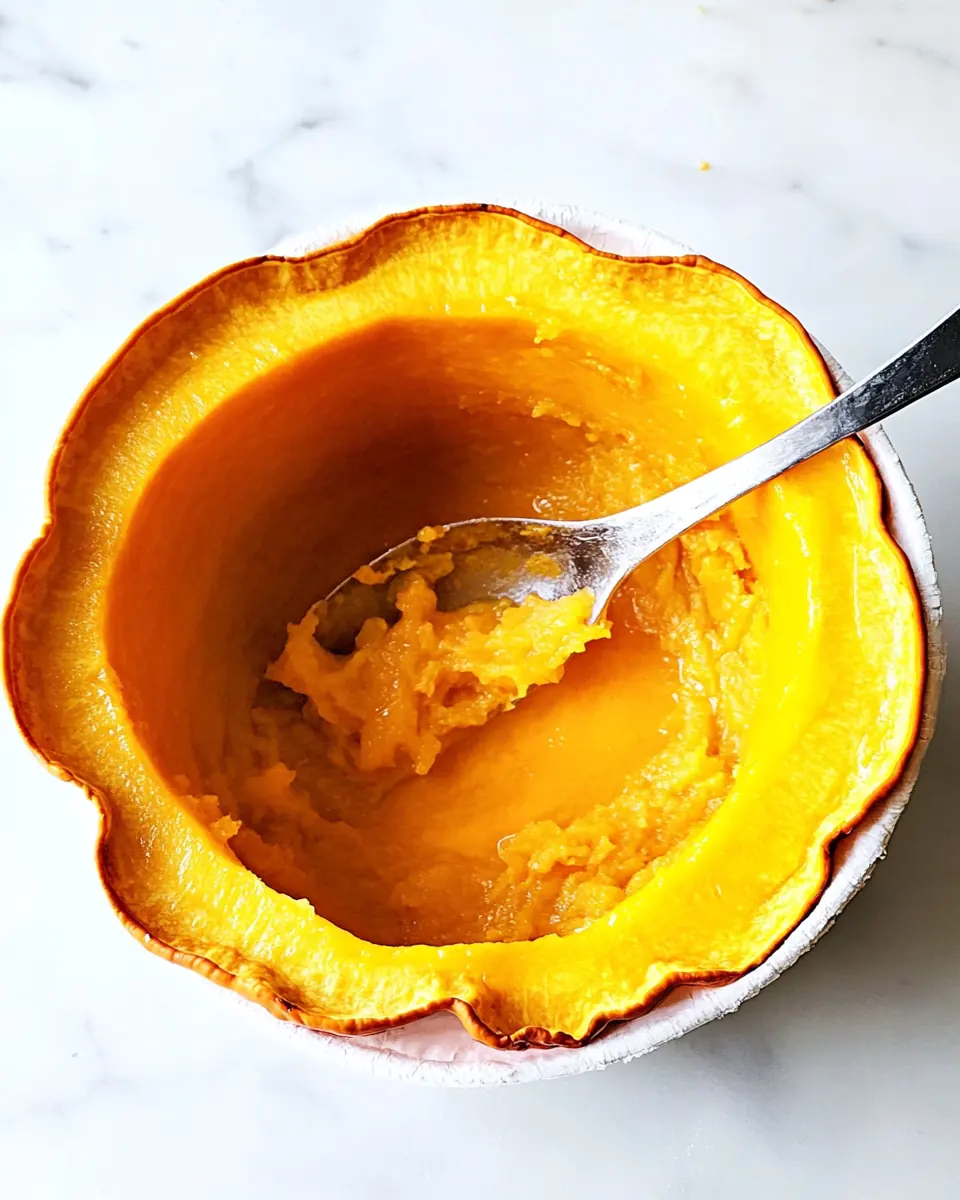
Let cool until safe to handle. Scoop out the tender filling and place in a food processor or high-speed blender and purée for 3-4 minutes until completely smooth.: Cooling lets moisture redistribute and keeps you from burning your hands. When scooping, the flesh should come away cleanly in soft ribbons. Processing for 3 to 4 minutes yields a silky texture; you can stop sooner for a more rustic feel. Overprocessing hot flesh can create steam pressure in sealed appliances, so vent or work in batches. A common oversight is blending while still too hot, which can lead to sudden bubbling and a messy lid; allow partial cooling before processing.
Store in an air-tight container for up to 1 week or store in freezer for up to 3 months.: Once cooled and smooth, you will want to portion the puree into airtight jars or freezer-safe bags. In the refrigerator it keeps well for about 1 week , and in the freezer it lasts up to 3 months , retaining flavor when thawed gently in the fridge. Label with the date so you rotate older batches first. Avoid leaving puree at room temperature for extended periods, as this can invite spoilage. Thaw in the refrigerator overnight or defrost gently on the stove for best texture retention.