Preheat the oven to 350℉. Spray a 9-inch springform pan and place it on a double thickness of heavy-duty foil (about 19-inches square). Securely wrap the foil around the pan.: As the oven warms, you should feel the kitchen shift from cool to cozy, and the preheat allows the cheesecake to bake evenly. Setting the oven accurately ensures the outer edge and center cook at the same pace. A common mistake is skipping the preheat which can lead to uneven rise and texture. Also, prepare your 9-inch springform pan by spraying it and wrapping it in heavy duty foil to prevent water from seeping in during the water bath.
In a small bowl, combine the cookie crumbs, pecans and butter. Press onto the bottom of the prepared pan. Place on a baking sheet, and bake for 8 to 10 minutes. Cool on a wire rack.: You will notice the buttery crumbs taking on a compact, sandy texture as you press them into the pan, and the fragrance of baked spices will bloom as the crust toasts. Baking the crust firms it so slices hold together when served. If you press the crust too thin it can become fragile, and if it is too thick it can dominate each bite. After baking, cooling on a wire rack prevents residual heat from steaming the crust and keeps it crisp.
In a large bowl, use an electric mixer to beat one package of the cream cheese, 1/2 cup of sugar and the cornstarch until smooth - about 2 minutes. Beat in the remaining cream cheese, one package at a time. Add the remaining sugar. Add 2 eggs; beat on low speed just until combined. Add the vanilla and the remaining eggs, beating on low speed just until combined.: You will feel the batter transform from lumpy to glossy and smooth, and the room will smell faintly of cream and sugar. Starting with one package of cream cheese plus some sugar and cornstarch helps create a lump free base, then adding the remaining packages one at a time prevents over beating. Mixing on low speed minimizes air incorporation which avoids doming and cracking. A common error is overbeating, which traps air and can cause the cake to crack while cooling. Use a hand mixer and scrape the bowl between additions so everything combines evenly.
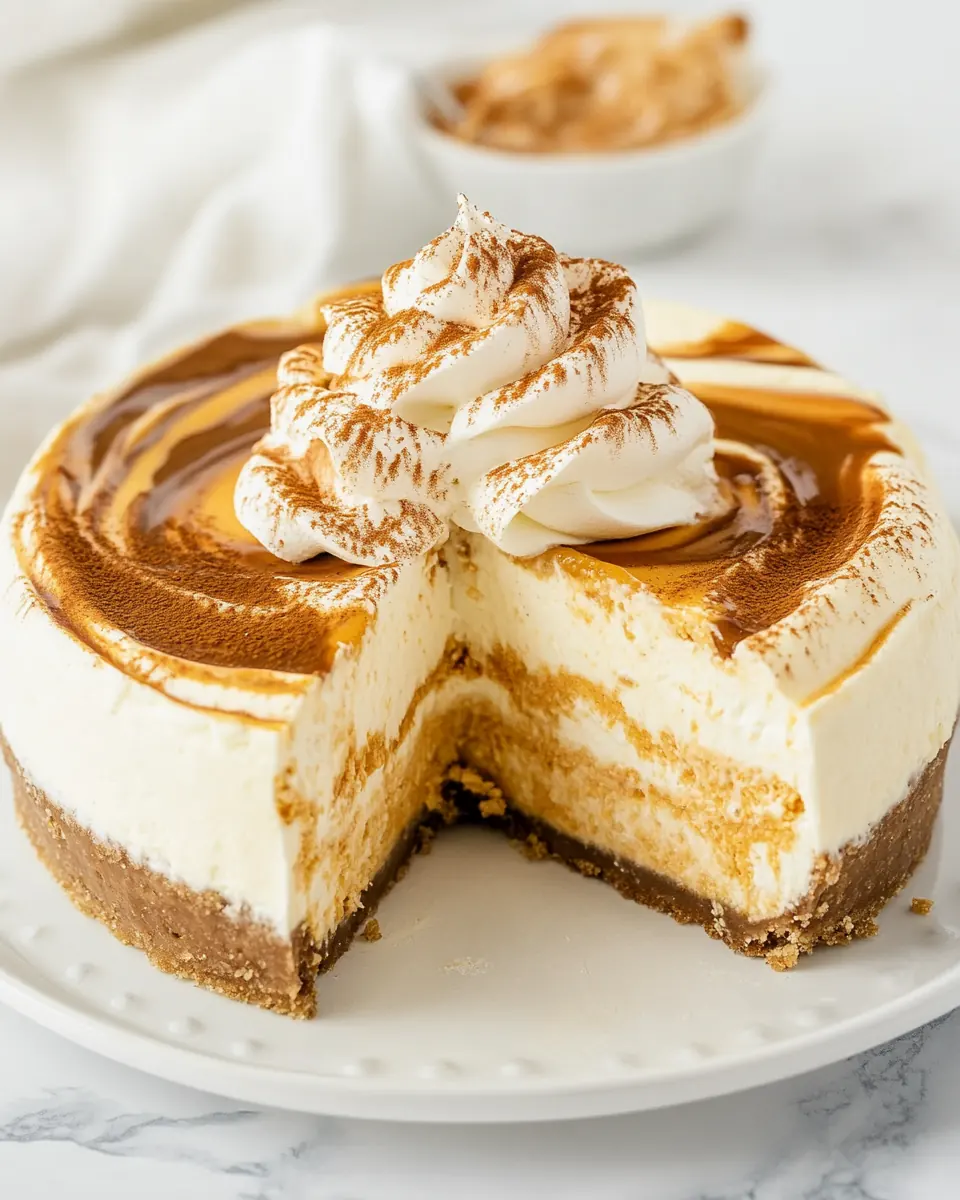
Place 2 cups of the filling in a small bowl; stir in the pumpkin, cinnamon and nutmeg. Remove 3/4 cup of the pumpkin filling; set aside. Pour the remaining pumpkin filling over the crust; top with the remaining plain filling. Drop the reserved pumpkin filling by spoonfuls over the cheesecake. Cut through with a knife to swirl.: The first sensory clue is the warm, spiced aroma as you blend pumpkin puree with cinnamon and nutmeg . When you pour the pumpkin layer onto the crust it should sit as a distinct, slightly denser layer than the plain filling, and the contrast helps the swirl pattern hold. Dropping reserved pumpkin by spoonfuls creates islands of color that you will drag a knife through to make marbling. Avoid over swirling which can homogenize the two batters and dilute the visual effect; aim for elegant streaks, not a single uniform color.
Place the wrapped springform pan in a large baking pan; add 1-inch of hot water to the larger pan. Bake at 350 for 55 to 60 minutes or until the center is just set and the top appears dull. Remove the springform pan from the water bath. Cool on a wire rack for 10 minutes. Carefully run a knife around the edge of the pan to loosen; cool 1 hour longer. Refrigerate overnight.: The water bath creates a moist oven environment that prevents the exterior from baking too quickly, which helps the center set gently and remain creamy. During baking you will notice the edges firming and the center still slightly wobbly like a softly set custard. The top will lose its sheen and look matte when done. A tricky pitfall is letting the water touch the foil seam; ensure the foil is secure so water does not seep in. After baking, cooling gradually reduces temperature stress that can cause cracking. Refrigeration overnight finishes the set, allowing flavors to settle and the texture to become sliceable and dense, not watery.
Garnish individual slices as desired: suggest whipped cream, caramel syrup and more gingersnap cookie crumbs.: The final sensory rewards are visual and aromatic. A light dollop of whipped cream adds brightness and a soft mouthfeel, while a drizzle of caramel introduces a buttery sweetness that complements the spice. Extra crushed gingersnaps on top echo the crust and add a crisp contrast. Avoid heavy, wet toppings that can make slices soggy; add garnishes just before serving to keep textures distinct and inviting.