Preheat oven to 425°F (220°C). Line a baking sheet with parchment paper.: The instant you step into this stage you should feel the ritual of cooking kick in, the warm oven hum is reassuring. Preheating to 425°F creates enough dry heat to encourage the exterior of the vegetables to caramelize, producing sweet, slightly charred edges and concentrated aroma. You will hear the oven click and feel the heat when you open it briefly to place the tray inside. A common mistake is not preheating fully, which leads to longer cook times and less even browning; give the oven its full warm up. Also, using parchment prevents sticking and helps clean up, which keeps the process relaxed.
Cut asparagus into about 1 1/2-inch pieces, woody ends removed. Cut bell peppers and onion into 3/4 to 1 inch squares. Place on baking sheet. Add cherry tomatoes. Salt if desired.: As you cut, notice the snap of the asparagus and the glossy skin of the bell peppers . Uniform pieces promote even roasting so they finish at the same time. Arranging them on the sheet in a single layer helps air circulate and encourages browning instead of steaming. When you salt them lightly before roasting, it draws out moisture that concentrates flavor. A frequent misstep is overcrowding the pan; if pieces overlap they steam and lose that roasted texture, so spread them out for the best results.
Place in oven and roast for 25 minutes, or desired tenderness.: During roasting you'll start to smell the vegetables sweeten and the sugars caramelize, with occasional gentle popping from the tomatoes as they burst. Look for browned edges on peppers and a slight shrivel on tomatoes as signs of readiness. If you prefer a deeper roast, extend the time slightly while keeping an eye to avoid burning. Overroasting can make vegetables too dry, so check early and stir once if necessary to promote even color.
Meanwhile, cook the quinoa: Place 1 cup quinoa (rinsed and drained) in a small saucepan with 1 1/2 cups water or vegetable broth. Bring to a light boil over medium-high heat. Then reduce heat to medium-low, cover, and simmer for 20 minutes.: Place 1 cup quinoa (rinsed and drained) in a small saucepan with 1 1/2 cups water or vegetable broth. Bring to a light boil over medium-high heat. Then reduce heat to medium-low, cover, and simmer for 20 minutes. : When you rinse the quinoa under cool water, you remove any bitter coating and improve texture. Bringing it to a light boil signals the starches are activating, and reducing to a low simmer lets the grains absorb liquid gently so they fluff instead of becoming sticky. You should hear only a whisper of bubbling as it simmers, and steam will escape from under the lid. A common error is lifting the lid often, which lets steam escape and can leave the quinoa undercooked; trust the timer and check at the end for tender kernels and no remaining liquid.
In a small bowl, combine dressing ingredients and set aside.: As you whisk together balsamic vinegar , minced garlic , dried basil , and salt, notice the sharp tang of vinegar mellow slightly as it integrates with the aromatics. The dressing should be bright and balanced, ready to coat the warm quinoa so it absorbs flavor. A slip here is using too much acid at once, which can overpower the vegetables; taste and adjust gradually to keep the final bowl harmonious.
When quinoa is done cooking, immediately place in a large bowl and toss with spinach. (The heat from the quinoa will lightly wilt the spinach.): The moment you transfer the fluffy quinoa , you should feel gentle steam and see the grains separate. Tossing with baby spinach lets residual heat soften the leaves so they collapse just enough to blend, adding silky texture and vibrant color. If you wait too long, the spinach may not wilt properly and will remain raw and fibrous; act promptly to get that delicate fold into the mix.
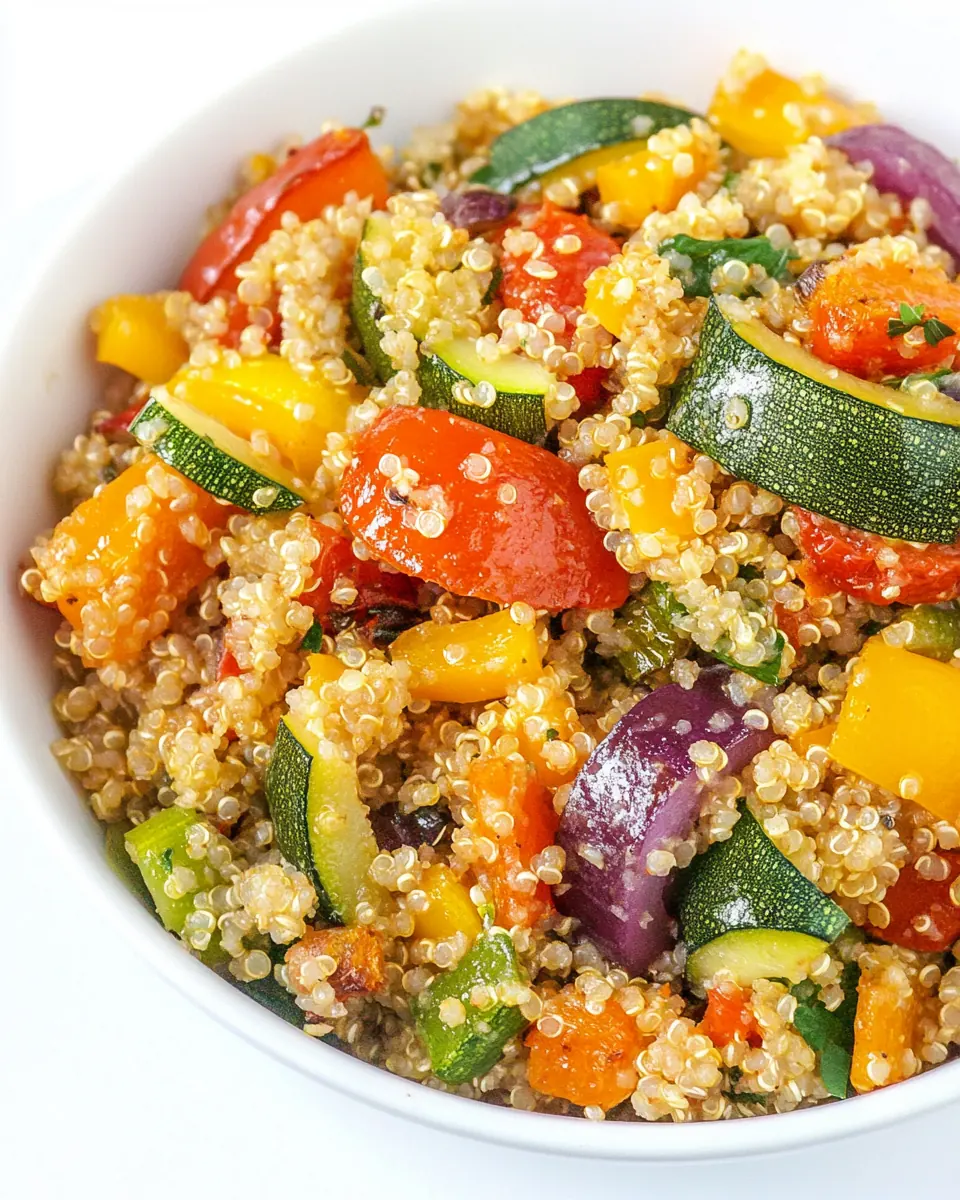
Pour dressing over quinoa and mix well to combine. Add roasted vegetables and stir.: When you add the dressing to hot quinoa , the grains take on flavor quickly, becoming more cohesive and aromatic. Stirring in the roasted vegetables distributes pockets of caramelized sweetness and roasted juices throughout. Pay attention to the scent as everything mingles, you should get a balanced lift of acid and roasted notes. A common mistake is adding the dressing after the vegetables cool completely, which can make the dish feel disjointed; combining while warm helps flavors marry.
Salt to taste (or add fresh basil, or a splash more balsamic if desired). Great served warm or chilled.: This finishing moment is where you calibrate seasoning. A pinch of additional salt can brighten flavors, and a final splash of balsamic vinegar lifts the bowl. Taste carefully and adjust in small increments. Serving warm emphasizes roasted aromatics, while chilled bowls let flavors settle and mingle; choose the temperature that suits your gathering. Over-salting at the end is easy, so add gradually and taste between adjustments.