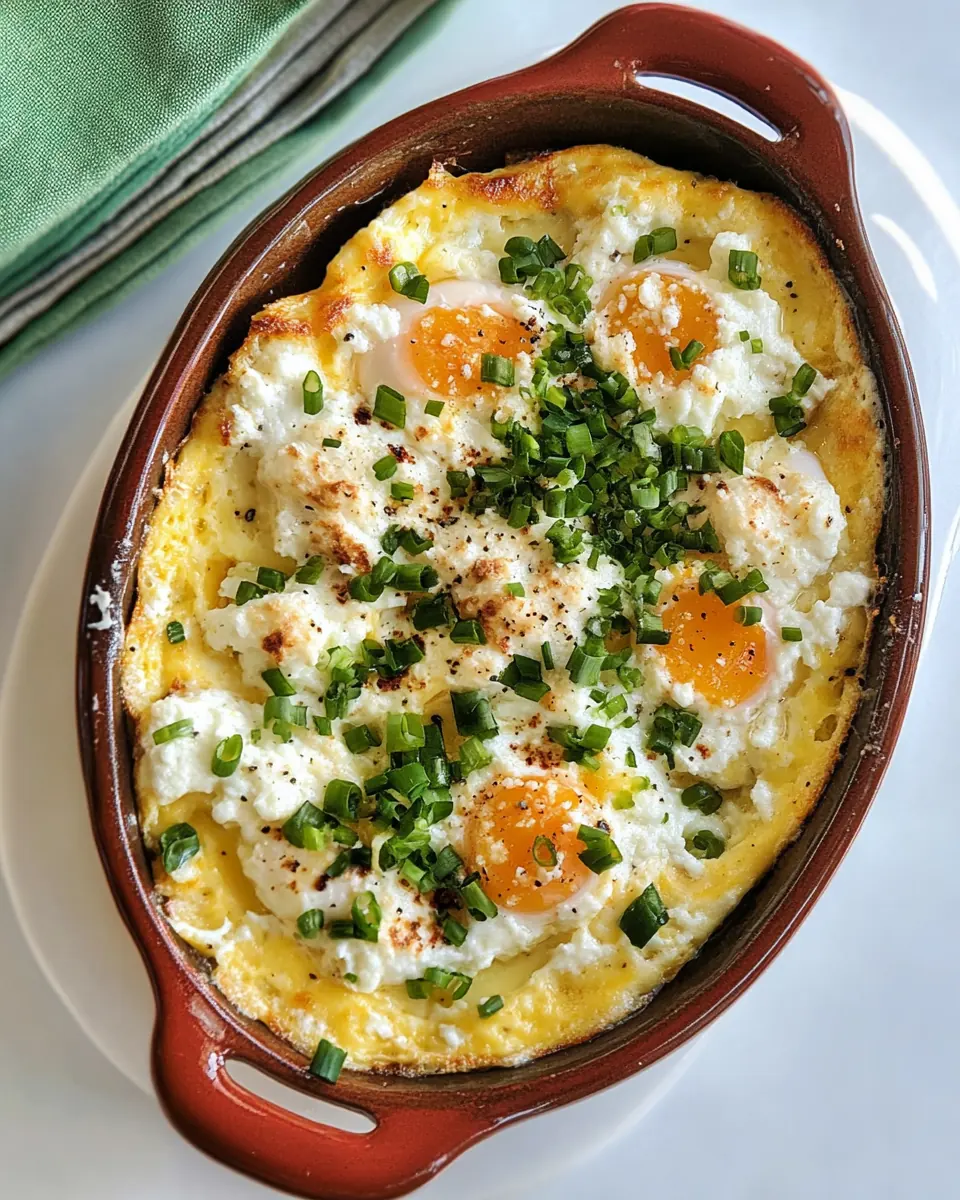
In a large skillet, heat butter or olive oil over medium heat. Add the eggs and ricotta. Scramble the eggs to desired consistency.: The moment the butter or olive oil meets the skillet you will hear a faint sizzle, and a warm, nutty aroma should slowly rise. Aim for medium heat so the fat shimmers but does not smoke. This temperature creates a gentle barrier between the pan and the eggs, promoting even cooking. A common mistake is overheating the fat, which can brown the eggs too quickly and create an uneven texture. If you notice dark spots, reduce the heat immediately. The visual cue is a faint ripple in the oil and a soft sheen on the surface, not aggressive bubbling. Proper heat helps the eggs set into soft curds rather than tough, dry clumps.
Top with salt and pepper and Pecorino cheese. Add a sprinkle of red pepper and green onions to taste.: When the skillet is ready, pour in the whisked eggs and spoon in the ricotta cheese . The instant contact creates a gentle steam and a delicate hiss, and you may see tiny curds forming at the edges within seconds. The ricotta cheese will soften and marble the eggs , adding a pillowy texture. Stir gently to distribute the ricotta, because vigorous scraping can break the curds into tiny pieces. A frequent pitfall is rushing this step, which leads to uneven pockets of ricotta. Look for glossy, slightly runny curds as the right time to proceed, because overcooking here will make the mixture chalky rather than creamy.
Serve plain, over toast, or a chaffle for Keto.: As you stir slowly with a spatula, listen for a gentle hiss and watch the color change from pale yellow to a creamy gold. Move the spatula in broad, folding strokes to gather large, soft curds, and pause between folds to let the residual heat finish cooking the eggs. This carryover heat yields a silkier texture, so remove them just before you think they are fully set. A typical error is continuous stirring at high heat, producing tiny dry curds. Instead, allow brief rests so the mixture registers a glossy surface and gentle wobble when you tilt the pan. The result should be creamy and slightly custard like, not dry or rubbery.
Top with salt and pepper and Pecorino cheese: After removing the pan from heat, season with salt and freshly ground pepper, then shower the top with grated Pecorino cheese . The warmth will melt the cheese partially, creating savory ribbons across the surface and enhancing the overall umami. Taste first, because the Pecorino cheese is salty and can push the dish over the edge if you add extra salt blindly. A common misstep is salting on the raw side, which can make the finished eggs taste metallic. Instead, season at the end for better control, and admire the tiny pools of melted cheese that glint like satin.
Add a sprinkle of red pepper and green onions to taste: Finish with a dusting of crushed red pepper and a scattering of thinly sliced green onions . The pepper gives a subtle warmth that lingers on the palate, while the onions add crunch and a vegetal burst. Add most of the green onions at the end to preserve color and texture, reserving a pinch for garnish. Avoid adding large amounts of pepper too early because heat can blunt its brightness. The visual contrast of pale eggs, flecks of green, and tiny red specks makes the dish inviting and signals balanced seasoning.
Serve plain, over toast, or a chaffle for Keto: Choose your serving vehicle based on mood and occasion, whether it is plain for a quick bowl, over warm toast for comfort, or atop a crisp chaffle for a low carb option. If you place the eggs on toast, the steam will soften the bread slightly, creating a cozy texture contrast. For chaffles, the crisp base provides a crunchy counterpoint that highlights the eggs silkiness. One mistake is piling hot eggs on very thin bread, which can become soggy quickly. Aim for sturdy toast or a well made chaffle that can hold the eggs without collapsing.