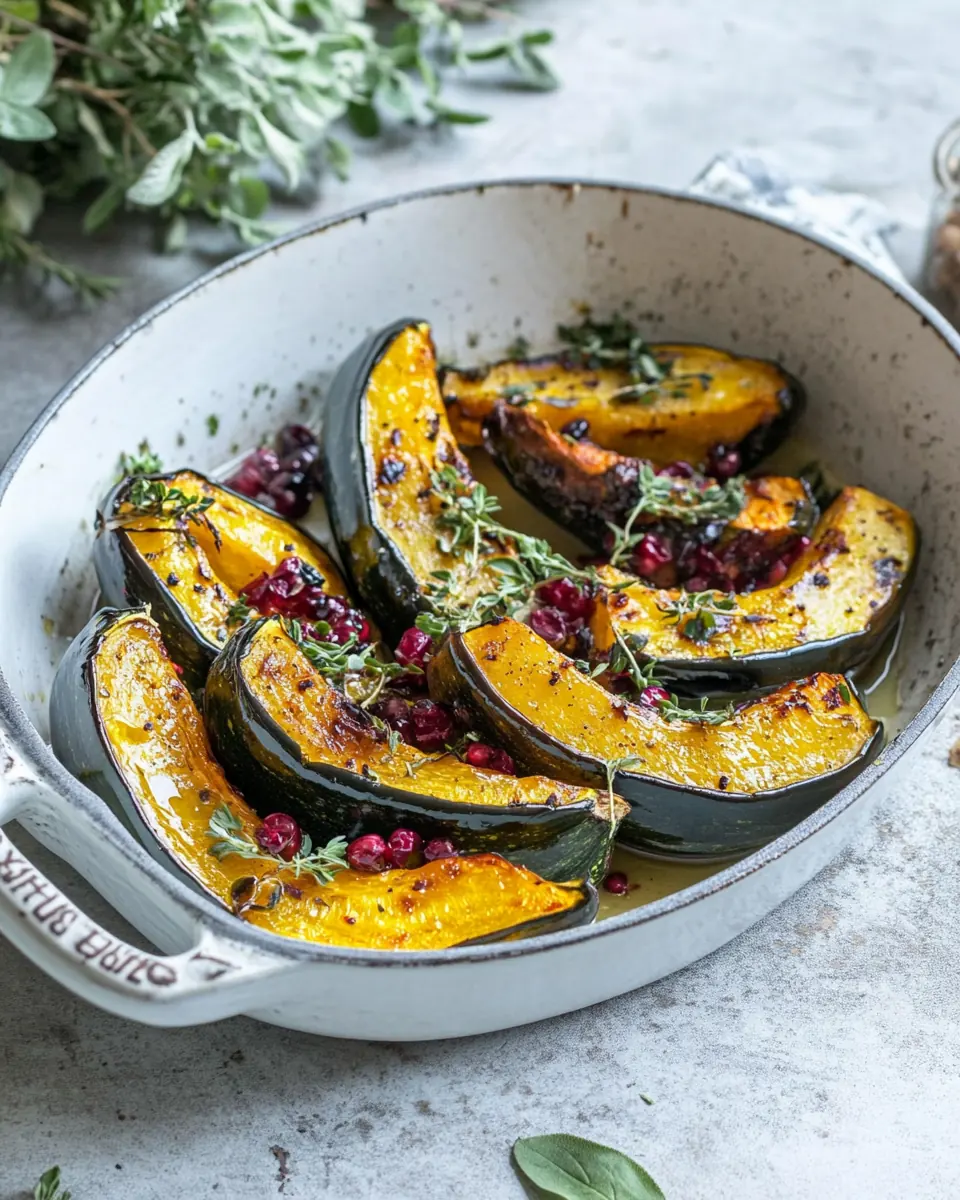
Preheat oven to 400 degrees and line a baking sheet with parchment paper.: As the oven comes up to temperature you will notice a faint warmth that makes the kitchen feel cozy. This step ensures an even, consistent heat so the acorn squash cooks through uniformly, and the parchment prevents sticking and makes cleanup effortless. If the oven is not fully preheated you may see uneven browning and longer cook time, so wait until the thermostat signals readiness. A common misstep is skipping the lining, which can cause the wedges to adhere and tear when turned, losing those caramelized bits.
Cut acorn squash lengthwise in half, then into wedges.: When you slice the acorn squash , you should hear a clean, crisp sound as the knife passes through the skin, followed by the hollow thud of seeds in the cavity. Cutting it lengthwise gives larger wedges that hold their shape, and it exposes more surface area for browning. The flesh will be dense and slightly moist; aim for even thickness so each piece roasts at the same rate. A frequent error is uneven cuts that leave thin edges overcooked while the center remains firm, so take your time and stabilize the squash on the cutting board.
Place the squash wedges on a baking sheet, drizzle with olive oil and sprinkle with salt.: As you arrange the wedges you will see the oil sheen highlight the textures, and the salt will sit like tiny crystals on the surface. The oil encourages Maillard browning along the exposed flesh, producing nutty aromas as it roasts. Toss or brush so each wedge gets a thin coating; this ensures crisp edges and a tender interior. Avoid overcrowding the pan, which leads to steaming instead of roasting and results in limp wedges rather than caramelized ones.
Bake for 30 minutes.: During this initial roast stage you should notice the kitchen filling with a roasted, almost chestnut like scent, and the edges will begin to darken. The flesh will soften and become easier to pierce with a fork, signaling progress. This phase allows the sugars in the squash to gently caramelize without burning, which builds deep flavor. Opening the oven too often cools the cavity and lengthens cooking time, so check visually near the end rather than frequently peeking.
Drizzle the squash with maple syrup and toss to coat.: When you add the maple syrup , a sweet, woody aroma will mingle with the savory roast notes, and the syrup will form a glossy layer on the wedges. Tossing helps the syrup adhere and distribute, creating a thin glaze that will deepen in color during the final roast. Be gentle when tossing to avoid bruising the delicate flesh. A pitfall is pouring syrup onto cold squash, which can collect and burn later, so ensure the wedges are warm enough to accept the glaze evenly.
Bake for an additional 20 minutes or until tender.: In the finishing stage listen for a subtle sizzle as the syrup caramelizes; visually you want golden brown edges and a soft, yielding center. The final texture should be creamy without being mushy, and the surface should have a few darker, caramelized spots. This step locks in that glossy finish and enhances contrast between crisp edges and tender interior. Overcooking will dry the squash and can produce a bitter char, so test with a fork and remove when it yields easily.
Serve.: As you plate the wedges the aroma will be inviting, and the glossy, golden surfaces will catch the light. Serve warm so the texture remains soft and the glaze feels fresh. If you let it sit too long, the exterior can lose its appeal and the syrup may become sticky as it cools, so plan to present shortly after roasting. A common mistake is leaving it on the hot pan, which continues cooking and can push the flesh past ideal tenderness.