Preheat the oven to 450°F. Cut the greens from the tops of the beets and save for another use, then trim the bottom of the stems and discard. Scrub the beets under cold water, pat dry with a paper towel and place in a bowl. Toss with the olive oil and generous pinches of salt.: You will notice the oven warming the kitchen with a dry, steady heat that encourages caramelization. A hot oven helps the natural sugars in the beets brown rather than steam, creating deeper flavors and slightly crisped edges. If your oven runs hot, rotate the rack to avoid burning the tops. A common error is starting at a lower temperature which leads to long cook times and a softer, less complex flavor.
Place the beets in a baking dish and cover tightly with foil. Bake for 1 hour for large beets, or about 45 min for medium. The beets will be done when you can easily slide a sharp knife into their tender centers. Set aside to cool enough to handle.: As you trim, the clean, slightly vegetal scent of the greens will lift the kitchen air; save them for sautés or pesto to avoid waste. Trimming ensures even roasting and prevents the greens from drawing moisture out of the roots while cooking. Avoid leaving long stems attached, they can dry out and char, which alters the flavor balance.
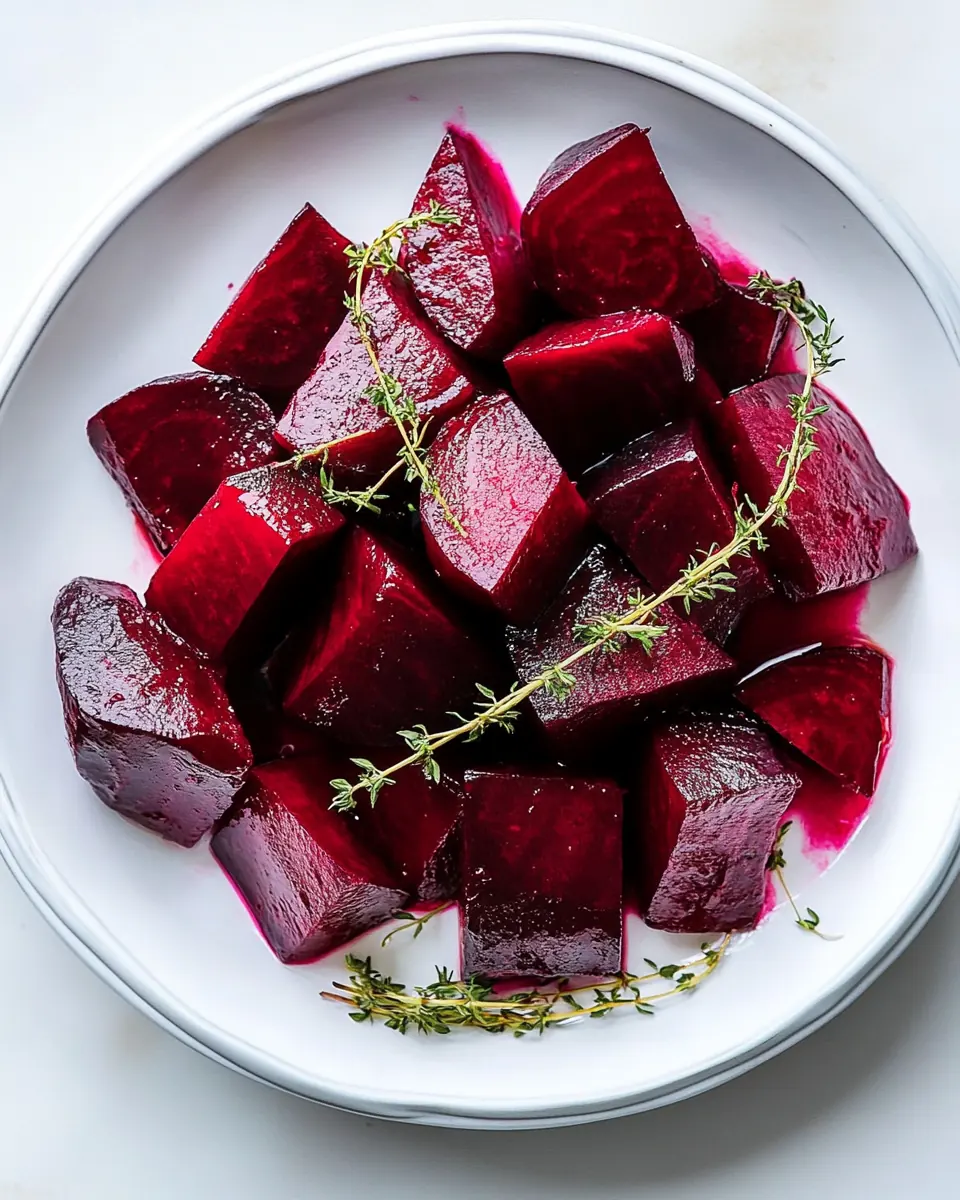
To peel, trim the ends then use a paper towel in each hand to rub off the skins. If you don't want your hands to get red, wear plastic gloves. Toss with more olive oil and salt and pepper and garnish with fresh thyme or chopped chives.: Running water and a gentle scrub remove stubborn soil and any sandy grit, and patting them dry prevents excess moisture that would steam the beets instead of browning them. The tactile firmness while scrubbing indicates freshness; soft spots suggest age. A frequent slip up is not drying them thoroughly, which can reduce the roasting effect.
Toss with the olive oil and generous pinches of salt: As you toss, the beets will glisten and give off a faint fruity aroma from the oil, and the salt begins to season through. Oil promotes even browning while salt enhances the beet's sweetness. Overdoing salt at this stage can concentrate flavors too much, so taste and adjust after roasting if needed.
Place the beets in a baking dish and cover tightly with foil: Covering traps heat and steam which helps cook the beets thoroughly while still allowing edges to brown slightly when uncovered later. You will feel a gentle warmth and see a faint steam when you lift the foil after baking. A typical mistake is using loose foil which leaks steam, lengthening cooking time and creating uneven textures.
Bake for 1 hour for large beets or about 45 min for medium: During baking the kitchen fills with a warm, sweet, almost caramel like scent as the beets soften and their sugars concentrate. Use a knife to test the center; it should slide in with minimal resistance. If the knife meets resistance, continue roasting in ten minute intervals. The pitfall to avoid is assuming all beets cook the same, sizes vary, so test for tenderness rather than relying strictly on time.
The beets will be done when you can easily slide a sharp knife into their tender centers: The knife test gives a clear textural cue, and the skin may separate slightly from the flesh. The interior should be uniformly tender and richly colored, not chalky. A common error is pulling them out too early, resulting in a firmer, less flavorful bite.
Set aside to cool enough to handle: Cooling concentrates flavor and makes peeling safer and cleaner to do. As they cool you will notice steam settling and a fragrant sweetness lingering in the air. If you try to peel them while overly hot you risk burns or losing juices; patience pays off here.
To peel, trim the ends then use a paper towel in each hand to rub off the skins: Rubbing with paper towels removes skins easily and keeps your hands from staining, while revealing the beet's glossy, jewel toned flesh. The tactile feedback confirms the skin is releasing properly. Avoid using a sharp peeler on hot beets, it is less effective and can remove more flesh than necessary.
If you don't want your hands to get red, wear plastic gloves: Wearing gloves prevents staining and keeps your hands clean, while you still feel the texture through the glove. This small habit makes prep less messy and more enjoyable, especially when handling multiple beets. Forgetting gloves means red stained hands that can transfer color to surfaces, so keep a pair nearby.
Toss with more olive oil and salt and pepper and garnish with fresh thyme or chopped chives: The final toss marries the roasted sweetness with bright seasoning and an herbaceous lift; the aroma of thyme or chives cuts through the richness. The contrast of warm beets with cool, fresh herbs creates balance on the palate. Over dressing can mask the beet's flavor, so add sparingly and taste as you go.