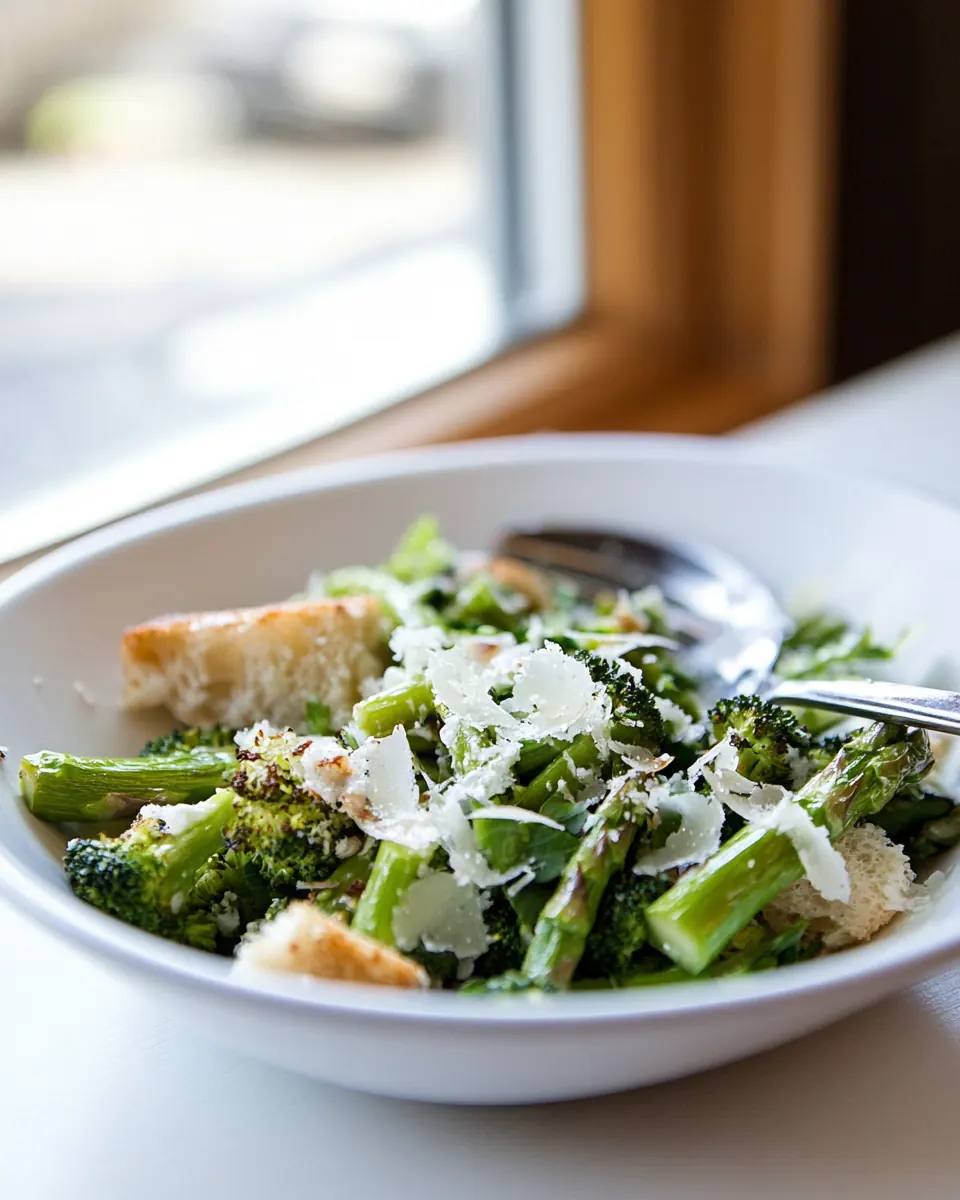
Preheat oven to 400ºF. Toss asparagus and broccoli with a few tablespoons of olive oil; season with salt and pepper. Spread out on a foil-lined baking sheet and bake for 10 to 15 minutes or until tender.: As you wait for the oven to reach temperature, you will hear the faint hum of the elements and feel the kitchen warm a bit, signaling the oven is getting ready to transform the vegetables. Preheating matters because it gives the asparagus and broccoli an immediate hot surface to begin caramelizing, which leads to those browned, slightly crisp edges that make the dish sing. If you skip proper preheating, the vegetables will cook unevenly and likely steam instead of roast. A common mistake is putting the tray in too early, which yields limp, pale veggies rather than crisped, nutty ones.
Toss lettuce with a splash of olive oil and balsamic vinegar. Arrange on plates. Top with roasted veggies and sprinkle with parmesan cheese.: When you coat the vegetables in olive oil , you will notice a glossy sheen and the aroma of oil warming as it hits the hot pan. The oil helps heat travel and encourages the outside to brown while keeping insides tender. I use my hands to ensure everything is evenly coated so each floret and spear gets a little seasoning. If you skimp on oil or salt, the vegetables will brown unevenly and taste flat. Avoid over seasoning at this stage, since you can always adjust later.
Spread out on a foil lined baking sheet and bake for 10 to 15 minutes or until tender: As the vegetables roast, you will hear a faint sizzle and start to smell a toasty, slightly sweet fragrance as the sugars caramelize. Visually, edges will darken into golden to deep brown spots, and the stalks of the asparagus will look a touch translucent. The why here is simple, the heat concentrates flavor and transforms texture, creating contrast between crisp edges and tender cores. A common troubleshooting point is overcrowding the pan, which traps steam and prevents browning, so keep space between pieces for best results.
Toss lettuce with a splash of olive oil and balsamic vinegar: The cool, crisp green leaf lettuce benefits from a light dressing so it does not compete with the roasted vegetables. When you gently toss, you will feel the leaves take on a faint shine and hear a soft rustle as they move. The acidity of the balsamic vinegar brightens the salad and balances the roasted sweetness. The common mistake is overdressing, which wilts the lettuce and masks the delicate roasted flavors, so use just a splash and adjust to taste.
Arrange on plates: Laying out the dressed green leaf lettuce creates a cool, crisp bed for the warm vegetables. The visual contrast between bright green leaves and browned broccoli and asparagus makes the salad feel composed and inviting. Plating matters because it sets expectations for the first bite and encourages even bites of both warm and cool elements. Avoid piling everything in one mound, which can lead to uneven distribution of flavors.
Top with roasted veggies and sprinkle with parmesan cheese: As you place the warm roasted broccoli and asparagus on the lettuce, you will notice steam lifting and a richer, savory perfume filling the air. Freshly grated parmesan cheese melts slightly on warm surfaces, adding creamy umami that ties the salad together. This final touch enhances mouthfeel and balance. A common error is using pregrated product or adding too much cheese, which can overwhelm the brightness of the balsamic vinegar and the vegetal notes of the vegetables.