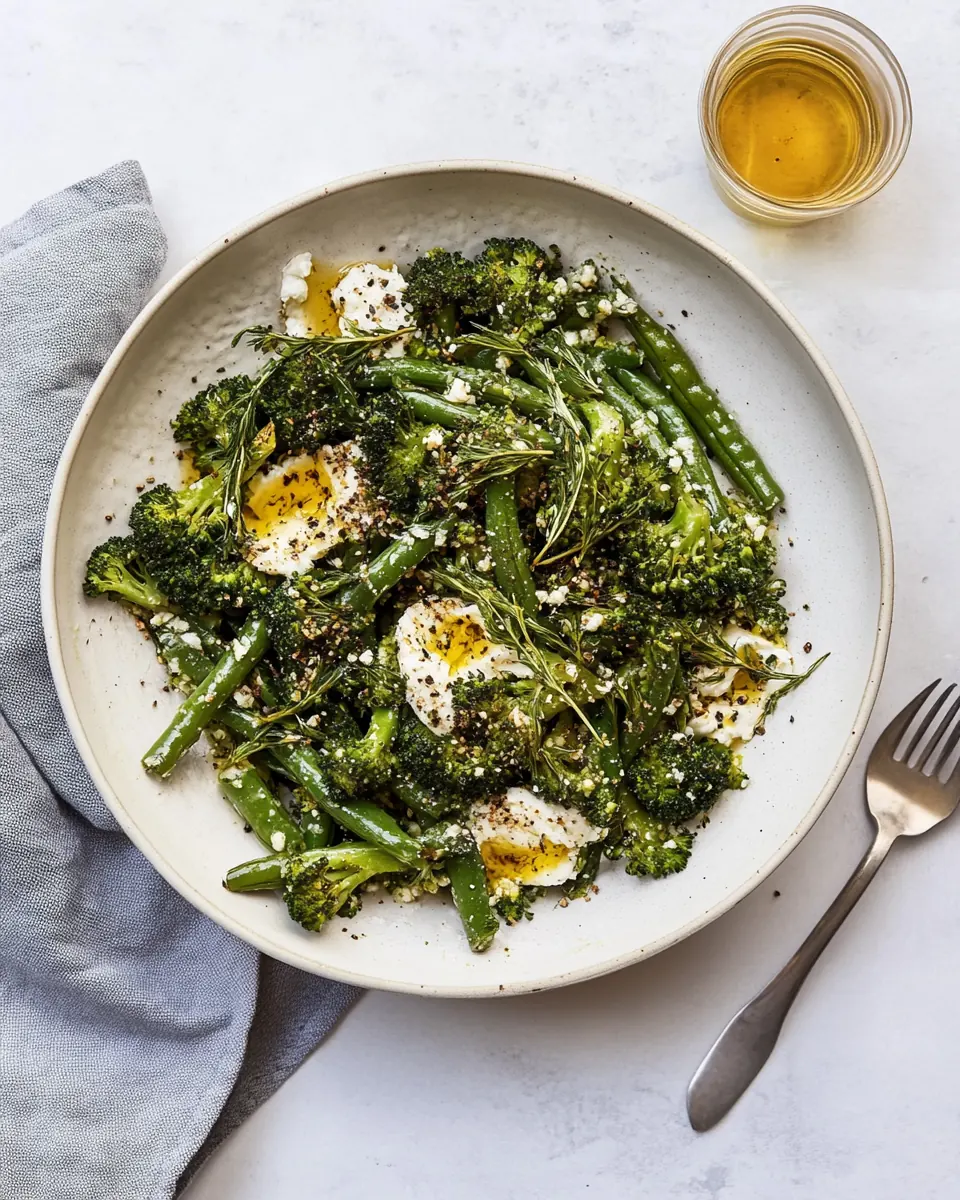
Preheat the oven to 200 C and toss the vegetables in olive oil to lightly coat. Spread these out on one very large roasting sheet or two smaller ones. You don’t want to overcrowd the pan. If you have a fan oven, bake on this setting and roast the vegetables on two trays at the same time. Keep the 2 vegetables separate on the tray as they roast at slightly different times. Sprinkle generously with nutritional yeast, salt and pepper and toss to combine. Use the floret part of the broccoli to wipe up and oil and nutritional yeast on the tray.: Warm air carrying a faint olive oil scent is the first clue the kitchen is ready, the hot oven will coax sugars from the broccoli and green beans producing browned, slightly charred tips that add complexity to each bite. I look for a steady heat so the exterior crisps while the interior stays tender, and I make sure the vegetables are only lightly coated so they roast rather than steam. A common mistake is over oiling which can make them soggy instead of crisp. Keep space on the tray so the surfaces get direct heat and turn golden rather than stewing.
Roast the broccoli for 15 minutes and until they take on char and are starting to crisp then remove from the tray. Continue roasting the beans for a further 4 – 5 minutes. They take closer to 20 minutes.: As the vegetables sizzle against the hot metal you will hear a light crackle and see glossy edges beginning to darken, a sign that caramelization is underway. Laying them out in a single layer prevents crowding, which would trap steam and prevent browning. I prefer two trays if needed, because the airflow is better and everything roasts evenly. Avoid piling them up, that will create limp rather than crisp textures, and flipping halfway helps ensure even color.
While the vegetables are roasting, place the burrata on a serving platter. Butterfly the cheese by cutting halfway down through the middle and then turning your knife to one direction to slice off the top and flap it open. Repeat on the other side. Drizzle the cheese with your very good quality olive oil and spritz it with lemon juice. Season lightly with salt and pepper.: When the pan is crowded, steam builds and the vegetables soften rather than char, losing the desired contrast with the burrata . Give each piece breathing room so edges can caramelize and develop a nutty aroma. If necessary, roast in batches rather than cramming everything together. A trap I see often is trying to save time by crowding the tray, but that risks missing the golden, slightly smoky notes that make the salad sing.
To make the crumb heat the olive oil in a small pan and fry the crumbs until golden. About halfway through add the garlic and allow stir to ensure it mixes with the crumbs and cooks to take the abrasive edge off. Add the lemon zest, salt and pepper.: The circulating heat in a fan oven encourages even browning, so you’ll notice a more uniform color across the trays and quicker development of crispness. I rotate trays front to back halfway through to avoid hot spots and ensure consistent results. Do not skip rotation when your oven has uneven heat, or some pieces may char too much while others remain pale. The goal is a balance of blistered edges and tender flesh.
When the vegetables are a cooked arrange them across the platter on top of the burrata. Scatter over the mint and chopped parsley and fried breadcrumbs.: Watching the trays, you will see the broccoli florets darken sooner than the slim green beans , which is why I roast them separately on the tray. The broccoli will develop crisp charred tips first and can be removed earlier to preserve its texture. A frequent misstep is treating both exactly the same, which can leave the beans limp or the broccoli overdone. Separate placement lets you pull each when it reaches its peak.
Sprinkle generously with nutritional yeast, salt and pepper and toss to combine: When the seasoning hits hot oil on the tray it blooms, releasing savory, toasty aromas that coat the vegetables. Tossing helps distribute those flavors into nooks and crevices, so every bite gets a hit of umami from the nutritional yeast . Watch that you do not over season early on, as flavors concentrate while roasting. If you add too much salt at the start, the vegetables can become overly salty once reduced.
Use the floret part of the broccoli to wipe up and oil and nutritional yeast on the tray: Using small florets to gather up browned bits is a simple trick that traps concentrated flavor, those sticky, toasty fragments cling and create intensely flavored bites. I often scrape gently with a spatula after roasting to capture these caramelized bits for plating. Avoid scraping too hard which can tear delicate pieces; gentle coaxing retains the texture and the flavor pockets.
Roast the broccoli for 15 minutes and until they take on char and are starting to crisp then remove from the tray: When the broccoli edges look darkened and the stems are tender when pierced, you know they are ready, the smell will be nutty and slightly sweet. Removing them at this point preserves a slight bite inside while giving flavorful char on the outside. A common error is leaving them too long which leads to dry, bitter florets. Trust visual cues more than the clock, because oven performance varies.
Continue roasting the beans for a further 4 to 5 minutes: The green beans need a little longer to blister and get those popping browned spots while staying tender crisp, and the added time allows them to caramelize without drying out. You will see their skins wrinkle and darken at the tips, and they will give a satisfying snap when bitten. If overroasted they can become limp and leathery, so check frequently in this short window and remove when they look glossy and blistered.
They take closer to 20 minutes: Overall roasting finishes when both vegetables show developed color and the aroma is rich and toasty, that roughly twenty minutes in a hot oven yields balanced textures. Keep an eye on the trays after the fifteen minute mark, the residual heat often finishes things quickly. Avoid walking away entirely, because the final few minutes are when surfaces go from golden to deeply charred; intervene if you need to prevent excess browning.
While the vegetables are roasting, place the burrata on a serving platter: The creamy center of the burrata benefits from sitting at room temperature so it loosens and becomes silkier, and putting it on a platter early helps it warm gently. Softening the cheese allows it to meld with the hot vegetables and creates that luscious pool of cream you want. A mistake is serving it too cold, which reduces the luxurious mouthfeel and inhibits the flavors from melding with the warm veg.
Butterfly the cheese by cutting halfway down through the middle and then turning your knife to one direction to slice off the top and flap it open: As you open the burrata the soft interior reveals itself, and the visual makes the dish feel generous and inviting, with creamy strands spilling out over the plate. This technique encourages guests to combine cheese and vegetables in each bite. Be gentle cutting so you do not crush the creamy center; a delicate hand preserves both form and texture.
Drizzle the cheese with your very good quality olive oil and spritz it with lemon juice: The glossy olive oil and bright lemon lift the creamy burrata , adding fruitiness and a citrus spark that balances fat. A little acid brightens every component and helps the cheese feel lighter on the palate. Avoid overdoing the lemon which can overwhelm the subtle dairy sweetness of the burrata .
Season lightly with salt and pepper: The final seasoning on the burrata should be restrained because the cheese is already rich, just a light dusting enhances its flavor without overpowering the vegetables. Taste as you go to find the right balance, since salt levels can change after you add the roasted veg. A common fault is over salting early, which cannot be undone once integrated.
To make the crumb heat the olive oil in a small pan and fry the crumbs until golden: As the breadcrumbs hit hot olive oil they will sizzle and emit a toasty, warm aroma, turning a confident golden brown that contributes crunch and nutty flavor. Keep the heat moderate so they color evenly, stirring often to avoid hot spots. Burned crumbs will taste bitter, so remove them the moment they reach a golden hue and transfer to a cool plate to stop cooking.
About halfway through add the garlic and allow stir to ensure it mixes with the crumbs and cooks to take the abrasive edge off: Adding crushed garlic midway softens its raw sharpness and infuses the crumbs with savory depth, releasing fragrant steam that hints at roasted garlic. Stir so the garlic cooks gently and becomes tender rather than charred. The pitfall is adding garlic too early which will burn and taste acrid, so timing matters for a mellow, aromatic crumb.
Add the lemon zest, salt and pepper: Zest brings concentrated citrus oils into the crumb, making it lively and aromatic, while salt amplifies taste and pepper adds a subtle warmth. Tossing these in at the end preserves the bright aromatic quality of the zest. Be mindful of salt levels if you have already salted the veg earlier, adjust to taste to avoid over seasoning.
When the vegetables are a cooked arrange them across the platter on top of the burrata: As you place warm broccoli and green beans over the soft burrata you will see the cheese melt slightly and mingle with roasted oil, creating ribbons of cream that coat the veg. This assembly creates a mosaic of textures and colors, and the warmth brings everything together. Avoid piling too high which can smother the cheese; aim for an even, artful scatter.
Scatter over the mint and chopped parsley and fried breadcrumbs: The finishing herbs add a green lift while the golden crumbs supply the final crunchy contrast, and the aroma of torn mint is a cool counterpoint to the warm roasted notes. I finish with a few extra lemon wedges for anyone wanting more brightness. A misstep would be adding the crumbs too early, they will lose crunch if they sit on warm veg for too long, so add them at the last moment.