Preheat the oven to 180 C/350 F and grease a large baking sheet.: The room fills with a faint warmth as the oven comes up to temperature, and that initial heat is crucial for encouraging immediate browning when the vegetables hit the pan. Greasing the sheet prevents sticking and helps the vegetables develop crisp edges that contrast with a tender interior. You'll notice a slight scent shift in the kitchen as the oven nears temperature, a reassuring signal that it is ready. Why this matters, the consistent oven heat ensures even roasting so all pieces cook at the same rate. A common mistake is skipping preheating, which can lead to unevenly roasted vegetables that steam rather than caramelize.
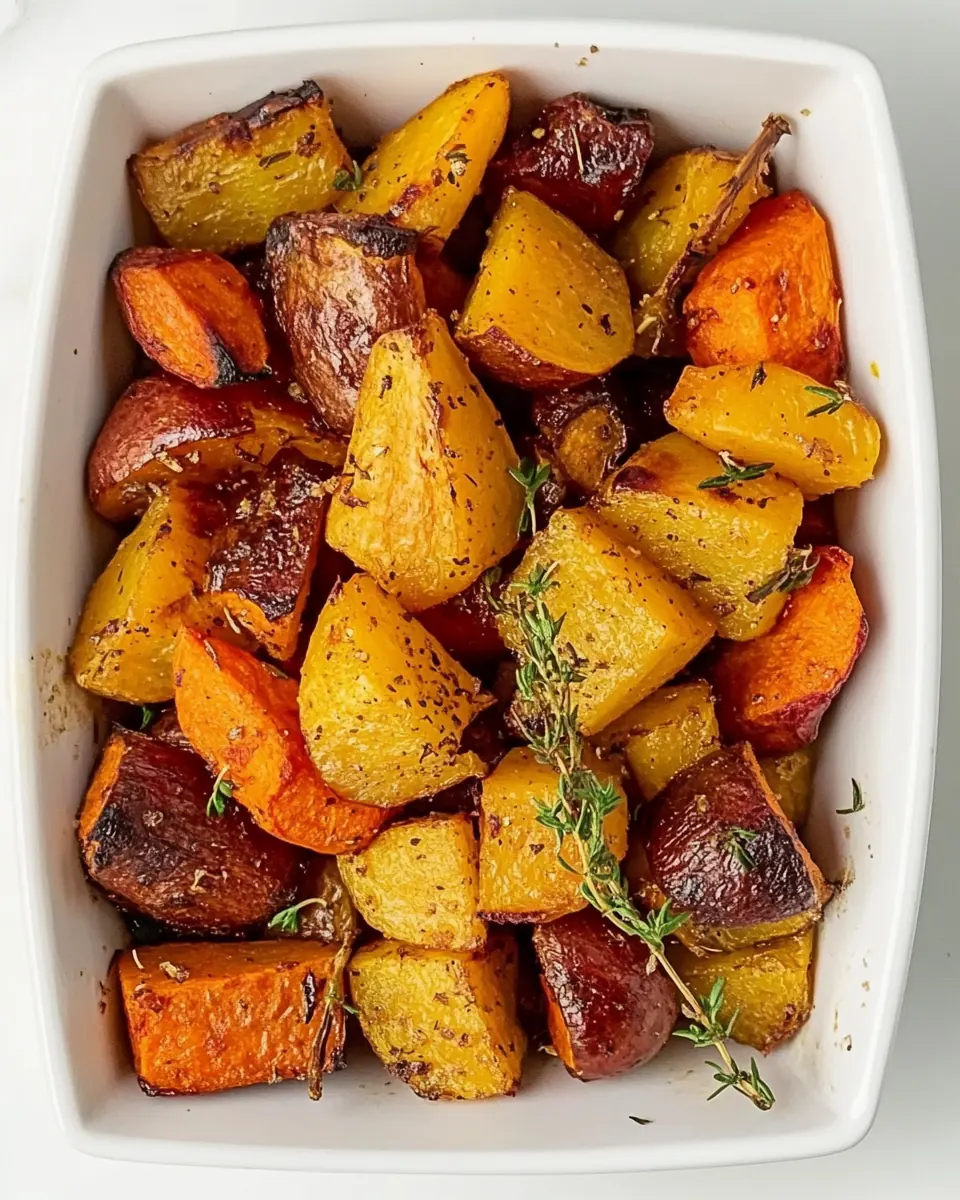
In a large mixing bowl, add the chopped potatoes, sweet potatoes, beetroot, and carrots.: As you place the cut vegetables into the bowl, enjoy the variety of colors and textures, from the orange of carrots to the deep red of beetroot . The visual contrast helps you gauge evenness of chopping, which directly affects cooking consistency. This step matters because grouping the pieces together makes seasoning and tossing easier, ensuring every piece gets coated. A frequent misstep is mixing unevenly sized chunks, which results in some vegetables overcooking while others stay hard.
Drizzle with olive oil. Add the salt, pepper, and Italian seasoning. Using your hands, mix very well to ensure it's fully coated.: When you drizzle the olive oil and sprinkle the seasonings, inhale the herbal aroma as the dried herbs wake up. Massaging the oil and spices into the vegetables ensures an even film that promotes uniform caramelization and flavor penetration. You should feel the pieces becoming glossy, a sign they are evenly coated. This tactile step matters a lot, because thorough coating prevents dry spots and helps the edges crisp. One mistake to avoid is under-mixing, which leaves some pieces under-seasoned and others overloaded.
Transfer the vegetables to the baking sheet and roast for 35 minutes, flipping halfway through.: As the vegetables roast, listen for a gentle crackle and look for edges turning golden and slightly charred; that is where the flavor concentrates. The smell will turn richer and sweeter as natural sugars caramelize, a cue that the pan is transforming. Flipping halfway ensures each side gets direct heat and browns evenly, producing a mosaic of textures. This timing produces tender interiors while preserving crisp exteriors. A common error is crowding the pan, which causes steaming rather than roasting, so spread the vegetables in a single layer with space between pieces.