Preheat the oven to 400°F. Set out a large baking sheet, lining it with parchment paper if you like.: Warm air that fills the kitchen will smell faintly of heat and anticipation, and a properly heated oven is essential for good caramelization on the sweet potato and blistering on the brussels sprouts . You should hear nothing from the oven itself, but when the vegetables hit the tray you will soon notice sizzles as moisture starts to evaporate. The reason this matters is even heat ensures even browning, and if your oven is not hot enough the vegetables will steam and limp rather than crisp. A common mistake is putting the tray in before the oven reaches 400°F, which leads to uneven roasting and less flavor development.
Make the hemp seed ranch dressing. In a blender, combine the hemp seeds, lemon juice, water, olive oil, dijon, garlic powder, nutritional yeast, salt, and pepper. Whizz the mixture on high until you have a smooth and creamy texture. Scrape the dressing into a small bowl and stir in the green onions and dill. Cover the dressing and store in the refrigerator.: The blender whirs to life and the hemp seeds break down into a pale, creamy emulsion, releasing a gentle, nutty aroma. The lemon juice brightens the mixture, and the olive oil adds a glossy sheen. When you scrape the dressing into a bowl and stir in the minced green onion and chopped dill , you will notice fresh herbal notes that cut through the richness. This technique matters because a well emulsified dressing coats vegetables, giving each bite a creamy finish without pooling. A frequent error is skimping on blending time, which can leave the dressing grainy instead of silky.
Place the diced sweet potatoes onto one end of the baking sheet. Toss the sweet potatoes with 1 teaspoon of the olive oil, some salt and pepper. Slide the sheet into the oven and set your timer for 15 minutes.: As you spread the cubed sweet potato in a single layer you should hear a soft scrape of the spoon and see glossy, oiled surfaces that glint under light. Tossing them with a teaspoon of olive oil , salt, and pepper adds a thin film that aids caramelization and encourages edges to brown. Slide the sheet into the oven and set the timer for 15 minutes, and soon those first sugars will begin to darken and smell gently sweet in the air. The why here is simple, initial roasting concentrates sugars and gives the cubes a tender interior with crisp edges. Avoid crowding the tray because cramped pieces steam instead of roast.
At the 15 minute mark, remove the baking sheet. In a small bowl, toss the tempeh pieces with another teaspoon of olive oil, some salt and pepper. Arrange the tempeh pieces in the middle segment of the baking sheet. Lightly toss the sweet potatoes. Slide the sheet back into the oven and set your timer for another 15 minutes.: When you briefly oil the tempeh pieces and season them they take on a sheen and start to crisp from the heat rather than stick. Arrange them on the middle segment of the baking sheet so when they cook they develop a nutty, toasted exterior. Lightly tossing the sweet potatoes at this point redistributes heat and prevents one side from over browning. This staged addition matters because the tempeh needs enough time in the oven to firm up but not so long that it becomes dry. A common pitfall is placing everything on the sheet at once which can result in uneven doneness.
At the 15 minute mark, remove the baking sheet. Throw the brussels sprouts into the same small bowl that you used for the tempeh. Toss the brussels sprouts with the remaining olive oil, salt, and pepper. Scatter them in a single layer on the remaining segment of the baking sheet.: The brussels sprouts benefit from the last segment of roasting time, where they develop blistered, deep brown edges and a faintly nutty aroma. Quartered sprouts should sit cut side down to maximize browning and create that satisfying crunch. When you toss them with the remaining tablespoon of olive oil , salt, and pepper, the oil helps conduct heat and prevents burning while encouraging crisping. This timing matters because sprouts cook faster than dense root vegetables, and adding them later prevents overcooking. Avoid cutting them unevenly, otherwise some pieces will char while others stay raw.
Flip the tempeh pieces over and brush them with the barbecue sauce. Slide the sheet back into the oven for 15 more minutes. Once brussels sprouts are lightly browned, remove baking sheet from the oven.: When you turn the tempeh you will notice a toasty scent and a change in color to a deeper golden brown. Brushing on the barbecue sauce creates a glossy, sticky coating that caramelizes in the heat, adding smoky, sweet notes to the bite. This finishing glaze is why the tempeh reads like a savory, meaty center in the bowl. The sensory cue to look for is a sticky, bubbling edge on the sauce after it returns to the oven. Common mistakes include applying too much sauce which can burn, or brushing it on too early which prevents proper browning underneath.
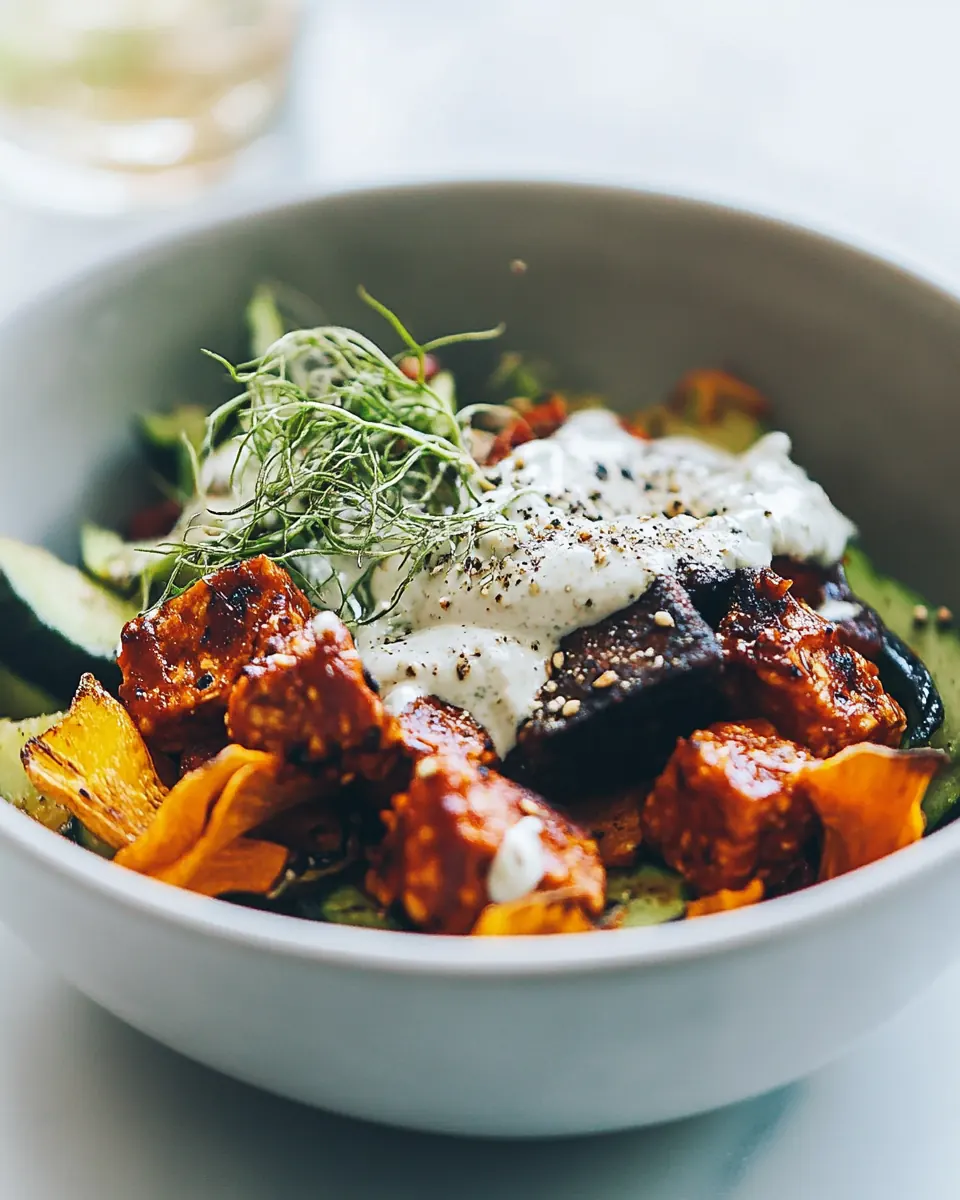
Transfer sweet potatoes, tempeh, and brussels sprouts to a serving bowl. Drizzle some of the hemp seed ranch dressing over top and enjoy.: As the tray returns to the oven you will hear a low, steady sizzle from the vegetables releasing steam. The brussels sprouts should show amber spots and crispy tips, while the sweet potato will be tender when pierced with a fork. The aroma in your kitchen will shift to a mix of roasted sweetness and smoky glaze. This final bake is crucial for textural harmony; removing the sheet too early leaves vegetables undercooked, while overbaking can dry the tempeh and darken the flavors too far.
Transfer sweet potatoes tempeh and brussels sprouts to a serving bowl and drizzle with dressing: When you assemble the bowl, the sound is quiet and deliberate as pieces slide into place, and the visual contrast of golden cubes, glazed tempeh , and charred sprouts is striking. Drizzling the pale green hemp seed ranch across the top ties flavors together and adds a cool, creamy counterpoint to roasted notes. Serving warm maximizes the interplay of textures and temperature. One mistake to avoid is overdressing at the outset; start with a light drizzle and add more if needed so the vegetables retain their crisp edges.