Roasted Winter Bowl with BBQ Tempeh Hemp Seed Ranch
Roasted Winter Bowl with BBQ Tempeh Hemp Seed Ranch is one of those meals I reach for on chilly evenings when I want something nourishing, textured, and honest. The first time I made it I remember juggling a tray of hot vegetables while the smell of sweet potato caramelizing filled the kitchen, and that smoky hint from the barbecue sauce made the whole apartment feel like a cozy café. That memory stuck, and now this bowl is my go to for nights when I want comfort without heaviness.
Every time I assemble a bowl I think about balance. I love the chewy, nutty bite of tempeh against the crisp char of brussels sprouts, and the creamy herb brightness of the hemp seed ranch cools and ties everything together. There is a rhythm to roasting in stages, and once you find it you can relax, pour a cup of tea, and let the oven do most of the work. I often tell friends this is a great introduction to plant forward meals because it feels substantial yet simple to pull off.
What keeps me coming back is how forgiving the recipe is. Swap a vegetable for another root, use a store bought barbecue sauce you love, or double the dressing to have extra for lunches. I enjoy plating this bowl with a drizzle of that pale green ranch, and every time it invites the same satisfying crunch, tenderness, and tang. This is the kind of recipe I rely on when I want to serve something pretty with minimal fuss, and it always gets compliments around my table.
Recipe Snapshot
1 hr 5 mins
20 mins
45 mins
Medium
450 kcal
American
Vegan, Gluten-Free
Dinner
Blender
Why This Roasted Winter Bowl with BBQ Tempeh Hemp Seed Ranch Is So Good
Layered texture that feels like a warm hug
I adore how Roasted Winter Bowl with BBQ Tempeh Hemp Seed Ranch brings together crisp, soft, and chewy elements. The combination of roasted sweet potato, blistered brussels sprouts, and pan ready tempeh means every bite is interesting. Textural contrast makes the bowl satisfying without heavy sauces, and that matters to me when I want a meal that feels complete and energizing.
Bright, creamy dressing without dairy
The hemp seed ranch is a revelation. It gives a velvety mouthfeel, a subtle nutty undertone, and a fresh herbal lift from the dill and green onion. I like that it’s naturally rich, so the dressing clings to roasted vegetables instead of running off. For folks who avoid dairy, this is a delicious workaround that still feels indulgent.
Simple, staged roasting for maximum flavor
I love the stepwise oven approach because it lets each ingredient finish at its peak. Starting the sweet potato first builds caramelized sugars, adding the tempeh mid bake keeps it chewy not dried, and finishing the brussels sprouts last ensures they crisp up. This measured strategy yields concentrated, roasted flavor, and I’ve found it creates fewer mistakes than crowding the sheet pan all at once.
Flexible and forgiving for weeknights
This bowl is ridiculously adaptable. If you only have one baking sheet, it still works. If you prefer a spicier barbecue sauce, use it. I frequently tweak seasoning levels depending on mood, and the recipe remains resilient. That practical versatility is why it’s become a weekday staple in my kitchen.
Wholesome, plant forward satisfaction
Finally, I appreciate how filling this dish is while being plant based. The combination of hemps seeds in the dressing and protein forward tempeh keeps you full for hours. It’s a nourishing bowl I happily pack for leftovers, and it feels like a small everyday celebration of good food.
What Goes Into Roasted Winter Bowl with BBQ Tempeh Hemp Seed Ranch
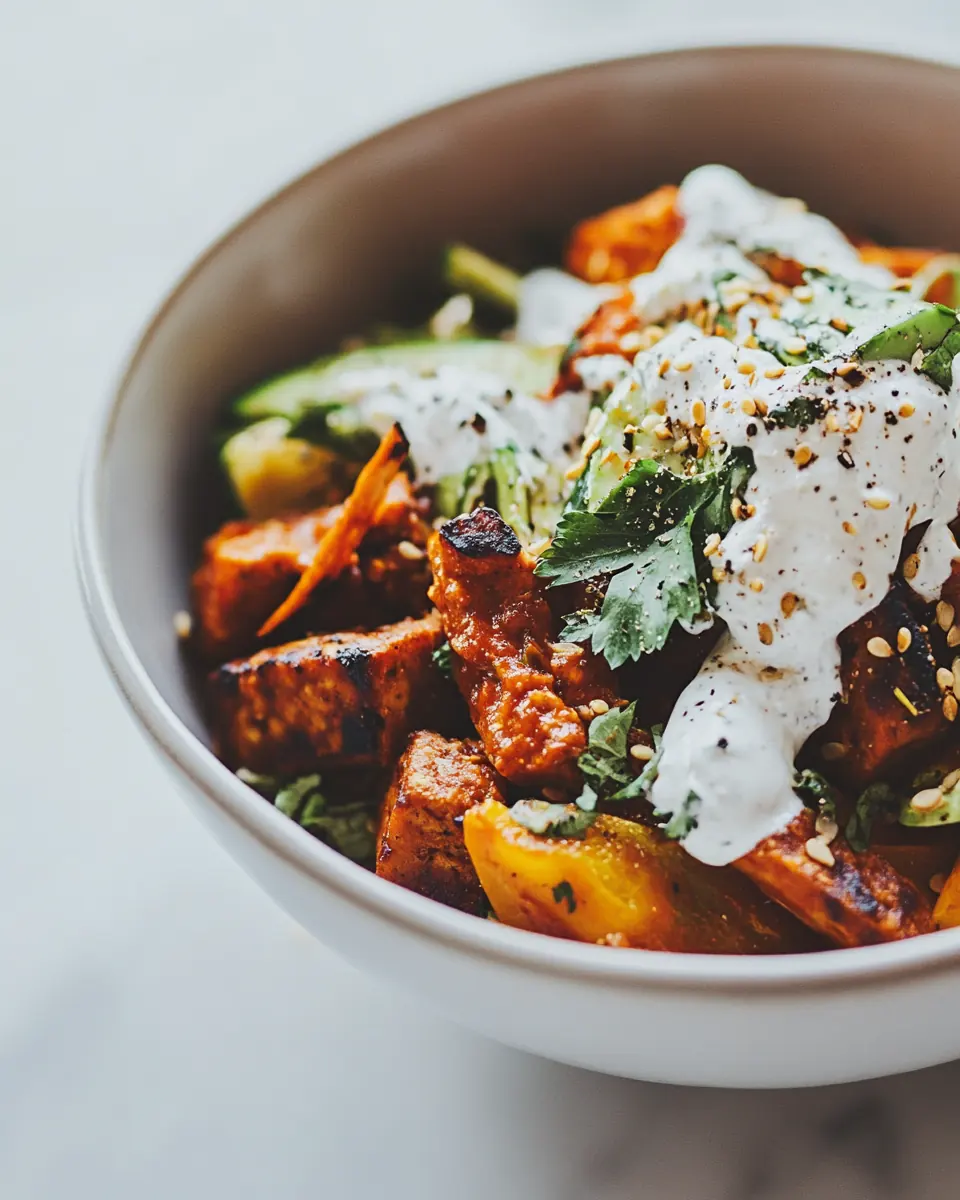
These ingredients were chosen to build layers of flavor and texture. The star players are the roasted vegetables that bring caramelized sweetness and char, the tempeh which adds nuttiness and protein, and the hemp seed ranch which provides a creamy, herbaceous finish. Each item has a specific role, from adding body to brightening the bowl. Together they create harmony without requiring fancy shopping trips.
- 1/2 cup raw + hulled hemp seeds: Provide a creamy, nutty base for the hemp seed ranch that contributes richness and a smooth texture when blended; add gradually to reach desired thickness while keeping the flavor mild and slightly earthy.
- 1/4 cup fresh lemon juice (from approximately 1 lemon): Brighten the ranch dressing with a sharp, acidic note that balances the hemp seeds' fattiness and helps preserve freshness; squeeze just before blending for peak citrus aroma and brightness.
- 1/4 cup water: Thin the hemp seed ranch and help emulsify the dressing for a silky pourable consistency; adjust quantity to achieve desired thickness without diluting flavor.
- 1 tablespoon olive oil: Add a fruity, savory fat to the dressing and to roasted vegetables, enhancing mouthfeel and carrying other flavors; use as directed for roasting and in the dressing for extra richness.
- 1 teaspoon dijon mustard: Stabilize the emulsion in the dressing and contribute a subtle tang that enhances savory depth; whisk thoroughly to ensure even distribution and avoid clumping.
- 1 teaspoon garlic powder: Impart a mellow, savory garlic flavor to the ranch without the bite of fresh garlic, ensuring consistent shelf-stable seasoning and easy blending into the dressing.
- 1/4 teaspoon nutritional yeast: Lend a subtle umami and cheesy undertone to the vegan ranch, boosting savory complexity while keeping the dressing dairy-free and slightly savory.
- 1 green onion, finely minced (approximately 1/4 cup): Provide a fresh, mild onion note and slight crunch when minced finely, delivering both flavor and visual flecks to the ranch; add near the end to preserve color and crispness.
- 1 sprig of dill, chopped (approximately 1 tablespoon): Offer a bright, herbal lift with delicate anise-like flavor that complements lemon and hemp, enhancing overall freshness; chop finely to distribute evenly in the dressing.
- sea salt and ground black pepper, to taste: Season the dressing and roasted vegetables to taste, balancing salt and pepper to enhance flavors; add sparingly at first and adjust after tasting the finished bowl components.
- 1 small-medium sweet potato, (about 3/4 lb or 330 grams) peeled + diced into 1/2 inch cubes: Supply a sweet, starchy base for the roasted bowl that caramelizes when roasted, offering tender, creamy interior bites; dice uniformly to ensure even cooking and browning.
- 1 tablespoon olive oil, divided: Moisten and aid in roasting and sautéing while contributing a subtle fruitiness that enhances caramelization; divide usage as specified for dressing and roasting needs.
- 1/3 of a block of tempeh, from a standard 1/2 lb or 250 gram block, cut into 2-inch pieces: Provide firm, nutty-textured protein that absorbs barbecue sauce well when cut into pieces and cooked, adding chew and savory depth to the bowl; steam or steam-fry first if desired for texture.
- 2 tablespoons barbecue sauce of choice (see notes): Coat the tempeh with concentrated sweet-smoky flavor, creating a glossy, savory finish that complements roasted vegetables and ranch; choose a sauce you enjoy and use sparingly to avoid overpowering.
- 7 8 brussels sprouts, trimmed and quartered: Offer a crisp, slightly bitter green component that caramelizes at the cut edges when roasted, contributing texture contrast and earthy flavor to the bowl.
The Method for Roasted Winter Bowl with BBQ Tempeh Hemp Seed Ranch
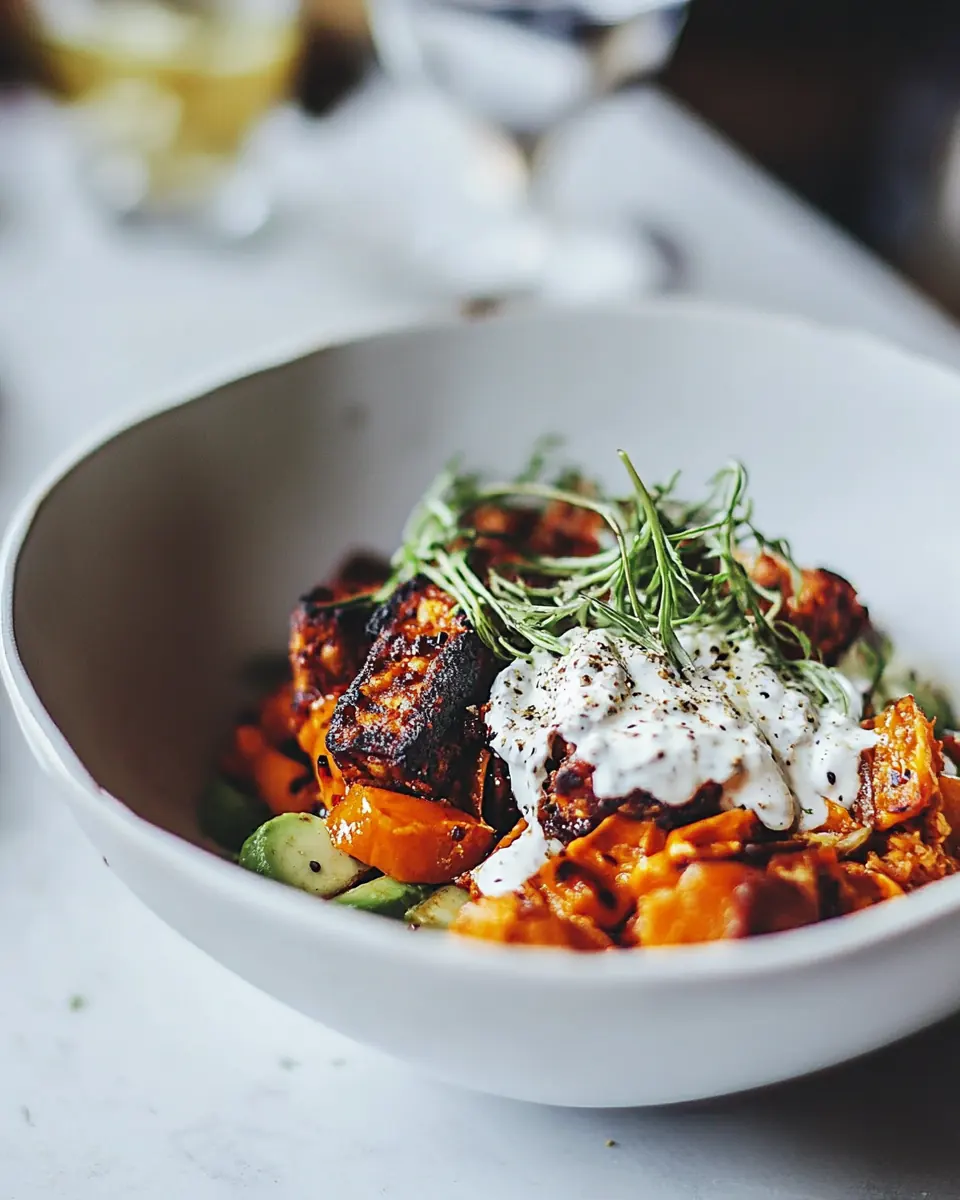
Working through these steps is like conducting a small orchestra, each part entering at just the right time. Take your time with the dressing first so it’s chilled and bright when the roasted vegetables finish. Keep the oven rhythm going and you will be rewarded with perfectly timed textures and concentrated flavors.
- Preheat the oven to 400°F. Set out a large baking sheet, lining it with parchment paper if you like.: Warm air that fills the kitchen will smell faintly of heat and anticipation, and a properly heated oven is essential for good caramelization on the sweet potato and blistering on the brussels sprouts . You should hear nothing from the oven itself, but when the vegetables hit the tray you will soon notice sizzles as moisture starts to evaporate. The reason this matters is even heat ensures even browning, and if your oven is not hot enough the vegetables will steam and limp rather than crisp. A common mistake is putting the tray in before the oven reaches 400°F, which leads to uneven roasting and less flavor development.
- Make the hemp seed ranch dressing. In a blender, combine the hemp seeds, lemon juice, water, olive oil, dijon, garlic powder, nutritional yeast, salt, and pepper. Whizz the mixture on high until you have a smooth and creamy texture. Scrape the dressing into a small bowl and stir in the green onions and dill. Cover the dressing and store in the refrigerator.: The blender whirs to life and the hemp seeds break down into a pale, creamy emulsion, releasing a gentle, nutty aroma. The lemon juice brightens the mixture, and the olive oil adds a glossy sheen. When you scrape the dressing into a bowl and stir in the minced green onion and chopped dill , you will notice fresh herbal notes that cut through the richness. This technique matters because a well emulsified dressing coats vegetables, giving each bite a creamy finish without pooling. A frequent error is skimping on blending time, which can leave the dressing grainy instead of silky.
- Place the diced sweet potatoes onto one end of the baking sheet. Toss the sweet potatoes with 1 teaspoon of the olive oil, some salt and pepper. Slide the sheet into the oven and set your timer for 15 minutes.: As you spread the cubed sweet potato in a single layer you should hear a soft scrape of the spoon and see glossy, oiled surfaces that glint under light. Tossing them with a teaspoon of olive oil , salt, and pepper adds a thin film that aids caramelization and encourages edges to brown. Slide the sheet into the oven and set the timer for 15 minutes, and soon those first sugars will begin to darken and smell gently sweet in the air. The why here is simple, initial roasting concentrates sugars and gives the cubes a tender interior with crisp edges. Avoid crowding the tray because cramped pieces steam instead of roast.
- At the 15 minute mark, remove the baking sheet. In a small bowl, toss the tempeh pieces with another teaspoon of olive oil, some salt and pepper. Arrange the tempeh pieces in the middle segment of the baking sheet. Lightly toss the sweet potatoes. Slide the sheet back into the oven and set your timer for another 15 minutes.: When you briefly oil the tempeh pieces and season them they take on a sheen and start to crisp from the heat rather than stick. Arrange them on the middle segment of the baking sheet so when they cook they develop a nutty, toasted exterior. Lightly tossing the sweet potatoes at this point redistributes heat and prevents one side from over browning. This staged addition matters because the tempeh needs enough time in the oven to firm up but not so long that it becomes dry. A common pitfall is placing everything on the sheet at once which can result in uneven doneness.
- At the 15 minute mark, remove the baking sheet. Throw the brussels sprouts into the same small bowl that you used for the tempeh. Toss the brussels sprouts with the remaining olive oil, salt, and pepper. Scatter them in a single layer on the remaining segment of the baking sheet.: The brussels sprouts benefit from the last segment of roasting time, where they develop blistered, deep brown edges and a faintly nutty aroma. Quartered sprouts should sit cut side down to maximize browning and create that satisfying crunch. When you toss them with the remaining tablespoon of olive oil , salt, and pepper, the oil helps conduct heat and prevents burning while encouraging crisping. This timing matters because sprouts cook faster than dense root vegetables, and adding them later prevents overcooking. Avoid cutting them unevenly, otherwise some pieces will char while others stay raw.
- Flip the tempeh pieces over and brush them with the barbecue sauce. Slide the sheet back into the oven for 15 more minutes. Once brussels sprouts are lightly browned, remove baking sheet from the oven.: When you turn the tempeh you will notice a toasty scent and a change in color to a deeper golden brown. Brushing on the barbecue sauce creates a glossy, sticky coating that caramelizes in the heat, adding smoky, sweet notes to the bite. This finishing glaze is why the tempeh reads like a savory, meaty center in the bowl. The sensory cue to look for is a sticky, bubbling edge on the sauce after it returns to the oven. Common mistakes include applying too much sauce which can burn, or brushing it on too early which prevents proper browning underneath.
- Transfer sweet potatoes, tempeh, and brussels sprouts to a serving bowl. Drizzle some of the hemp seed ranch dressing over top and enjoy.: As the tray returns to the oven you will hear a low, steady sizzle from the vegetables releasing steam. The brussels sprouts should show amber spots and crispy tips, while the sweet potato will be tender when pierced with a fork. The aroma in your kitchen will shift to a mix of roasted sweetness and smoky glaze. This final bake is crucial for textural harmony; removing the sheet too early leaves vegetables undercooked, while overbaking can dry the tempeh and darken the flavors too far.
- Transfer sweet potatoes tempeh and brussels sprouts to a serving bowl and drizzle with dressing: When you assemble the bowl, the sound is quiet and deliberate as pieces slide into place, and the visual contrast of golden cubes, glazed tempeh , and charred sprouts is striking. Drizzling the pale green hemp seed ranch across the top ties flavors together and adds a cool, creamy counterpoint to roasted notes. Serving warm maximizes the interplay of textures and temperature. One mistake to avoid is overdressing at the outset; start with a light drizzle and add more if needed so the vegetables retain their crisp edges.
Make It Your Own
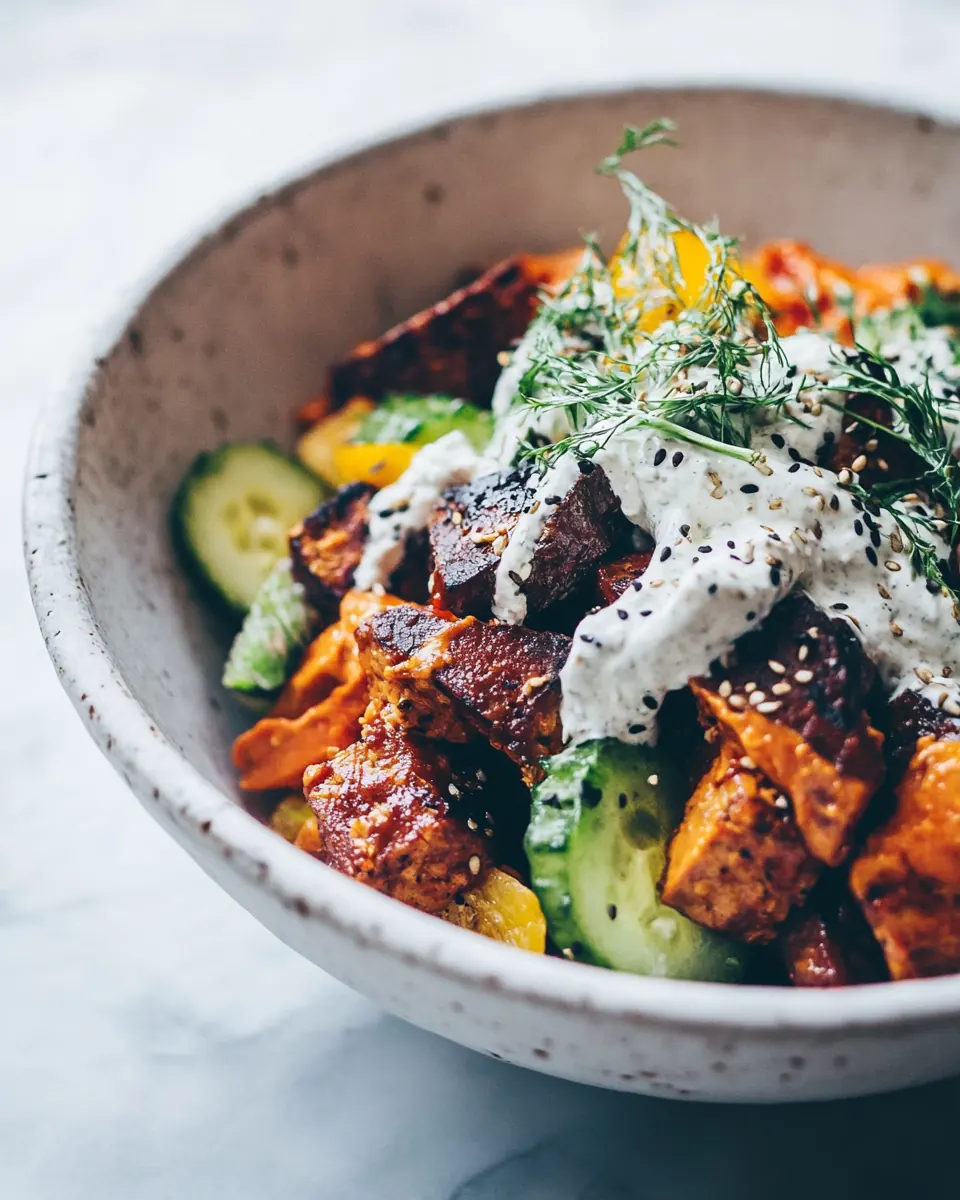
The framework of this bowl invites personalization while keeping the core texture and flavor balance intact. Below are tips to help you customize, scale, and simplify without losing what makes this dish satisfying.
- Choose your barbecue sauce wisely. A smoky sweet sauce leans comfort forward, while a tangier style brightens the tempeh. Start with two tablespoons and taste so the glaze enhances but does not overwhelm the bowl.
- Reserve extra dressing. Make a little more hemp seed ranch than the recipe calls for so you can add a splash to leftovers or use it as a dip for crisp vegetables.
- Roast on a single sheet or separate trays. If your oven runs hot, use two trays to avoid crowding; the goal is single layers for even browning and crisp edges.
- Prep ingredients in advance. Dice the sweet potato and trim the brussels sprouts the night before to make assembly quick on busy evenings.
- Adjust salt thoughtfully. Season lightly before roasting and finish with a pinch more if needed; roasted vegetables concentrate saltiness as they reduce.
Best Served With
This bowl is flexible for many occasions. It works as a warming solo dinner, a centerpiece for a casual lunch spread, or as part of a seasonal menu when winter produce shines. Layer in complementary sides to make a fuller meal or keep it simple for an easy weeknight plate.
- Serve warm on a casual weeknight. Plate the bowl immediately after roasting so the contrast of warm vegetables and cool hemp seed ranch is preserved for a cozy, satisfying dinner.
- Pack for lunches. Keep the dressing separate to maintain texture, then drizzle before eating. This makes a sturdy, nutritious midday meal that reheats well in a microwave or toaster oven.
- Pair with a simple grain. Add a scoop of cooked quinoa or brown rice to bulk the bowl for heartier appetites and to soak up extra dressing or glaze.
- Occasion ideas. This is a welcome option for holiday buffets or potlucks where guests might want plant forward mains that still feel indulgent and composed.
- Seasonal pairings. Lean into root vegetables and hearty greens in winter for complementary flavors, and lighten the bowl with lemon forward dressings in spring when greens are brighter.
- Storage tips. Store components separately in airtight containers, dressing in its own jar, and consume within three days for best texture and flavor retention.
FAQ
Conclusion
This Roasted Winter Bowl with BBQ Tempeh Hemp Seed Ranch shines because it balances roasted sweetness, smoky glaze, and a creamy, herbaceous dressing in one satisfying plate. I encourage you to give it a try on a cold evening when you want a filling, plant forward meal that still feels special. The layered textures and bold contrasts make it easy to love, and once you taste that sticky glazed tempeh with the cooling hemp seed ranch you will likely find yourself making it again and again.
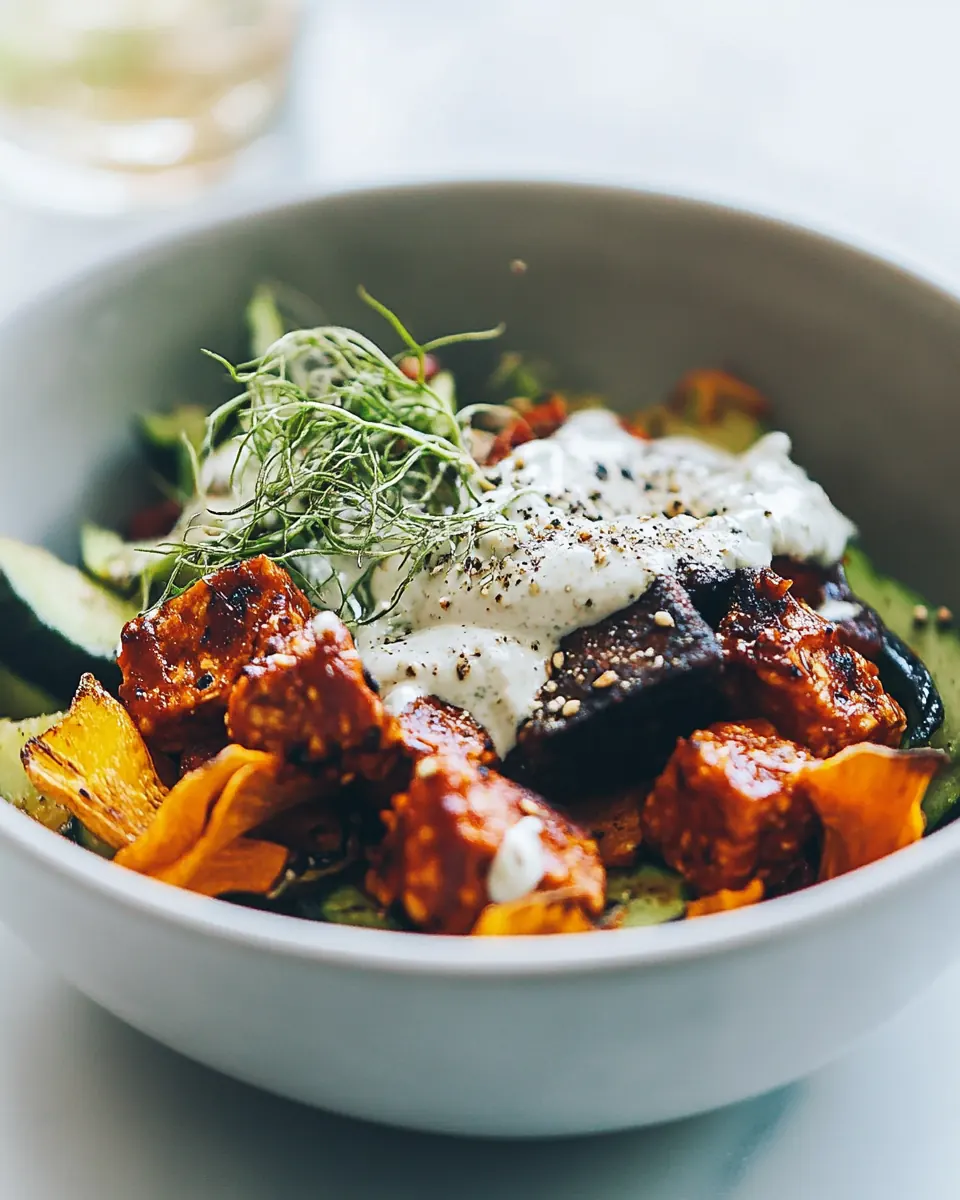
Roasted Winter Bowl with BBQ Tempeh Hemp Seed Ranch
Ingredients
Equipment
Method
- Preheat the oven to 400°F. Set out a large baking sheet, lining it with parchment paper if you like.: Warm air that fills the kitchen will smell faintly of heat and anticipation, and a properly heated oven is essential for good caramelization on the sweet potato and blistering on the brussels sprouts . You should hear nothing from the oven itself, but when the vegetables hit the tray you will soon notice sizzles as moisture starts to evaporate. The reason this matters is even heat ensures even browning, and if your oven is not hot enough the vegetables will steam and limp rather than crisp. A common mistake is putting the tray in before the oven reaches 400°F, which leads to uneven roasting and less flavor development.
- Make the hemp seed ranch dressing. In a blender, combine the hemp seeds, lemon juice, water, olive oil, dijon, garlic powder, nutritional yeast, salt, and pepper. Whizz the mixture on high until you have a smooth and creamy texture. Scrape the dressing into a small bowl and stir in the green onions and dill. Cover the dressing and store in the refrigerator.: The blender whirs to life and the hemp seeds break down into a pale, creamy emulsion, releasing a gentle, nutty aroma. The lemon juice brightens the mixture, and the olive oil adds a glossy sheen. When you scrape the dressing into a bowl and stir in the minced green onion and chopped dill , you will notice fresh herbal notes that cut through the richness. This technique matters because a well emulsified dressing coats vegetables, giving each bite a creamy finish without pooling. A frequent error is skimping on blending time, which can leave the dressing grainy instead of silky.
- Place the diced sweet potatoes onto one end of the baking sheet. Toss the sweet potatoes with 1 teaspoon of the olive oil, some salt and pepper. Slide the sheet into the oven and set your timer for 15 minutes.: As you spread the cubed sweet potato in a single layer you should hear a soft scrape of the spoon and see glossy, oiled surfaces that glint under light. Tossing them with a teaspoon of olive oil , salt, and pepper adds a thin film that aids caramelization and encourages edges to brown. Slide the sheet into the oven and set the timer for 15 minutes, and soon those first sugars will begin to darken and smell gently sweet in the air. The why here is simple, initial roasting concentrates sugars and gives the cubes a tender interior with crisp edges. Avoid crowding the tray because cramped pieces steam instead of roast.
- At the 15 minute mark, remove the baking sheet. In a small bowl, toss the tempeh pieces with another teaspoon of olive oil, some salt and pepper. Arrange the tempeh pieces in the middle segment of the baking sheet. Lightly toss the sweet potatoes. Slide the sheet back into the oven and set your timer for another 15 minutes.: When you briefly oil the tempeh pieces and season them they take on a sheen and start to crisp from the heat rather than stick. Arrange them on the middle segment of the baking sheet so when they cook they develop a nutty, toasted exterior. Lightly tossing the sweet potatoes at this point redistributes heat and prevents one side from over browning. This staged addition matters because the tempeh needs enough time in the oven to firm up but not so long that it becomes dry. A common pitfall is placing everything on the sheet at once which can result in uneven doneness.
- At the 15 minute mark, remove the baking sheet. Throw the brussels sprouts into the same small bowl that you used for the tempeh. Toss the brussels sprouts with the remaining olive oil, salt, and pepper. Scatter them in a single layer on the remaining segment of the baking sheet.: The brussels sprouts benefit from the last segment of roasting time, where they develop blistered, deep brown edges and a faintly nutty aroma. Quartered sprouts should sit cut side down to maximize browning and create that satisfying crunch. When you toss them with the remaining tablespoon of olive oil , salt, and pepper, the oil helps conduct heat and prevents burning while encouraging crisping. This timing matters because sprouts cook faster than dense root vegetables, and adding them later prevents overcooking. Avoid cutting them unevenly, otherwise some pieces will char while others stay raw.
- Flip the tempeh pieces over and brush them with the barbecue sauce. Slide the sheet back into the oven for 15 more minutes. Once brussels sprouts are lightly browned, remove baking sheet from the oven.: When you turn the tempeh you will notice a toasty scent and a change in color to a deeper golden brown. Brushing on the barbecue sauce creates a glossy, sticky coating that caramelizes in the heat, adding smoky, sweet notes to the bite. This finishing glaze is why the tempeh reads like a savory, meaty center in the bowl. The sensory cue to look for is a sticky, bubbling edge on the sauce after it returns to the oven. Common mistakes include applying too much sauce which can burn, or brushing it on too early which prevents proper browning underneath.
- Transfer sweet potatoes, tempeh, and brussels sprouts to a serving bowl. Drizzle some of the hemp seed ranch dressing over top and enjoy.: As the tray returns to the oven you will hear a low, steady sizzle from the vegetables releasing steam. The brussels sprouts should show amber spots and crispy tips, while the sweet potato will be tender when pierced with a fork. The aroma in your kitchen will shift to a mix of roasted sweetness and smoky glaze. This final bake is crucial for textural harmony; removing the sheet too early leaves vegetables undercooked, while overbaking can dry the tempeh and darken the flavors too far.
- Transfer sweet potatoes tempeh and brussels sprouts to a serving bowl and drizzle with dressing: When you assemble the bowl, the sound is quiet and deliberate as pieces slide into place, and the visual contrast of golden cubes, glazed tempeh , and charred sprouts is striking. Drizzling the pale green hemp seed ranch across the top ties flavors together and adds a cool, creamy counterpoint to roasted notes. Serving warm maximizes the interplay of textures and temperature. One mistake to avoid is overdressing at the outset; start with a light drizzle and add more if needed so the vegetables retain their crisp edges.
Notes
- Choose your barbecue sauce wisely. A smoky sweet sauce leans comfort forward, while a tangier style brightens the tempeh. Start with two tablespoons and taste so the glaze enhances but does not overwhelm the bowl.
- Reserve extra dressing. Make a little more hemp seed ranch than the recipe calls for so you can add a splash to leftovers or use it as a dip for crisp vegetables.
- Roast on a single sheet or separate trays. If your oven runs hot, use two trays to avoid crowding; the goal is single layers for even browning and crisp edges.
- Prep ingredients in advance. Dice the sweet potato and trim the brussels sprouts the night before to make assembly quick on busy evenings.
- Adjust salt thoughtfully. Season lightly before roasting and finish with a pinch more if needed; roasted vegetables concentrate saltiness as they reduce.