Place all of the ingredients into a large mixing bowl or the bowl of an electric mixer.: The moment you combine the bowlfull you will notice aromas starting to mingle, with the faint sweetness of pumpkin and the herbaceous hint of rosemary . I like to add ingredients in the order listed so the yeast meets the warm milk and the wetter items coat the flour evenly. This approach helps prevent dry pockets of flour and creates a more uniform dough. One common mistake is rushing and not scraping the bowl sides, which leaves bits of dry ingredients; make sure everything is incorporated before moving on.
If kneading by hand mix together the ingredients and knead by hand until a smooth soft dough is achieved. If using an electric mixer, fit it with the dough hook and knead until a smooth soft dough is achieved. I used an electric mixer with a dough hook and this took about 10 minutes.: You will feel the dough change under your hands or the hook, becoming elastic and slightly tacky rather than sticky. The tactile feedback is important, because underkneaded dough will be dense and overkneaded dough can become tight and tough. As you knead, pay attention to how the dough springs back and forms a smooth surface; that signals readiness. Avoid adding too much extra flour to correct stickiness, instead give the dough a couple of minutes to develop; if it truly is too wet, add flour one tablespoon at a time.
Light grease a large mixing bowl and add the dough.: When you place the dough into an oiled bowl, the light sheen prevents sticking during the rise and makes turning the dough out effortless later. The oil also protects the dough surface and gives a soft finish to the crust. I rub a little oil on my hand before shaping the dough as well, to reduce tearing. A common oversight is using too little oil, which results in the dough drying out at the surface; a thin even coat solves this.
Cover and let rise until doubled, about 60-75 minutes.: During this rise, watch for volume change rather than fixating on time, because room temperature varies. The dough should feel pillowy and hold an indentation when gently pressed. You may also notice a mild fermented scent developing, which is a good sign. Overproofing will collapse the structure, so check periodically once the dough is approaching doubled size.
Lightly oil your work surface.: Oiling the surface prevents sticking and keeps the dough smooth as you handle it. The oil helps you shape without tearing the dough, so your rolls keep a neat appearance. If you skip this step, the dough can snag and stretch unevenly, producing misshapen rolls; a very light coating is all you need.
Gently deflate your dough and turn it out on the oiled work surface.: Deflating feels like a gentle pressing that releases large trapped bubbles and equalizes texture. The dough should hold some air but not be full of enormous pockets. This step readies the dough for shaping and prevents large holes in the final rolls. If you press too aggressively you can knock out too much gas, resulting in dense rolls, so be gentle and deliberate.
Shape the dough into 12-16 equally sized rolls.: As you portion and shape, you will notice the dough takes on a smooth, taught surface that bakes into an even crumb. I divide using a bench scraper for clean edges and roll each piece into a tight ball to encourage even rise. Uneven sizing leads to inconsistent baking where small rolls overbrown while large ones remain underbaked, so aim for uniform pieces.
Lightly grease 2 8-inch cake pans or 1 9×13 dish.: Greasing the pans helps the bottoms release cleanly and supports even browning. The choice of pan affects roll crowding and baking time, so use what fits your desired presentation. Packing rolls too tightly can prevent proper crust formation, while too much space may cause excessive spreading, so arrange them with gentle proximity.
Add rolls to the prepared pans. I was able to fit 8 large rolls in 1 8-inch cake pan.: Arranging the rolls gives you an immediate visual on how they will proof and bake together. You should see slight spacing that will close as they rise. If you place them too close initially, they will merge into one large loaf shape, which may be fine for pull apart bread but not for individual rolls. Take care to keep sizes consistent across pans for even baking.
Cover the pans and let the rolls rise until almost doubled, about 45 minutes.: This final rise builds lightness and finish crumb structure. The dough should look noticeably puffy, and a gentle poke should slowly spring back. Underproofing here leads to tight, dense interiors, while overproofing results in collapse during baking, so start checking as they near the target time.
Toward the end of the rising time preheat the oven to 350 degrees F.: Preheating ensures the oven is at the correct temperature so the rolls begin baking immediately and get a good oven spring. A properly hot oven helps set the crust and create that golden color. If you skip preheating, the rolls can bake unevenly and become pale and dense, so always start the oven with time to spare.
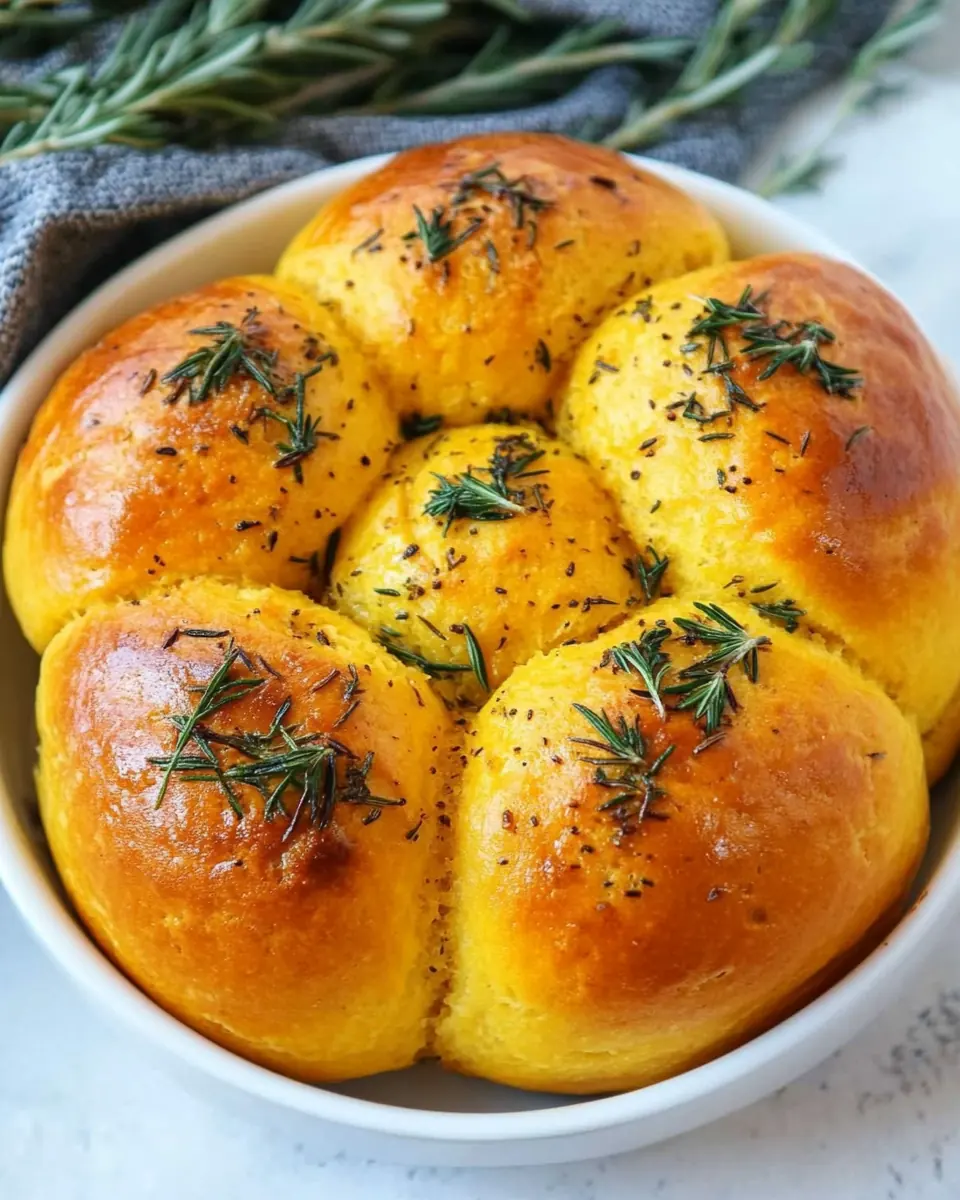
Bake the bread for 20 minutes, or until its crust is a deep golden brown, and a digital thermometer inserted into the center registers about 190°F.: As the rolls bake, you will notice a lovely color forming and a faint toasty aroma. The interior should register around 190°F to confirm doneness while remaining soft. Common errors include removing them too early by relying on color alone; use a thermometer or check that the bottoms sound hollow when tapped for assurance.
If desired, brush rolls with melted butter and a sprinkle of kosher salt.: Brushing with melted butter adds sheen and richness, and a light sprinkle of kosher salt can heighten the flavors by contrast. This finishing touch also softens the crust slightly, making the rolls more inviting. Be cautious with salt quantity, as too much can overpower the delicate herbal notes of rosemary .
Remove the rolls from the oven, and turn them out onto a rack to cool. Store completely cool bread at room temperature for up to 5 days.: Cooling on a rack prevents condensation at the bottom and preserves texture, and letting them cool fully stabilizes the crumb. Store in a loosely covered container to keep the crust from becoming soggy, or freeze after cooling for longer storage. A common mistake is sealing while warm, which traps steam and makes the rolls limp, so always cool completely first.