Wash and drain the quinoa in a bowl of water until it runs clear. Drain water.: Your first sensory cue is the water clarity, you will notice cloudy water turn clear as starch rinses away, leaving the grains smelling faintly nutty rather than bitter. This matters because rinsed quinoa cooks into separate, light grains instead of clumping into a paste, and the texture becomes pleasantly fluffy when done. A common pitfall is skipping this rinse, which can leave a soapy or earthy aftertaste; if you detect any off aroma after rinsing, repeat until the water runs clear. When draining, shake the sieve gently so excess water does not steam the grains before they hit the pot, which helps maintain the intended cooking ratio.
Combine 2 1/2 cups water, 1 1/4 cups quinoa and salt in a pot over high heat and bring to a boil. Cover, turn heat to medium, and let simmer, until all of the water is absorbed, about 15 minutes. Remove from heat, fluff with fork. Keep covered until ready to serve.: You will hear a steady simmer and see gentle steam escape from under the lid; that soft bubbling is your audio cue that the water is cooking into the quinoa . The pot will smell mildly toasty as the liquid reduces. Allowing it to steam off with the lid on after removing from heat finishes the cooking gently, yielding plump, separated grains. Fluffing with a fork introduces air and prevents compacting. One error I often see is lifting the lid repeatedly during simmering which lets steam escape and can extend cooking time, so resist peeking. If you notice the bottom catching or a scorched smell, your heat was too high, and you should reduce the temperature earlier next time and stir gently to loosen any stuck bits.
In a mason jar with tight fitting lid, add in the pomegranate molasses, olive oil, 2 tablespoons of water. Season with salt and pepper, if you'd like. Cover with lid tightly and shake.: When you shake the jar you will see the glossy dressing emulsify, a sheen forming as oil and syrup combine, and a bright, fruity aroma will rise. This simple vinaigrette clings to grains and vegetables, so the glossy texture is key to even coating. If the sauce seems too viscous, the added water will smooth it out without diluting the flavor too much. One trap is under seasoning; taste and adjust carefully because the rotisserie chicken may already carry salt, so add seasoning conservatively. If your dressing separates in the jar, shake again just before serving to recombine.
If you would like to make the Pomegranate Sauce from scratch, see very bottom of recipe.: Follow the scratch sauce method when you want an intensely fresh pomegranate character; while it simmers, your kitchen will fill with a warm, fruity perfume and a deep crimson syrup will form. This homemade approach yields a more nuanced sweetness and a slightly brighter acidity than store bought molasses, which can elevate the bowl. The main mistake is boiling too aggressively, which can burn the sugars and impart a bitter note, so simmer gently and stir occasionally. When the sauce lightly coats the back of a spoon you have the correct consistency.
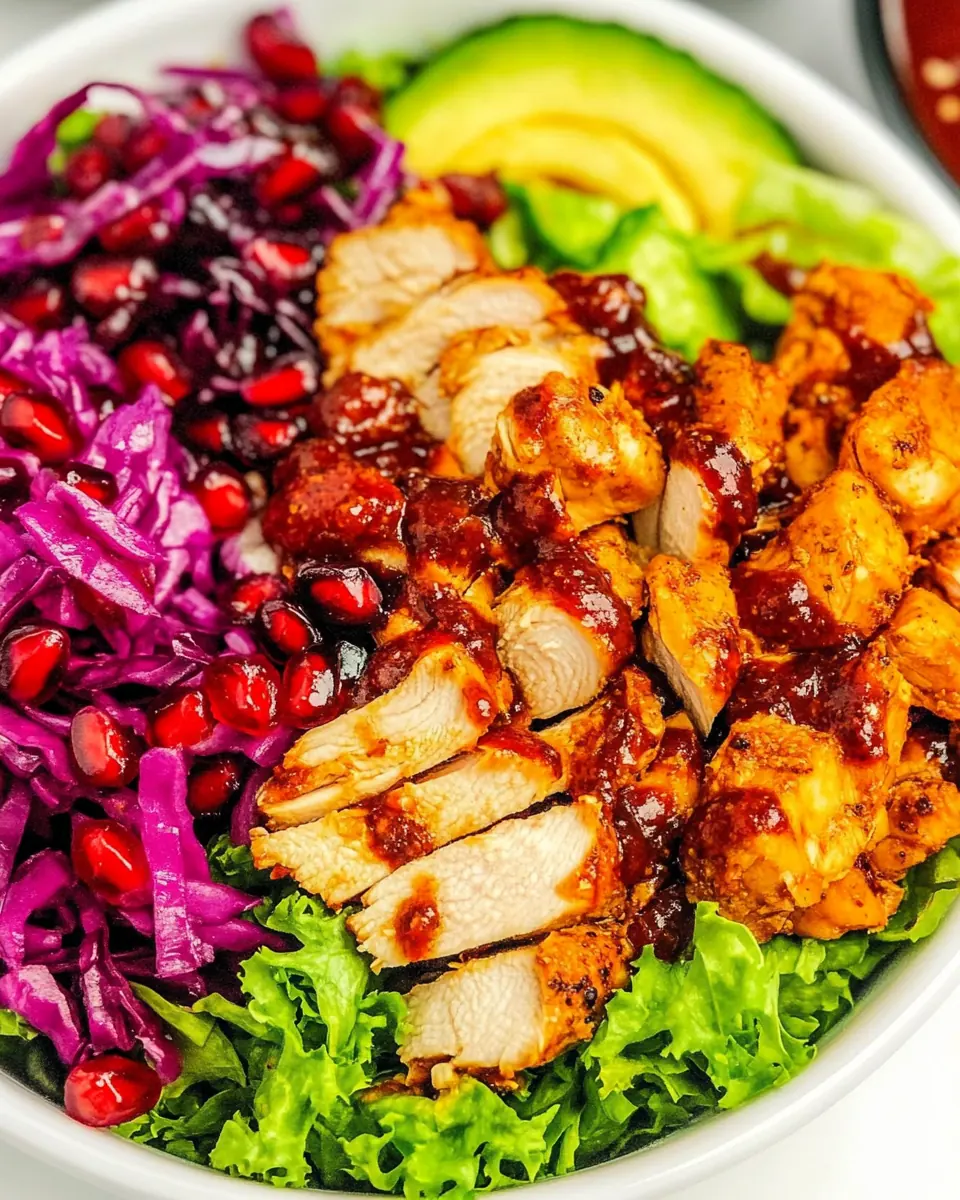
Then assemble the Buddha Bowl, divide the quinoa amongst the bowls. Add in the vegetables, chicken. Drizzle on the Pomegranate Sauce and top with crunch.: As you assemble, notice the contrast of warm quinoa against cool avocado slices and crisp broccoli . Drizzling the glossy pomegranate dressing slowly lets it bead on top before sinking in, creating a beautiful finish and ensuring each element gets a hit of flavor. Scatter the toasted nuts last so they retain max crunch. Avoid tossing everything too aggressively which bruises delicate ingredients like avocado and sprouts; a gentle fold or artful placement keeps textures distinct and pleasing.
Store the leftover Pomegranate Sauce in the refrigerator. It should last for 2 weeks.: The sauce chilling will concentrate flavors and thicken slightly, giving a richer mouthfeel when used later, and you will notice the aroma mellow and sweeten. Label the jar with the date so you track freshness. A frequent error is leaving the sauce at room temperature; always refrigerate to preserve quality. If the sauce becomes overly thick in the fridge, stir in a teaspoon of water and shake to loosen before using.