In a food processor, combine the flour, sugar, cornmeal and salt; pulse 3 to 4 times. Add the butter and pulse until the mixture resembles coarse crumbs. While the processor is running, slowly drizzle the buttermilk into the crumbs. Continue processing until the dough comes together into a ball.: You will notice a slightly dusty, sweet aroma as the dry ingredients mix, and the pale flour will look homogenous with little flecks of cornmeal dotted throughout; this even distribution matters because it ensures the cornmeal will toast uniformly during baking, adding that gentle grit to the crust. One common mistake is overpulsing and creating compacted flour, which can reduce flakiness, so pulse just enough to blend and keep the mixture light and airy.
Remove the dough from the processor and form a ball, incorporating any stray crumbs. Wrap the dough in plastic wrap and refrigerate for about an hour (overnight is fine too).: At this point, you will see pea sized chunks of butter coated in flour, and the texture should be crumbly and cool to the touch; these butter pockets are what create layers in the baked crust. If the mixture becomes pasty from soft butter, pop it in the fridge briefly, because warm butter will yield a tough crust.
Place the rack in the center of the oven and preheat the oven to 350°F. Line a baking sheet with parchment paper.: As the buttermilk hits the crumbs you will smell a faint tang and the dough begins to coalesce, looking slightly glossy where moisture binds the flour; slow addition prevents overhydration, so stop when the dough just starts to hold together. Overpouring is a frequent misstep, leading to overly wet dough that is hard to roll, so add conservatively.
Remove the dough from the refrigerator and place it on the parchment-lined baking sheet. Roll out the dough into a 14 to 15-inch wide round-ish circle (it doesn't have to be perfect).: The dough will gather around the blade and form a cohesive mass, slightly tacky but not sticky; this ball indicates proper hydration and signals you to stop processing to preserve texture. If you keep blending, the crust can become tough, so handle minimally from here on.
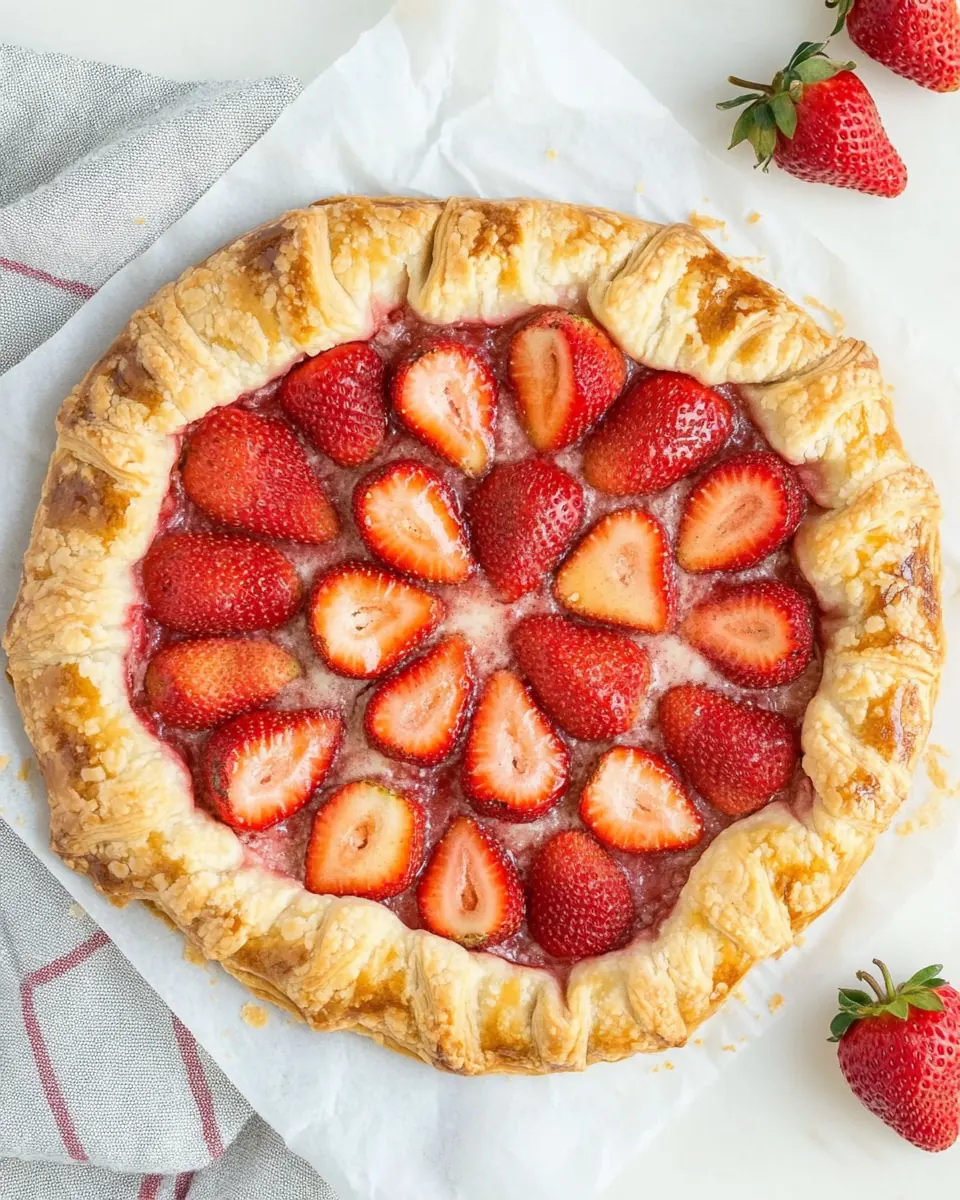
Spread the jam on the dough, leaving about a 1 1/2-inch border around the edges. Sprinkle the cookie crumbs on top of the jam. Place the berries, cut side down in a decorative fashion on top of crumbs. Overlap some of them to make sure all crumbs are covered, making two layers of strawberries. Mix sugar/cinnamon and lightly sprinkle the tops of the strawberries with the mixture.: When you shape the dough by hand it should feel cool and slightly firm, with visible butter bits; press gently to incorporate crumbs without warming the dough too much. A common error is overworking the dough, which warms the butter and ruins flakiness, so be gentle and quick.
Gently fold edges of the dough back over the strawberries (all the way around).: Chilling firms the butter , relaxes gluten, and makes the dough easier to roll; the smell becomes more muted and the texture more manageable. If you skip chilling, the dough will be sticky and hard to shape, and the crust may lose its flaky lift.
In a small bowl, whisk the egg white and milk together. Brush the edges of the dough with the egg wash, and sprinkle with turbinado sugar.: Preheating ensures even oven spring and browning; you will sense a warm oven air and the temperature stability helps the crust develop a golden exterior while the filling bubbles gently. Not preheating can lead to uneven baking, leaving the center undercooked while the edge overbrowns.
Bake the galette for 45 minutes to 1 hour, or until the crust is golden brown and the filling is bubbly. Transfer the baking sheet to a wire rack to cool for about 30 minutes before serving. It's delicious served warm with a bit of whipped cream or ice cream, but it's also good at room temperature and served plain.: Parchment prevents sticking and promotes even bottom browning, and it will also make transferring the galette easy when it is done; the paper should sit flat and smooth so the dough rolls evenly on top. Skipping parchment can make cleanup hard and increase the chance the galette sticks and breaks when removed.
Remove the dough from the refrigerator and place it on the parchment-lined baking sheet: The chilled dough should feel firm but pliable, and placing it on the sheet before rolling saves transfers and keeps the shape intact; the parchment protects the baking surface from any jam seepage. If the dough cracks when you roll it, you can press the cracks together gently rather than rework it too much.
Roll out the dough into a 14 to 15-inch wide round-ish circle (it doesn't have to be perfect): As you roll you will hear a soft whisper of the rolling pin across parchment, and the dough will thin out to a slightly translucent edge; aim for even thickness so the crust bakes uniformly. Don’t obsess over perfection, but avoid very thin spots that could tear and let juices leak through.
Spread the jam on the dough, leaving about a 1 1/2-inch border around the edges: The jam will look glossy and slightly tacky, creating a flavorful base that prevents the fruit from sliding while adding concentrated sweetness; leave the border because it folds over and seals the filling. A frequent mistake is putting jam too close to the edge, which can cause it to melt out during baking.
Sprinkle the cookie crumbs on top of the jam: The crumbs will provide an absorbent layer that soaks up excess juices, and as they warm they release a buttery aroma that complements the crust; spread them evenly so the fruit has a stable bed. If you skip this step, the bottom of the galette can become soggy from the fruit juices.
Place the berries, cut side down in a decorative fashion on top of crumbs: Arranging the strawberries cut side down keeps their bright surfaces exposed to heat, encouraging caramelization and a glossy finish; overlapping them creates depth and helps contain juices. A common slip is piling fruit unevenly, which can cause uneven cooking and leaking.
Overlap some of them to make sure all crumbs are covered, making two layers of strawberries: Creating two layers gives generous fruit coverage and ensures every bite has both berries and crust; you will hear the soft thud of fruit as you place each piece, and the arrangement should look abundant but balanced. Avoid overstacking which can lead to an underbaked center.
Mix sugar/cinnamon and lightly sprinkle the tops of the strawberries with the mixture: The sugar will glisten on the berry tops and the cinnamon adds a warming background note that surfaces as the fruit softens and begins to bubble; this light dusting promotes gentle caramelization. Too much sugar will create an overly syrupy filling, so keep the sprinkle light.
Gently fold edges of the dough back over the strawberries (all the way around): Folding creates the rustic rim and traps some juices, while the tactile act of folding seals the edges for a cozy presentation; the crust will feel cool and slightly pliable as you work. If you fold with sweaty hands, the dough can soften too much, so cool fingers or a brief chill helps.
In a small bowl, whisk the egg white and milk together: The mixture will shine and thin to a brushable consistency, and it helps the crust develop a glossy, even color while making the turbinado stick. If the wash is too thick the crust may brown unevenly, so thin it just enough for easy application.
Brush the edges of the dough with the egg wash, and sprinkle with turbinado sugar: When you brush you will see the crust take on a pale sheen that turns golden in the oven, and the turbinado will look jewel like on the rim, adding crunch after baking. An over wet wash can cause sugar to sink in and burn, so apply lightly and evenly.
Bake the galette for 45 minutes to 1 hour, or until the crust is golden brown and the filling is bubbly: During baking the kitchen fills with a warm, fruity perfume and you will notice the juices bubbling around the edges while the crust turns a deep, even gold; that bubbling indicates the filling has thickened and is hot enough to set. A common error is removing it too soon, leaving the center runny, so ensure the filling is actively bubbling before pulling it from the oven.
Transfer the baking sheet to a wire rack to cool for about 30 minutes before serving: Cooling allows the filling to set slightly, making slicing or tearing neat wedges easier, and the crust firms to a pleasant texture; the galette will steam gently as it rests, releasing a final burst of aroma. Cutting too early risks a sloppy, leaking center, so patience yields the best presentation and texture.
It's delicious served warm with a bit of whipped cream or ice cream, but it's also good at room temperature and served plain: Warm servings bring out the jammy, aromatic qualities and pair beautifully with creamy accompaniments, while room temperature slices highlight the texture contrasts and are easier to transport. If you plan to serve chilled, note the crust softens over time, so slightly warm before serving for the best mouthfeel.