Rinse basmati rice in a strainer or fine mesh sieve under cold water until the water runs clear. This is an important step to remove excess starch and create fluffy rice.: The scent and texture change early on, you will notice the water losing starchiness and going from cloudy to clear, and the grains becoming less sticky when rubbed gently between your fingers. This preserves the individual grain structure when cooked, yielding light, fluffy rice. A common mistake is rushing this step, which leaves excess starch and produces clumpy rice. If your water remains cloudy after several rinses, keep rinsing until it clears, then let the rice drain briefly so it is not waterlogged when it hits the pan.
In a small bowl, steep the saffron threads in the warm water for 5 minutes to release their flavor and color. You should be able to submerge your finger in the water, otherwise it is too hot.: You will see the warm water gradually take on a warm golden hue and smell a delicate floral, slightly honeyed fragrance; this is saffron blooming. The warmth helps dissolve the aroma compounds without cooking them away, which is why I never use boiling water here. A potential pitfall is using water that is too hot, which can blunt the delicate aroma, so aim for comfortably warm. Stir the threads gently and set the bowl aside to let the infusion deepen before it is added to the rice.
Heat a medium saucepan over medium heat. Add olive oil, then once hot, add the rinsed rice and sauté for 2 minutes.: You want the pan hot enough to warm the olive oil so it shimmers but does not smoke, which preserves flavor. When the oil is ready, add the rinsed rice and sauté for 2 minutes; you will hear a faint toasting whisper and see the grains take on a faintly translucent edge. This brief sauté builds a subtle nutty note and helps each grain stay separate. Avoid leaving the rice unattended, because oil can overheat and oils that burn will impart a bitter taste.
Add vegetable broth, salt, and the saffron water, and bring to a gentle boil.: As the liquid joins the pan, you may hear a soft bubbling that signals the heat level; the broth should be hot enough to bubble up but not roar. The saffron water will streak the pan with color, and the aroma will lift in the steam. This combination is essential because the broth layers savory depth under the saffron’s fragrance. A misstep here is bringing the mixture to a vigorous boil, which can jostle the grains and make them break during cooking, so opt for a gentler heat.
When boiling, reduce heat to low, cover the saucepan with a lid, and simmer for 18 minutes, or until the rice is tender and the liquid is absorbed.: During the simmer, the sound will change to a low, steady whisper and the surface will be still with occasional small bubbles, which is a good sign. The grains will swell and look plump when you lift the lid slightly to peek, and the liquid should have mostly sunk in at the edges. This low gentle cook ensures even steam penetration for tender grains without becoming mushy. Do not remove the lid to stir repeatedly, as that releases steam and disrupts the cooking; only check briefly if you must.
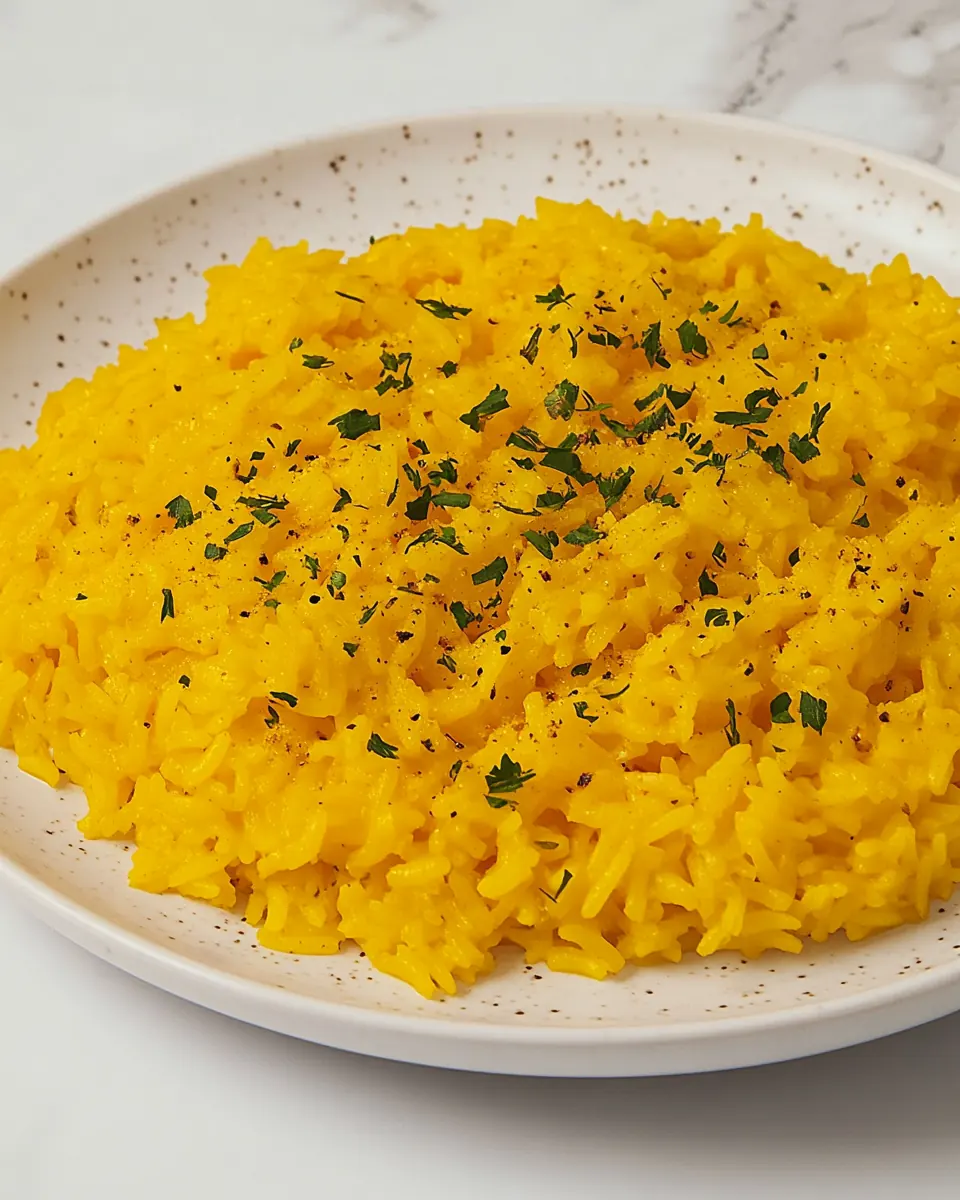
Remove from heat and let the rice stand, covered, for 5 minutes. Then, fluff with a fork before serving.: This resting phase lets trapped steam finish cooking the center of the grains and settle the texture, resulting in separate, fluffy rice. You will notice a faint steam release when you lift the lid and a fragrant burst of saffron scent. After resting, fluff gently with a fork to separate grains without mashing them. A frequent mistake is skipping the rest and fluffing right away, which leaves grains tighter and less airy; patience here pays off.