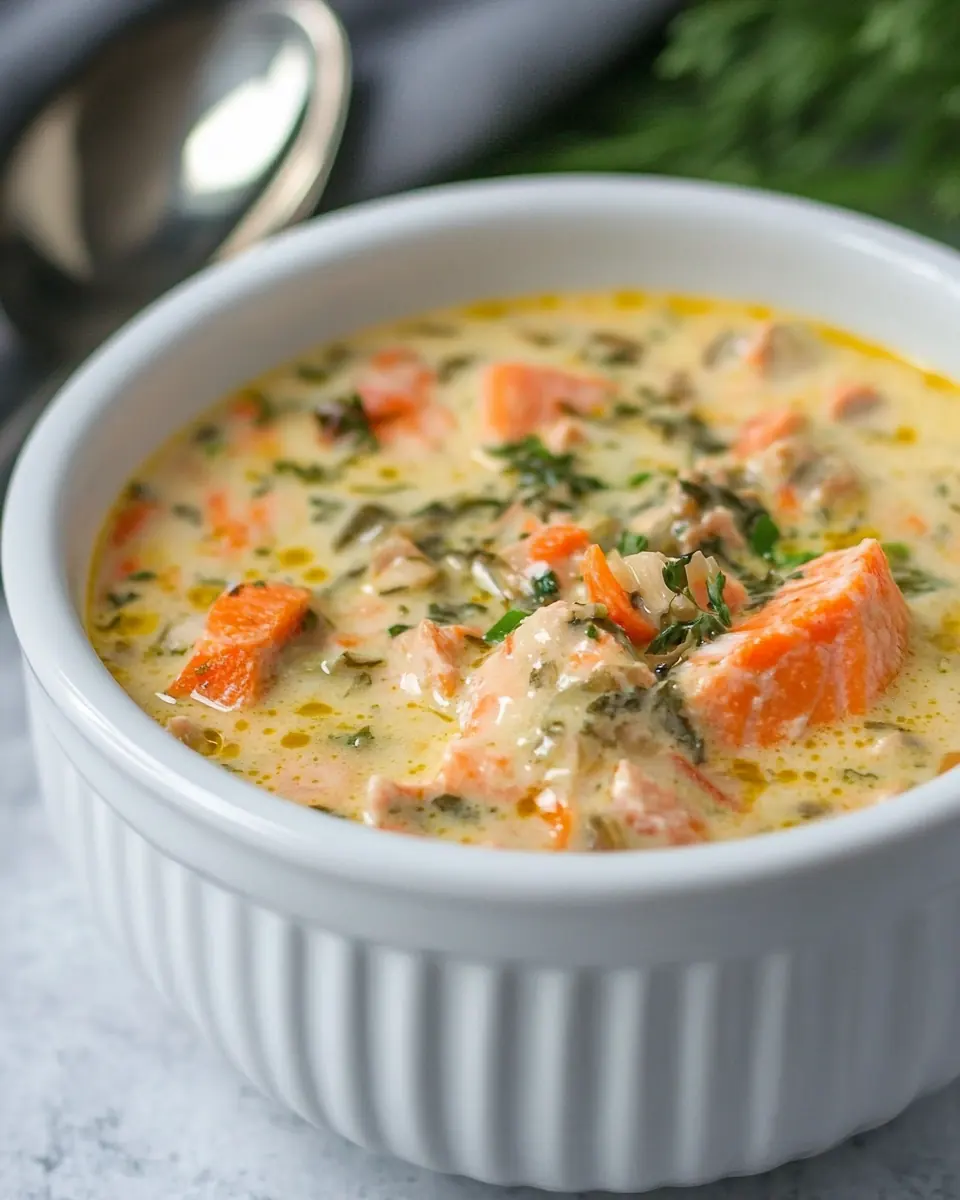
In a large saucepan, sauté the celery, onion, green pepper and garlic in butter until the vegetables are tender. Add the broth, potatoes, carrots, salt, pepper, and dill; bring to a boil. Reduce heat; cover and simmer for 40 minutes or until the vegetables are nearly tender.: The kitchen will start to fill with a warm, savory perfume as the butter melts and the vegetables hit the pan, a soft sizzling that signals flavor development. Listen for a gentle hiss rather than a violent splatter; that indicates moderate heat and controlled browning. The vegetables should become translucent and slightly glossy, releasing their sweet aromatics and losing raw sharpness. This gentle softening is crucial because it builds the chowder s flavor base, giving the broth depth without needing extra seasoning. A common mistake is rushing the step with too high heat, which can brown the vegetables aggressively and introduce bitter notes, so keep the temperature medium and stir occasionally for even cooking.
Stir in the corn, cream and salmon. Simmer for 15 minutes or until heated through.: When the chicken broth hits the pan you'll hear a change in the sound as the simmer intensifies and steam rises. The broth brings a savory foundation while the diced potatoes and shredded carrots begin absorbing heat, releasing faint starchy and sweet scents. Watch for the first vigorous bubbles to know it s reached a boil; that s the cue the liquid will begin cooking the vegetables through. This step matters because the direct boil helps the starchy potatoes start breaking down at the edges, which contributes to the chowder s body. Avoid boiling too aggressively for too long, as that can make vegetables fall apart unevenly and cloud the texture.
Reduce heat; cover and simmer for 40 minutes or until the vegetables are nearly tender: The sound will mellow to a gentle murmur as you lower the heat and place the lid on. Simmering slowly allows the flavors to marry and the potatoes to soften uniformly, releasing starch that thickens the broth organically. You want the vegetables to be tender when pierced with a fork but not completely mushy, which lets them hold shape and give pleasant mouthfeel. This slow cooking yields a deeper, integrated flavor compared to a rushed approach. A frequent error is lifting the lid too often, which drops temperature and extends cooking time; trust the simmer and check only near the end.
Stir in the corn, cream and salmon: As you add the creamed corn and half and half , the chowder s surface will glossy with cream and the steam will smell sweet and dairy rich. Fold in the cooked salmon gently so the flakes remain intact and tender, dispersing them through the pot without turning them into mush. The cream softens the broth and the corn adds both sweetness and texture, creating a rounded, satisfying mouthfeel. This layering matters because it preserves the integrity of the salmon while integrating creamy and starchy elements. Avoid vigorous stirring that will shred the salmon excessively and make the chowder uniformly pasty rather than pleasantly textured.
Simmer for 15 minutes or until heated through: As the chowder finishes, it will come to a gentle, even simmer where small bubbles break the surface and the aromas become fully cohesive. This final short simmer allows the flavors to knit and the half and half to warm without curdling, while ensuring the salmon is fully heated and the corn is tender. You should see a slight thickening as the starches and creamed corn bind with the dairy. The key is patience, keeping the heat low so the cream stays smooth and the texture stays silky. Overheating at this stage can cause separation, so maintain a low simmer and taste for final seasoning rather than prolonged cooking.