Salmon Chowder
Salmon Chowder has been my go to when the weather turns sharp and I want something that warms from the inside out. The first time I made this I was coming home with cold hands after a long grocery run, and the aroma of butter and sautéed vegetables filled my small kitchen in a way that felt like an immediate hug. That moment stuck with me, and now this bowl is what I reach for when I want simple comfort that still tastes thoughtful.
Over the years I have tweaked small things, but the heart of the recipe remains the same: a creamy broth studded with tender chunks of salmon, soft diced potatoes, and the gentle bite of sautéed onion and celery. I love how a few pantry staples transform into something cozy and memorable. Sometimes I serve it with crusty bread for dipping, other times I ladle it into leftover mason jars for a quick lunch the next day.
Recipe Snapshot
1 hr 20 mins
20 mins
60 mins
Medium
350 kcal
American
Gluten-Free, Low FODMAP
Dinner
Large saucepan, Wooden spoon
The Beauty of This Salmon Chowder
Comforting, without being heavy
I adore how Salmon Chowder manages to be luxuriously creamy yet never cloying. The use of half and half keeps the texture rich but still light enough so you can savor every spoonful without feeling weighed down. When I want dinner that feels indulgent but practical, this is my first choice.
Quick to assemble, big on flavor
What draws me back is the straightforward technique. The sauté step builds real depth from simple aromatics like onion, garlic, and celery, and that base carries through the whole pot. I can have the kitchen smelling wonderful within minutes, and the payoff is enormous for the small investment of hands on time.
Flexible and forgiving
I love recipes that tolerate small changes, and this chowder is one of them. Whether my salmon is freshly poached, grilled earlier, or canned, the chowder still comes together beautifully. That flexibility makes this dish perfect for weeknight cooking when plans shift and I need a reliable, tasty outcome.
Textural harmony
There is something satisfying about the contrast in each spoonful. The creamy broth, soft but intact potatoes, tender salmon flakes, and the occasional sweet bite of creamed corn create layers of texture that keep the bowl interesting. I never tire of the interplay.
Seasonal and soothing
This is my winter recipe for days when I crave warmth and nourishment. The combination of hearty vegetables and heart healthy salmon feels like a thoughtful meal for the whole family, and it works equally well for a quiet night in or a casual gathering.
Ingredients Overview for Salmon Chowder
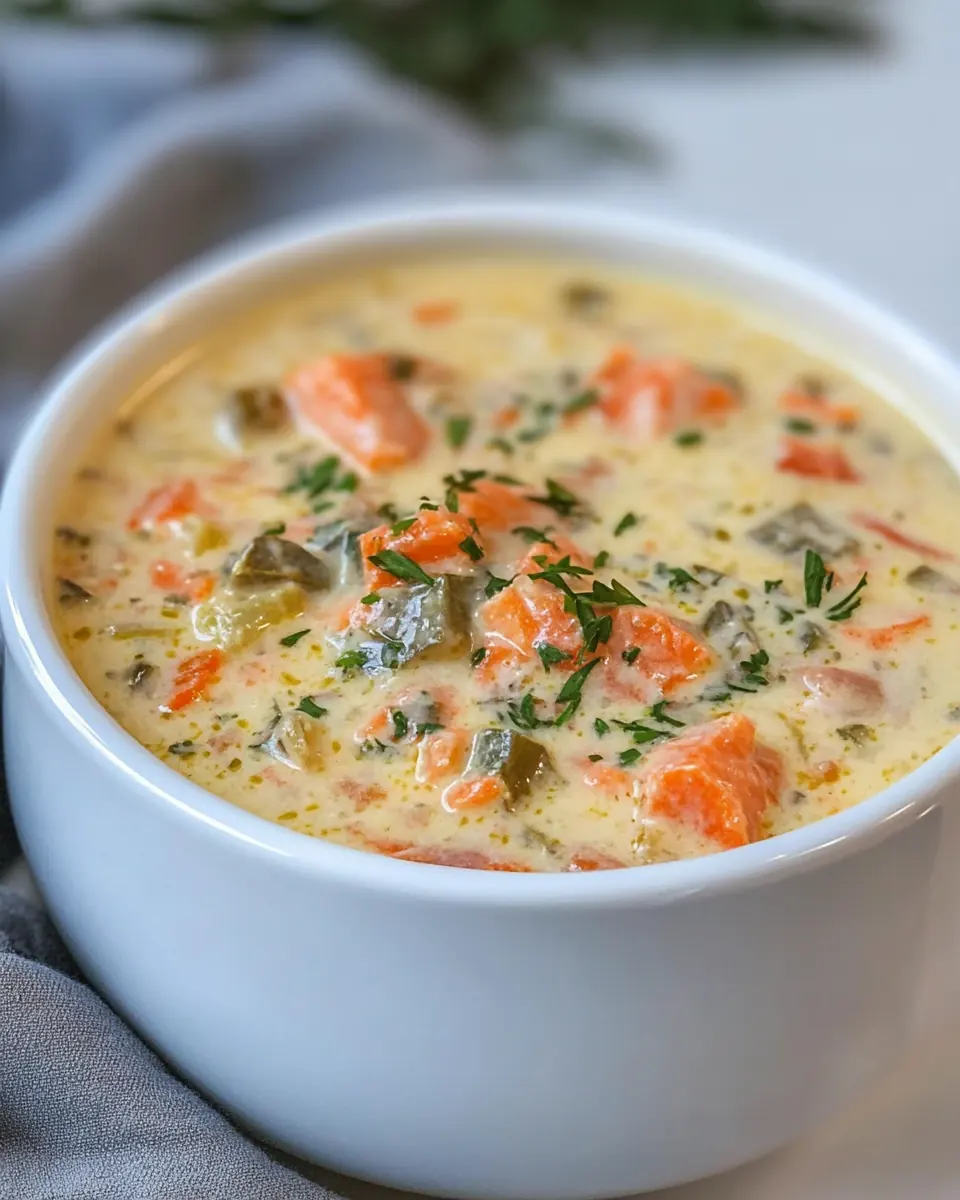
These ingredients are chosen to create a balanced, comforting chowder. The base starts with aromatic vegetables and butter to build savory depth, then moves to starchy potatoes and creamed corn for body. The half and half brings creamy silkiness while the cooked salmon provides protein and a delicate seafood flavor. Together they form a bowl that is both nourishing and richly flavored.
- 1/2 cup chopped celery: Provide aromatic crunch and a mild, slightly bitter flavor that brightens the chowder; sauté until softened to build the base of the soup and release moisture that melds with onions and peppers. Chop uniformly so pieces cook evenly and contribute pleasant texture in each bite.
- 1/2 cup chopped onion: Add sweet and savory depth when caramelized; cook until translucent to form the savory backbone of the chowder. Dice finely to integrate smoothly with other vegetables and to create a mellow onion presence without large raw bites.
- 1/2 cup chopped green bell pepper: Contribute a fresh, slightly sweet and vegetal note that complements the celery and onion; sauté early to soften and release its flavor into the base. Remove seeds and dice evenly so it adds color and tender texture throughout the chowder.
- 1 medium garlic clove, minced: Impart a sharp, pungent aroma and subtle warmth when minced and added early in cooking; cook briefly to mellow the raw edge and infuse the broth. Use a medium mince to distribute garlicky flavor without overpowering the other ingredients.
- 3 tablespoons butter: Provide a rich, silky fat for sautéing vegetables and building flavor layers; melt and brown slightly to create a flavorful fond. Measure precisely to control richness in the chowder and prevent greasiness while helping to bind ingredients.
- One 14.5-ounce can low sodium chicken broth: Deliver a savory, salty liquid foundation that frames the chowder's flavors; pour in to deglaze the pan and simmer with vegetables to concentrate taste. Choose low sodium to better control seasoning and avoid over-salting later in the cooking process.
- 1 cup uncooked peeled and diced potatoes: Add body and tender bite with a starchy base that thickens the chowder as it cooks; dice small so potatoes cook evenly and release starch. Peel to remove tougher skin and ensure a smooth, creamy texture after simmering and mashing slightly if desired.
- 1 cup shredded carrots: Introduce natural sweetness, color, and slight texture contrast to the chowder; shred finely so carrots soften and meld into the soup. Cook until tender to enhance sweetness and integrate with the creamy broth without remaining crunchy.
- 1 1/2 teaspoons salt: Season to enhance all flavors and balance sweetness from corn and cream; dissolve into the simmering chowder to distribute evenly. Adjust to taste toward the end of cooking to avoid over-seasoning, especially with added broth and canned ingredients.
- 1/2 teaspoon freshly ground black pepper: Add a warm, earthy bite and subtle heat that rounds out savory notes; grind fresh for best aromatic impact and sprinkle gradually while tasting. Use sparingly to avoid dominating delicate seafood and dairy flavors.
- 1 teaspoon chopped fresh dill (+ more for garnish): Bring a bright, herbaceous finish that complements fish and cream; chop fresh dill and stir in near the end to preserve its aroma. Reserve a bit for garnish to add visual appeal and a burst of fresh flavor on serving.
- One 14.75-ounce can cream-style corn: Contribute sweetness, body, and a slightly corn-forward texture that thickens the chowder; stir in canned cream–style corn to integrate with the broth and dairy. Use the cream–style variety to add a silky mouthfeel and tiny corn bits for consistency.
- 2 cups half and half cream: Provide creamy richness and a smooth, luscious consistency that balances the broth and vegetables; add gradually and heat gently to prevent curdling. Choose half and half for a lighter creaminess than heavy cream while still producing a satisfying chowder.
- 1 3/4 to 2 cups fully cooked salmon chunks: Deliver tender, flaky seafood protein and distinctive salmon flavor that defines the dish; fold in cooked salmon chunks near the end to warm gently and avoid overcooking. Use the stated amount to achieve a hearty, fish-forward chowder with visible salmon pieces.
Making Salmon Chowder
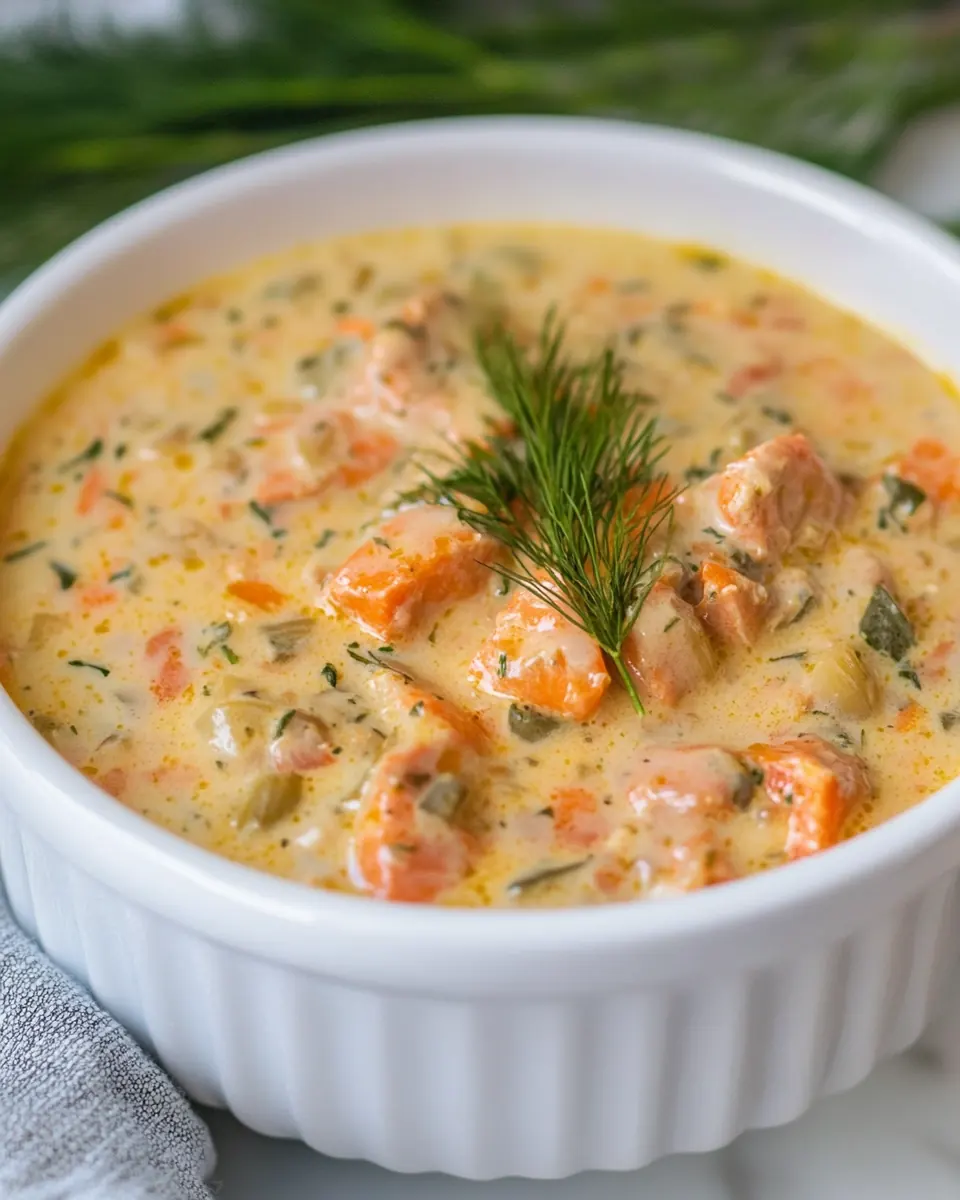
I like to approach the cooking with a relaxed rhythm, focusing on aromas and texture as the pot develops. This chowder rewards attention during the sauté stage, then becomes forgiving while it simmers. Keep your tools ready and your senses open to the changes in sound and smell.
- In a large saucepan, sauté the celery, onion, green pepper and garlic in butter until the vegetables are tender. Add the broth, potatoes, carrots, salt, pepper, and dill; bring to a boil. Reduce heat; cover and simmer for 40 minutes or until the vegetables are nearly tender.: The kitchen will start to fill with a warm, savory perfume as the butter melts and the vegetables hit the pan, a soft sizzling that signals flavor development. Listen for a gentle hiss rather than a violent splatter; that indicates moderate heat and controlled browning. The vegetables should become translucent and slightly glossy, releasing their sweet aromatics and losing raw sharpness. This gentle softening is crucial because it builds the chowder s flavor base, giving the broth depth without needing extra seasoning. A common mistake is rushing the step with too high heat, which can brown the vegetables aggressively and introduce bitter notes, so keep the temperature medium and stir occasionally for even cooking.
- Stir in the corn, cream and salmon. Simmer for 15 minutes or until heated through.: When the chicken broth hits the pan you'll hear a change in the sound as the simmer intensifies and steam rises. The broth brings a savory foundation while the diced potatoes and shredded carrots begin absorbing heat, releasing faint starchy and sweet scents. Watch for the first vigorous bubbles to know it s reached a boil; that s the cue the liquid will begin cooking the vegetables through. This step matters because the direct boil helps the starchy potatoes start breaking down at the edges, which contributes to the chowder s body. Avoid boiling too aggressively for too long, as that can make vegetables fall apart unevenly and cloud the texture.
- Reduce heat; cover and simmer for 40 minutes or until the vegetables are nearly tender: The sound will mellow to a gentle murmur as you lower the heat and place the lid on. Simmering slowly allows the flavors to marry and the potatoes to soften uniformly, releasing starch that thickens the broth organically. You want the vegetables to be tender when pierced with a fork but not completely mushy, which lets them hold shape and give pleasant mouthfeel. This slow cooking yields a deeper, integrated flavor compared to a rushed approach. A frequent error is lifting the lid too often, which drops temperature and extends cooking time; trust the simmer and check only near the end.
- Stir in the corn, cream and salmon: As you add the creamed corn and half and half , the chowder s surface will glossy with cream and the steam will smell sweet and dairy rich. Fold in the cooked salmon gently so the flakes remain intact and tender, dispersing them through the pot without turning them into mush. The cream softens the broth and the corn adds both sweetness and texture, creating a rounded, satisfying mouthfeel. This layering matters because it preserves the integrity of the salmon while integrating creamy and starchy elements. Avoid vigorous stirring that will shred the salmon excessively and make the chowder uniformly pasty rather than pleasantly textured.
- Simmer for 15 minutes or until heated through: As the chowder finishes, it will come to a gentle, even simmer where small bubbles break the surface and the aromas become fully cohesive. This final short simmer allows the flavors to knit and the half and half to warm without curdling, while ensuring the salmon is fully heated and the corn is tender. You should see a slight thickening as the starches and creamed corn bind with the dairy. The key is patience, keeping the heat low so the cream stays smooth and the texture stays silky. Overheating at this stage can cause separation, so maintain a low simmer and taste for final seasoning rather than prolonged cooking.
Expert Tips about Salmon Chowder
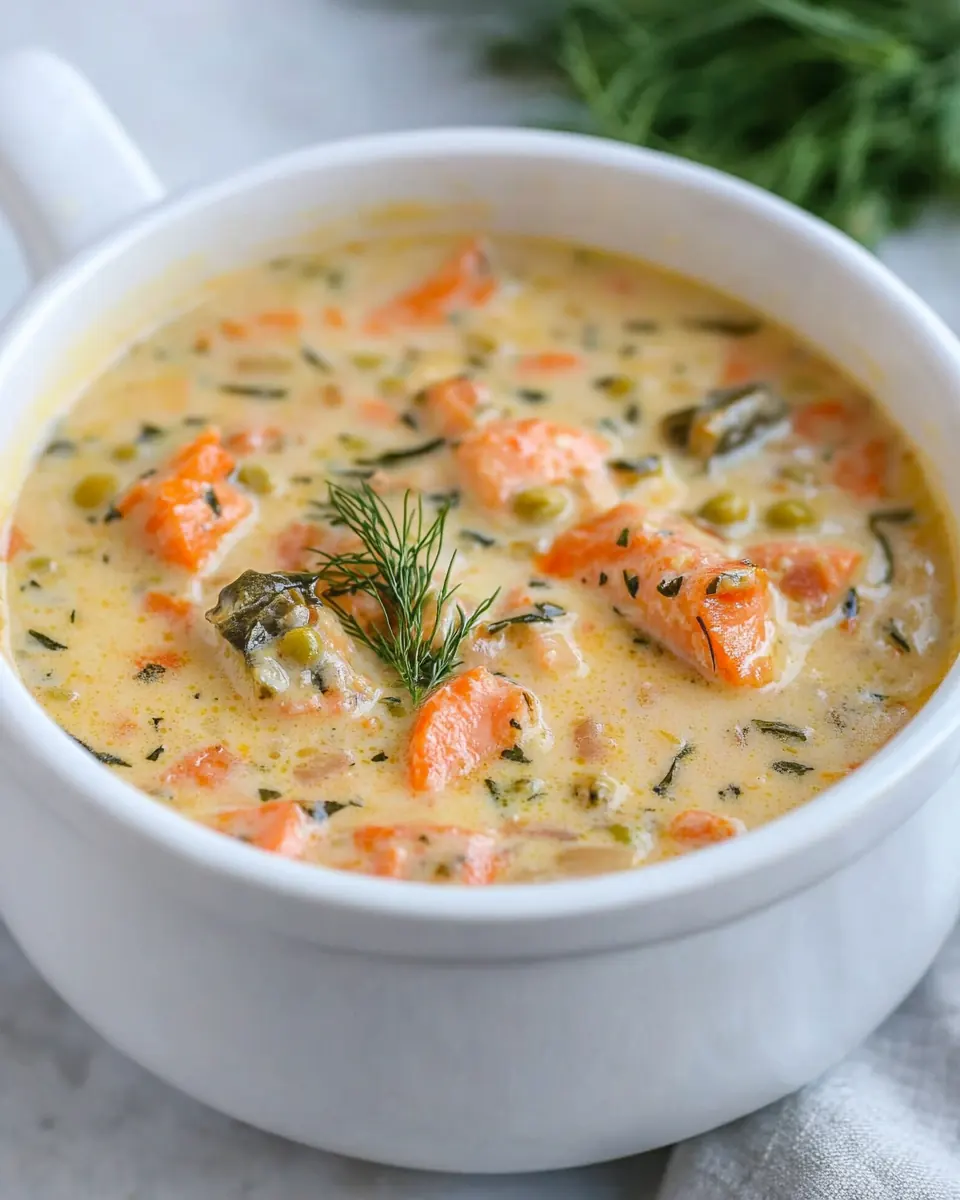
This section gives focused, practical guidance to elevate your chowder. These tips emphasize technique, timing, and small adjustments that produce big results. Use them to avoid common pitfalls and to boost flavor and texture.
- Control the salt Start with low sodium broth and the stated salt amount, then taste near the end before adding more, because ingredients like creamed corn can vary in sweetness and saltiness.
- Protect the salmon Add fully cooked salmon near the finish and fold gently to preserve flaky texture and moistness, preventing the fish from turning mealy.
- Watch the heat Keep the final simmer low when you add dairy to avoid curdling, and maintain a gentle bubble rather than a rolling boil for smooth creaminess.
- Even potato pieces Cut the potatoes into uniform dice so they cook evenly; mismatched sizes lead to some pieces being overcooked while others remain firm.
- Boost aroma with fresh herbs Add chopped fresh dill at the end and a sprinkle on top to lift the overall flavor profile and provide an aromatic contrast to the creamy base.
Serve This Salmon Chowder With
Serving this chowder well is about balance and occasion. I often pair it with simple sides and seasonal ideas that complement its creamy texture and mild seafood flavor. Below are detailed serving suggestions and storage tips to help you plan meals around the chowder.
- Crusty bread for dipping A warm loaf, torn into pieces, soaks up broth and contrasts the chowder s creaminess with a chewy, toasty texture.
- Light green salad A crisp salad with a bright vinaigrette provides a refreshing counterpoint to the rich soup, especially for a midday meal or casual dinner.
- Mason jar lunches Chill leftovers in microwave safe jars for easy reheating at work; reheat gently to avoid breaking up the salmon too much and stir once heated.
- Winter dinner centerpiece Serve the chowder as the main course on cold evenings, accompanied by simple roasted vegetables or a green vegetable for color and balance.
- Storage tips Cool the chowder before refrigerating, store in sealed containers for up to three days, and reheat slowly over low heat to maintain texture and prevent separation.
- Seasonal pairing This is especially fitting for winter evenings when you want something warming and soothing, and fresh dill or lemon zest can brighten late winter bowls.
FAQ
Conclusion
Salmon Chowder stands out for its comforting creaminess, tender chunks of salmon, and the satisfying interplay of savory and sweet flavors. It s a reliable recipe that balances elegance with ease, making it perfect for cold nights, casual dinners, or when you want a cozy meal with minimal fuss. Give it a try and let the simple, layered flavors of the chowder bring warmth to your table; I think you ll find it becomes a favorite for its warmth, adaptability, and straightforward, comforting taste.
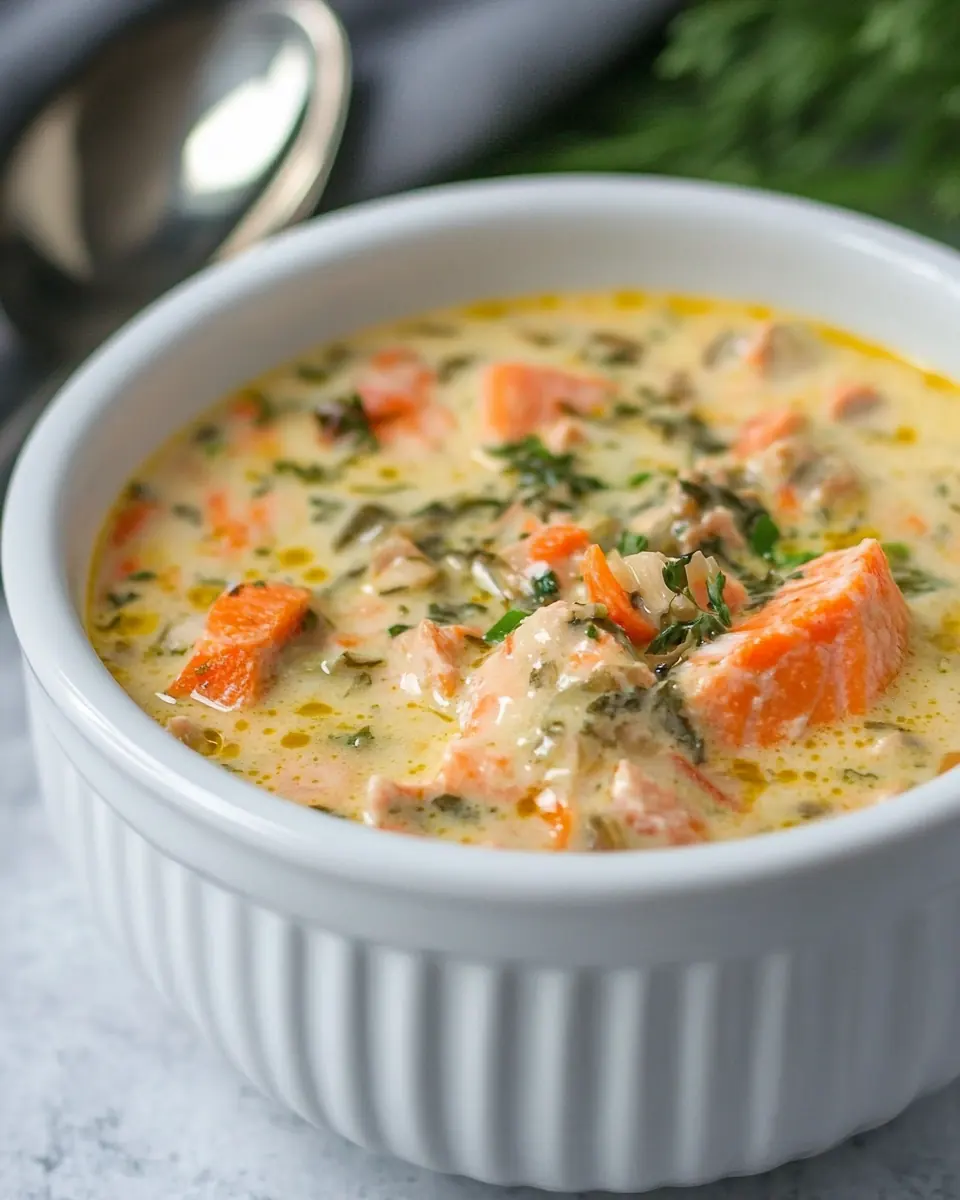
Salmon Chowder
Ingredients
Equipment
Method
- In a large saucepan, sauté the celery, onion, green pepper and garlic in butter until the vegetables are tender. Add the broth, potatoes, carrots, salt, pepper, and dill; bring to a boil. Reduce heat; cover and simmer for 40 minutes or until the vegetables are nearly tender.: The kitchen will start to fill with a warm, savory perfume as the butter melts and the vegetables hit the pan, a soft sizzling that signals flavor development. Listen for a gentle hiss rather than a violent splatter; that indicates moderate heat and controlled browning. The vegetables should become translucent and slightly glossy, releasing their sweet aromatics and losing raw sharpness. This gentle softening is crucial because it builds the chowder s flavor base, giving the broth depth without needing extra seasoning. A common mistake is rushing the step with too high heat, which can brown the vegetables aggressively and introduce bitter notes, so keep the temperature medium and stir occasionally for even cooking.
- Stir in the corn, cream and salmon. Simmer for 15 minutes or until heated through.: When the chicken broth hits the pan you'll hear a change in the sound as the simmer intensifies and steam rises. The broth brings a savory foundation while the diced potatoes and shredded carrots begin absorbing heat, releasing faint starchy and sweet scents. Watch for the first vigorous bubbles to know it s reached a boil; that s the cue the liquid will begin cooking the vegetables through. This step matters because the direct boil helps the starchy potatoes start breaking down at the edges, which contributes to the chowder s body. Avoid boiling too aggressively for too long, as that can make vegetables fall apart unevenly and cloud the texture.
- Reduce heat; cover and simmer for 40 minutes or until the vegetables are nearly tender: The sound will mellow to a gentle murmur as you lower the heat and place the lid on. Simmering slowly allows the flavors to marry and the potatoes to soften uniformly, releasing starch that thickens the broth organically. You want the vegetables to be tender when pierced with a fork but not completely mushy, which lets them hold shape and give pleasant mouthfeel. This slow cooking yields a deeper, integrated flavor compared to a rushed approach. A frequent error is lifting the lid too often, which drops temperature and extends cooking time; trust the simmer and check only near the end.
- Stir in the corn, cream and salmon: As you add the creamed corn and half and half , the chowder s surface will glossy with cream and the steam will smell sweet and dairy rich. Fold in the cooked salmon gently so the flakes remain intact and tender, dispersing them through the pot without turning them into mush. The cream softens the broth and the corn adds both sweetness and texture, creating a rounded, satisfying mouthfeel. This layering matters because it preserves the integrity of the salmon while integrating creamy and starchy elements. Avoid vigorous stirring that will shred the salmon excessively and make the chowder uniformly pasty rather than pleasantly textured.
- Simmer for 15 minutes or until heated through: As the chowder finishes, it will come to a gentle, even simmer where small bubbles break the surface and the aromas become fully cohesive. This final short simmer allows the flavors to knit and the half and half to warm without curdling, while ensuring the salmon is fully heated and the corn is tender. You should see a slight thickening as the starches and creamed corn bind with the dairy. The key is patience, keeping the heat low so the cream stays smooth and the texture stays silky. Overheating at this stage can cause separation, so maintain a low simmer and taste for final seasoning rather than prolonged cooking.
Notes
- Control the salt Start with low sodium broth and the stated salt amount, then taste near the end before adding more, because ingredients like creamed corn can vary in sweetness and saltiness.
- Protect the salmon Add fully cooked salmon near the finish and fold gently to preserve flaky texture and moistness, preventing the fish from turning mealy.
- Watch the heat Keep the final simmer low when you add dairy to avoid curdling, and maintain a gentle bubble rather than a rolling boil for smooth creaminess.
- Even potato pieces Cut the potatoes into uniform dice so they cook evenly; mismatched sizes lead to some pieces being overcooked while others remain firm.
- Boost aroma with fresh herbs Add chopped fresh dill at the end and a sprinkle on top to lift the overall flavor profile and provide an aromatic contrast to the creamy base.