In a skillet, cook sausage until crumbled and no longer pink. Drain fat.: The moment the sausage hits the hot pan you will hear a steady sizzle and smell savory notes rising, a clear sign that the meat is releasing its juices and browning. Stir frequently so the meat breaks into small crumbles, watching for a uniform golden brown rather than large dark patches. Browning creates Maillard flavors that deepen the filling's savoriness, which you want as the backbone of the dish. If you notice greasy pooling, carefully tilt the pan and spoon off excess fat, because too much residual fat will make the filling greasy and cause splatter when mixed. A common mistake is cooking at too high heat, which can brown the exterior while leaving some pieces underdone, so maintain a steady medium flame for even doneness.
In a bowl, combine cooked sausage and cream cheese.: Once combined you will feel the warmth from the sausage soften the cream cheese , creating a spreadable, slightly glossy mixture that holds together without being runny. Mix until the texture is homogenous, tasting for seasoning and adjusting sparingly because the sausage already carries salt. This emulsion is important so the filling stays put between the slices; if it is too loose the sandwiches can leak during dunking. Be careful not to overmix into a purée, you want a bit of texture so the mouthfeel remains interesting.
Spread cream cheese mixture on top of 6 slices of bread. Press the other 6 slices of bread on top to form 6 sandwiches.: As you spread, you will notice the cream cheese adhering to the porous surface of the bread, which helps the filling anchor in place. Pressing the top slice firmly but gently ensures good contact while avoiding crushing the loaf. The assembled sandwiches should feel snug and slightly weighted, which prevents the filling from migrating when you dunk. One pitfall to avoid is overfilling, which can cause the mixture to squeeze out and burn during cooking, so keep a modest amount spread evenly across each slice.
In a shallow dish, whisk together eggs, milk, maple syrup, salt, and vanilla until well blended. Dip sandwiches in egg mixture.: The batter should look smooth and glossy, with a faint aroma of vanilla and maple rising as you whisk. Dipping is about timing, not soaking; you want the bread to absorb enough custard to become tender without collapsing. Hold the sandwich briefly so each side is evenly coated, letting excess drip back into the dish. If the batter feels too thin, the bread will soak up too much and become soggy, and if it is too thick the center may not cook uniformly. Avoid aggressive squeezing, which can force the filling out of the seams.
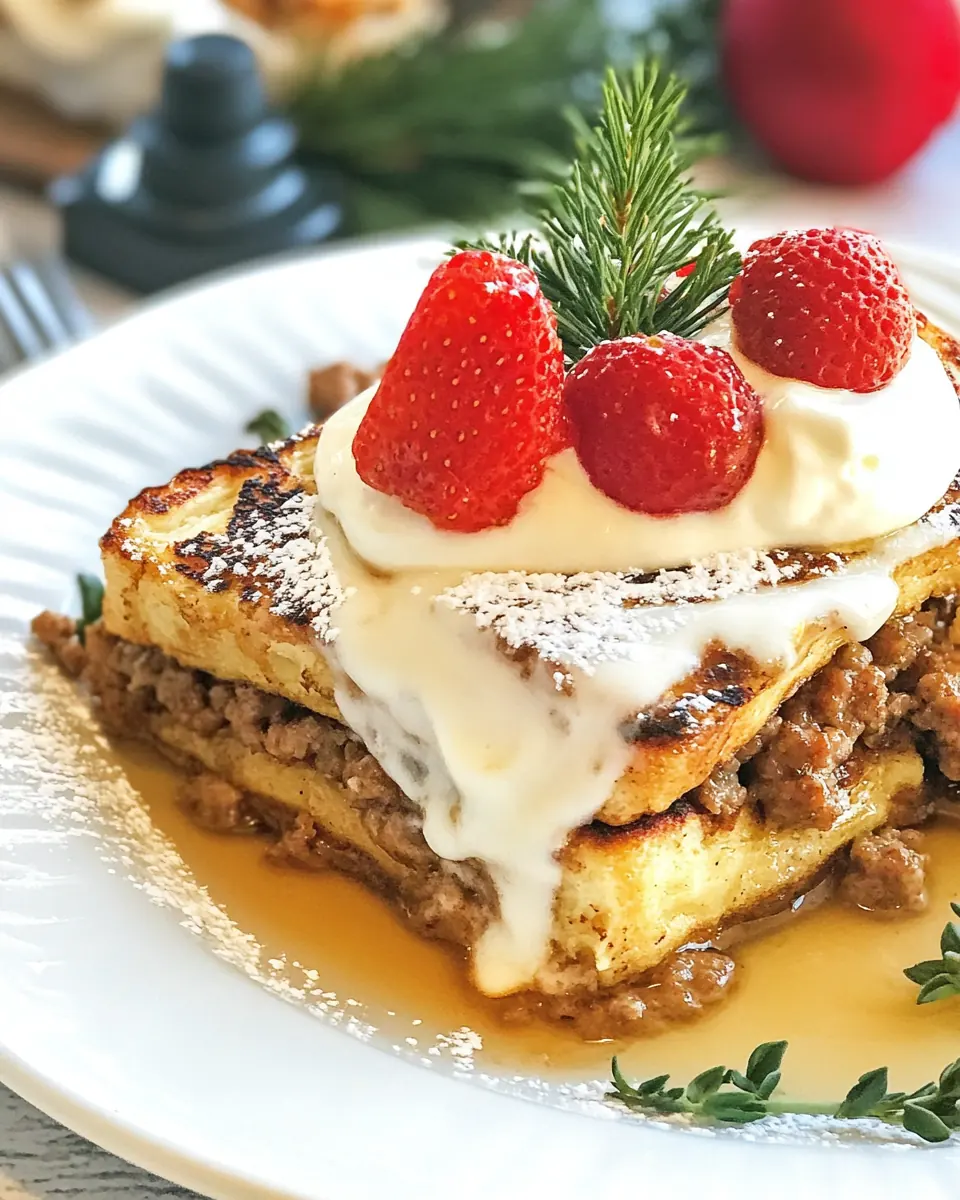
Melt 1 tbsp of butter in a large nonstick skillet on medium heat. Place two sandwiches in skillet. Cook 4 to 5 minutes per side or until golden brown. Repeat with remaining french toast sandwiches. Serve with maple syrup.: As the sandwiches hit the warm skillet you will hear a crisping hiss and see the edges start to caramelize, turning a deep golden brown that signals readiness. The butter helps the surface brown evenly and imparts a nutty aroma as it warms, but do not let it smoke. Flip when the underside is a rich, even brown and the sandwich feels set when you press gently. Cooking slowly at medium heat allows the interior to steam into a custard without scorching the exterior. A frequent error is using high heat for a faster result, which often leaves the center undercooked while the outside becomes overly dark. After frying, rest the sandwiches briefly so the filling firms a touch, then serve warm with a drizzle of maple syrup for contrast.