Sausage Cream Cheese Stuffed French Toast
Sausage Cream Cheese Stuffed French Toast is the kind of breakfast that turns an ordinary morning into a memorable one, and it grabbed my attention the first time I folded warm, savory filling into thick slices of bread. I remember the morning my family gathered around the table, sleepy but curious, while I cooked up the sausage filling and coaxed it together with softened cream cheese until it was silky and savory. The aroma of cooked sausage mingling with brown butter filled the kitchen, and everyone hovered nearby, impatient for the first bite.
There is something satisfyingly old fashioned about making a sandwich, dipping it in an egg bath, and frying it until the crust is crisp and golden. I like how the creamy cream cheese softens the edges of the cooked sausage, turning each bite into a custardy, slightly tangy experience. Over time I adjusted the assembly so the filling stays put, and I learned how to get the perfect crust without burning the exterior or leaving the center underdone. Friends always ask for the trick, and it mainly comes down to patience and medium heat.
When guests come over for a relaxed weekend brunch, I often reach for this recipe because it marries comfort and a little indulgence without being fussy. The loaf I used gives the sandwiches structure, while the egg and milk batter soaks in just enough to create a tender interior. Everyone raves about the contrast between the savory filling and the sweet drizzle of maple syrup on top. If you like recipes that feel a little decadent but are straightforward to make, you’ll find this version rewarding and approachable.
Recipe Snapshot
20 mins
15 mins
5 mins
Easy
400 kcal
American
Gluten-Free, Low FODMAP
Breakfast
12-inch Non-Stick Skillet
Why This Sausage Cream Cheese Stuffed French Toast Stands Out
Bold, balanced flavor
I adore how Sausage Cream Cheese Stuffed French Toast brings together savory and sweet in one tidy package. The seasoned cooked sausage adds depth and a little spice, while the cream cheese smooths everything out so you get a creamy mouthfeel that plays nicely with the egg soaked bread. That balance makes each bite interesting, and I find it keeps people coming back for more.
Textural contrast that excites
The contrast between the crisp, golden exterior of the fried sandwich and the soft, almost custardy interior is a major selling point. I aim for a crust that gives a satisfying snap when you cut into it, while the interior remains yielding and rich. That combination keeps the dish from feeling one note, and it makes for an attention grabbing plate at brunch or a weekend breakfast.
Simple techniques, impressive results
You do not need sophisticated tools to pull this off, just a skillet and a little patience. I appreciate recipes where a few straightforward steps yield something that tastes like effort but does not require all day. The method here is elegant in its simplicity, which makes it a dependable choice when I want to serve something special without overcommitting my morning.
Make ahead flexibility
I love that you can prepare the filling in advance, chill it, and assemble just before cooking. That small bit of prep reduces morning chaos and preserves fresh texture when it is time to fry. For larger crowds, doubling the filling and assembling sandwiches before guests arrive is a practical strategy I use often.
Comfort food that feels celebratory
There is an indulgent quality to Sausage Cream Cheese Stuffed French Toast that still reads as homey and familiar. It is the sort of dish I serve when I want to celebrate a slow morning or treat friends. The familiar ingredients and approachable process make it feel both special and welcoming.
What to Gather for Sausage Cream Cheese Stuffed French Toast
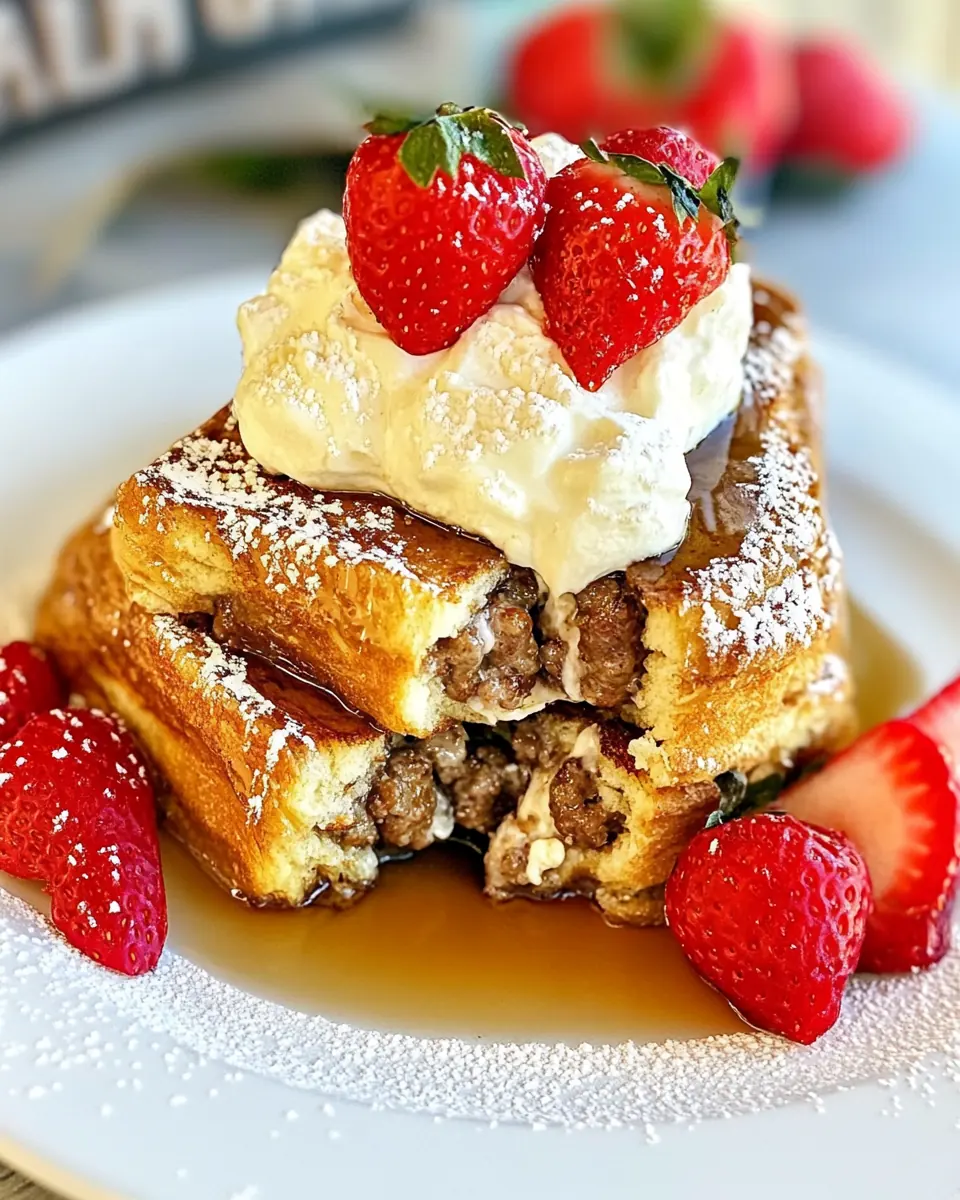
These ingredients are chosen to create a harmonious blend of savory richness and tender, custardy bread. The key players are the cooked sausage for savory depth, the softened cream cheese to add creaminess, and the egg and milk mixture to create the custard that transforms the bread into tender French toast. Each component plays a clear role in texture or flavor, and together they produce a satisfying, balanced breakfast sandwich.
- 1 lb pork sausage: Brown and crumble to render fat and develop savory flavor; provides the primary protein and hearty texture for the stuffed French toast, contributing richness and a salty backbone to balance sweet components.
- 6 oz cream cheese, softened: Soften and spread to create a creamy, tangy filling; adds moisture and a luscious mouthfeel that helps bind the sausage and enhances the custardy interior.
- 3 large eggs: Whisk until combined to form part of the custard base; supplies structure and stability to the egg mixture, helping the bread absorb the custard and set when cooked.
- 2/3 cup milk: Mix into the egg custard to loosen and enrich the mixture; contributes fluidity for even soaking and a subtle dairy sweetness that tenderizes the bread.
- 2 tbsp maple syrup: Stir into the custard for sweet aromatic depth; imparts maple flavor and caramel notes that complement the savory sausage and cream cheese filling.
- 1/4 tsp salt: Season the custard sparingly to enhance overall flavor balance; brings out natural sweetness and cuts richness so the finished dish isn’t overly cloying.
- 1 tsp vanilla: Add to the custard for aromatic warmth and flavor lift; infuses a delicate vanilla nuance that rounds and elevates the combined savory and sweet elements.
- 3 tbsp butter, divided: Melt and use for frying and finishing; provides browning, a glossy finish, and a buttery flavor—use divided amounts to sauté sausage and crisp the assembled French toast.
- 1 loaf Pepperidge Farm Farmhouse Hearty White Bread: Slice and use as the structural vehicle to hold filling and soak up custard; offers a sturdy crumb and neutral flavor that crisps nicely while encasing the sausage and cream cheese center.
Cooking Instructions for Sausage Cream Cheese Stuffed French Toast
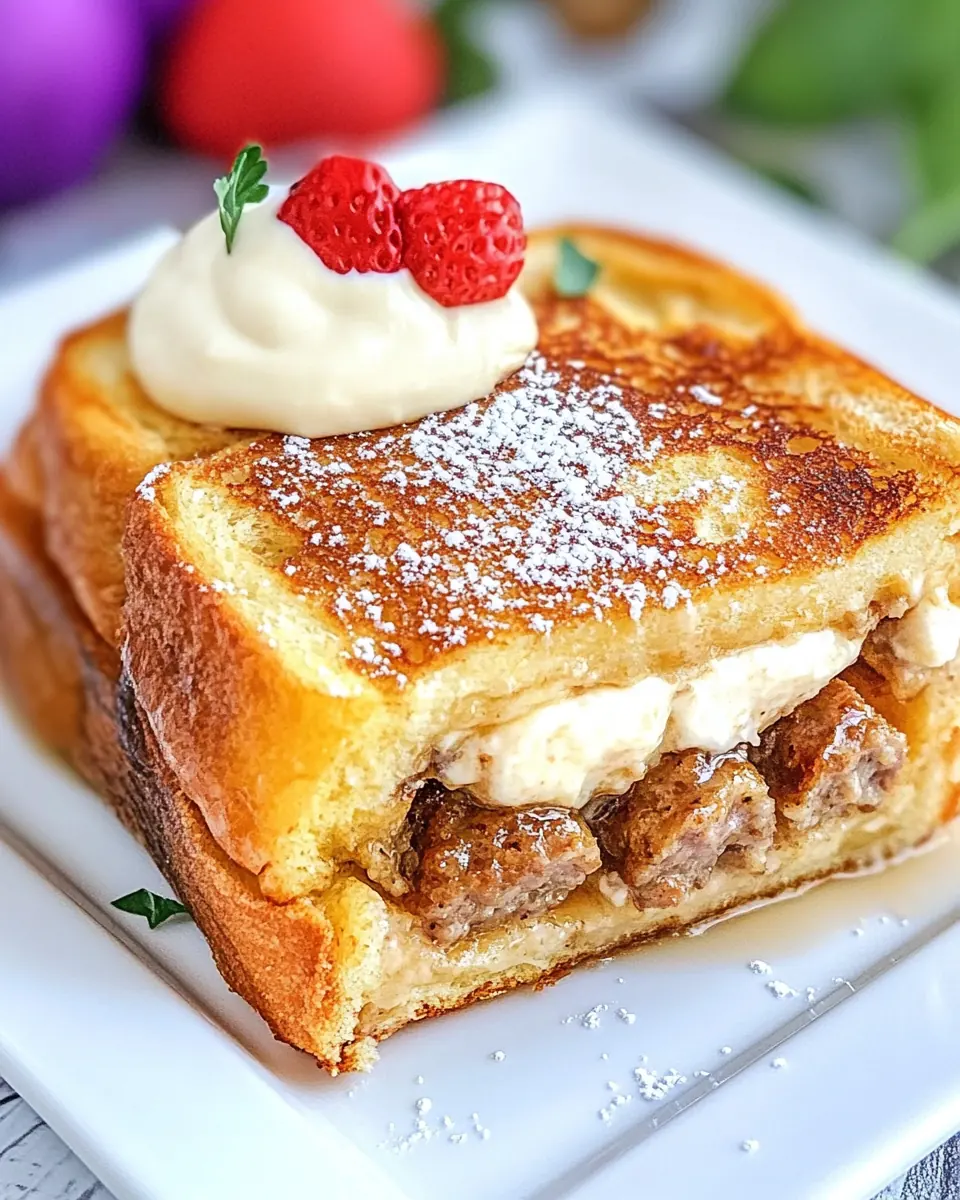
These steps will guide you through turning simple ingredients into a rich, savory stuffed French toast. I like to work in a rhythm, prepping the filling first then assembling and frying in small batches so each sandwich gets even attention. Keep your skillet at medium heat and watch for golden color as your signal to flip.
- In a skillet, cook sausage until crumbled and no longer pink. Drain fat.: The moment the sausage hits the hot pan you will hear a steady sizzle and smell savory notes rising, a clear sign that the meat is releasing its juices and browning. Stir frequently so the meat breaks into small crumbles, watching for a uniform golden brown rather than large dark patches. Browning creates Maillard flavors that deepen the filling's savoriness, which you want as the backbone of the dish. If you notice greasy pooling, carefully tilt the pan and spoon off excess fat, because too much residual fat will make the filling greasy and cause splatter when mixed. A common mistake is cooking at too high heat, which can brown the exterior while leaving some pieces underdone, so maintain a steady medium flame for even doneness.
- In a bowl, combine cooked sausage and cream cheese.: Once combined you will feel the warmth from the sausage soften the cream cheese , creating a spreadable, slightly glossy mixture that holds together without being runny. Mix until the texture is homogenous, tasting for seasoning and adjusting sparingly because the sausage already carries salt. This emulsion is important so the filling stays put between the slices; if it is too loose the sandwiches can leak during dunking. Be careful not to overmix into a purée, you want a bit of texture so the mouthfeel remains interesting.
- Spread cream cheese mixture on top of 6 slices of bread. Press the other 6 slices of bread on top to form 6 sandwiches.: As you spread, you will notice the cream cheese adhering to the porous surface of the bread, which helps the filling anchor in place. Pressing the top slice firmly but gently ensures good contact while avoiding crushing the loaf. The assembled sandwiches should feel snug and slightly weighted, which prevents the filling from migrating when you dunk. One pitfall to avoid is overfilling, which can cause the mixture to squeeze out and burn during cooking, so keep a modest amount spread evenly across each slice.
- In a shallow dish, whisk together eggs, milk, maple syrup, salt, and vanilla until well blended. Dip sandwiches in egg mixture.: The batter should look smooth and glossy, with a faint aroma of vanilla and maple rising as you whisk. Dipping is about timing, not soaking; you want the bread to absorb enough custard to become tender without collapsing. Hold the sandwich briefly so each side is evenly coated, letting excess drip back into the dish. If the batter feels too thin, the bread will soak up too much and become soggy, and if it is too thick the center may not cook uniformly. Avoid aggressive squeezing, which can force the filling out of the seams.
- Melt 1 tbsp of butter in a large nonstick skillet on medium heat. Place two sandwiches in skillet. Cook 4 to 5 minutes per side or until golden brown. Repeat with remaining french toast sandwiches. Serve with maple syrup.: As the sandwiches hit the warm skillet you will hear a crisping hiss and see the edges start to caramelize, turning a deep golden brown that signals readiness. The butter helps the surface brown evenly and imparts a nutty aroma as it warms, but do not let it smoke. Flip when the underside is a rich, even brown and the sandwich feels set when you press gently. Cooking slowly at medium heat allows the interior to steam into a custard without scorching the exterior. A frequent error is using high heat for a faster result, which often leaves the center undercooked while the outside becomes overly dark. After frying, rest the sandwiches briefly so the filling firms a touch, then serve warm with a drizzle of maple syrup for contrast.
Ways to Customize
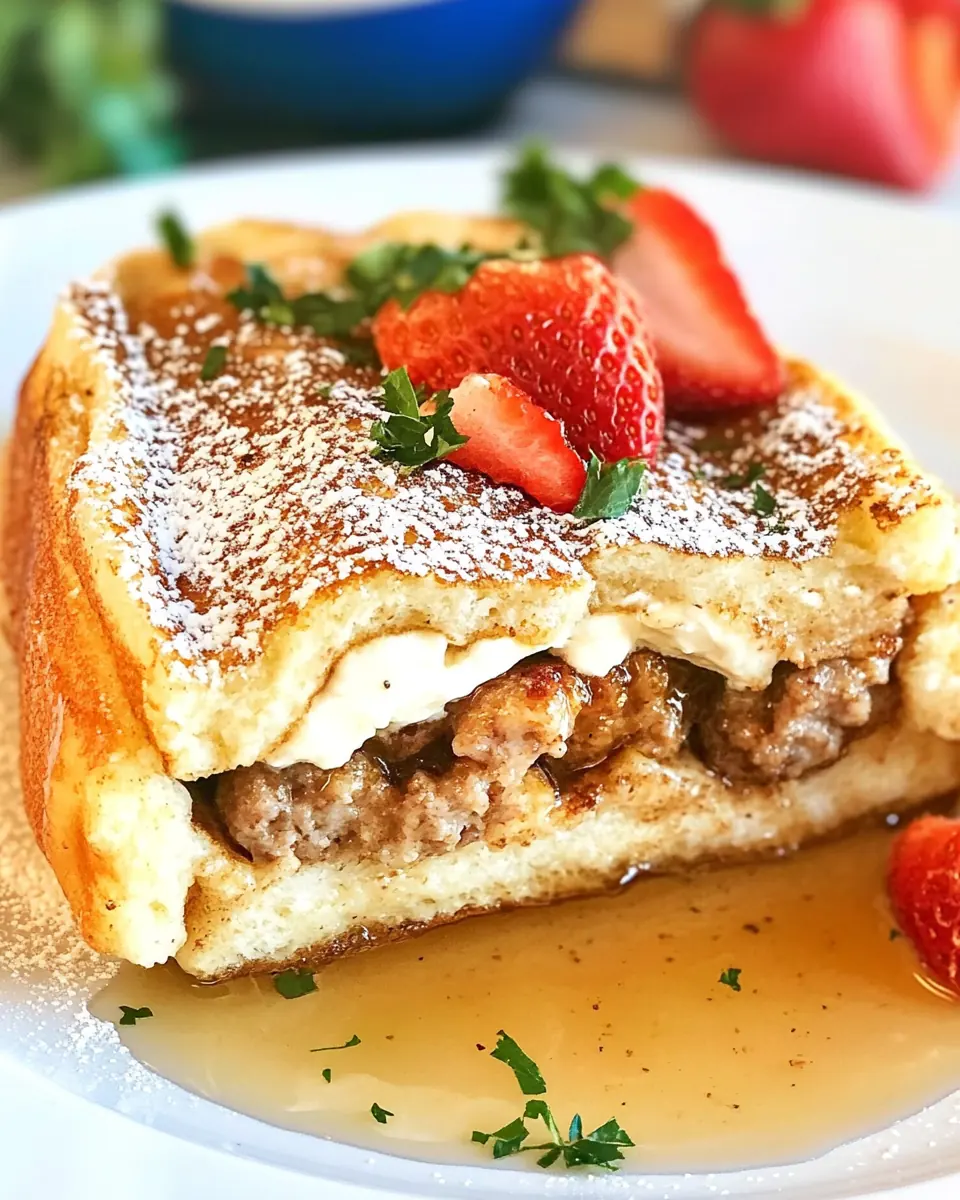
These customization ideas let you tweak texture, richness, and serving style while staying true to the recipe. A few small swaps or timing changes can produce distinct results that suit different mornings or crowds.
- Change the bread style Choose a thicker, denser loaf for a heartier bite or a softer loaf if you prefer a more custardy interior, noting that slice thickness affects soak time and yield.
- Adjust the sausage seasoning Use a milder or more seasoned sausage to control the spice level, keeping in mind that stronger seasonings may reduce the need for added salt.
- Make ahead the filling Prepare the sausage and cream cheese mixture a day in advance and refrigerate, which saves time and deepens the flavors as they meld.
- Swap milk richness Using higher fat milk yields a richer custard, while lower fat versions make the batter lighter, so pick based on your preference for richness.
- Control sweetness Alter the amount of maple syrup in the batter or simply add syrup to the plate for those who like a more savory profile without changing the cooking properties.
How to Enjoy Sausage Cream Cheese Stuffed French Toast
This dish shines when presented thoughtfully, and small serving choices can elevate the experience. Consider pairing and plating options that complement the savory richness and creamy center. Think about occasion and pacing, because timing keeps the sandwich at its best.
- Brunch centerpiece Serve the sandwiches hot from the skillet on a large platter so everyone can grab one, and offer maple syrup on the side for controlled sweetness.
- Casual weekend breakfast Plate one sandwich per person with a simple fruit side to cut through the richness, making it approachable for sleepy mornings.
- Family style Keep cooked sandwiches warm in a low oven while finishing additional batches, then slice in halves to make sharing easier and reduce portioning fuss.
- Occasion pairing This recipe works well for relaxed holiday mornings or a celebratory brunch when you want something special without complicated steps.
- Storage tips Refrigerate leftover assembled sandwiches uncovered until cool, then wrap and store up to two days; reheat gently in a skillet to regain crispness rather than microwaving, which can make them soggy.
- Seasonal pairings Add a side of seasonal fruit to brighten the plate in spring or fall, letting the fresh acidity contrast the savory filling.
FAQ
Conclusion
This Sausage Cream Cheese Stuffed French Toast brings savory comfort and creamy indulgence together in a single, satisfying sandwich. It stands out because of its balance of textures and the approachable method that yields an impressive result. I encourage you to give it a try on a relaxed morning or for a special brunch, because the recipe rewards a small investment of time with flavor that feels celebratory and familiar.
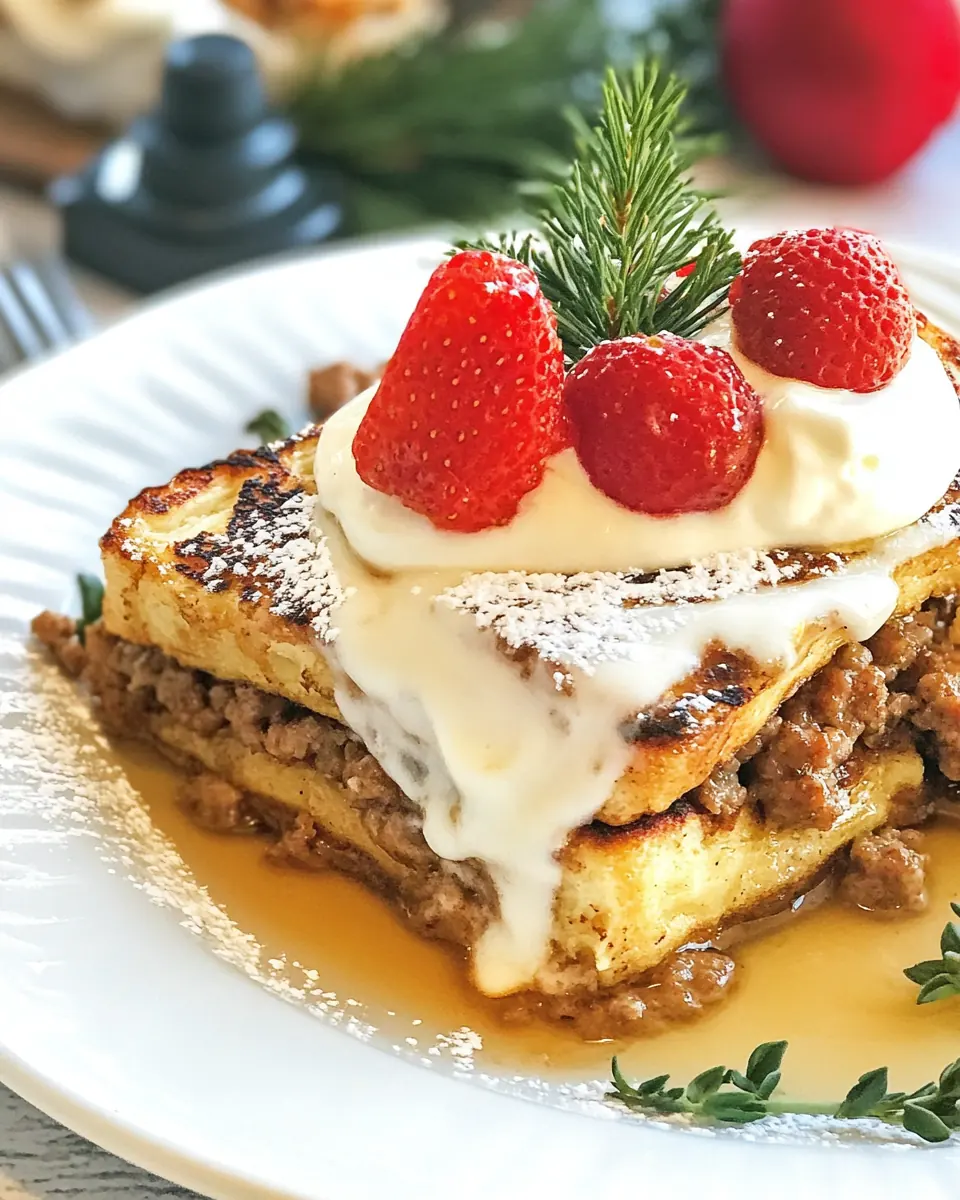
Sausage Cream Cheese Stuffed French Toast
Ingredients
Equipment
Method
- In a skillet, cook sausage until crumbled and no longer pink. Drain fat.: The moment the sausage hits the hot pan you will hear a steady sizzle and smell savory notes rising, a clear sign that the meat is releasing its juices and browning. Stir frequently so the meat breaks into small crumbles, watching for a uniform golden brown rather than large dark patches. Browning creates Maillard flavors that deepen the filling's savoriness, which you want as the backbone of the dish. If you notice greasy pooling, carefully tilt the pan and spoon off excess fat, because too much residual fat will make the filling greasy and cause splatter when mixed. A common mistake is cooking at too high heat, which can brown the exterior while leaving some pieces underdone, so maintain a steady medium flame for even doneness.
- In a bowl, combine cooked sausage and cream cheese.: Once combined you will feel the warmth from the sausage soften the cream cheese , creating a spreadable, slightly glossy mixture that holds together without being runny. Mix until the texture is homogenous, tasting for seasoning and adjusting sparingly because the sausage already carries salt. This emulsion is important so the filling stays put between the slices; if it is too loose the sandwiches can leak during dunking. Be careful not to overmix into a purée, you want a bit of texture so the mouthfeel remains interesting.
- Spread cream cheese mixture on top of 6 slices of bread. Press the other 6 slices of bread on top to form 6 sandwiches.: As you spread, you will notice the cream cheese adhering to the porous surface of the bread, which helps the filling anchor in place. Pressing the top slice firmly but gently ensures good contact while avoiding crushing the loaf. The assembled sandwiches should feel snug and slightly weighted, which prevents the filling from migrating when you dunk. One pitfall to avoid is overfilling, which can cause the mixture to squeeze out and burn during cooking, so keep a modest amount spread evenly across each slice.
- In a shallow dish, whisk together eggs, milk, maple syrup, salt, and vanilla until well blended. Dip sandwiches in egg mixture.: The batter should look smooth and glossy, with a faint aroma of vanilla and maple rising as you whisk. Dipping is about timing, not soaking; you want the bread to absorb enough custard to become tender without collapsing. Hold the sandwich briefly so each side is evenly coated, letting excess drip back into the dish. If the batter feels too thin, the bread will soak up too much and become soggy, and if it is too thick the center may not cook uniformly. Avoid aggressive squeezing, which can force the filling out of the seams.
- Melt 1 tbsp of butter in a large nonstick skillet on medium heat. Place two sandwiches in skillet. Cook 4 to 5 minutes per side or until golden brown. Repeat with remaining french toast sandwiches. Serve with maple syrup.: As the sandwiches hit the warm skillet you will hear a crisping hiss and see the edges start to caramelize, turning a deep golden brown that signals readiness. The butter helps the surface brown evenly and imparts a nutty aroma as it warms, but do not let it smoke. Flip when the underside is a rich, even brown and the sandwich feels set when you press gently. Cooking slowly at medium heat allows the interior to steam into a custard without scorching the exterior. A frequent error is using high heat for a faster result, which often leaves the center undercooked while the outside becomes overly dark. After frying, rest the sandwiches briefly so the filling firms a touch, then serve warm with a drizzle of maple syrup for contrast.
Notes
- Change the bread style Choose a thicker, denser loaf for a heartier bite or a softer loaf if you prefer a more custardy interior, noting that slice thickness affects soak time and yield.
- Adjust the sausage seasoning Use a milder or more seasoned sausage to control the spice level, keeping in mind that stronger seasonings may reduce the need for added salt.
- Make ahead the filling Prepare the sausage and cream cheese mixture a day in advance and refrigerate, which saves time and deepens the flavors as they meld.
- Swap milk richness Using higher fat milk yields a richer custard, while lower fat versions make the batter lighter, so pick based on your preference for richness.
- Control sweetness Alter the amount of maple syrup in the batter or simply add syrup to the plate for those who like a more savory profile without changing the cooking properties.