Start by preheating the oven to 400°F. Grab a 9×13 inch sheet pan and line it with parchment paper. Set aside.: You will notice the warmth of the oven beginning to circulate, and that steady oven hum reassures you that the environment is ready for baking. Preheating to 400°F ensures the crust begins browning quickly, creating a slightly crisp exterior while preserving tenderness inside. Prepare the 9×13 sheet pan with parchment to prevent sticking and to make removal cleaner, and keep a light dusting of flour nearby in case the dough is tacky during pressing. A common mistake is skipping preheating, which causes uneven rise and a dense center. If your oven runs hot, rotate the pan halfway through baking to promote even color.
In a large mixing bowl, add the flour, sugar, baking powder, and salt. Whisk together until combined. Add the cold cubes of butter to the flour mixture and combine with your hands or a pastry cutter. The texture should resemble crumbs.: As you whisk the dry ingredients, enjoy the faint, powdery scent of the flour and the subtle sweetness from the sugar. When you add the cold butter , either using a pastry cutter or your fingers, you should feel small, cool lumps breaking into the mixture; these are the future flaky pockets. The visual cue is a coarse, sandy texture dotted with pea sized butter pieces. The reason this matters is that the butter will steam in the oven, creating lift and tenderness. Avoid over working the mixture, which melts the butter and leads to a dense result. If it becomes greasy, chill the bowl briefly before continuing.
In a separate medium mixing bowl, add the cold heavy cream and vanilla extract. Stir to combine. Add this to the flour mixture and mix everything together until just combined. Don’t over mix, the dough will be thick.: The mixture of cold heavy cream and vanilla will smell rich and slightly sweet; when added, the dough should come together into a cohesive mass without being wet. You will feel resistance as you fold it in, and the dough will retain a slightly shaggy texture. This is intentional because minimal mixing keeps the final shortcake tender. Over mixing activates gluten and results in chewiness, so stop when the dough holds together. If the dough feels too dry, add a splash more cream, but proceed cautiously. A sticky dough can be gently floured on the surface for pressing.
Evenly press the dough into the parchment lined sheet pan until about 1/2 an inch thick. Bake for 15-20 minutes or until golden brown and cooked all the way through. Let it cool in the pan while working on the topping.: Pressing the dough should feel satisfying, as you create an even canvas that will brown uniformly. The surface will transform in the oven, producing a warm, buttery aroma and a golden surface. Visual cues for doneness include a firm center and golden edges; when you press lightly the crust should spring back slightly. Cooling in the pan prevents breaking and helps the structure set. A common pitfall is under baking, which leaves a doughy center; if you see pale spots, give it another few minutes. Resist slicing while it is too hot, as it can crumble or compress badly.
In a bowl, add the sliced strawberries, lemon juice, and sugar. Combine, then cover and let it sit in the fridge for 10-15 minutes.: As the strawberries mingle with the sugar and lemon juice , you will hear a faint clink as juices begin to form and see the berries release a glossy syrup. The aroma becomes brighter and fruit forward, and the texture softens just enough to be spoonable without turning to mush. This maceration step draws out flavor and creates a sauce that contrasts beautifully with the crumbly base. Avoid letting them sit too long, which can make the berries limp; the ideal balance is juicy but still holding shape. If the mixture seems very watery, drain a bit of excess liquid before assembly to prevent sogginess.
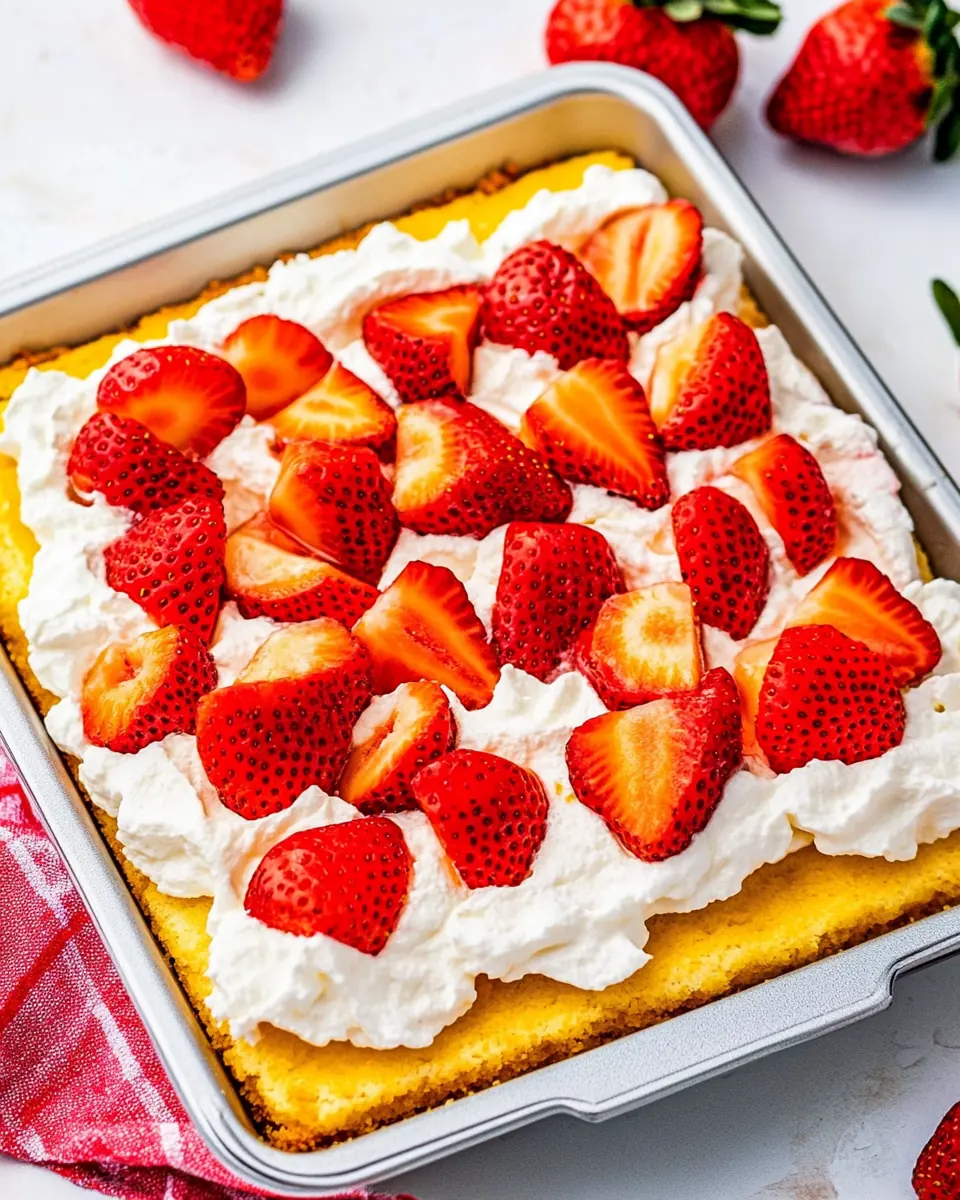
Once the shortcake has completely cooled, spread the whipped cream so it covers the entire cake. Then, spoon the strawberries evenly over the whipped cream. Slice the cake into even squares and serve!: The cooled shortcake should feel room temperature and firm to the touch, which makes spreading the whipped topping easy and tidy. As you spread, the topping will stay pillowy and reflect light, offering a creamy contrast to the golden base. Spoon the macerated strawberries across the surface in a single layer, letting their syrup pool slightly at the edges for visual appeal. When slicing into squares, use a sharp knife for clean edges, wiping between cuts if needed. A typical error is assembling before the base cools, which leads to melting and sliding; patience here preserves layers and texture.