Dice the onion, celery and carrot so they are all the same size. Finely slice the garlic. Peel and roughly chop the potatoes.: The scent that rises as you chop is the first promise of what is to come, and even sizes ensure uniform cooking so no single piece dominates the bite. When the vegetables are consistent, they soften at the same rate and melt into the filling, creating cohesive texture. A common error is uneven dicing, which leaves some pieces underdone while others are overcooked, so take a little extra time at the board.
Heat the oil in a large skillet or fry pan to a medium heat. Add the diced onion, carrot, celery and herbs. Sautée until soft, sweet and fragrant.: As the oil warms, you should see a gentle shimmer and smell the faint olive fruit. Once the onion and carrot hit the pan, listen for the quiet hiss as they start to sweat, and watch them turn translucent with ribbons of golden color at the edges. The dried rosemary and thyme will bloom in the fat, releasing aromatic notes that set the tone for the filling. If the pan is too hot the edges will brown too quickly and the interior won't soften, so keep it at medium and stir occasionally.
Add the garlic and cook for another minute.: When the sliced garlic joins the softened base, the kitchen fills with a bright, savory perfume. Cook just long enough for the garlic to be fragrant and glossy, about a minute, so it melds without turning bitter. Garlic burns fast, so watch closely and remove from heat if it begins to darken.
Increase the heat of your pan to high. Add the minced lamb. Use a wooden spoon to break up the lamb, and cook until browned.: Turning up the heat encourages the minced lamb to sear, creating browned bits that deepen the overall flavor. You should hear a lively sizzle and see the meat release and then reabsorb juices as it browns. Breaking the meat up ensures even caramelization and prevents large clumps. Overcrowding the pan traps steam and prevents browning, so cook in batches if needed to get that rich caramelized flavor.
Add the stock and tomato relish to the pan. Reduce the heat and simmer the pie filling for 15-20 minutes until the sauce has thickened and is glossy.: Once the beef stock and tomato relish are in, the mixture will steam and then slowly reduce, turning into a glossy, cohesive sauce that clings to the minced lamb . You will see the liquid concentrate and the surface become slightly shiny; that is your cue that the flavors are concentrating. Stir occasionally to prevent sticking, and skim any excess fat if you prefer a leaner filling. Simmering too briefly leaves the sauce watery, while over reducing can dry the filling out.
Transfer your pie filling to a pie or casserole dish. Preheat your oven to 180 degrees Celsius (360 F).: Moving the filling into its baking dish shifts the work from stovetop to oven, and the high, dry heat will finish the top later. The filling should sit evenly in the dish so the mashed potatoes can be spread smoothly. Preheat the oven so the pie goes in to a consistent environment, as putting it into a cold oven can change the baking time and texture.
Cook the potatoes in a large pot of boiling salted water until soft and mashable.: Boiling the potatoes in salted water seasons them from the inside and softens them until a fork slides through easily. You will see fluffy edges and a starchy foam at the surface when they reach the right doneness. Undercooked potatoes make for lumpy mash, so test a few pieces before draining to ensure they are tender through.
Drain the potatoes in a colander, then leave them to rest in the colander so that they steam and dry out.: Letting the cooked potatoes sit in the colander for a few minutes lets excess water evaporate, which is crucial for a fluffy mash that browns rather than a watery topping that weeps. You will notice steam rising, and the potatoes become drier to the touch. If you skip this, your mashed potatoes can be gluey or fail to crisp in the oven.
Return the potatoes to the cooking pot, add the first measure of butter and mash, adding milk as needed. You want a thick smooth mash that you can scoop and spread.: The warm pot helps melt the first dollop of butter , giving the mash a silky, rich mouthfeel. Use a masher or ricer to break the potatoes until they are smooth but still fluffy, adding milk little by little to reach a scoopable, thick consistency. The goal is a mash that holds its shape when spooned, so avoid adding too much liquid which will make it runny and hard to brown. Overmashing can make them gluey, so stop once they are smooth and light.
Top the pie filling with mashed potatoes.: As you spread the mash over the filling, notice the contrast in temperature and texture, and aim for an even layer to ensure uniform browning. The surface should be smooth or peaky depending on the crust you prefer, peaks become golden and crispier. Be gentle to avoid compressing the filling, which can make the final pie dense rather than airy.
Sprinkle the top of the pie with the grated cheese and drizzle on the second measure of butter.: The grated cheese melts into salty, gooey pockets and the final drizzle of butter encourages golden browning and small crisped spots on the mash. The aroma at this stage is rich and mouthwatering, and the visual of gleaming butter and cheese is your cue that the oven will do the rest. Too much topping can overwhelm the texture balance, so keep it moderate.
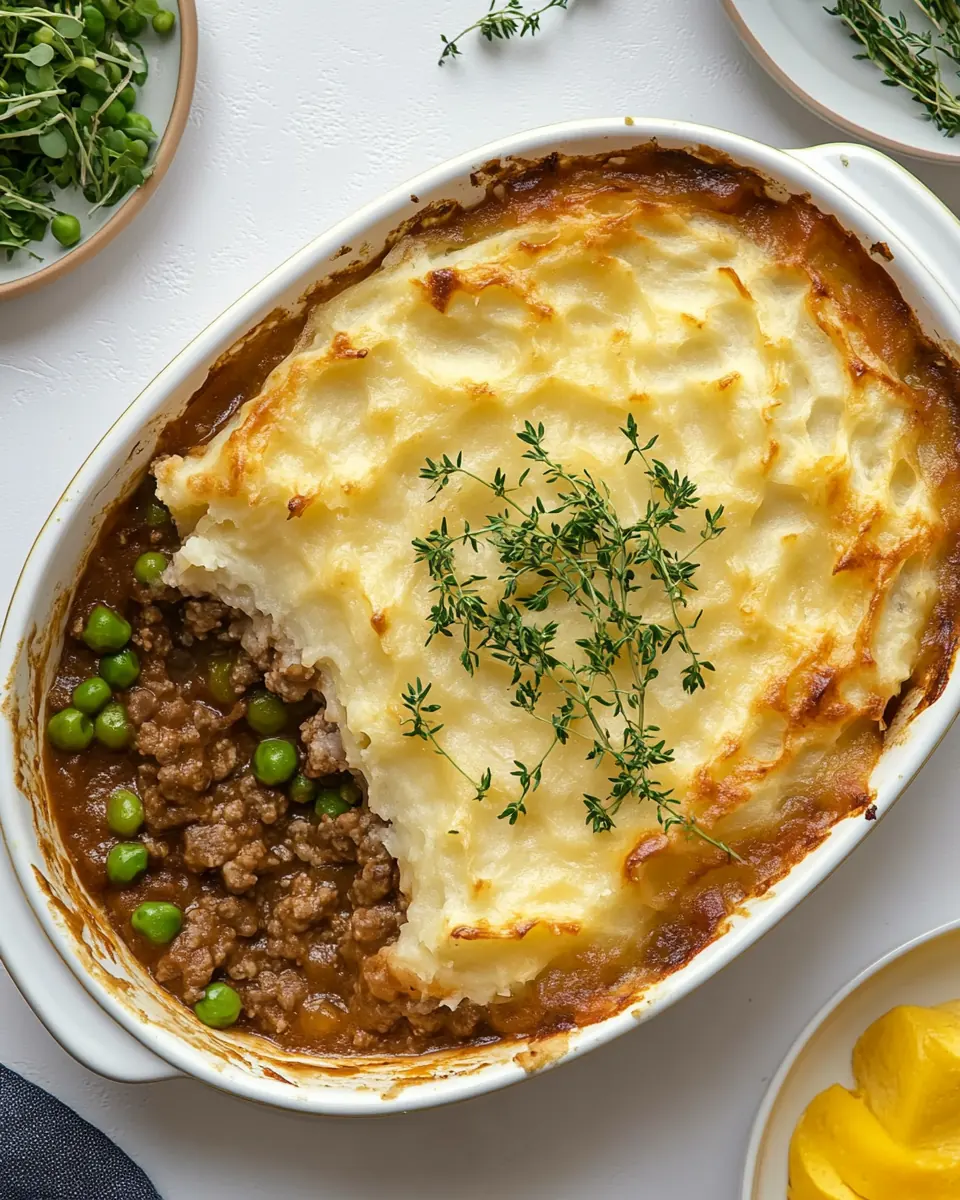
Bake for 30 -40 minutes until the pie is piping hot and the cheese is melted and golden. remove the pie from the oven and leave to rest for 5-10 minutes before serving.: In the oven the edges of the mash will bubble and brown, and the filling will steam beneath, sending up savory scent. The cheese should blister into golden patches and the whole dish should feel hot to the center. Resting after baking lets the filling settle, making it easier to serve clean slices. Cutting too soon can cause the filling to spill out, so be patient and let it rest.
Enjoy!: The first forkful should give you that satisfying mix of creamy potatoes , tender minced lamb , and the savory glazing of the sauce. Serve while warm and savor the comforting textures. A common pitfall is serving too hot, which can mask flavors, so let the dish cool just enough to enjoy immediately.