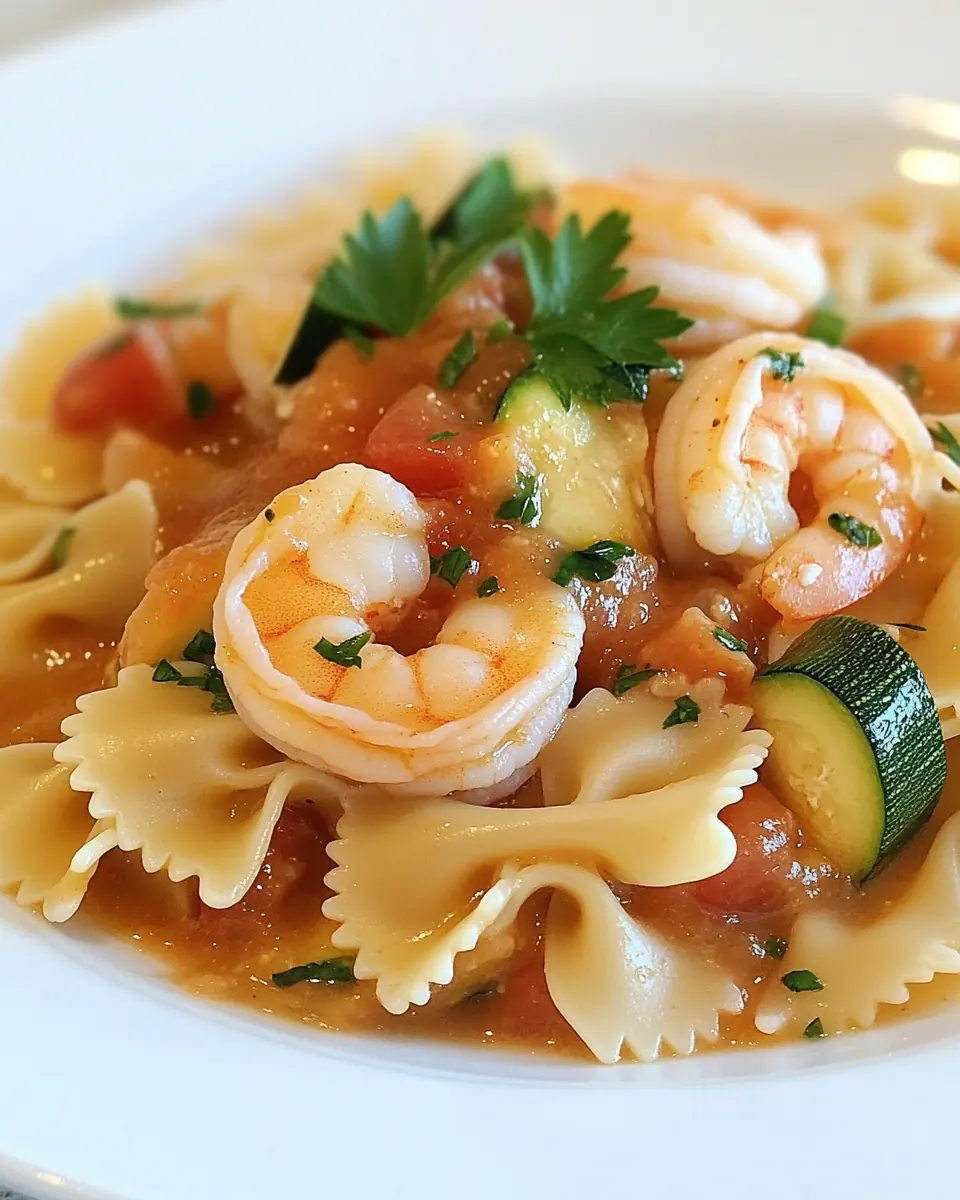
Cook pasta according to package instructions.: Start by bringing a large pot of well salted water to a rolling boil, then add the bowtie pasta and stir gently so the pieces do not cling. As the pasta cooks you should hear a constant, gentle bubbling and see the water move around the shapes. Cook to al dente, where the center still has a slight tooth to it, because it will continue to soften slightly when mixed with the warm sauce. A common mistake is overcooking which leads to a mushy finish, so test a piece a minute or two before the lower end of the package time to get perfect texture. After draining, give the pasta a quick toss to prevent sticking and keep it warm until sauce is ready.
While pasta cooks, heat a large skillet until very hot.: Place your skillet over high heat and let it become very hot until it gives off a faint shimmer, this is essential for an immediate sear on the shrimp . When the pan is properly heated you may see wisps of vapor and the surface will look dry and ready. Heating the pan thoroughly prevents the shrimp from steaming and ensures a quick caramelized edge. If you start with a cool pan the shrimp will release water and steam, losing that desirable sear.
Spray lightly with cooking spray.: A light coating of cooking spray prevents sticking while keeping added fat minimal. The spray should sizzle briefly on contact with the hot surface, signaling readiness for the shrimp . Apply sparingly, because excess spray can pool and create uneven browning. If you see smoking or dark residue, wipe the pan and reduce heat slightly before continuing.
Season shrimp with salt and pepper and add to hot skillet.: Seasoning the shrimp right before they hit the pan ensures immediate flavor without drawing out moisture. As soon as they touch the skillet you should hear a crisp sizzle and see the edges begin to firm. That sizzling sound is the Maillard reaction starting, which gives roasted notes to the seafood. Avoid overcrowding the pan, because too many pieces will lower the temperature and cause steaming instead of searing.
Saute for about 1 minute, until almost cooked through and remove from heat.: Cook the shrimp briefly and watch for milky opaque flesh and a slight curl to the shape, bright signs that they are nearly done. The interior should remain juicy, not rubbery. Remove them just before fully cooked because carryover heat will finish them. A common error is leaving them in too long, which makes the texture tough and chewy.
Set shrimp aside.: Transfer the shrimp to a plate to rest while you build the sauce. Resting stops residual heat from overcooking and keeps their texture tender. Cover lightly if you like to retain warmth, but don’t stack them or they may steam and soften. If you forget to set them aside and leave them in the pan, they will continue to cook and risk becoming dry.
Add olive oil to the pan, lower heat to medium, add shallots and garlic and saute until golden, about 1 minute.: Add the olive oil and reduce heat so the shallots and garlic soften rather than burn. You should notice a fragrant uplift of aromas as they cook, with the shallots turning translucent and the garlic giving off a sweet, roasted scent. This step forms the flavorful base for the sauce, so patience matters. If the aromatics brown too quickly, lower the heat immediately, because burnt garlic will introduce bitterness.
Add tomatoes and season with salt and pepper, and cook about 1 minute.: Toss in the diced tomatoes , and you will see their juices loosen and begin to mingle with the oil, creating a glossy, lightly saucy base. Salt helps the tomatoes break down faster and amplifies their natural brightness. Cook briefly so they soften but do not collapse entirely, preserving little bursts of tomato in the sauce. Overcooking here can lead to a flat, overly soft texture without contrast.
Add zucchini, saute another minute.: Add the prepared zucchini and sauté until it takes on a touch of translucence but still holds a slight bite. You should hear a soft hiss as the zucchini hits the pan and see its edges become tender. Quick cooking preserves its fresh vegetal flavor and prevents sogginess. The typical mistake is cooking zucchini too long, which causes it to lose structure and become mushy in the final dish.
Add chicken broth, red pepper flakes and mix well.: Pour in the chicken broth to deglaze the pan and lift any brown bits, which adds savory depth to the sauce. If using, sprinkle in the crushed red pepper flakes for gentle heat that rounds out the sweetness of the tomatoes . Stir so the liquid melds with the softened vegetables and creates a silky consistency. If you add too much broth you will thin the sauce excessively, so measure carefully and simmer briefly to concentrate flavors.
Return shrimp to the pan and simmer 30 seconds.: Bring the shrimp back into the skillet and let them warm through in the sauce for just thirty seconds, enough for flavors to marry without overcooking. You will notice the sauce clinging to their surfaces and the aroma intensifying. This brief finish preserves the shrimp’s tenderness and ensures even seasoning. Leaving them to simmer longer will firm them up and dry them out.
When pasta is cooked to al dente, drain in a colander and add pasta to sauce.: Drain the bowtie pasta thoroughly and transfer it into the skillet so every piece can get coated. The residual heat from the sauce will finish the pasta while allowing it to soak up flavor. Mixing pasta directly into the pan helps the shapes capture bits of tomato and herb. If you drain and let the pasta sit too long before combining, it may cool and not integrate with the sauce well.
Mix well with the sauce and adjust salt and pepper.: Toss everything gently until the sauce evenly coats the bowtie pasta ; you should see a glossy finish and smell a balanced savory aroma. Taste and tweak with additional salt and fresh pepper to your preference. Proper seasoning elevates the dish, so don’t skip this step. A common oversight is underseasoning at the end, which leaves the final plate bland despite good technique.
Add chopped parsley and serve.: Finish with the bright pop of chopped parsley , scattering it over the top for color and a fresh herbal note. The parsley should be added right before serving so it retains its vibrant hue and aroma. Serve immediately to enjoy the contrast of warm sauce and tender shrimp . If you let the dish sit too long, the parsley will wilt and the pasta may absorb too much sauce.
Top with some really good grated cheese!: A final sprinkle of grated cheese can lend a creamy, savory edge that rounds out the sauce, creating a comforting finish. Choose a dry grating cheese and add it sparingly so it melts into ribbons on contact. If you add too much cheese it may overwhelm the delicate seafood notes, so balance is key.
Yields a little over 1 1/2 cups per serving.: Expect each serving to be roughly one and a half cups, a portion size I find satisfying for a standard meal. This estimate helps with plating and leftovers planning. If you need larger portions, adjust the recipe quantities accordingly.