Shrimp and Zucchini with Bowties in Light Tomato Sauce
Shrimp and Zucchini with Bowties in Light Tomato Sauce is one of those meals I turn to when I want something bright, satisfying, and quick on a weeknight.
I first made this dish on a sultry summer evening after coming home from a walk to the farmers market, arms full of ripe tomatoes and a zucchini that looked like it had sunshine baked right into it. I had leftover shrimp in the fridge and a box of bowtie pasta tucked on the shelf, so I threw everything together and discovered a routine that felt both fresh and comforting. The first forkful hooked me with the way warm tomatoes and garlic softened into a light sauce that coated the pasta, while the quick sear on the shrimp kept it snappy and tender.
I kept experimenting, tinkering with the garlic and adding a splash of chicken broth to give the sauce a silky lift without weighing it down. Sometimes I julienne the zucchini for delicate ribbons, other times I cube it for a heartier bite, and both versions have their charms. Family dinners turned into quick rituals, and now this recipe is my go to when I need something healthy that still feels a little indulgent.
Recipe Snapshot
30 mins
10 mins
20 mins
Hard
350 kcal
Italian
Paleo, Whole30
Dinner
Large pot, Large skillet, Colander
What We Adore About This Shrimp and Zucchini with Bowties in Light Tomato Sauce
Fresh seasonal brightness
I love how the combination of ripe tomatoes and crisp zucchini sings of summer, offering a natural sweetness that complements the shrimp. The vegetables keep the dish light, while the pasta makes it comforting.
Speed without compromise
This recipe delivers a real meal in under an hour, which is crucial for weeknights when time is short. I value techniques that preserve texture and flavor, like high heat searing for the shrimp and brief sautéing for the aromatics, so you get vibrant results fast.
Balanced, not heavy
The light tomato sauce, lifted with a little chicken broth, gives you sauciness without heaviness. It lets the bowtie pasta and seafood shine, so the plate feels satisfying but not greasy.
Family friendly and versatile
People at my table appreciate how adaptable this dish is. It’s approachable for picky eaters, but it also scales up neatly if I need to feed guests. The flavors are simple, but they stack in a way that feels thoughtful and complete.
Textural contrast
Searing the shrimp briefly creates a buttery snap, while the tender zucchini and al dente bowtie pasta provide contrasting bites. That interplay is what keeps the dish interesting through every forkful.
Ingredient List for Shrimp and Zucchini with Bowties in Light Tomato Sauce
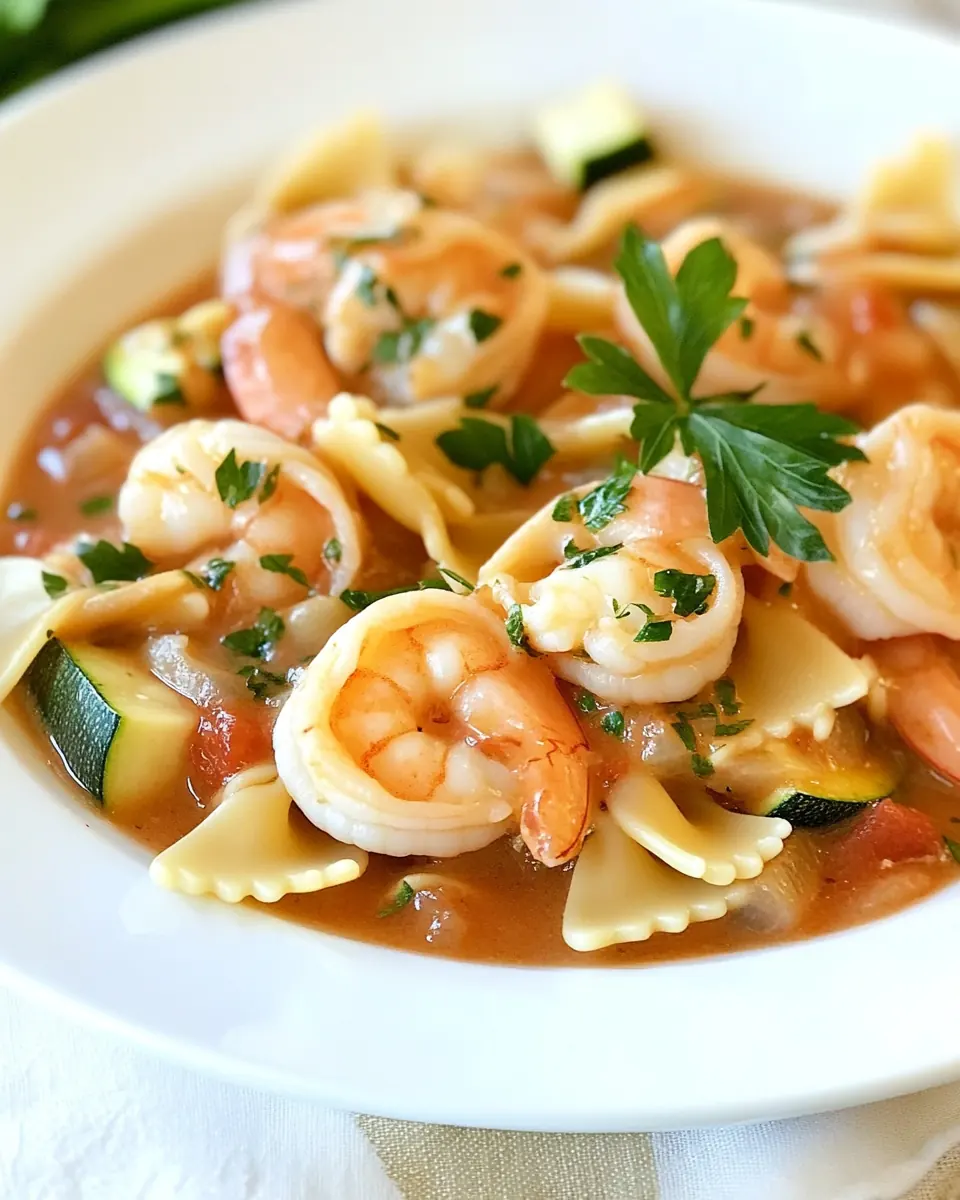
The ingredients here are all about simplicity and harmony. I choose items that layer flavor without fuss, letting each component contribute a clear note. The shrimp brings a briny sweetness, the tomatoes add gentle acidity, and the zucchini provides fresh vegetal texture. A little garlic and shallots form the aromatic base while chicken broth and olive oil help the sauce come together without overpowering the main players.
- 1 lbs shrimp, shelled and deviened (12 oz peeled weight): Cooked and peeled shrimp provide lean protein and a sweet, briny flavor; sauté quickly to avoid toughness and integrate into the sauce at the end to keep texture tender. Use the specified peeled weight for accurate portioning so the dish remains light yet satisfying. Season lightly while cooking to balance the tomato and zucchini flavors.
- 8 oz uncooked bowtie pasta: Uncooked bowtie pasta offers a tender, chewy base that soaks up the light tomato sauce and binds other ingredients; cook to al dente so it holds shape when tossed with shrimp and vegetables. Measure precisely to maintain proper pasta-to-protein ratio and prevent an overly saucy or dry final plate.
- 3 cloves garlic, sliced thin: Sliced garlic imparts aromatic, savory depth and a subtle pungency that mellows when gently cooked in oil; add early to flavor the oil but avoid high heat to prevent bitterness. Thin slices distribute garlic flavor evenly throughout the sauce and complement the shrimp and tomatoes.
- 2 shallots, diced: Diced shallots contribute a sweet, delicate onion note and gentle sharpness that enriches the sauce without overpowering; sweat them until soft to release natural sugars and build a mellow base. Finely diced shallots blend into the sauce and harmonize with garlic and tomatoes.
- 1 medium zucchini, julienned or cubed: Julienned or cubed zucchini provides tender-crisp texture and mild vegetal sweetness that absorbs sauce flavors; cook just until tender to retain shape and a pleasant bite. Use consistent cuts for even cooking and visual appeal in the finished dish.
- 2 medium tomatoes, diced: Diced tomatoes add bright acidity, fresh juiciness, and a light tomato base for the sauce; simmer briefly to break down slightly while preserving tomato freshness. Use ripe tomatoes for best flavor and to create a naturally light, low-fat sauce.
- 1 tbsp olive oil: Olive oil supplies a fragrant, fruity fat for sautéing aromatics and developing flavor; heat gently to release aromas and coat ingredients without smoking. Use the listed amount to achieve a light sauté that contributes richness without overpowering the low-fat profile.
- 1/2 cup fat free chicken broth: Fat free chicken broth introduces savory umami and moisture to form a light, low-calorie sauce; add to deglaze the pan and thin the tomatoes for a silky consistency. Use as a flavorful liquid that keeps the dish moist while maintaining a lighter nutritional profile.
- 1 tbsp fresh parsley, finely chopped: Fresh parsley, finely chopped, offers bright herbaceous notes and a fresh finish when sprinkled over the completed dish; stir in at the end to preserve color and aroma. Use sparingly to enhance balance and add a pop of green for presentation.
- cooking spray: Cooking spray provides a nonstick option for the pan to minimize added fats while sautéing ingredients; use lightly to prevent sticking and promote even cooking. Opt for spray to keep the recipe lower in oil while still allowing proper browning of aromatics.
- 1/2 tsp crushed red pepper flakes (optional): Crushed red pepper flakes deliver optional heat and subtle smokiness that can elevate the overall flavor; add a pinch to taste to introduce warmth without overwhelming the other components. Use sparingly and adjust while cooking to control spice level.
- salt and fresh pepper: Salt and fresh pepper season and balance flavors throughout the dish; add incrementally and taste as you go to achieve the desired seasoning. Use fresh ground pepper for aromatic bite and adjust salt to enhance but not dominate the natural flavors.
How to Make Shrimp and Zucchini with Bowties in Light Tomato Sauce
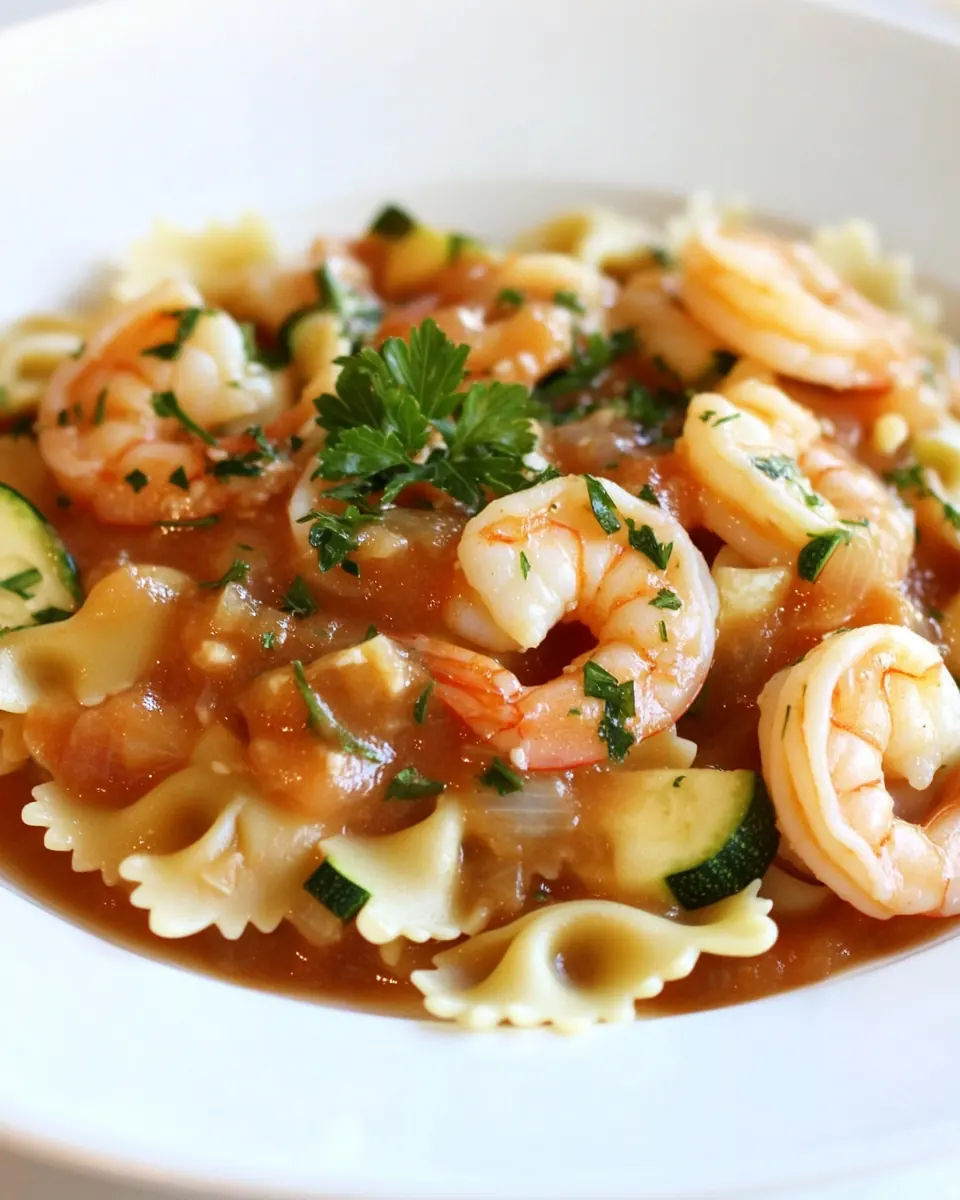
I like to keep the workflow organized so the pasta and sauce finish at the same moment. Timing and a hot pan are the unsung heroes here, and I always prep the ingredients first so there are no surprises at the stove. The steps below follow the original directions, expanded with sensory notes, why each action matters, and troubleshooting tips.
- Cook pasta according to package instructions.: Start by bringing a large pot of well salted water to a rolling boil, then add the bowtie pasta and stir gently so the pieces do not cling. As the pasta cooks you should hear a constant, gentle bubbling and see the water move around the shapes. Cook to al dente, where the center still has a slight tooth to it, because it will continue to soften slightly when mixed with the warm sauce. A common mistake is overcooking which leads to a mushy finish, so test a piece a minute or two before the lower end of the package time to get perfect texture. After draining, give the pasta a quick toss to prevent sticking and keep it warm until sauce is ready.
- While pasta cooks, heat a large skillet until very hot.: Place your skillet over high heat and let it become very hot until it gives off a faint shimmer, this is essential for an immediate sear on the shrimp . When the pan is properly heated you may see wisps of vapor and the surface will look dry and ready. Heating the pan thoroughly prevents the shrimp from steaming and ensures a quick caramelized edge. If you start with a cool pan the shrimp will release water and steam, losing that desirable sear.
- Spray lightly with cooking spray.: A light coating of cooking spray prevents sticking while keeping added fat minimal. The spray should sizzle briefly on contact with the hot surface, signaling readiness for the shrimp . Apply sparingly, because excess spray can pool and create uneven browning. If you see smoking or dark residue, wipe the pan and reduce heat slightly before continuing.
- Season shrimp with salt and pepper and add to hot skillet.: Seasoning the shrimp right before they hit the pan ensures immediate flavor without drawing out moisture. As soon as they touch the skillet you should hear a crisp sizzle and see the edges begin to firm. That sizzling sound is the Maillard reaction starting, which gives roasted notes to the seafood. Avoid overcrowding the pan, because too many pieces will lower the temperature and cause steaming instead of searing.
- Saute for about 1 minute, until almost cooked through and remove from heat.: Cook the shrimp briefly and watch for milky opaque flesh and a slight curl to the shape, bright signs that they are nearly done. The interior should remain juicy, not rubbery. Remove them just before fully cooked because carryover heat will finish them. A common error is leaving them in too long, which makes the texture tough and chewy.
- Set shrimp aside.: Transfer the shrimp to a plate to rest while you build the sauce. Resting stops residual heat from overcooking and keeps their texture tender. Cover lightly if you like to retain warmth, but don’t stack them or they may steam and soften. If you forget to set them aside and leave them in the pan, they will continue to cook and risk becoming dry.
- Add olive oil to the pan, lower heat to medium, add shallots and garlic and saute until golden, about 1 minute.: Add the olive oil and reduce heat so the shallots and garlic soften rather than burn. You should notice a fragrant uplift of aromas as they cook, with the shallots turning translucent and the garlic giving off a sweet, roasted scent. This step forms the flavorful base for the sauce, so patience matters. If the aromatics brown too quickly, lower the heat immediately, because burnt garlic will introduce bitterness.
- Add tomatoes and season with salt and pepper, and cook about 1 minute.: Toss in the diced tomatoes , and you will see their juices loosen and begin to mingle with the oil, creating a glossy, lightly saucy base. Salt helps the tomatoes break down faster and amplifies their natural brightness. Cook briefly so they soften but do not collapse entirely, preserving little bursts of tomato in the sauce. Overcooking here can lead to a flat, overly soft texture without contrast.
- Add zucchini, saute another minute.: Add the prepared zucchini and sauté until it takes on a touch of translucence but still holds a slight bite. You should hear a soft hiss as the zucchini hits the pan and see its edges become tender. Quick cooking preserves its fresh vegetal flavor and prevents sogginess. The typical mistake is cooking zucchini too long, which causes it to lose structure and become mushy in the final dish.
- Add chicken broth, red pepper flakes and mix well.: Pour in the chicken broth to deglaze the pan and lift any brown bits, which adds savory depth to the sauce. If using, sprinkle in the crushed red pepper flakes for gentle heat that rounds out the sweetness of the tomatoes . Stir so the liquid melds with the softened vegetables and creates a silky consistency. If you add too much broth you will thin the sauce excessively, so measure carefully and simmer briefly to concentrate flavors.
- Return shrimp to the pan and simmer 30 seconds.: Bring the shrimp back into the skillet and let them warm through in the sauce for just thirty seconds, enough for flavors to marry without overcooking. You will notice the sauce clinging to their surfaces and the aroma intensifying. This brief finish preserves the shrimp’s tenderness and ensures even seasoning. Leaving them to simmer longer will firm them up and dry them out.
- When pasta is cooked to al dente, drain in a colander and add pasta to sauce.: Drain the bowtie pasta thoroughly and transfer it into the skillet so every piece can get coated. The residual heat from the sauce will finish the pasta while allowing it to soak up flavor. Mixing pasta directly into the pan helps the shapes capture bits of tomato and herb. If you drain and let the pasta sit too long before combining, it may cool and not integrate with the sauce well.
- Mix well with the sauce and adjust salt and pepper.: Toss everything gently until the sauce evenly coats the bowtie pasta ; you should see a glossy finish and smell a balanced savory aroma. Taste and tweak with additional salt and fresh pepper to your preference. Proper seasoning elevates the dish, so don’t skip this step. A common oversight is underseasoning at the end, which leaves the final plate bland despite good technique.
- Add chopped parsley and serve.: Finish with the bright pop of chopped parsley , scattering it over the top for color and a fresh herbal note. The parsley should be added right before serving so it retains its vibrant hue and aroma. Serve immediately to enjoy the contrast of warm sauce and tender shrimp . If you let the dish sit too long, the parsley will wilt and the pasta may absorb too much sauce.
- Top with some really good grated cheese!: A final sprinkle of grated cheese can lend a creamy, savory edge that rounds out the sauce, creating a comforting finish. Choose a dry grating cheese and add it sparingly so it melts into ribbons on contact. If you add too much cheese it may overwhelm the delicate seafood notes, so balance is key.
- Yields a little over 1 1/2 cups per serving.: Expect each serving to be roughly one and a half cups, a portion size I find satisfying for a standard meal. This estimate helps with plating and leftovers planning. If you need larger portions, adjust the recipe quantities accordingly.
Change It Up
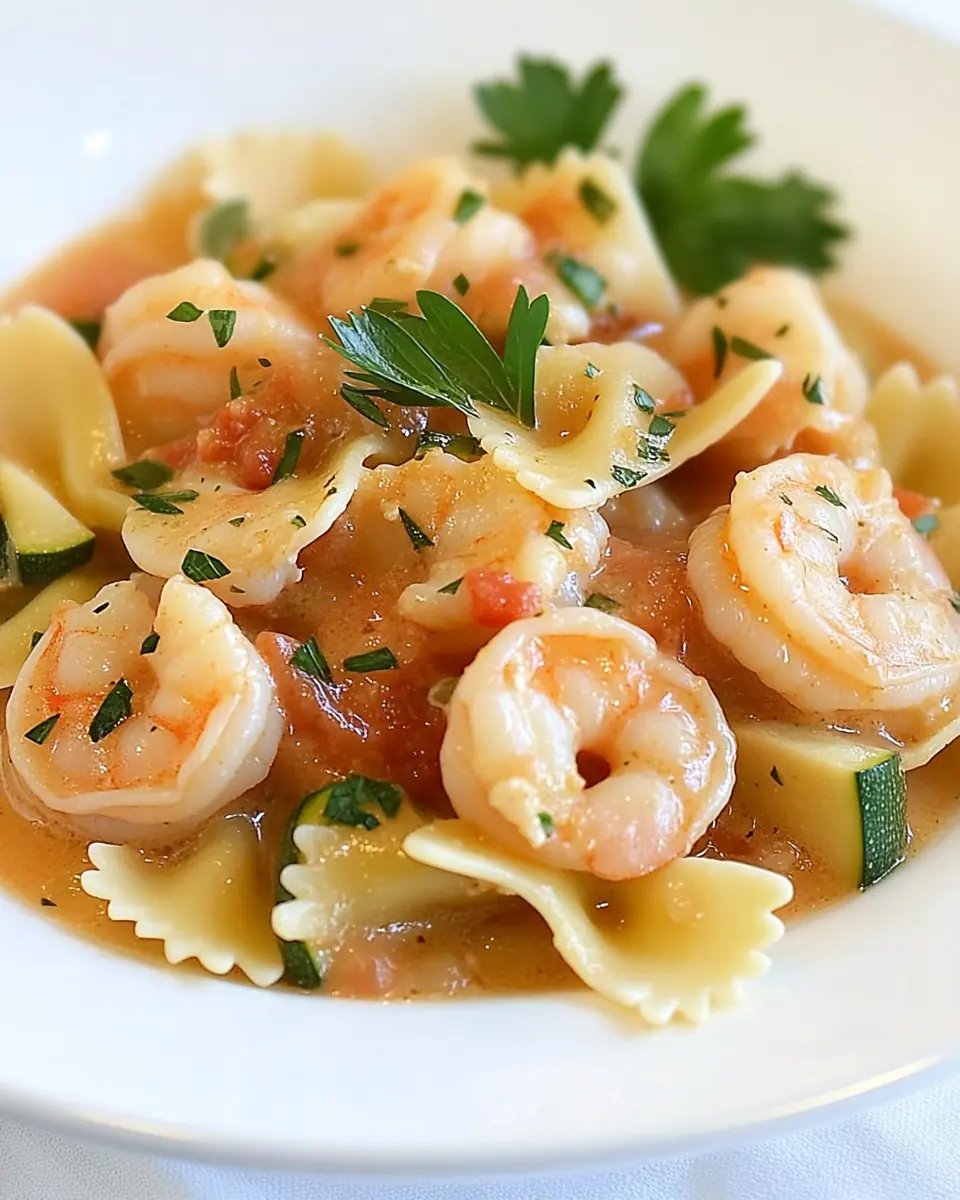
If you want to vary the dish or adapt it to what you have on hand, here are thoughtful ways to change it while keeping the core character intact. Each tip highlights a small swap or enhancement that keeps the recipe quick and flavorful.
- Boost the herb profile: Stir in extra chopped parsley and a little zest from citrus for an herbier finish that brightens the sauce instantly.
- Make it milder: Omit the crushed red pepper flakes if you prefer a very mild plate, the tomatoes will still lend depth and the shrimp remains the star.
- Change zucchini cut: Julienned zucchini blends subtly through the pasta, while cubed zucchini gives bigger, more satisfying vegetable bites.
- Use low sodium broth: If you are watching salt, use low sodium chicken broth and adjust seasoning at the end, it prevents over salting early on.
- Serve family style: Toss pasta and sauce in a warmed serving bowl and top with parsley so everyone can help themselves and the dish stays warm longer.
- Finish simply: A light grating of dry cheese adds creaminess, but use it sparingly to avoid masking the delicate shrimp flavors.
What Goes Well With This Shrimp and Zucchini with Bowties in Light Tomato Sauce
This dish pairs well with simple, fresh accompaniments that echo its light, summery character. Think small additions that enhance texture or provide a cooling counterpoint. Below are practical serving ideas and occasions where this recipe really shines.
- Light green salad: A crisp salad dressed with lemon vinaigrette complements the warm pasta and adds crunch for contrast, ideal for casual dinners.
- Crusty bread: Warm slices of crusty bread are perfect for mopping up the light tomato sauce and make the meal feel heartier for cooler evenings.
- Al fresco dinners: This recipe is ideal for outdoor summer meals, where the fresh tomatoes and zucchini reflect seasonal produce and pair nicely with a breezy setting.
- Weeknight family meals: Because it’s quick and balanced, serve it on busy weeknights when you want something wholesome without fuss, the pasta and shrimp make it a crowd pleaser.
- Make ahead tips: Keep components slightly undercooked if storing for later, then gently rewarm in a skillet with a splash of chicken broth to refresh the sauce and texture.
- Occasion suggestions: Serve at light dinner parties or as a satisfying lunch, it’s versatile and approachable for varied guest preferences.
FAQ
Conclusion
This recipe stands out for its bright combination of fresh tomatoes, tender shrimp, and al dente bowtie pasta, all brought together by a light, savory sauce. It’s the kind of meal that feels both special and effortless, perfect for busy evenings when you want something wholesome without hours in the kitchen. Give it a try soon, and you may find it becoming a regular in your rotation for simple, satisfying dinners.
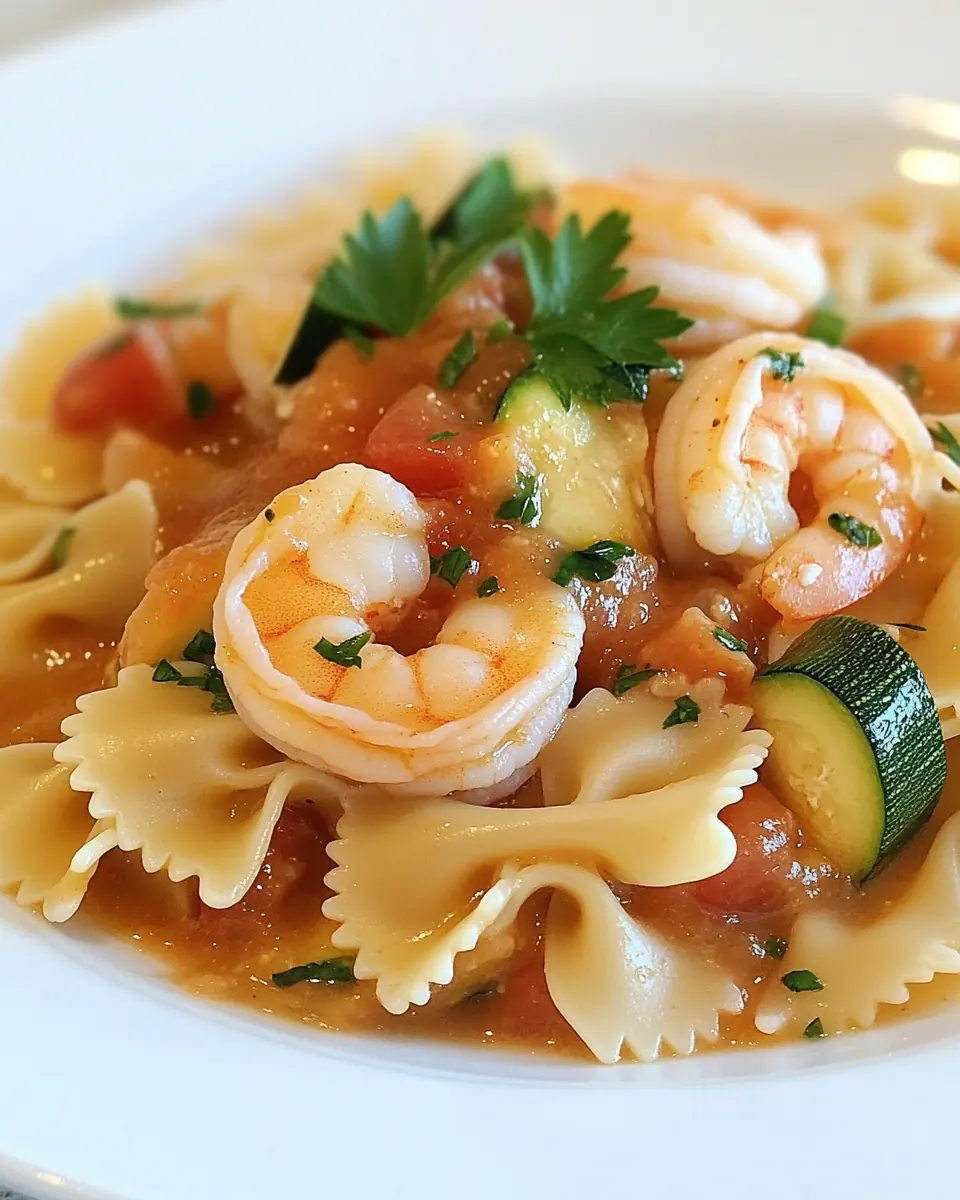
Shrimp and Zucchini with Bowties in Light Tomato Sauce
Ingredients
Equipment
Method
- Cook pasta according to package instructions.: Start by bringing a large pot of well salted water to a rolling boil, then add the bowtie pasta and stir gently so the pieces do not cling. As the pasta cooks you should hear a constant, gentle bubbling and see the water move around the shapes. Cook to al dente, where the center still has a slight tooth to it, because it will continue to soften slightly when mixed with the warm sauce. A common mistake is overcooking which leads to a mushy finish, so test a piece a minute or two before the lower end of the package time to get perfect texture. After draining, give the pasta a quick toss to prevent sticking and keep it warm until sauce is ready.
- While pasta cooks, heat a large skillet until very hot.: Place your skillet over high heat and let it become very hot until it gives off a faint shimmer, this is essential for an immediate sear on the shrimp . When the pan is properly heated you may see wisps of vapor and the surface will look dry and ready. Heating the pan thoroughly prevents the shrimp from steaming and ensures a quick caramelized edge. If you start with a cool pan the shrimp will release water and steam, losing that desirable sear.
- Spray lightly with cooking spray.: A light coating of cooking spray prevents sticking while keeping added fat minimal. The spray should sizzle briefly on contact with the hot surface, signaling readiness for the shrimp . Apply sparingly, because excess spray can pool and create uneven browning. If you see smoking or dark residue, wipe the pan and reduce heat slightly before continuing.
- Season shrimp with salt and pepper and add to hot skillet.: Seasoning the shrimp right before they hit the pan ensures immediate flavor without drawing out moisture. As soon as they touch the skillet you should hear a crisp sizzle and see the edges begin to firm. That sizzling sound is the Maillard reaction starting, which gives roasted notes to the seafood. Avoid overcrowding the pan, because too many pieces will lower the temperature and cause steaming instead of searing.
- Saute for about 1 minute, until almost cooked through and remove from heat.: Cook the shrimp briefly and watch for milky opaque flesh and a slight curl to the shape, bright signs that they are nearly done. The interior should remain juicy, not rubbery. Remove them just before fully cooked because carryover heat will finish them. A common error is leaving them in too long, which makes the texture tough and chewy.
- Set shrimp aside.: Transfer the shrimp to a plate to rest while you build the sauce. Resting stops residual heat from overcooking and keeps their texture tender. Cover lightly if you like to retain warmth, but don’t stack them or they may steam and soften. If you forget to set them aside and leave them in the pan, they will continue to cook and risk becoming dry.
- Add olive oil to the pan, lower heat to medium, add shallots and garlic and saute until golden, about 1 minute.: Add the olive oil and reduce heat so the shallots and garlic soften rather than burn. You should notice a fragrant uplift of aromas as they cook, with the shallots turning translucent and the garlic giving off a sweet, roasted scent. This step forms the flavorful base for the sauce, so patience matters. If the aromatics brown too quickly, lower the heat immediately, because burnt garlic will introduce bitterness.
- Add tomatoes and season with salt and pepper, and cook about 1 minute.: Toss in the diced tomatoes , and you will see their juices loosen and begin to mingle with the oil, creating a glossy, lightly saucy base. Salt helps the tomatoes break down faster and amplifies their natural brightness. Cook briefly so they soften but do not collapse entirely, preserving little bursts of tomato in the sauce. Overcooking here can lead to a flat, overly soft texture without contrast.
- Add zucchini, saute another minute.: Add the prepared zucchini and sauté until it takes on a touch of translucence but still holds a slight bite. You should hear a soft hiss as the zucchini hits the pan and see its edges become tender. Quick cooking preserves its fresh vegetal flavor and prevents sogginess. The typical mistake is cooking zucchini too long, which causes it to lose structure and become mushy in the final dish.
- Add chicken broth, red pepper flakes and mix well.: Pour in the chicken broth to deglaze the pan and lift any brown bits, which adds savory depth to the sauce. If using, sprinkle in the crushed red pepper flakes for gentle heat that rounds out the sweetness of the tomatoes . Stir so the liquid melds with the softened vegetables and creates a silky consistency. If you add too much broth you will thin the sauce excessively, so measure carefully and simmer briefly to concentrate flavors.
- Return shrimp to the pan and simmer 30 seconds.: Bring the shrimp back into the skillet and let them warm through in the sauce for just thirty seconds, enough for flavors to marry without overcooking. You will notice the sauce clinging to their surfaces and the aroma intensifying. This brief finish preserves the shrimp’s tenderness and ensures even seasoning. Leaving them to simmer longer will firm them up and dry them out.
- When pasta is cooked to al dente, drain in a colander and add pasta to sauce.: Drain the bowtie pasta thoroughly and transfer it into the skillet so every piece can get coated. The residual heat from the sauce will finish the pasta while allowing it to soak up flavor. Mixing pasta directly into the pan helps the shapes capture bits of tomato and herb. If you drain and let the pasta sit too long before combining, it may cool and not integrate with the sauce well.
- Mix well with the sauce and adjust salt and pepper.: Toss everything gently until the sauce evenly coats the bowtie pasta ; you should see a glossy finish and smell a balanced savory aroma. Taste and tweak with additional salt and fresh pepper to your preference. Proper seasoning elevates the dish, so don’t skip this step. A common oversight is underseasoning at the end, which leaves the final plate bland despite good technique.
- Add chopped parsley and serve.: Finish with the bright pop of chopped parsley , scattering it over the top for color and a fresh herbal note. The parsley should be added right before serving so it retains its vibrant hue and aroma. Serve immediately to enjoy the contrast of warm sauce and tender shrimp . If you let the dish sit too long, the parsley will wilt and the pasta may absorb too much sauce.
- Top with some really good grated cheese!: A final sprinkle of grated cheese can lend a creamy, savory edge that rounds out the sauce, creating a comforting finish. Choose a dry grating cheese and add it sparingly so it melts into ribbons on contact. If you add too much cheese it may overwhelm the delicate seafood notes, so balance is key.
- Yields a little over 1 1/2 cups per serving.: Expect each serving to be roughly one and a half cups, a portion size I find satisfying for a standard meal. This estimate helps with plating and leftovers planning. If you need larger portions, adjust the recipe quantities accordingly.
Notes
- Boost the herb profile: Stir in extra chopped parsley and a little zest from citrus for an herbier finish that brightens the sauce instantly.
- Make it milder: Omit the crushed red pepper flakes if you prefer a very mild plate, the tomatoes will still lend depth and the shrimp remains the star.
- Change zucchini cut: Julienned zucchini blends subtly through the pasta, while cubed zucchini gives bigger, more satisfying vegetable bites.
- Use low sodium broth: If you are watching salt, use low sodium chicken broth and adjust seasoning at the end, it prevents over salting early on.
- Serve family style: Toss pasta and sauce in a warmed serving bowl and top with parsley so everyone can help themselves and the dish stays warm longer.
- Finish simply: A light grating of dry cheese adds creaminess, but use it sparingly to avoid masking the delicate shrimp flavors.