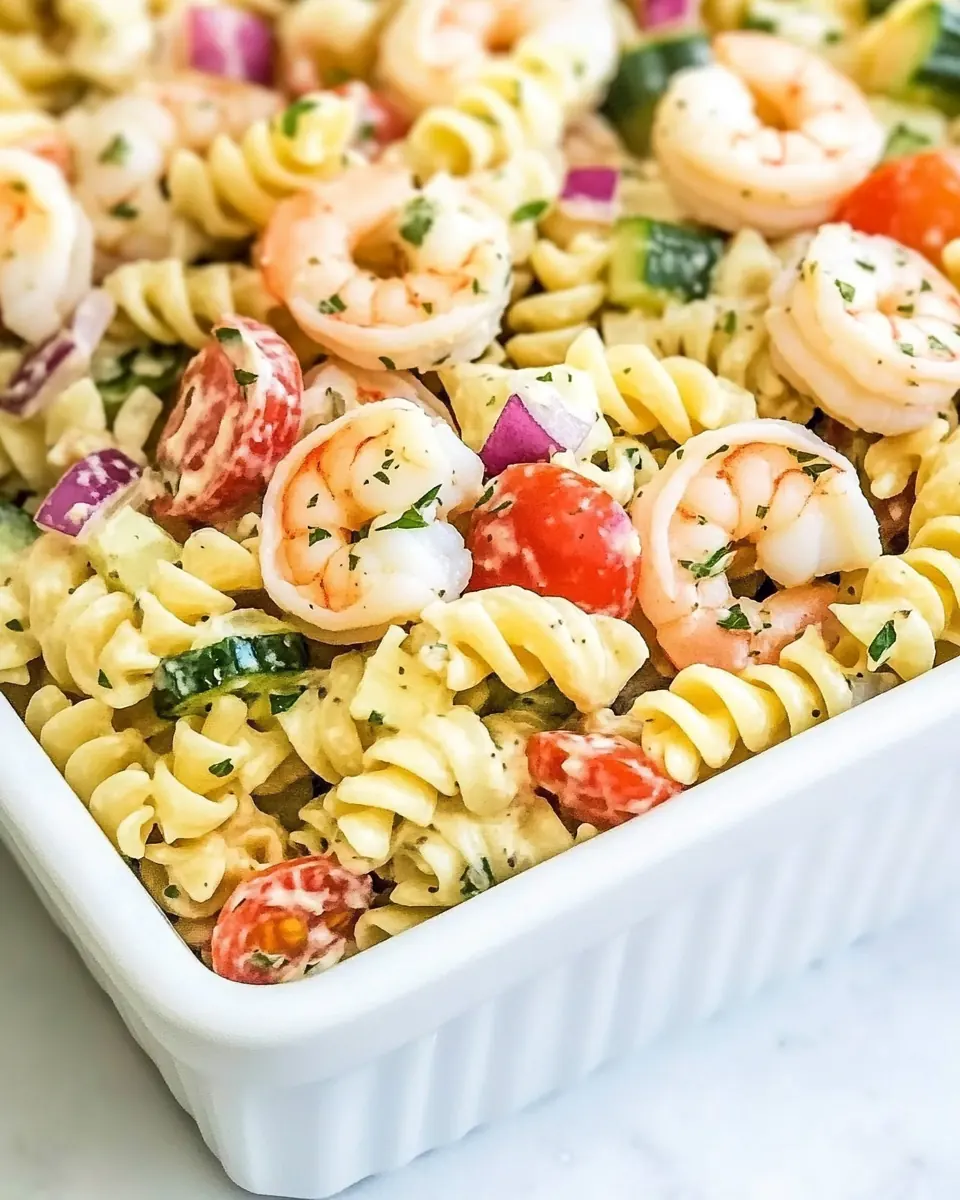
Boil the pasta in a large pot of salted water according to package instructions. Drain the pasta and run under cold water, until cool, drain and place in a large bowl.: The kitchen will fill with a warm, wheaty steam as the pasta comes to a gentle boil, and you should hear a steady, soft bubbling sound rather than a roaring boil, which helps prevent foaming over. When the pasta reaches al dente, it will still have slight resistance when bitten through, and that firmness is crucial so the pieces do not collapse when chilled. After draining, rinse the pasta under cool running water until it feels pleasantly cool to the touch, this stops the cooking and removes surface starch that otherwise makes the salad gummy. A common mistake is to skip rinsing, which can glue the pieces together once dressed, so take the extra minute to refresh the pasta under the tap.
Drain and rinse the shrimps under cool water, add them to the bowl of pasta along with the diced tomato and cucumber. Set aside.: You will notice the pasta lose its steam and become pliant, not mushy, as the cool water firms it up. Transferring it to a large bowl while still slightly warm allows the dressing to absorb evenly, but fully cooling prevents the mayo from breaking down. Feel the pasta between your fingers to ensure it is separated and not sticking together. Overcrowding the bowl can cause clumping, so use a roomy container for gentle tossing.
In a separate bowl whisk together the ingredients for the dressing, adding more milk if necessary to reach desired consistency. Pour the dressing over the pasta and gently stir together, to coat and mix the pasta salad. Chill until ready to serve.: As you rinse the canned or thawed cooked shrimp , you will see any residual brine wash away, leaving the delicate, slightly springy texture that blends well with pasta . When you fold in the diced tomato and cucumber , look for a mix of colors and a contrast of textures, the cucumber providing crispness while the tomato offers juiciness. The sound here is subtle: a light swish as you fold the pieces together, and the visual cue is even distribution without crushing the tomato. A typical error is folding too vigorously, which bruises the tomato and releases excess liquid, so gently combine the ingredients.
Set aside: Letting the salad sit briefly before dressing allows any stray liquid to settle and gives you a chance to taste and adjust seasoning. Visually, components will relax and the bowl will look more cohesive. If you skip this pause, the dressing may be absorbed unevenly, and the final texture can be inconsistent. Use this moment to check the seasoning and remove any large tomato seeds that might have been missed.
In a separate bowl whisk together the ingredients for the dressing, adding more milk if necessary to reach desired consistency: As you whisk the mayo , ketchup , salt , sugar , and optional horseradish , you will see the mixture mellow into a glossy, unified emulsion, and the aroma will shift to a gentle tang with a hint of sweetness. Whisking briskly incorporates air so the dressing feels lighter on the palate; if it looks too thick, add a teaspoon of milk at a time until it flows slowly off a spoon. A common pitfall is over thinning, which causes the dressing to pool instead of coating, so aim for a thick ribbon that still pours.
Pour the dressing over the pasta and gently stir together, to coat and mix the pasta salad: When the dressing hits the bowl, listen for a soft swishing sound as you fold it through; you should see the glossy dressing cling to the pasta and vegetables, not pool beneath them. Use a gentle folding motion from the bottom up to evenly distribute without breaking the tomato or overworking the pasta . The salad should look uniformly dressed with visible flecks of seasoning. Avoid aggressive stirring which can make the salad weepy or cause the proteins to become dense.
Chill until ready to serve: Cooling the salad in the refrigerator allows flavors to marry and the dressing to firm slightly, giving a cohesive mouthfeel. The bowl will become quieter as condensation fades and the salad reaches a cool, refreshing temperature, perfect for serving. Chill for at least thirty minutes so the texture sets, but not so long that the cucumber loses its crunch. A typical mistake is serving it straight from mixing, which can leave flavors unblended and a loose dressing texture.