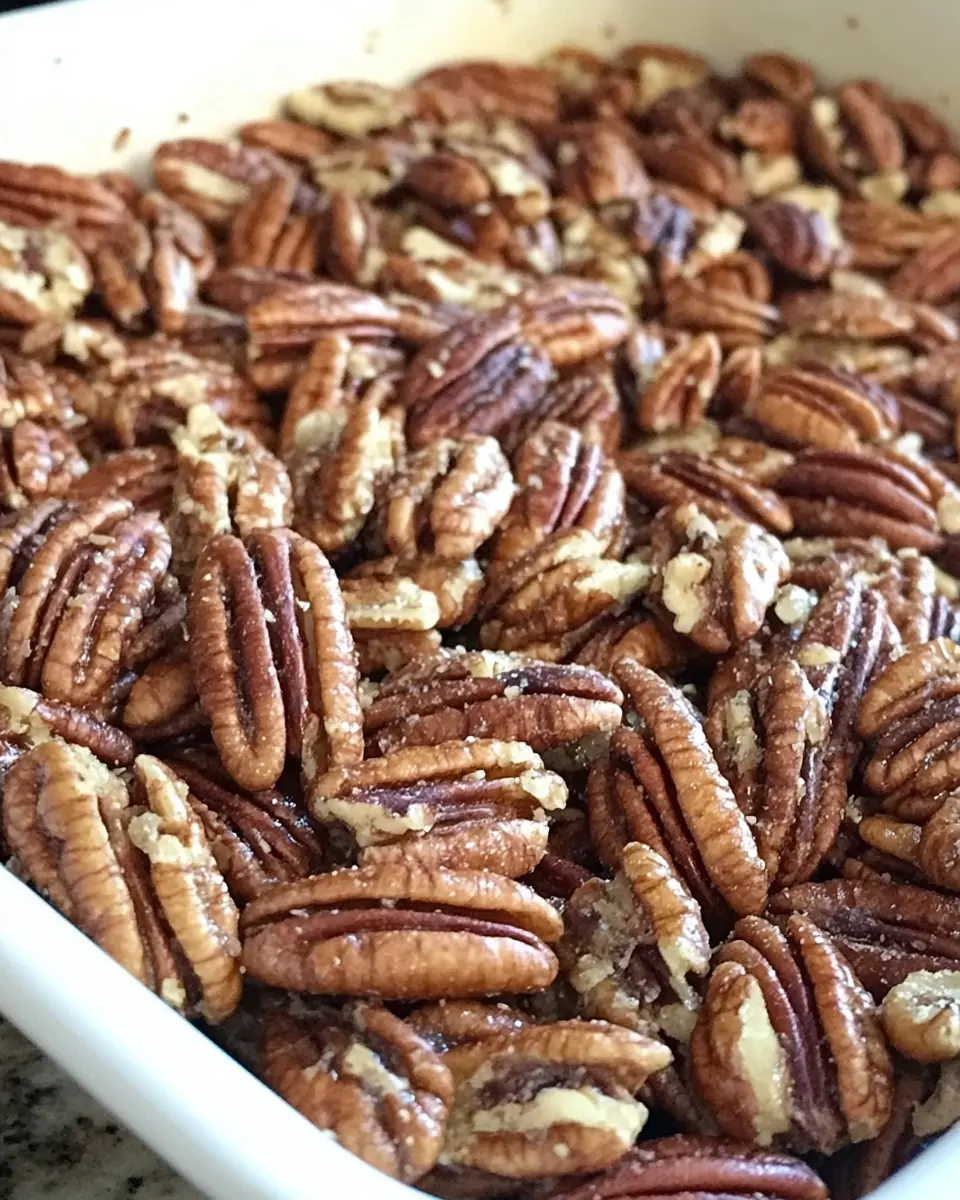
Preheat oven to 300 degrees Fahrenheit.: Warmth changes the way the pecan oils bloom, creating a toasty aroma that fills the kitchen and signals readiness. You should notice the oven stabilizing at the set temperature before the nuts go in, which ensures even roasting. If the oven is not fully preheated, you risk uneven coloring, so wait until the indicator shows the temperature is reached and the interior is consistently warm.
Place pecan halves on a half sheet pan or cookie sheet, being sure to spread evenly on the pan.: When you spread the pecan halves in a single layer, air circulates around each piece and promotes uniform browning. The visual cue to look for is each nut lying flat, not piled on top of another. If you crowd the pan, the nuts steam instead of toast, which leaves them limp and pale, so always use a wide sheet and spread them out.
Break pats of butter into small pieces and place on pecan halves.: As the butter melts, it coats the surfaces and encourages a glossy finish, while helping the salt adhere. You will hear a faint sizzle and smell butter begin to caramelize, which is a good sign. A common mistake is adding large chunks that take too long to melt, causing uneven coating; cut the butter small so it distributes quickly.
Sprinkle salt all over the pecans.: The granules of salt should be visible on the nuts before roasting, because they dissolve slightly as the butter melts and create pockets of concentrated flavor. I pay attention to coverage, aiming for an even dusting rather than clumps. Over salting will overpower the natural pecan taste, so measure carefully to keep balance.
Place pan into oven and bake for 10 minutes, then stir gently, turning the pecans as you stir.: During the first ten minutes the surface will just begin to color and the aroma will rise. When you stir, you should hear a subtle shift as the pecan halves move and see more even bronze appear. Stirring redistributes heat and melted butter , preventing hot spots. One mistake is skipping this stir, which can result in uneven browning with some pieces overdone while others remain pale.
Cook another 10 minutes, watching carefully to make sure they do not over brown.: In the second interval the color deepens and the scent becomes nutty and toasted. Keep a close eye because nuts can go from perfect to bitter very quickly once sugars and oils overcook. I stand nearby and check every few minutes through the oven window, and if you see dark edges form, remove them immediately to avoid a bitter finish.
Remove from the oven and allow to cool slightly.: Cooling lets the butter set and the pecan halves crisp further as they release steam, which results in a better texture. You will notice the glossy coating dull slightly and the sound change to a firmer snap when bitten. A common error is tasting immediately while they are too hot, which can feel greasy and mask the final crunch, so give them a short rest.