Heat oil in a Dutch oven. Season brisket with salt and pepper. Add the brisket, fat side down and cook until well browned, about 4-5 minutes per side.: As the oil warms, you will hear a faint ripple and see it shimmer, signaling it is ready to sear. The pan should be hot enough that when you lay the brisket in, it sizzles immediately, forming a brown crust. This Maillard reaction contributes nutty, savory flavors that are vital to the final dish. If the oil smokes, lower the heat to prevent bitterness. A common misstep is overcrowding the pot, which makes the meat steam instead of sear, so work with enough surface space.
Preheat your oven to 325º.: After patting the brisket dry, you will feel the texture change as the seasonings adhere. Even seasoning at this stage helps build flavor from the inside out during the long cook. I press the salt and freshly ground pepper into the meat so it forms a seasoning crust when seared. Avoid oversalting because the glaze will reduce and intensify salty notes.
Combine the remaining ingredients, place the brisket in a Dutch oven, and pour sauce over the brisket.: When the meat hits the hot oil, listen for a steady sizzle and watch for a deepening brown color. That crust signals that flavorful compounds are forming, leading to a richly flavored sauce later. Flip carefully so the sear remains intact. Rushing this step or turning too often prevents proper browning.
Cover and bake in 325º oven for 2 1/2-3 hours, flipping halfway through cooking time.: You will notice the kitchen temperature settle into a warm hum as the oven comes up to heat. The low and steady oven environment allows connective tissue in the brisket to break down slowly, yielding tender slices. Confirm the oven reaches the desired temperature before inserting the pan, as placing cold meat into an oven that is still warming can extend cooking time and affect texture.
Check the beef and if it shreds easily with a fork, it's done.: As you whisk together the coffee , ketchup , chili sauce , honey , Worcestershire sauce , minced garlic , and soy sauce , inhale the evolving aroma of sweet, salty, and roasted notes. Pouring this mixture over the seared brisket helps distribute flavors evenly and creates a bathing liquid that will reduce into the glaze. A frequent error is not tasting the sauce before baking, so take a spoonful and adjust seasoning if needed.
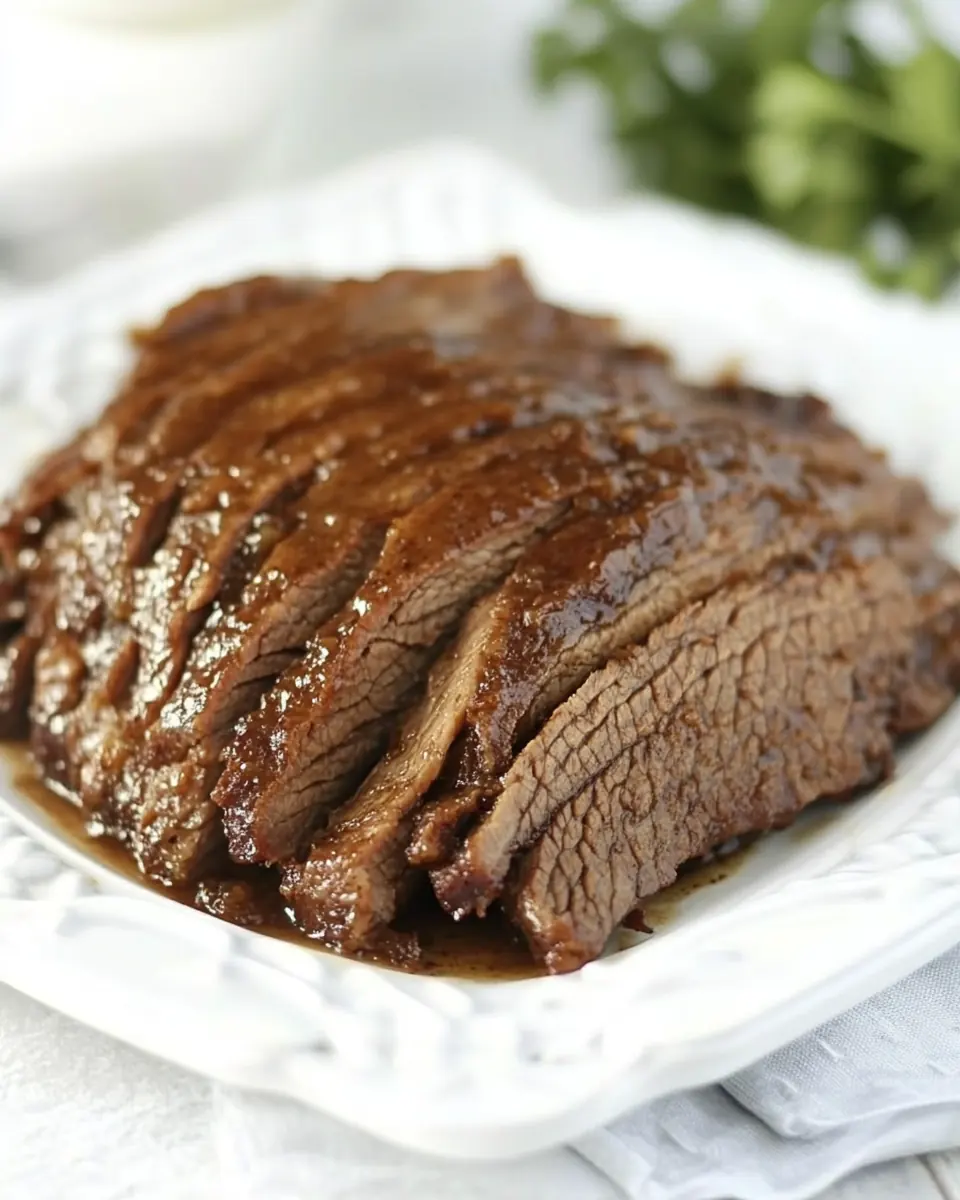
Remove to a cutting board and slice against the grain.: In the oven, you will begin to notice a deep, concentrated scent coming from the pot as sugars caramelize and beef juices mingle with the glaze. The long, low bake allows collagen to melt and makes the meat tender. Flip at the halfway point to ensure even exposure to juices and glaze. One mistake to avoid is opening the oven too often, which drops temperature and lengthens cooking time.
Place the slices back in the Dutch oven to allow slices to absorb some of the pan juices. Serve with sauce.: The tactile cue of the fork gliding through the meat is the clearest sign of readiness, and you will see strands separating gently rather than tearing. This texture means collagen has converted to gelatin, delivering that silky mouthfeel. If it resists, return it to the oven and check again later; undercooking will leave the meat tough rather than tender.
Alternatively, you may cook in a slow cooker on low for 8 hours, flipping at the halfway mark.: Slicing against the grain shortens muscle fibers, producing tender bite sized pieces rather than long, chewy strands. Look for the direction of fibers and cut perpendicular to them for the best texture. If you slice with the grain, the meat will feel stringy and tougher, so take a moment to orient the cut.
Place the slices back in the Dutch oven to allow slices to absorb some of the pan juices: Returning the sliced brisket to the warm juices lets the glaze cling to every surface, amplifying flavor and keeping the meat moist. You will see the sauce gloss over the slices and smell intensified aromatics. A common oversight is plating immediately, which can leave the meat drier and the sauce separated; resting in the pan allows flavors to marry.
Serve with sauce: As you spoon the glossy sauce over the plated slices, the shine and the perfume of roasted coffee and sweet glaze will be the first impression for diners. Serving warm keeps the texture luscious and highlights the contrast between crust and tender interior. Avoid refrigerating and serving cold shortly after cooking, as the glaze firms up and the experience is less pleasant.
Alternatively you may cook in a slow cooker on low for 8 hours, flipping at the halfway mark: Cooking low and slow in a crock produces a deeply tender result with minimal monitoring. You will notice a diffuse, steady aroma signaling progress, and the meat will become fall apart tender. The trade off is less surface crust than searing and oven braising, so if you prefer a caramelized exterior, searing first is recommended. A mistake to watch for is adding too little liquid in the slow cooker, which can lead to dryness during the long cook.