Grease the bottom and sides of the slow cooker insert using coconut oil, cooking spray, or butter.: You will notice a faint sheen across the insert surface, which is the sign you applied enough fat to prevent sticking. When the insert is properly greased, the rim where the insert meets the pot will be slick, and you may smell a subtle hint of the fat you used, especially if it was butter . This step matters because it prevents the thin, dry crust from forming as the oats cook slowly, a crust that can sometimes burn and taint the rest of the batch. A common mistake is skipping this step entirely, leading to stubborn bits adhering to the bottom; if that happens, resist stirring the burned portion back in, and scoop from the unmarred portion instead.
Combine the steel-cut oats, water, milk, maple syrup, brown sugar, cinnamon, vanilla, and salt together in the slow cooker.: As you add each component, listen for the gentle plop of liquid meeting oats and the soft clink of the measuring cups. The mixture should look homogenous, with no dry pockets of steel-cut oats visible. The aroma will start to pick up -- the maple syrup and brown sugar lend a caramel whisper while the cinnamon adds woodsy spice. Combining ingredients evenly ensures uniform hydration, which is why you should stir briefly until everything is distributed. A trap I see is adding too much milk or too little water; adhere to the totals for a predictable texture, and if you must change liquid ratios later, do so conservatively.
Place the lid on the slow cooker and cook for 6 hours on low for a firm texture and 8 hours on low for a softer texture. Alternatively, cook on high for 3-4 hours.: While the oats cook, you will notice the pot emit a steady, comforting steam and the highest scents of maple and cinnamon wafting. Visually, the mixture will transform from distinct grains to a thickening porridge, with tiny bubbles breaking at the surface as starches gelatinize. The long, low heat is what yields the best mouthfeel, because it slowly breaks down the oat kernels without turning them gluey. Common errors include lifting the lid repeatedly, which drops the pot temperature and can extend cooking time; resist checking often. If your slow cooker runs hot, check at the earlier end of the time range to avoid over softening the oats.
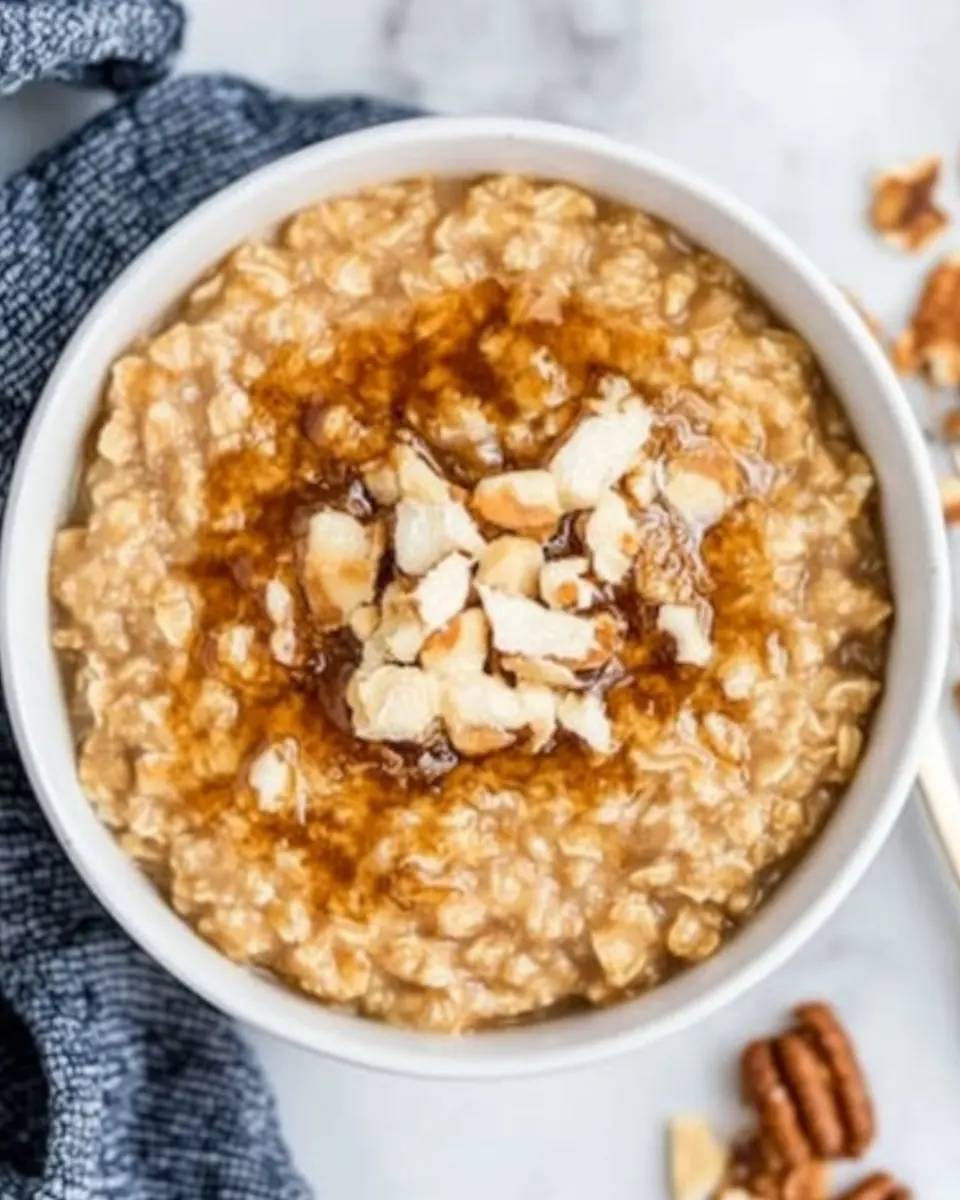
To serve, dish up oats and top with additional maple syrup and chopped nuts if desired.: When you scoop the finished porridge, note its sheen and viscosity, it should move slowly off the spoon and feel warm and silky on the tongue. The sound is quiet, mostly the soft scrape of spoon on bowl, while the aroma will be richly sweet and spiced, begging for a sprinkle of crunch. Adding extra maple syrup brightens sweetness and chopped nuts introduce contrast, both in flavor and texture. A typical misstep is overheating leftovers without adding a splash of milk, which can leave the oats dryer than you expect; when reheating, stir in a little milk to revive creaminess.