Spray the insert of your slow cooker with cooking spray if desired and add the chicken. Season it with salt and pepper. Set aside momentarily. Chicken Tips– Chicken comes in all shapes and sizes. I use breasts that are of an even, normal thickness and not 'thin-sliced' which are NOT a great choice here nor are chicken tenders or small pieces of chicken because they will cook very quickly and can actually overcook before the sauce has thickened and reduced. If your chicken is very thick/big, slice it into 1/2-inch pieces; and/or pound with a meat tenderizing tool.: The kitchen will smell faintly of the seasoning, and the surface of the cook insert should glint slightly where the spray touched it, helping prevent sticking. I like to space the chicken breasts so they are not jammed together, which helps even heat circulation. Why this matters: crowded meat can cook unevenly and trap steam, leading to a less concentrated sauce. Common mistake to avoid: don’t stack large pieces of chicken on top of each other, or the interior may lag in reaching a safe temperature.
To a small bowl or 2-cup measuring cup, add the cream, broth, Parmesan, cornstarch, Dijon, Italian seasoning, smoked paprika, garlic, and whisk to combine. It will not be 'smooth' due to the cheese and the garlic which is fine. Pour the mixture evenly over the chicken.: You will notice the aroma of the freshly ground black pepper right away, and the grains of salt will start drawing flavor toward the surface of the chicken . Seasoning at this stage allows the meat to absorb flavor as it sits and then as it cooks. Why this matters: early seasoning helps build depth rather than leaving a flat tasting center. Common mistake to avoid: under seasoning, which can result in a bland final dish, so be generous within reason and adjust later if needed.
Evenly scatter the sun-dried tomatoes over and around the chicken.: As you whisk, the Parmesan will break into the liquid creating a slightly grainy but homogenous mixture that promises a velvety finish when heated slowly. You should smell the garlic and the mustard’s faint tang right away. Why this matters: thorough whisking prevents lumps of cornstarch and aids even thickening, producing a cohesive sauce. Common mistake to avoid: tossing in cornstarch without whisking, which can create pockets of paste that never fully dissolve.
Place the lid on the slow cooker and slow cook for about 4-5 hours on LOW, OR about 2-3 hours on HIGH. Cooking Tips– If you have the time, I prefer low heat for this recipe because the cream is less likely to curdle or separate with low-and-slow heat. However, don't cook for more than 5 hours (unless chicken truly isn't done) because you will risk the sauce breaking or separating. Chicken is done when the internal temp reaches 165 F.: The sauce will slide and pool around the chicken , a pale creamy blanket that will slowly darken as it reduces. Pour evenly so each piece gets saucy coverage and the flavors distribute uniformly. Why this matters: even distribution ensures every portion ends up sauced and seasoned equally. Common mistake to avoid: pouring only to one side of the cooker, which can lead to uneven flavor and texture in the finished dish.
In the final 10 minutes or so of cooking, give the sauce a good stir to make it cohesive. Add the spinach, nestle it into the sauce by stirring it in, place the cover back on, and cook for another 10 minutes or until the spinach wilts.: The sun dried tomatoes will sit on the surface and around the meat, releasing concentrated tomato oil and flavor as they warm. You will see their deep ruby color against the pale sauce, promising bursts of tang in each bite. Why this matters: distributing them prevents clumps of tomato in a single bite and ensures a balanced flavor profile. Common mistake to avoid: leaving the tomatoes in one area where they could dominate the sauce in that spot.
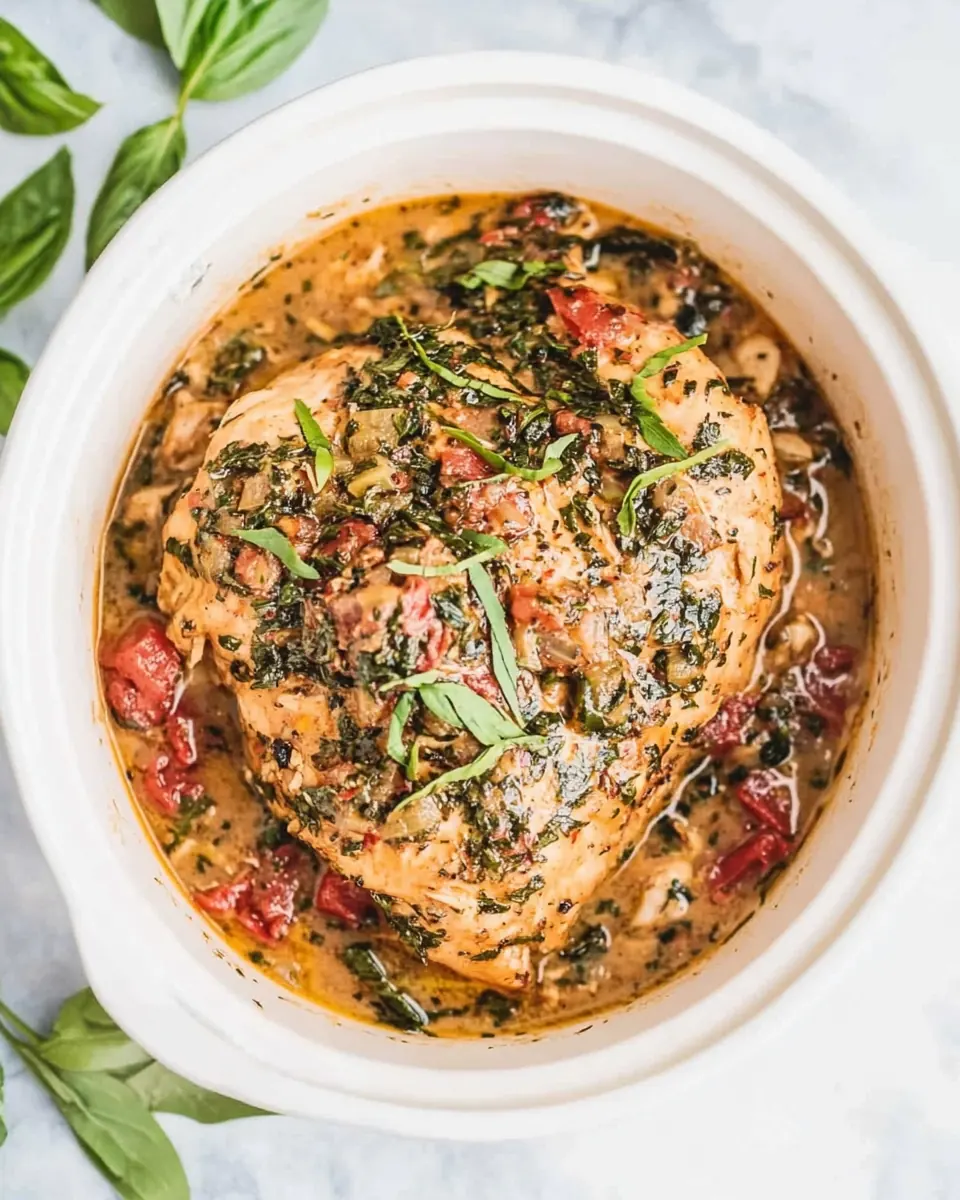
Taste the sauce, and make any necessary flavor adjustments such as more salt, pepper, paprika, etc. Optionally garnish the chicken with extra Parmesan and serve immediately with pasta, mashed potatoes, rice, or your favorite sides.: As the cooker hums, the kitchen fills with a slow, savory perfume, and the sauce will gently bubble at the edges. The low setting gives the heavy cream time to meld without breaking, producing a smoother texture. Why this matters: gentle, prolonged heat prevents curdling and promotes a tender chicken . Common mistake to avoid: leaving it for far longer than recommended, which risks the sauce separating or the meat drying out.
In the final 10 minutes or so of cooking, give the sauce a good stir to make it cohesive: When you stir, you should see the sauce pull together into a unified, glossy coating. The sound is a quiet slosh, and visually the cream will look smoother after a gentle whisking motion. Why this matters: stirring redistributes heat and integrates any separated pockets, improving mouthfeel and appearance. Common mistake to avoid: stirring too aggressively which can shred the chicken or introduce too much air into the sauce.
Add the spinach, nestle it into the sauce by stirring it in, place the cover back on, and cook for another 10 minutes or until the spinach wilts: The spinach will collapse quickly and steam into the still warm sauce, turning from bright green to a deeper hue and adding a fresh vegetal counterpoint. You will notice the aroma shift subtly as the greens release their scent. Why this matters: adding greens at the end preserves color and texture, preventing them from becoming mushy. Common mistake to avoid: adding the spinach too early, which can turn it into an overly soft, dark pile without brightness.
Taste the sauce, and make any necessary flavor adjustments such as more salt, pepper, paprika, etc: Use a spoon to judge the balance, and be prepared to nudge the seasoning with small increments so you do not over correct. The flavors should be layered and rounded, with a gentle tang from the sun dried tomatoes and a creamy backbone. Why this matters: final seasoning tailors the dish to your broth selection and personal preference. Common mistake to avoid: adding too much salt at once; adjust gradually and taste between additions.
Optionally garnish the chicken with extra Parmesan and serve immediately with pasta, mashed potatoes, rice, or your favorite sides: The final plated dish should glisten with sauce, flecked with bits of sun dried tomato and wilted spinach , and maybe a sprinkle of extra Parmesan for nuttiness. Serving hot preserves the texture and makes the sauce feel luxuriously creamy. Why this matters: plating while hot ensures the sauce stays smooth, and warm sides absorb the sauce delightfully. Common mistake to avoid: letting it sit too long before serving, which cools the sauce and can thicken it into a less silky texture.