Line a baking sheet with parchment paper or heavy-duty aluminum foil. Set it aside.: The smell of clean paper or foil and the quiet crinkle as you prepare your workspace signals readiness. This small prep step prevents sticking and keeps the meatball rolling station tidy so you can work quickly. One common mistake is skipping this and having meatballs stick or tear when you move them, which makes portioning messy.
Combine ground beef, egg, breadcrumbs, milk, garlic, parmesan cheese, onion, Worcestershire sauce, Italian seasoning, kosher salt, and cracked black pepper in a large bowl.: As you mix, you will notice the textures coming together, from the coarse grain of ground beef to the silky egg and moist breadcrumbs. The aroma of garlic and parmesan cheese will lift off the bowl, promising savory depth. I press and fold until the mixture is just cohesive, because overmixing tightens the proteins and yields denser meatballs. A frequent error is working the meat too vigorously, which makes the final texture heavy rather than tender.
Use a 1 1/2-tablespoon scoop to scoop out the meatball filling. Roll the ground beef mixture into a tight ball. Place the meatball on the prepared baking sheet and repeat (I was able to get 24 meatballs).: You will hear a soft pat as each ball hits the sheet and feel the slight tack as the mixture compacts into a smooth ball. Uniform sizes ensure even cooking so listen for the subtle difference when you tap two balls together, they should be firm but not hard. Avoid making meatballs of wildly different sizes, since uneven cooking is the most common issue here.
Heat 2-3 tablespoons extra virgin olive oil in a 10 to 12-inch skillet over medium heat. (Be sure the oil is hot but not smoking before adding the meatballs. That way, you will get a nice sear without burning the meatballs.) Fry the meatballs, turning them to brown on all sides, for about 8-10 minutes or until cooked through. (If you use a smaller skillet, you may need to fry the meatballs in batches to ensure they cook evenly. If you overcrowd the skillet, you will steam the meatballs instead of frying.) Transfer the meatballs to a plate lined with paper towels to drain.: When the oil shimmers and gives a faint perfume of green olive, it is ready. Add meatballs and let them sit so a golden crust forms, you will hear a gentle sizzle that tells you the Maillard reaction is happening. The contrast between the crisp exterior and soft interior comes from this initial sear. A typical mistake is adding meatballs too early when the oil is not hot enough, which causes sticking and lackluster browning.
In the same skillet, melt the butter over medium heat.: As you brown, watch for even color development, moving them gently to expose each side to heat, and listen for steady sizzling that slows as moisture releases. The internal aroma will shift from raw to savory when they are nearly done. Overcrowding is the most common issue because it traps steam and prevents the crisp crust, so give them space and keep an eye on the color for an even golden brown.
Add the sliced onion and sauté until translucent.: As the salted butter melts you will see glossy gold encouraging the next step, and the aroma will be slightly sweet and nutty. This melted butter forms the base for the onion, and helps deglaze those browned bits later. A pitfall is heating the butter too high until it browns or burns, which changes the sauce flavor, so keep it moderate.
Sprinkle the flour over the cooked onions, stirring constantly, for 1-2 minutes.: The pan will fill with a sweet, savory scent as the onion softens and the edges begin to take on pale golden notes. Stir gently so slices cook evenly and release their natural sugars. This step builds the gravy's backbone, and rushing it prevents proper flavor development. Avoid skipping until translucent, as undercooked onion will taste sharp and raw.
Slowly whisk in the beef broth to ensure there are no lumps. Add the Worcestershire sauce, kitchen bouquet, and water. Bring the mixture to a simmer and let it thicken, stirring occasionally. Season with salt and pepper to taste.: As you stir, the raw flour smell disappears and a nutty aroma emerges, indicating the flour has cooked enough to thicken without tasting pasty. The mixture will take on a slightly sandy texture before you add liquid. Not cooking the flour long enough leads to a raw flour taste, so give it that minute to integrate and brown lightly.
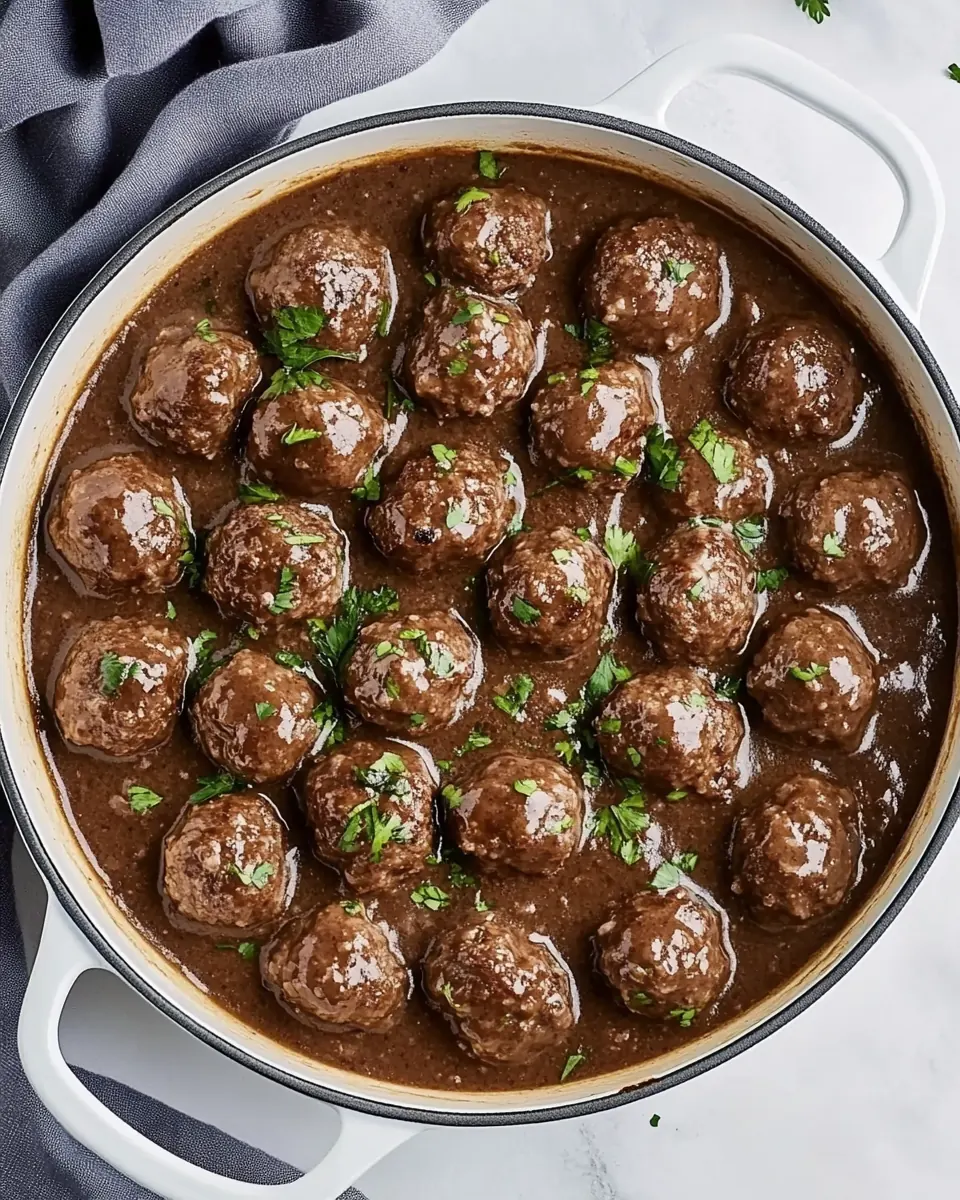
Once the gravy is thickened, add the pan-fried meatballs to the skillet. Let the meatballs simmer in the gravy for 2-3 minutes. Garnish with the chopped fresh parsley. Serve immediately over mashed potatoes or cooked egg noodles.: Pouring the beef broth in a steady stream while whisking creates a glossy, lump free gravy. The scent deepens as it simmers, and the sauce will reduce to a velvety consistency that coats the back of a spoon. The kitchen bouquet darkens the color and layers in savory notes, while the simmer allows flavors to marry. A common slip is adding liquid too quickly and ending up with lumps, so whisk steadily and keep the heat gentle.
Once the gravy is thickened, add the pan fried meatballs to the skillet. Let the meatballs simmer in the gravy for 2 to 3 minutes. Garnish with the chopped fresh parsley. Serve immediately over mashed potatoes or cooked egg noodles.: As the meatballs nestle into the glossy gravy, you will hear a quiet bubble and see the sauce cling to their sides, signaling they are absorbing flavor. The steam will carry concentrated beef and onion aromas, and a gentle spooning of gravy over each ball gives a finished sheen. The parsley adds a bright herbal note and visual contrast at the end. Beware of simmering too long, which can firm the meatballs excessively; a brief finish is all you need.