Squeeze the juice and heat it until it reaches boiling point. Cool the juice in the fridge for about 4 to 6 hours.: Coolness is the crucial first signal here, the chilled juice carrying a faint vegetal aroma that calms the dough mixture when combined later. You'll notice a light steam as you bring the juice to a boil, and an intensified color as the heat concentrates the pigments. Once chilled, the juice should feel refreshing to the touch, and cold liquid helps prevent the dough from becoming overly sticky. If skipped, the dough can turn too soft and difficult to shape; always allow the full chill time so the skin firms up properly.
Sift together the icing sugar and cooked glutinous flour. Add the shortening and combine until the mixture resembles breadcrumbs.: The sifted mixture should look pale and fine, a soft cloud of starch and sugar. When you rub in the shortening, the texture changes to sandy granules, and you may catch a faint sweet scent. This breadcrumb stage is important because it ensures even fat distribution, which produces that tender, pillowy skin later. A common mistake is adding shortening that is too soft, which can make the mixture greasy rather than crumbly.
Add the juice and milk to the mixture, and mix until a soft and smooth dough forms. Let the dough rest for 10 minutes. Divide it into 60 g (2 oz) portions and roll each portion into a ball. Wrap each ball with cling wrap until ready to use.: The bowl will transform as liquids incorporate, and you will see the dough pull together into a satin, slightly tacky ball. Press your fingers into the dough to feel the elasticity, it should yield and spring back gently. Resting lets the flour fully hydrate, making the dough easier to roll and less likely to tear. When portioning, weigh each ball to maintain consistent skin thickness. A frequent error is skipping the rest, which can leave dough that tears easily when wrapping the filling.
Add melon seeds to the mooncake paste. Roll the mixture tightly into balls, each weighing 120 g (4 oz.).: As you fold the seeds into the paste, you'll hear tiny crackles from the toasted seeds and smell their warm fragrance. Pressing and rolling the paste creates a compact core that resists moisture migration into the skin. The surface should be smooth and slightly glossy, a sign the filling is cohesive. If the paste feels crumbly, a touch of neutral oil or a brief knead can bring it together, otherwise the filling may separate during wrapping.
Lightly dust your hands with cooked glutinous rice flour. Flatten the dough and place the filling in the center.: The dusting prevents sticking, and as you press the dough into a thin disc you will feel its supple texture, cool and soft against your fingers. Centering the filling is key, because off center filling can lead to uneven thickness and awkward molds. Use gentle, even pressure to form the skin without stretching it thin. Overstretching causes thin spots that tear, so handle the dough with gentle hands.
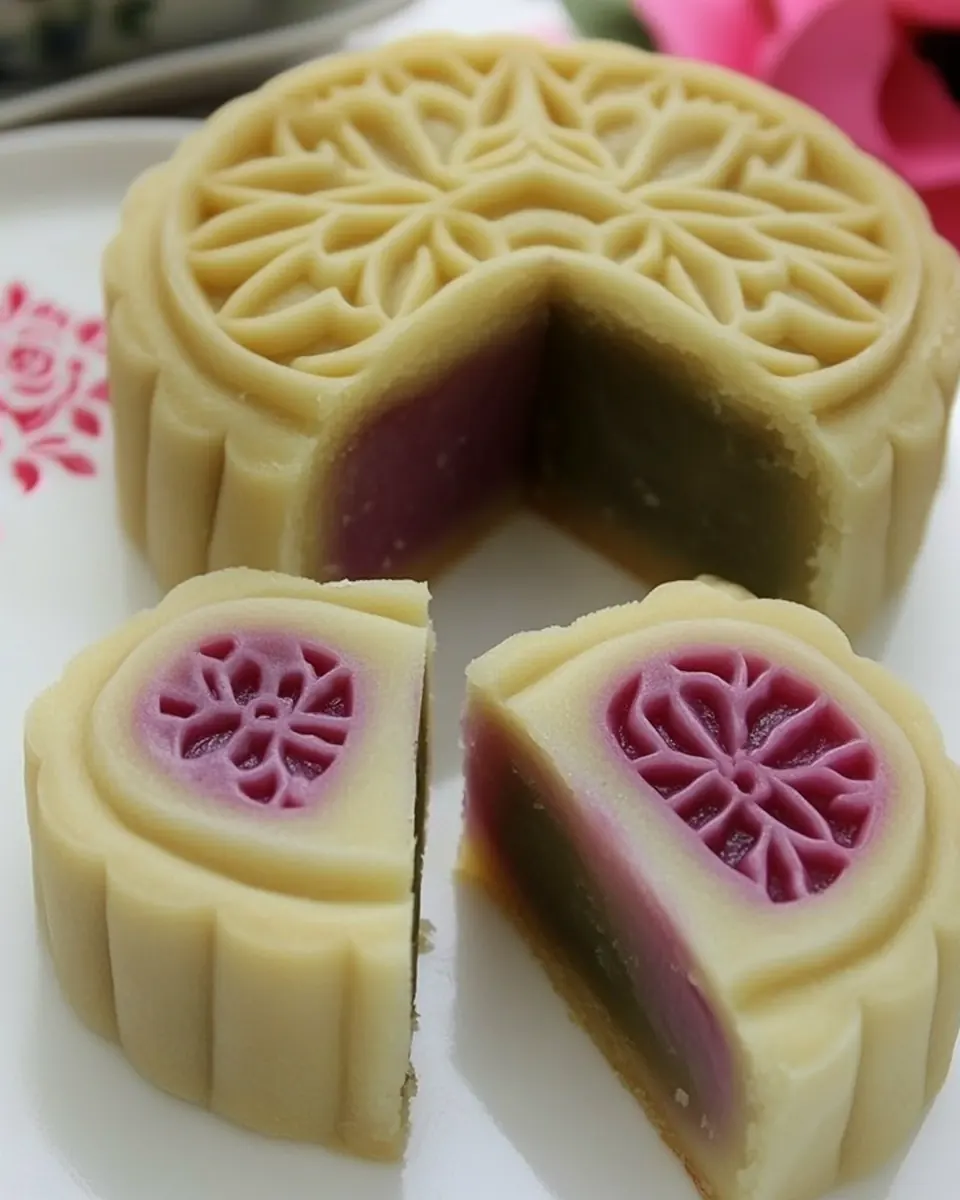
Wrap it up tightly and seal the edges. Place it in a floured mooncake mold, tap to release, and then remove it. Chill for at least 6 hours before serving.: When sealed, the surface will be smooth and the seams hidden. Pressing into a floured mold reveals crisp patterns, and the soft thud when tapping the mold indicates a clean release. After molding, the mooncakes need chilling so the skin firms and the paste and seeds set together, creating a neat cross section. A common pitfall is unmolding too soon, which can cause deformities; patience during the chill yields perfect shapes.