In a medium bowl, whisk the 3 3/4 cups all-purpose flour, 1 1/2 teaspoons baking powder, 1/2 teaspoon salt, 1/2 teaspoon ground cinnamon, and 1/4 teaspoon ground nutmeg together. Set aside.: You should smell the warm spice as you whisk the all-purpose flour with ground cinnamon and ground nutmeg , a dry, toasty aroma that hints at the cookies to come. Visually, the mixture should look uniform with no streaks of baking powder or clumps of spice. This dry blend provides even leavening and spice distribution so every bite tastes consistent. If you skip this step, you risk pockets of leavening or spice, which can create uneven rise or unexpected bursts of flavor. A common mistake is not fully breaking up lumps in the flour which can lead to dense spots in the baked cookie; take your time to whisk well.
In a stand mixer with a paddle attachment, whisk the 1 cup room-temperature unsalted butter, 1 cup granulated sugar, and 1/2 cup light brown sugar on medium-high speed until fluffy, about 2-3 minutes.: As you beat the unsalted butter with granulated sugar and light brown sugar , you will hear a smooth, steady whir and see the mixture lighten to a pale, airy cream. This aeration traps tiny pockets of air that help the cookies rise and feel tender. The creamed mixture should feel light and slightly fluffy to the touch. If the butter is too cold, it will not cream properly and the texture will be dense; if it is too warm, it will look greasy. The usual mistake is using butter at the wrong temperature, so aim for a tactile softness where the butter gives under a fingertip but still holds shape.
Mix in the 3/4 cup pumpkin puree, then the 1 large egg, and then add the 2 teaspoon vanilla extract, mixing well between additions.: When you incorporate the pumpkin puree , the batter will become visibly more moist and take on a soft orange hue, and you may notice a faint earthy pumpkin scent. Adding the large egg after the pumpkin helps stabilize the mixture, and the vanilla extract lifts the flavors. Mixing between additions ensures each ingredient is fully emulsified, preventing streaks of egg or lumps of pumpkin. If you rush and dump everything at once, the texture may be uneven and the dough may not bind correctly. One slip to avoid is over mixing after the egg, which can lead to a tougher cookie due to overdeveloped gluten.
Slowly add in the flour mixture on low speed just until combined. Cover and chill the dough for an hour.: As you add the dry mix to the wet, the dough will thicken and come together, forming a cohesive mass that is moist but scoopable. The low speed protects the trapped air and prevents overworking gluten. Chilling the dough firms the fats and hydrates the flour, which helps the cookies spread less and develop a neater crackled top. You will notice the dough becomes easier to handle after chilling and the flavors meld into a more integrated profile. A common mistake is skipping the chill which can result in flat, greasy cookies that spread excessively in the oven.
Preheat an oven to 350 degrees Fahrenheit and line two baking sheets with parchment paper. In a small bowl, combine the 1/2 cup granulated sugar and 1 teaspoon pumpkin pie spice for the coating and set aside.: When the oven reaches 350 degrees Fahrenheit , the room will warm and you may smell a faint hint of the heating element. Lining the sheets with parchment prevents sticking and promotes even browning. The coating mixture of granulated sugar and pumpkin pie spice should look sandy and fragrant, ready to give the cookies a crisp, spiced crust. If your oven temperature is off, baking times will vary, so an oven thermometer is helpful. A frequent misstep is placing parchment on a hot rack before preheating which can cause shifting, so prep the sheets beforehand and place them in once the oven is ready.
Once the dough is chilled, take a tablespoon of the cookie batter and roll it into a ball. Roll the ball in the cinnamon sugar coating and place on the prepared baking sheet.: At this stage the dough should be cool to the touch and easy to roll into neat balls, with the surface slightly tacky. Rolling in the coating gives each cookie a sparkly, spiced exterior that caramelizes into a delicate crust. Place the coated balls with some space between them so they have room to expand. If the dough warms up while rolling, pop it back into the fridge for a few minutes; soft dough will spread too thin. A common mistake is making the balls uneven in size which leads to inconsistent baking, so use a tablespoon scoop for uniform cookies.
Repeat until the dough is gone, and slightly flatten each cookie dough ball with a heavy-bottomed glass or measuring cup.: As you continue, the tray will start to look like a neat field of sugar crusted domes. Gently pressing each ball creates a slightly flattened top that encourages that signature crackled finish and more even baking. You will notice the dough give and the sugar coating press into the surface, which helps the cookies develop an appealing texture. Avoid pressing too thin which can cause overly crisp edges and a flat center. The usual error here is inconsistent flattening, so apply steady, even pressure to each ball for uniform results.
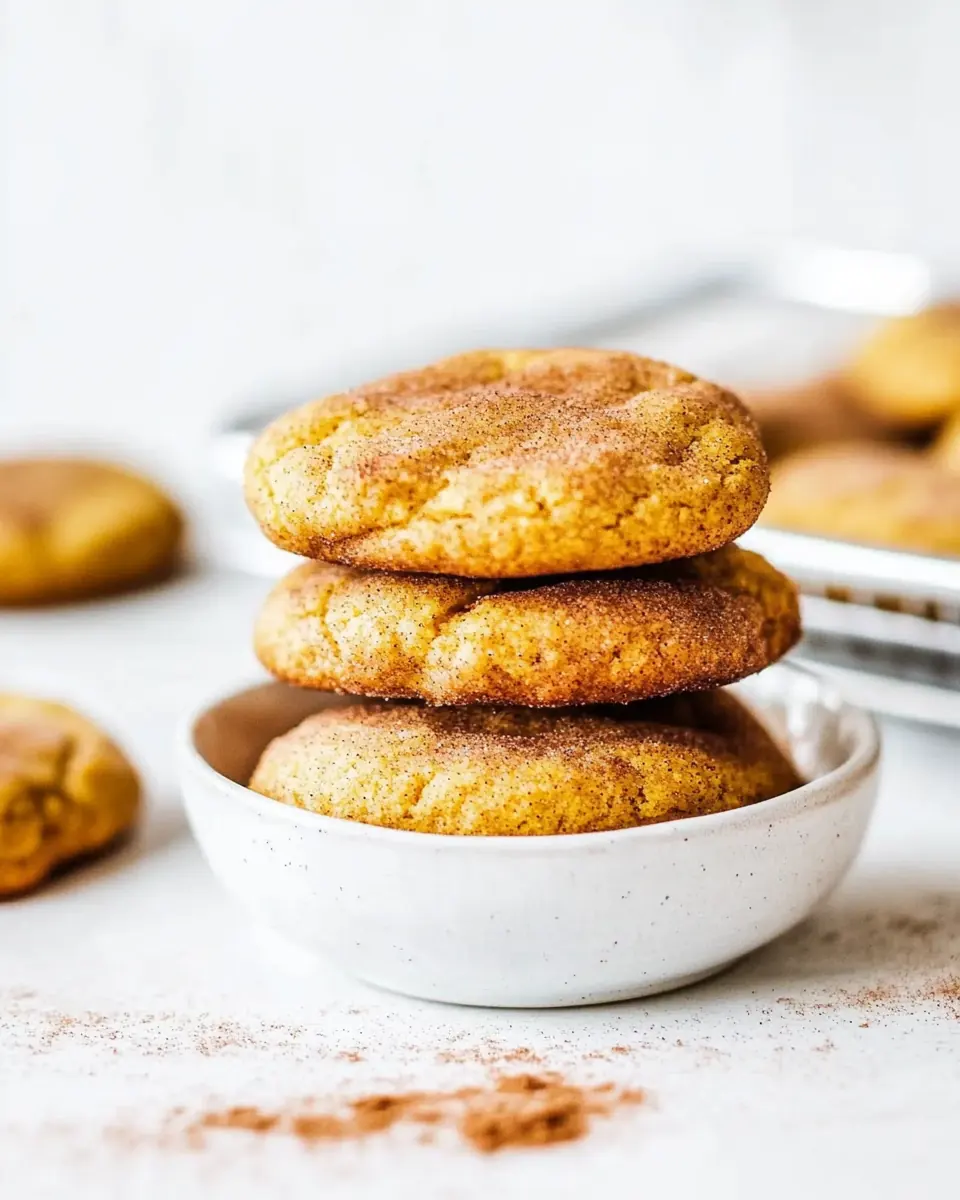
Bake the cookies for 10-15 minutes or until the tops start to crack. Cool the cookies on the baking sheet for 5 minutes and transfer to a wire rack. Enjoy!: During baking you will see the cookies puff, then settle and show small cracks on their tops, and the aroma will shift to richer, spiced sweetness. The edges may take on a light golden tone while the centers remain soft and slightly domed. Cooling on the hot sheet for about 5 minutes lets the cookies set so they do not break when moved. Transfer to a wire rack so air circulates and prevents sogginess. A key mistake to avoid is overbaking; remove them as soon as the cracks appear because carryover heat continues to cook the interior, and overbaked cookies will be dry rather than tender.