Cook the egg noodles according to package directions. Drain and keep warm.: The boiling of the egg noodles produces a fragrant, wheaty steam and a soft, plump texture that should still hold a slight bite when you drain them. You want the water to be at a vigorous boil before adding the noodles, and the surface will foam with starch as they cook. After draining, toss them gently to prevent sticking, and keep them covered so they stay warm and pliable for assembly. The why here is that slightly undercooked noodles finish in the oven, ensuring a pleasing al dente result rather than a mushy mass. A typical mistake is overcooking to complete softness, which ruins the texture after baking. If the noodles seem to stick together, toss them with a small splash of olive oil or a bit of reserved sauce.
Cook the ground beef in a sauté pan until no longer pink, drain off excess grease and add the marinara sauce.: As the ground beef browns you'll hear a steady sizzle and smell rich, meaty notes as Maillard flavors develop. Break the beef up with a wooden spoon so it browns evenly, producing small browned bits that contribute deep savory taste. Drain excess grease to prevent the final bake from becoming greasy, then return the beef to the pan and stir in the marinara sauce , allowing the sauce to simmer briefly and absorb the meat flavors. This step matters because well browned beef gives the sauce a fuller, more complex profile. A common misstep is skipping the drain, which leaves excess fat in the casserole and makes the top look oily rather than golden. If your sauce seems thin, simmer a few extra minutes to concentrate flavor.
In a separate bowl, combine the garlic powder, onion powder, sour cream, ricotta, and cottage cheese. Add the noodles and toss to coat.: When you fold the dairy mixture with the warm egg noodles , you'll notice steam rising and a creamy sheen forming as the cheeses soften. The powders distribute flavor evenly without adding texture. Tossing by hand ensures each noodle is coated and every bite gets a balance of tang and silk from the sour cream , ricotta , and cottage cheese . This matters because the even coating prevents dry patches in the casserole and helps the layers meld. A mistake here is combining cold cheese with hot noodles which can cause clumping; bring the cheeses to room temperature for a smoother mix.
Heat the oven to 350° and spray a 9×13-inch pan with cooking spray.: As the oven warms to 350° , you can feel the kitchen heat shift and the air become ready for baking. Spraying the pan prevents sticking and ensures easy serving after baking. Choosing the right pan size ensures proper depth for even cooking, so use a 9 by 13 inch pan as directed to keep the layers balanced. The rationale is that the oven temperature allows cheeses to melt and the sauce to bubble without overbrowning. A misstep is using a much smaller or larger pan which changes bake time and can result in uneven doneness.
Spoon half the noodles evenly in the pan, spread with half the meat sauce and top with the cheddar cheese.: When you spread the first noodle layer, you should see a dense, textured bed of pasta that accepts the warm marinara sauce and browned beef. The cheddar cheese on top will sit and begin to soften from the residual heat, creating pockets of sharp flavor. Layering in this order helps the sauce penetrate the noodles and the cheddar to create a flavorful barrier before the second noodle layer. This technique matters because it creates alternating layers of creaminess and savory meat. Avoid piling ingredients unevenly, which can create dry edges or a soggy center.
Spread the remaining noodles over the cheese and top with remaining meat sauce and the mozzarella cheese.: As you add the final noodle layer and the remaining marinara sauce , the casserole will gain height and weight, and the top will be ready to accept the mozzarella cheese . The mozzarella cheese will melt into a smooth, stretchy blanket that browns attractively in the oven. This final assembly step balances textures and ensures the cheese melts over the sauce rather than sinking. A pitfall is pressing down hard on the layers, which compacts the casserole and can hinder even baking.
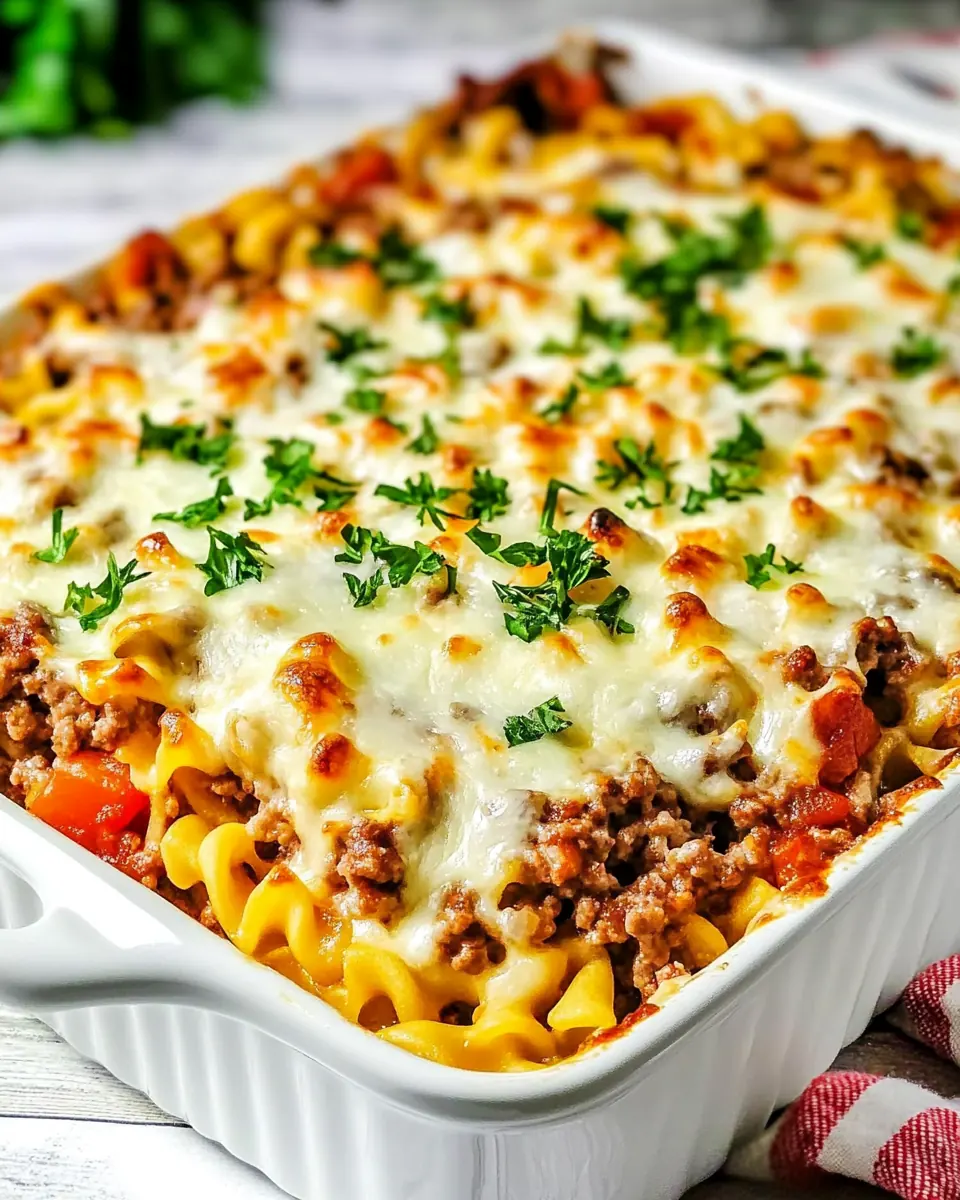
Place in the oven and bake for 20 minutes until the cheese melted.: In the oven you will witness the cheese transform, bubbling and then settling into a golden, slightly blistered top while the sauce simmers at the edges. The sound is subtle, a gentle bubble rather than a roar, and the aroma will deepen to a comforting tomato and toasted cheese fragrance. Baking allows the components to marry, creating a cohesive casserole. The key sign of readiness is thoroughly melted cheese and hot center when tested. A common error is underbaking which leaves the center cool and the cheeses not fully integrated. If the top browns too quickly, tent loosely with foil for the remaining time.
Remove and sprinkle with parsley.: After you pull the pan from the oven, the stream of steam and the smell of browned cheese is immediate and inviting. Letting the casserole rest for a few minutes lets the layers settle so it slices cleanly, and the chopped parsley scattered on top adds a fresh herbal finish and color contrast. This resting period is important because it prevents the filling from running when you serve. Avoid cutting into it immediately, which will yield a loose, less presentable portion.