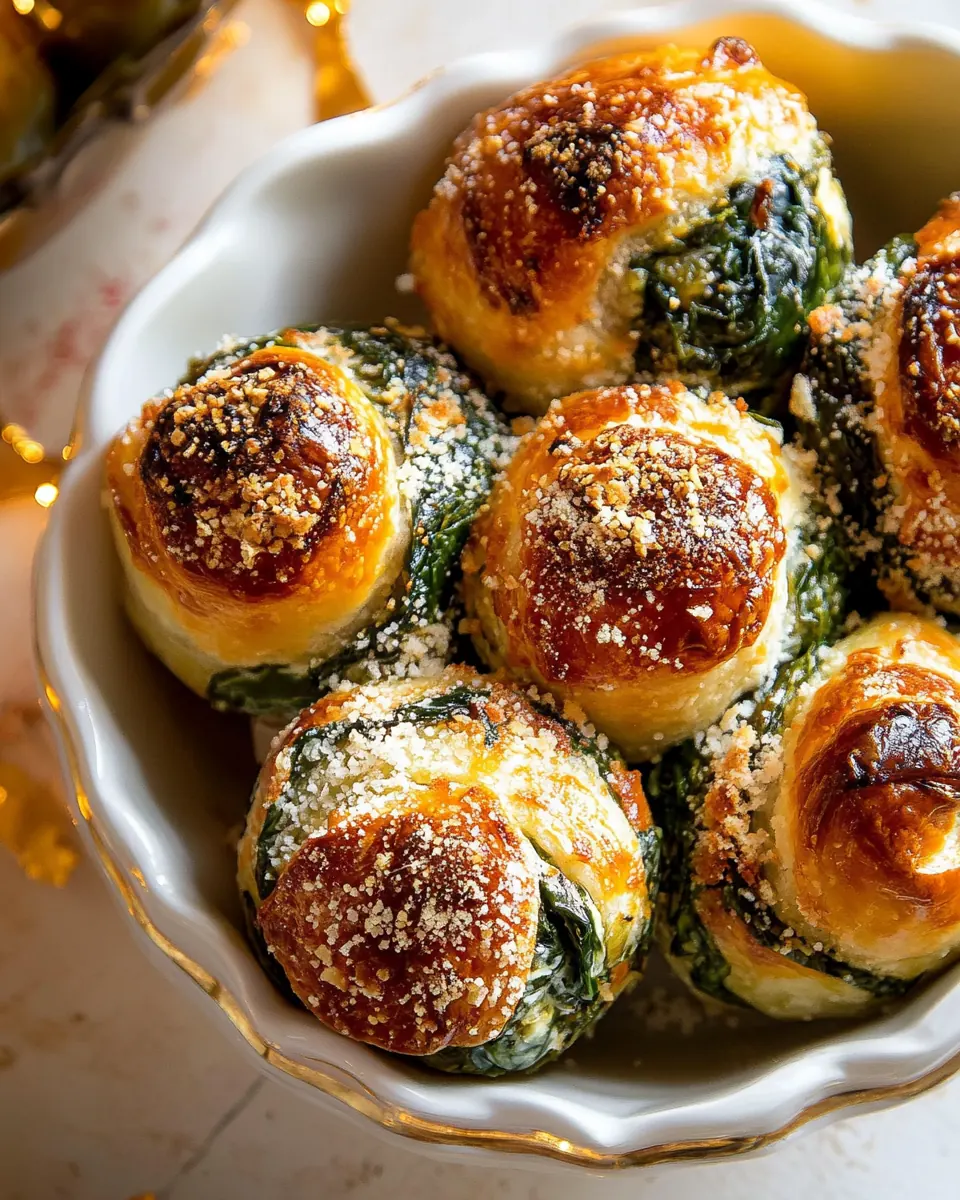
Line a baking sheet with parchment paper. In a bowl, mix the spinach, artichokes, cream cheese, provolone, gruyere, garlic powder, onion powder, pepper, and chili flakes until combined. Lay each pastry sheet on the counter and roll it into a slightly larger rectangle. Cut each sheet in half lengthwise to create 4 pieces. Spoon 1/4 of the spinach dip down the long edge of each pastry. Brush the opposite end with the beaten egg, then roll the dough over the filling, wrapping the dough around the filling. Pinch to seal and place seam side down on the baking sheet. Brush the tops of each roll with the beaten egg, then sprinkle with salt. Freeze for 20 minutes. Preheat the oven to 425° F. Bake for 20 minutes or until the pastry is deep golden brown. Meanwhile, brown the butter and mix in the sage leaves. Spoon the butter and leaves over the rolls. EAT and enjoy!: The smell of clean paper and the quiet rustle as you smooth it into place sets you up for success, and using parchment prevents the underside from browning too quickly while allowing easy cleanup. This matters because sticky melted cheese can make removal difficult, so take a moment to secure the paper, tucking it into the sheet edges. A common mistake here is skipping parchment and ending up with stuck rolls or burnt bottoms.
In a bowl, mix the spinach, artichokes, cream cheese, provolone, gruyere, garlic powder, onion powder, pepper, and chili flakes until combined.: At this stage you will notice the cheeses soften and bind the chopped spinach and artichokes into a cohesive mass, and the aroma of seasonings will bloom when you stir. The creaminess should coat the other ingredients without large clumps, which helps the filling slide into the pastry easily. Stir slowly at first so the cream cheese breaks down evenly, then fold to distribute textures. Avoid overworking the mixture, or the filling can become gummy.
Lay each pastry sheet on the counter and roll it into a slightly larger rectangle.: Working on a lightly floured surface, you will feel the puff pastry relax into shape as you gently roll it; the layers remain delicate so use light pressure. Visual cues to watch for include slightly larger dimensions with intact visible layers. Rolling makes the sheets easier to cut evenly and creates uniform rolls. If you press too hard you risk compressing the layers and reducing flakiness.
Cut each sheet in half lengthwise to create 4 pieces.: A sharp knife will glide through the chilled pastry producing clean edges, and you may hear a soft, crisp whisper as layers separate. Even pieces bake at the same rate, so take care to measure or align edges before cutting. Uneven pieces can cause some rolls to overbrown while others remain underdone.
Spoon 1/4 of the spinach dip down the long edge of each pastry.: As you spoon the filling you will feel its weight and notice a compact, slightly chunky texture studded with bits of artichoke and shredded cheese . Place it close enough to the edge to roll snugly but not so close that filling escapes. Distribute evenly for consistent bites. The common pitfall is overfilling, which causes leaks during baking and soggy pastry.
Brush the opposite end with the beaten egg, then roll the dough over the filling, wrapping the dough around the filling.: The egg wash acts as glue and will develop a glossy, deep brown finish in the oven. As you roll, keep even pressure so the layers wrap tightly and the seam adheres. You should feel the roll become compact and see the pastry overlay itself neatly. If the seam does not seal well, the roll can open while baking, so press firmly but gently.
Pinch to seal and place seam side down on the baking sheet.: Pinching the ends creates a neat seal and placing seam side down ensures the roll stays closed as the pastry puffs. You will notice a slight flattening where you press, which helps the rolls rest securely and prevents rolling during bake. Avoid stretching the seam area, which can tear the pastry and lead to leakage.
Brush the tops of each roll with the beaten egg, then sprinkle with salt.: When you brush the tops the smell of beaten egg on warm pastry primes the surface for color, and the pretzel salt will cling, providing crunchy bursts of seasoning. Apply a thin, even coat of egg to avoid pooling, and tap off excess salt so it does not pile into gritty clumps. Too much liquid on the surface can lead to uneven browning.
Freeze for 20 minutes.: Chilling the assembled rolls firms the pastry so layers remain distinct and the filling stays in place, resulting in a flakier final texture. While frozen, the room will feel crisper, and handling becomes easier since the pastry is less sticky. Do not skip this step unless you are baking immediately, because warm pastry can sag and leak in the oven.
Preheat the oven to 425° F.: A properly preheated oven creates steam that lifts the pastry layers quickly, producing a showy puff and golden color. You should feel the heat hum as the oven reaches temperature, and aim to get it fully hot before the rolls go in. Putting them into an underheated oven will result in dense, underpuffed pastry and a longer baking time.
Bake for 20 minutes or until the pastry is deep golden brown.: As they bake you will see the pastry expand, edges crisp, and patches of golden cheese peeking through. Listen for a faint sizzling as moisture evaporates, and rely on color, not just time, to judge doneness. If the tops brown too quickly, lower the oven by 25 degrees and continue baking until the center is hot and the pastry is cooked through. A common error is removing them too early, leaving the filling underheated.
Meanwhile, brown the butter and mix in the sage leaves.: Browning the butter releases a toasty, nutty aroma and the sage crisps in the hot fat, creating an intensely fragrant sauce. Watch closely because browned butter can go from golden to burned in seconds; swirl the pan and remove from heat as soon as you notice amber flecks. Over browning will impart bitterness, which is the mistake I warn most about.
Spoon the butter and leaves over the rolls.: The warm, nutty butter will seep into tiny cracks and the crisped sage adds an herbal note and visual contrast. Drizzling invites the aroma to bloom just before serving, and you should see a glossy sheen and flecks of crisped leaf on the rolls. Avoid pouring too much, or the pastry bottom can become soggy.
EAT and enjoy!: When you bite in the pastry should crackle slightly, giving way to hot, creamy filling with melded flavors of spinach , artichoke , and cheeses. Allow the rolls to rest a minute to avoid scalding, and notice the layers of texture and the buttery, herbed finish. The most common mistake here is rushing to eat while piping hot, so give it just a breath before serving.