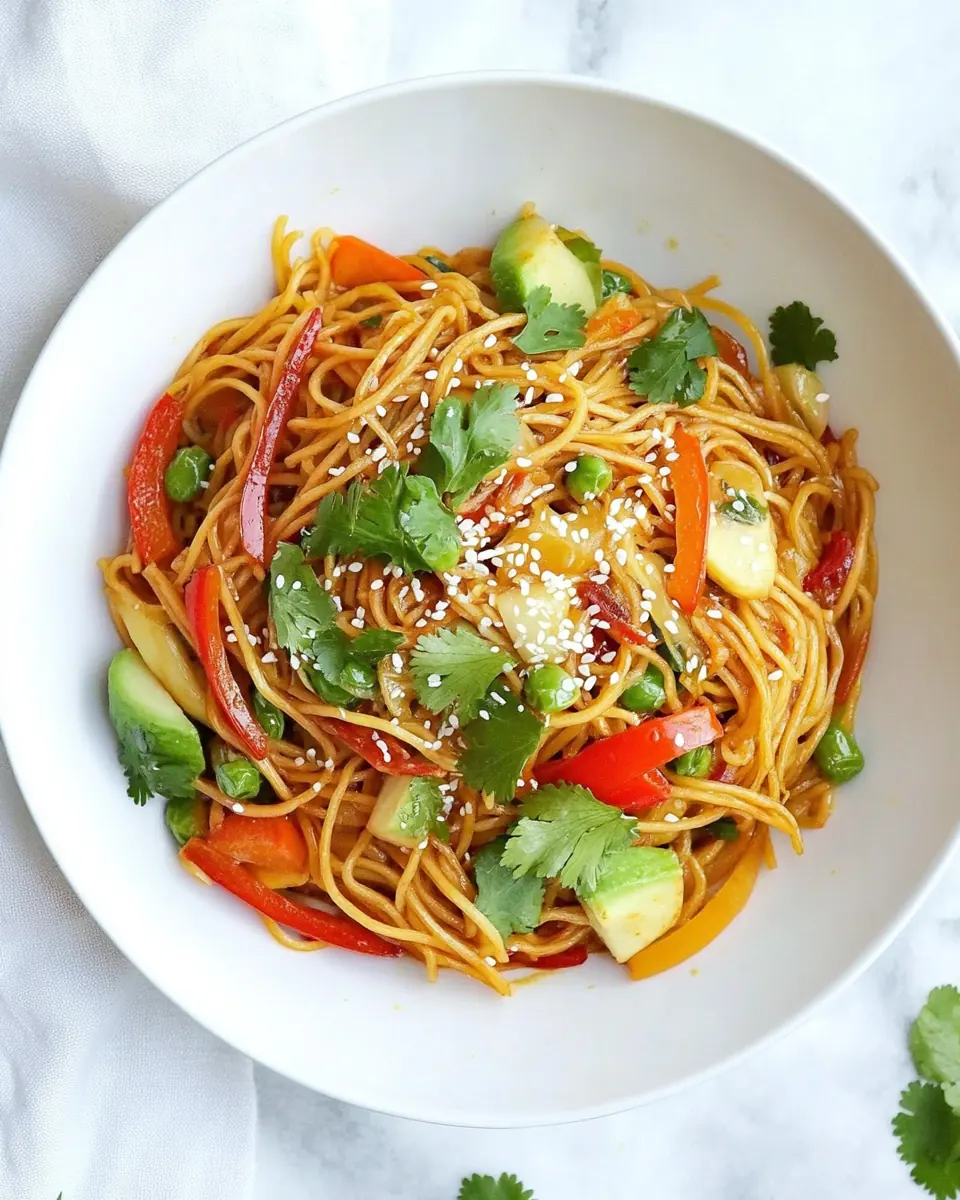
Bring a large pot of water to a boil. Add the noodles to the boiling water and cook according to package directions. Drain and set aside.: The sound of rolling water is your cue the noodles will cook properly, and you want a full, vigorous boil so the lo mein noodles move freely and do not stick. The steam should be strong, and you will notice the pot breathing as it approaches readiness. If the water is not vigorously boiling the noodles can become gummy, because they absorb water unevenly. A common mistake is under-salting the water; while you do not need a lot, a pinch helps the noodle flavor. Keep an eye on the pot and adjust heat to maintain a steady, lively boil.
Meanwhile, in a large, heavy skillet or wok (you want it big guys), heat the sesame oil over high heat. When the pan is hot add the red pepper, orange pepper, mushrooms, snow peas and carrots. After about 3 minutes add the cabbage. Stir fry for 2-5 minutes longer or until the vegetables have just begun to soften, but have not lost their crunch. This took me about 5 minutes.: As the noodles hit the pot you will hear a gentle bubble and see them soften in moments, and they will look more translucent when nearly done. Stir once or twice to prevent clumping. Timing is crucial since overcooked noodles will break apart when tossed, becoming sticky instead of silky. Test a strand for chew, and when it has a slight bite, drain immediately. Do not let them sit in hot water after draining, because residual heat will keep cooking them.
While the vegetables cook combine the soy sauce, rice vinegar, toasted sesame oil, fish sauce, sambal oelek, ginger and garlic. Whisk to combine and set aside.: Once drained, the noodles will steam, so spread them briefly or toss with a small splash of sesame oil to keep them separate and to add a fragrant layer. You may feel warmth and notice the sesame aroma clinging to the strands. If you crowd them into a bowl while hot they can clump, so use a wide plate or tray. Avoid rinsing, unless the recipe directs it, because rinsing removes starch that helps the sauce adhere.
When you feel the vegetables are ready add the sauce and stir fry for 2-3 minutes to cook the garlic and ginger. Add the noodles (and chicken, if using) and toss well. Stir fry for one more minute and then remove from heat. Serve immediately and garnish with chopped fresh cilantro and chopped cashews.: As the oil heats you should see it shimmer and smell the toasty notes rising, and the pan will be loud with a faint sizzle when you add ingredients. A properly heated wok gives instant searing which preserves vegetable texture and adds flavor through caramelization. If the oil starts smoking heavily, lower the heat immediately, because burned oil imparts a bitter edge. Preheating the pan ensures quick cooking and prevents steaming.
When the pan is hot add the red pepper, orange pepper, mushrooms, snow peas and carrots: The first contact will create a bright sizzle and you will see the vegetables glisten as they hit the oil. Toss them quickly so edges brown and sugars start to caramelize, which builds savory complexity. Keep the ingredients moving to prevent one side from charring while others remain raw. A typical slip is adding too many vegetables at once, cooling the pan; instead work in a single large batch so the heat stays consistent.
After about 3 minutes add the cabbage: The cabbage wilts faster than root vegetables, and adding it later helps preserve a slight crunch. You will hear a softer sizzle as the cabbage meets the hot pan, and it will begin to collapse and shine with oil. Keep tossing so the cabbage cooks uniformly. Overcooking will result in limp, watery cabbage that dilutes flavor, so aim for tender crisp rather than fully soft.
Stir fry for 2 to 5 minutes longer or until the vegetables have just begun to soften: In this window you can smell the vegetables shifting from raw to cooked, and you might notice sweeter, roasted aromas forming. Visual cues are key, look for slight browning on the edges and bright color retained in the centers. Do not let them go past the point of crispness, or you lose the textural contrast that makes the dish lively. A common error is relying solely on time instead of watching; every stove cooks differently.
While the vegetables cook combine the soy sauce rice vinegar toasted sesame oil fish sauce sambal oelek ginger and garlic: Mixing these creates a layered sauce where salty, tangy, nutty, and spicy notes balance. You will see the sauce glisten and smell the sharpness of fresh ginger and garlic , which will mellow when cooked. Whisk until cohesive so the flavors marry, because a separated sauce will cling unevenly to noodles. Avoid over-salting here, taste after combining, since the soy sauce and fish sauce deliver concentrated saltiness.
Whisk to combine and set aside: The sauce should look smooth and slightly glossy, and setting it aside lets the flavors settle. You may notice little flecks of grated ginger and minced garlic distributing throughout, which signals even seasoning. If you add it to the pan immediately the raw aromatics will cook too quickly; giving the sauce a brief rest yields a more integrated final flavor. Do not discard any residual sauce in the mixing bowl; you will want every drop to coat the noodles.
When you feel the vegetables are ready add the sauce and stir fry for 2 to 3 minutes to cook the garlic and ginger: The moment the sauce hits the hot pan it will steam and intensify, releasing a heady scent as the garlic and ginger soften. This step builds the final savory layer and slightly reduces the sauce so it clings better. Stir constantly to ensure even cooking and to avoid burning the sugars in the sauce. A pitfall here is leaving the pan unattended; the concentrated sauce can scorch quickly if left still.
Add the noodles and chicken if using and toss well: Tossing right away lets the noodles pick up sauce and heat through, while the chicken warms and absorbs flavor. You will hear the ingredients mingle, with a soft sizzling and a releasing aroma. Use tongs or a spatula to fold everything together so the sauce reaches each strand. If the mixture seems dry, a splash of warm water can loosen it, but avoid drowning the pan which would steam instead of sear.
Stir fry for one more minute and then remove from heat: In this final minute the flavors finish their marriage, the sauce thickens slightly, and the dish reaches serving temperature. Watch for glossy coating on the noodles and bright vegetables; those are your signals to stop cooking. Letting it sit in the hot pan will continue to soften the vegetables, so remove promptly to preserve texture. Overcooking here is the easiest way to lose the crisp-tender quality.
Serve immediately and garnish with chopped fresh cilantro and chopped cashews: Serving hot preserves aroma and texture, while the cilantro adds herbal lift and the cashews supply a satisfying crunch. You will notice the contrast between warm noodles and cool herb notes when you taste it. If you wait too long to garnish, the herbs will wilt and nuts may soften, so sprinkle just before plating. A simple oversight is plating too slowly; serve at once for the best experience.