In the bowl of a stand mixer or a large mixing bowl (with a hand mixer), beat butter and sugars for 2-3 minutes until light and fluffy. Add egg, vanilla, and almond. Mix until combined. Add the flour and salt. Mix until a soft dough forms.: As you begin, notice the change in color and texture when you cream the salted butter with the brown sugar and sugar , it should become paler and pillowy, and the sound of the mixer will shift to a lighter, higher pitched hum. This aeration is crucial, because those tiny air pockets help the cookies feel tender rather than dense, and the sugars begin to dissolve giving the dough a smooth, slightly sticky feel. When you add the egg , the mixture will become glossy and more cohesive, which signals proper emulsification. Adding the extracts will send a warm aromatic note through the bowl, and you should pause and scrape the sides to ensure even mixing. Once you add the all purpose flour and kosher sea salt , fold just until no streaks of flour remain to avoid developing excess gluten, which would make the cookies tough. A common mistake is overmixing after the flour goes in, so stop as soon as the dough comes together and still feels soft to the touch.
Divide the dough into two balls. Wrap one ball in plastic wrap and set it aside. Fold the green food coloring into the remaining ball until it is a uniform color. Flatten into a 1-inch thick disk. Wrap in plastic wrap and place in the refrigerator along with the ball of dough. Chill for 3 hours.: As you split the dough, note the contrast between the plain ball and the one that will become green; working the gel into the dough yields a vivid, streak free color when properly kneaded. Press the gel in gently with clean hands or a spatula, folding until the dough holds a steady, uniform green, and the aroma of extracts is still discernible. Flattening into a disk increases surface area so the chilling is faster and more even, and after wrapping, the dough will firm up and become easier to roll and cut. The three hour chill is not arbitrary, it allows the butter to solidify which prevents spreading and preserves crisp edges during slicing. A common error is trying to speed this up by freezing immediately, which can create uneven texture and cracking when you later try to cut shapes.
Remove the green dough, using a clover-shaped cookie cutter, cut as many clovers as you can out of the dough, re-rolling the dough as needed.: When you take the green disk from the fridge it should feel firm and cold, with just enough give to imprint a cutter, and your clover cuts will pop cleanly with a satisfying sound as the edges separate. If the cutter drags, chill the dough a bit longer or lightly flour the cutter edge. Re rolling scraps is fine, but do it minimally to keep the layers from getting tight, which can make the finished cookies tougher. Aim to stack the clovers neatly and press out excess air between layers when you plan to make the clover tower, otherwise there will be gaps that make the next steps difficult.
In a small bowl, whisk together the egg white and water. Brush over the tops of each clover, and stack into a tall "tower." You want the clovers to be lined up as evenly as possible. Lay the tower down, so that it's one long log of clovers. Wrap with plastic wrap and freeze for 30 minutes.: The egg wash should be glossy and thin, and when you brush it onto each clover the surface becomes tacky, which is exactly what helps the layers stick. Stacking the clovers into a tall tower requires patience, align each leaf so the shapes nest together, and you will notice a faint tack when they are correctly adhered. Rolling the tower into a log orientation evens out the shape and freezing for 30 minutes firms it so you can encase it without distortion. A frequent mistake is skipping the freeze, which makes the clover stack collapse when you try to wrap it, resulting in uneven slices.
Break the ball of dough into several pieces and roll it into ropes. When the clover log is ready, remove it and line the clovers with the long ropes. You want to encase the clovers completely. Press tightly, then roll on a lightly floured surface into a smooth log. Brush the outside with egg wash, then roll in the sprinkles. I used a loaf pan to do this and it worked really well. Return to the freezer for 30 minutes.: The plain dough broken into ropes should feel pliable and cool, perfect for wrapping the frozen clover stack. As you encase the clovers, press firmly so there are no visible seams and run the log gently over the palm of your hand to smooth it; the motion helps the dough meld and hides any imperfections. Brushing the outside with the egg white mixture gives a sheen and tack for the rainbow nonpareil sprinkles to adhere to, and when you roll the log in sprinkles you will hear tiny clinking sounds and see a uniform, colorful crust form. Returning to the freezer chills the entire log so it slices cleanly and the sprinkles set in place. Avoid working too long at room temperature, which softens the butter and makes rolling difficult.
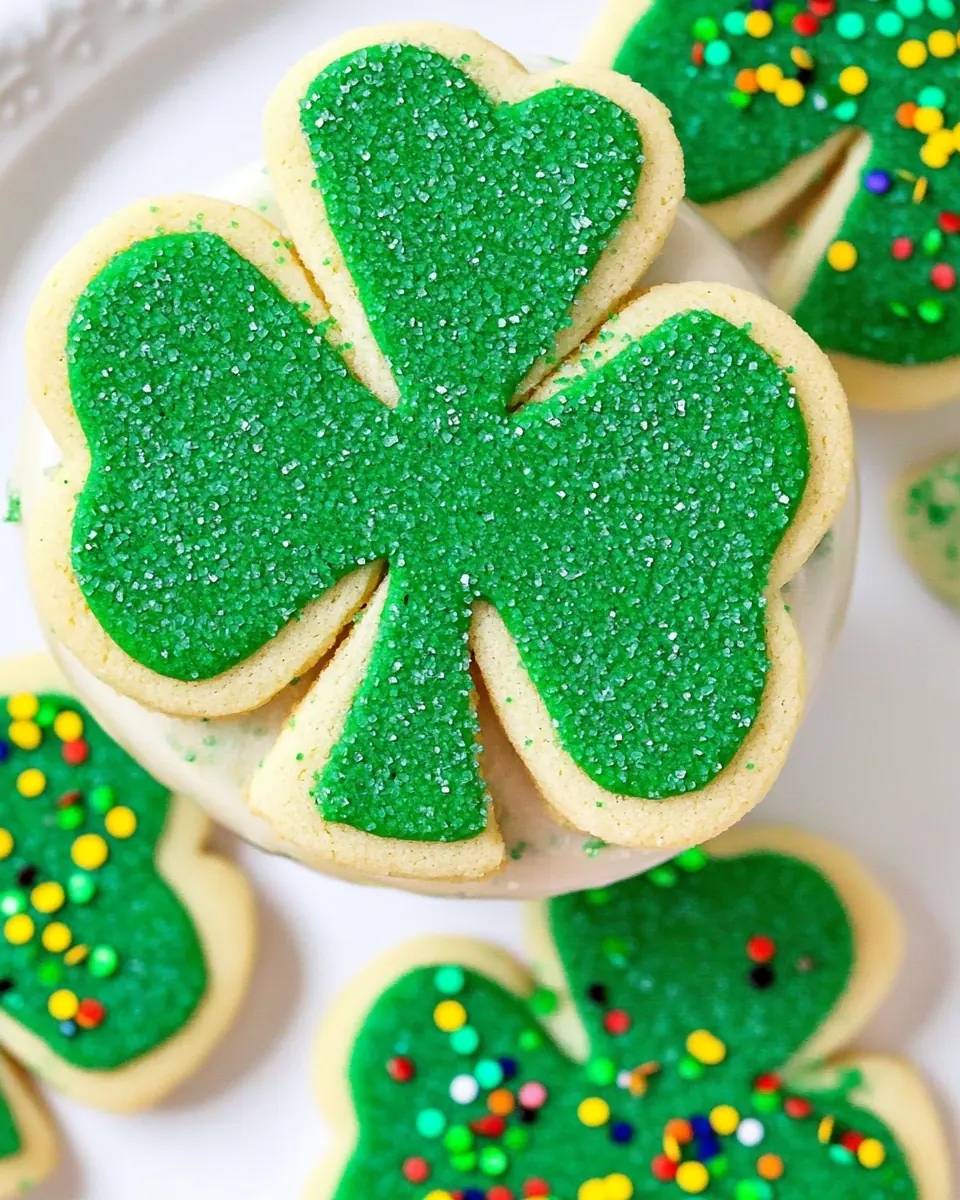
Preheat oven to 375 degrees. Line a baking sheet with parchment paper or a silicone mat. Slice the log into 1/4" thick slices. Place 12 on a baking sheet at a time. Bake for 10-12 minutes, remove from the oven, and allow to cool on the sheet for 3 minutes before transferring to a wire rack to cool completely.: The oven should be fully preheated so the cookies set quickly and keep their shape, and the initial heat gives the exterior a gentle crisp while the interior stays tender. Slicing into neat 1 4 inch pieces yields a pleasing ratio of green interior to sprinkled crust, and you will notice the edges gaining a faint golden hint when they are ready. The short rest on the warm sheet lets the cookies stabilize so they do not break when moved, and the final cooling on a wire rack prevents residual steam from making the bottoms soggy. A common pitfall is slicing when the log is not cold enough, which leads to misshapen rounds and smeared sprinkles, so keep the log chilled until the knife goes through cleanly.