In a medium mixing bowl whisk together orange juice, orange zest, lemon juice, olive oil, hot sauce, dijon mustard and garlic.: The kitchen will fill with a bright citrus and garlicky scent as you whisk, and the vinaigrette like texture is important because it helps the marinade penetrate the surface of the chicken . Whisking fully disperses the dijon mustard so it emulsifies the oil with the juices, yielding a smooth coating. If you skip thorough whisking you can end up with uneven flavor pockets, so take the time to emulsify until the mixture looks cohesive and slightly glossy. A common mistake is using pre warmed or overheated liquids which can blunt the acidity, so keep everything cool before marinating.
Place chicken thighs in a gallon size resealable bag, pour marinade over chicken then seal bag while pressing out excess air.: As you slide the chicken into the bag the marinade should lightly coat each piece, and the scent will become more concentrated within the sealed bag which helps absorption. Pressing out air allows the marinade to stay in close contact with all surfaces, promoting even flavor distribution. Avoid overfilling the bag so the thighs can lay flat; overcrowding prevents equal coverage and may yield patches of underflavored meat. A typical misstep is skipping the sealing step securely, which can cause leaks and a messy fridge.
Rub marinade over chicken, transfer to refrigerator and let marinate 1 - 6 hours.: The chicken benefits from at least one hour to let the acid and aromatics work, but not so long that the citrus begins to break down the texture. During this time you'll notice the bag become fragrant and slightly tacky as the marinade adheres. Marinating up to six hours deepens the flavor without making the texture mushy; beyond that can be risky because citrus can denature proteins excessively. A common error is marinating at room temperature, which risks bacterial growth, so always refrigerate while marinating.
Preheat a grill over medium-high heat to about 400 degrees.: When the grill reaches heat it should feel hot to the touch and you may see faint wisps of smoke; preheating sets up proper searing. A temperature near 400 degrees yields quick caramelization of the glaze while still allowing the interior of the chicken to cook through. If the grill is not hot enough, you will miss that desirable char and the chicken can dry out from prolonged cooking. A frequent mistake is starting to grill before the surface is fully heated, which prevents good sear marks and causes sticking.
While grill is preheating prepare glaze - in a small saucepan melt butter over medium heat.: The melted butter will begin to sizzle gently and release a nutty aroma, making a rich base for the glaze. Using medium heat ensures the butter melts without burning; browned butter would shift the flavor profile significantly. Monitor the pan closely because dairy can go from melted to browned quickly. A common slip up is turning the heat too high, which scorches the butter and creates bitter notes in the glaze.
Whisk in honey, orange juice, orange zest, BBQ sauce and dijon mustard and remove from heat. Set aside about 1/3 cup for serving.: Once combined, the glaze should be glossy and pourable, smelling of sweet honey and citrus. Removing it from heat preserves the brightness of the fresh orange zest , and reserving a portion for serving gives you a fresh finishing touch. If you over reduce the glaze it can become too thick and crystallize when cooled, so aim for a syrupy consistency. A typical mistake is using all the glaze during grilling and not keeping a reserved portion for plating, which reduces the impact at service.
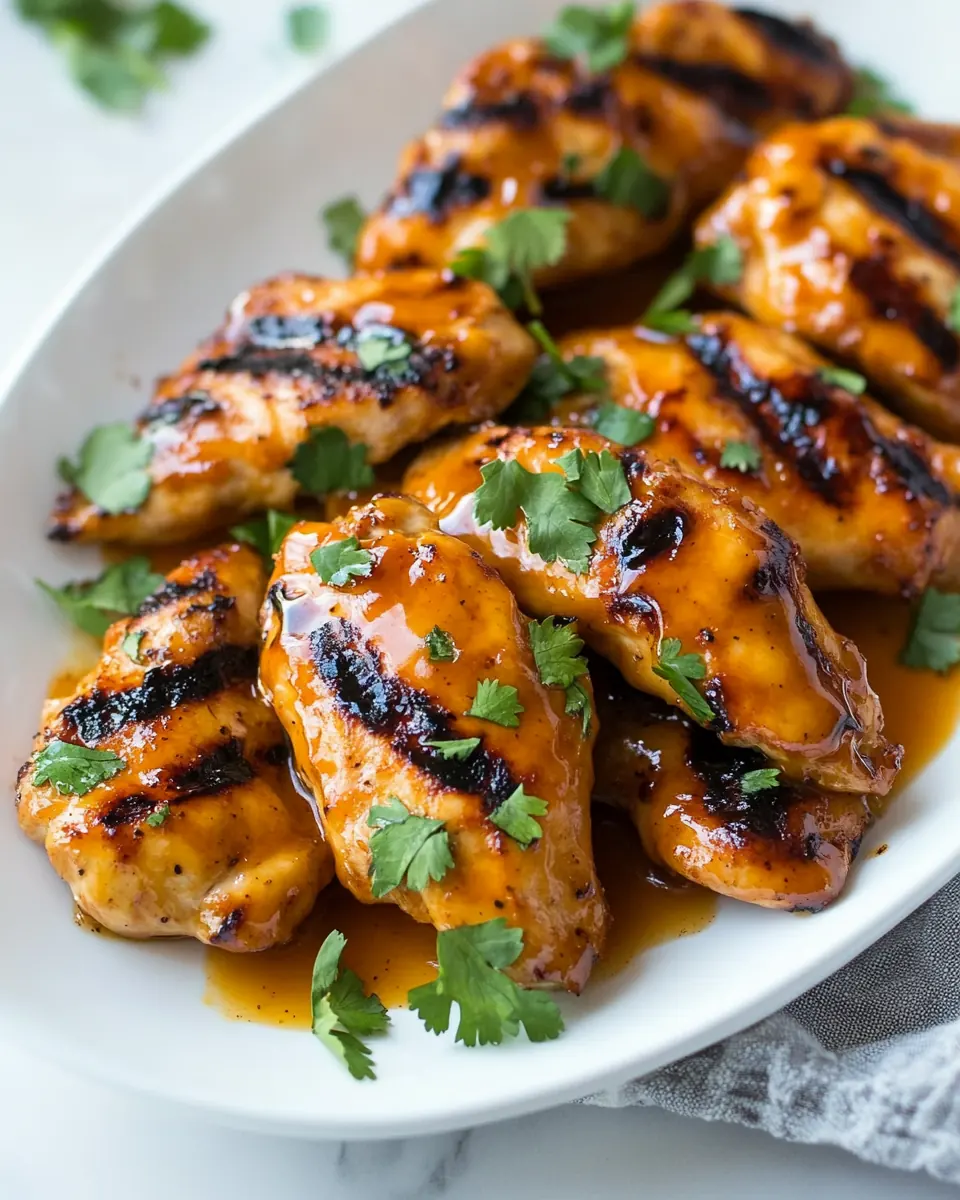
Grill chicken about 4 minutes per side then brush with glaze and grill until cooked through (165 degrees in center) and slightly charred about 2 minutes per side more.: At first you will hear the satisfying sizzle that signals good contact between the chicken and the grill, and the surface will begin to caramelize. After the initial sear, brushing with the glaze introduces sugars that will caramelize quickly, so watch for a deep golden to mahogany color and not outright burning. Use a thermometer to confirm the internal temperature reaches 165 degrees , which ensures safety while preserving juiciness. Overbasting or leaving the chicken on too long after glazing leads to bitter char, so work in short timed bursts and monitor closely.
Serve warm with reserved glaze, garnished with parsley if desired.: When plated the chicken should gleam with the sticky glaze and release a bright citrus aroma as you slice into it, steam rising with a hint of honeyed smoke. Spoon the reserved glaze on the side so each diner can add more if they like, and sprinkle the chopped parsley for a fresh herbal contrast and color. Avoid letting the chicken sit too long after glazing, because the gloss loses its shine and the texture can firm up. A frequent error is skipping the resting step, which can cause the juices to run out when cut, so let the pieces sit briefly before serving.
Recipe source: adapted slightly from the Neely's: adapted slightly from the Neely's : Knowing the origin is helpful because it points to a tested foundation, and adapting it allowed me to trim and balance ingredients for everyday cooking. Respecting the source helps maintain the recipe integrity while you make adjustments for personal taste. Be careful not to over credit or change core technique without testing, since small tweaks like marinating time or glaze ratio significantly affect outcome.