Add enough water to a large pot to boil the pasta, add 1 tablespoon of sea salt, and bring the water to a boil.: The first scent you will notice is the mineral tang of boiling water, and the small sparkle of salt as it dissolves. Boiling vigorously creates movement so the bow tie pasta can tumble freely, preventing sticking. Using the right amount of salted water seasons the pasta from the inside out, which matters because once rinsed and cooled it will no longer absorb dressing the same way. A common mistake is using too little water which causes clumping and uneven cooking; use a large pot so the pasta has room to move.
Add the pasta, give it a stir, and cook until al dente, about 10 minutes, but read the package instructions. Make sure to stir it often while it cooks.: As the pasta cooks you will hear a steady gentle boil and see the shapes bobbing. Stirring in the first minute prevents the pieces from sticking together. To test doneness, bite into a piece; it should be tender with a slight bite in the center, not chalky. Overcooking will make the salad mushy and less pleasant to eat, so check a minute or two before the package time and taste frequently.
In a medium mixing bowl add the olive oil, balsamic vinegar, maple, balsamic reduction, salt, and pepper, and stir to combine.: When you whisk these ingredients the dressing should become glossy, and the aroma of the balsamic vinegar will open up, balanced by the sweet maple. The oil should coat the other components for a harmonious glaze that clings to the pasta and strawberries . If the dressing separates, whisk again or add a tiny splash more oil; separation can make the salad unevenly flavored.
Add the strawberries and toss them in the balsamic mixture. Store in the fridge until ready to use.: As you toss, the juices of the strawberries will mingle with the dressing, creating a fragrant, slightly syrupy coating. This is where the salad starts to come alive, the fruit taking on a glossier, more concentrated note. Chill this mixture if you're not assembling immediately, because warm fruit can make greens limp and pasta absorb too much liquid. Avoid tossing too roughly which can break down the strawberries and make the dressing watery.
When the pasta is done cooking, drain using a colander and rinse it under cold water to cool it down. Drain well.: The sudden cold rinse stops carryover cooking, firms the texture, and removes excess starch that could gum up the salad. You should see the steam disappear and the pasta cool quickly to the touch. Drain thoroughly because excess water will dilute the dressing and make the salad watery, a common error if you skip this step.
Add the cooled pasta to a large bowl and add the strawberry mixture and all its juices to the bowl.: The sound here is gentle as the pasta settles, and you will notice the bowl picking up a glossy sheen from the strawberry dressing. The juices help coat each pasta shape, so everything tastes integrated rather than disjointed. If the pasta seems dry, reserve a little dressing to add gradually, rather than dumping too much at once which can make it soggy.
Next, add the salad greens, walnuts, pine nuts, and half of the feta cheese, toss to combine, and coat everything in the sauce. Taste and adjust for salt, pepper, and balsamic vinegar as needed.: Tossing should be gentle and deliberate, folding rather than mashing, so the arugula and spinach remain crisp and the nuts stay crunchy. You will see ribbons of green and pops of red as they mix. Taste and adjust seasoning at this stage because the cold salad distributes flavors differently than warm dishes. A common mistake is over tossing which bruises the greens and mashes the fruit.
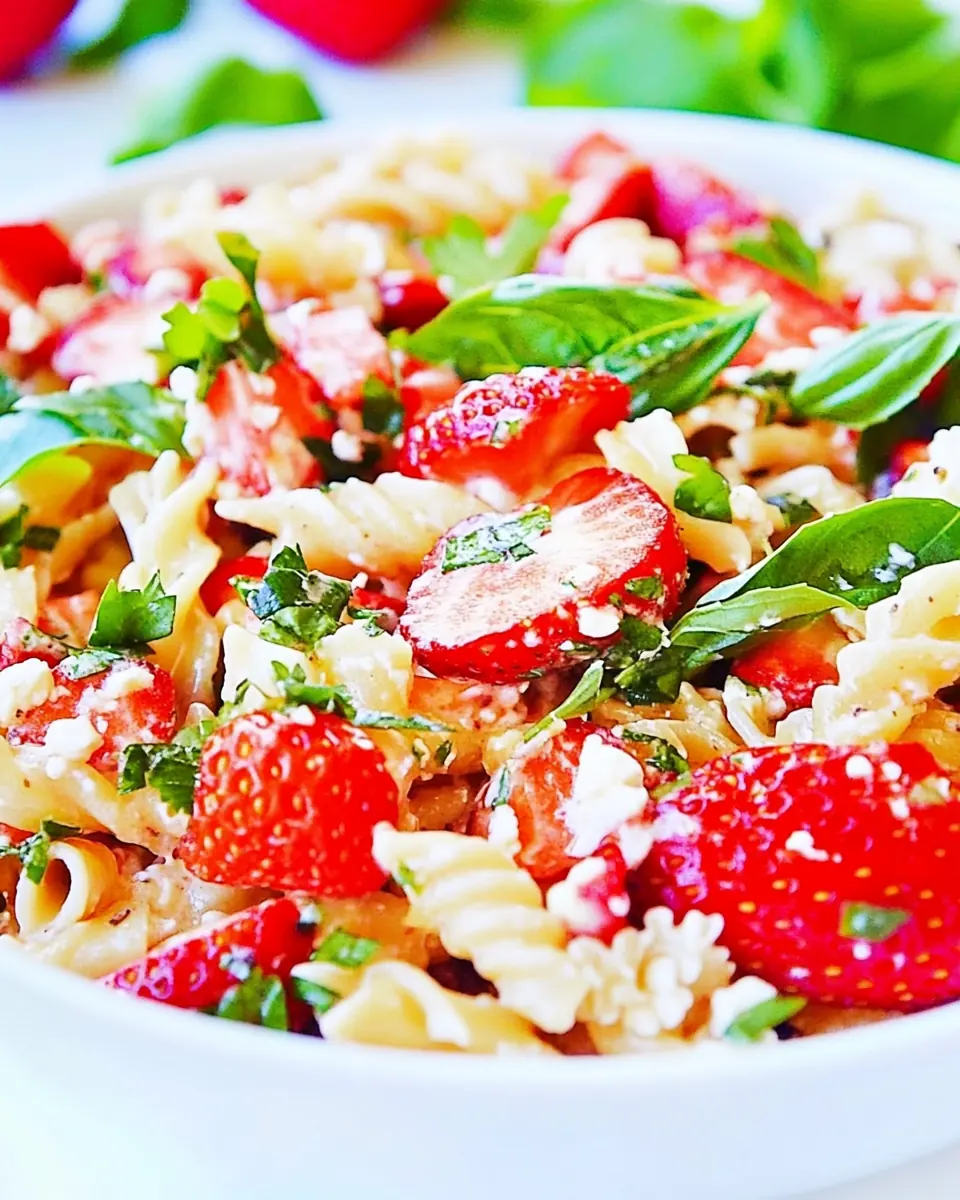
Before serving garnish with more fresh strawberries, remaining feta cheese, pine nuts, and fresh basil leaves.: The final garnish adds visual contrast and an extra layer of flavor, the basil releasing a perfume when torn and scattered. The salad should look lively, with glossy dressing and scattered crumbles of feta . Serve chilled or at cool room temperature. Avoid adding garnishes too early because delicate herbs will wilt and nuts will soften if they sit too long.