Strawberry Balsamic Pasta Salad
Strawberry Balsamic Pasta Salad has been my go to for sunny weekend gatherings, a bowl I reach for when I want something bright, crunchy, and a little bit unexpected. I remember the first time I tossed together sweet strawberries with tangy balsamic and chewy pasta, and how every bite felt like summer in a forkful. That afternoon I was rushing between errands, and this salad became the easiest way to bring a splash of color and flavor to the table without fuss.
Over the years I’ve tweaked the balance of textures, learning that the right amount of olive oil and a touch of balsamic vinegar can turn simple ingredients into something that sings. I like assembling parts ahead so that when guests arrive I can focus on final touches like toasted pine nuts and a scattering of crumbled feta. Each time I serve Strawberry Balsamic Pasta Salad someone asks for the recipe, and that small request is why I keep refining it.
Recipe Snapshot
30 mins
10 mins
20 mins
Medium
320 kcal
Italian
Vegan, Gluten-Free
Salads
Large pot, Colander, Medium mixing bowl, Skillet
The Appeal of This Strawberry Balsamic Pasta Salad
Fresh seasonal fruit meets savory balance
I love how Strawberries bring natural sweetness and bright acidity, which the balsamic vinegar mirrors and deepens. The interplay creates a flavor bridge, so every forkful tastes layered not flat.
Contrasting textures that keep each bite interesting
The chew of the bow tie pasta paired with crunchy walnuts and toasted pine nuts keeps the salad lively. I find that texture contrast is what turns a good salad into a memorable one.
Versatility for occasions
This recipe moves easily between a casual picnic, a potluck, or a light dinner. I often bring it to summer gatherings because it travels well and everyone seems to enjoy the sweet and savory contrast.
Make ahead ease
I routinely prep elements in advance, and the dressing-soaked strawberries can sit chilled for a few hours, improving flavor without losing freshness. That convenience makes it a practical choice when I want something impressive with minimal last minute work.
Bright visual appeal
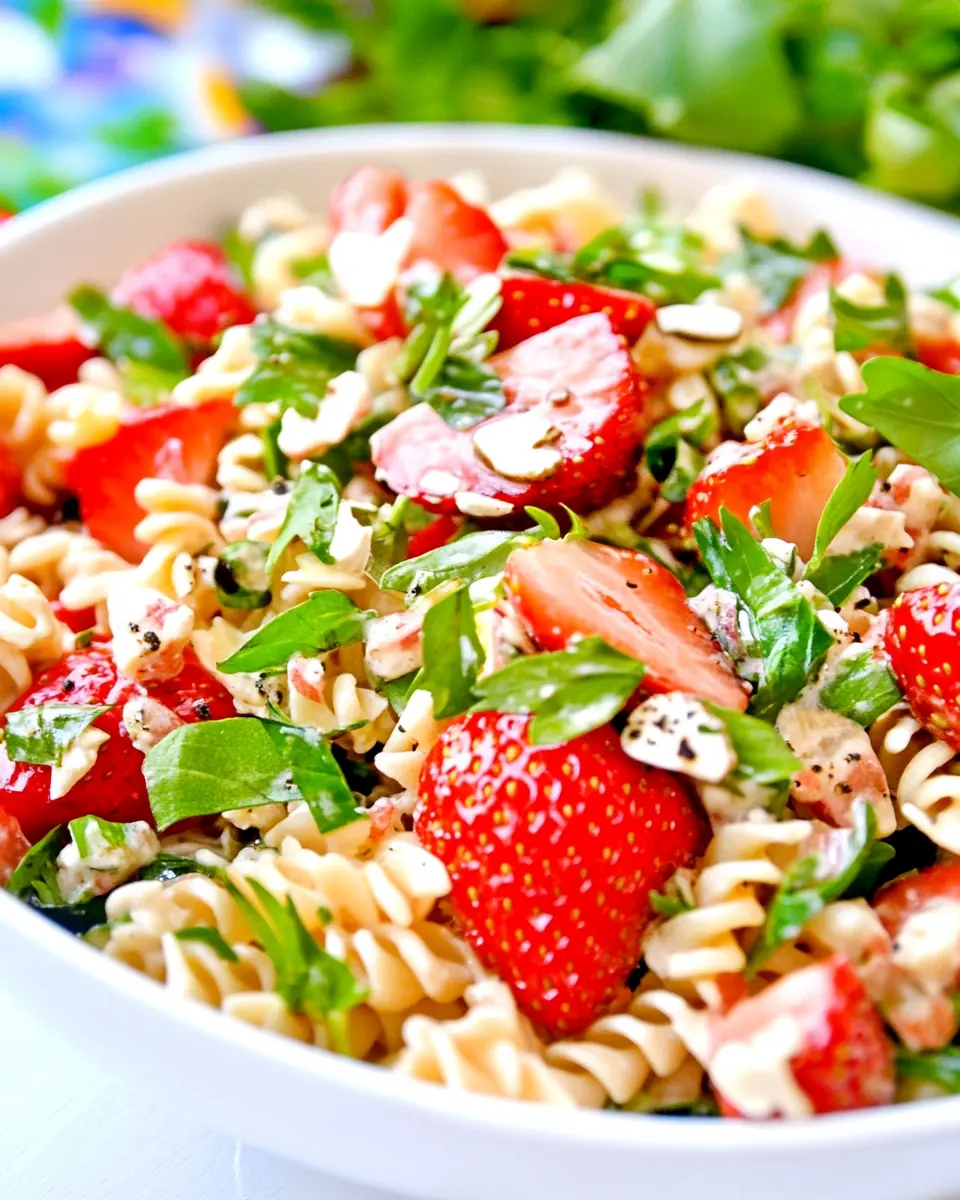
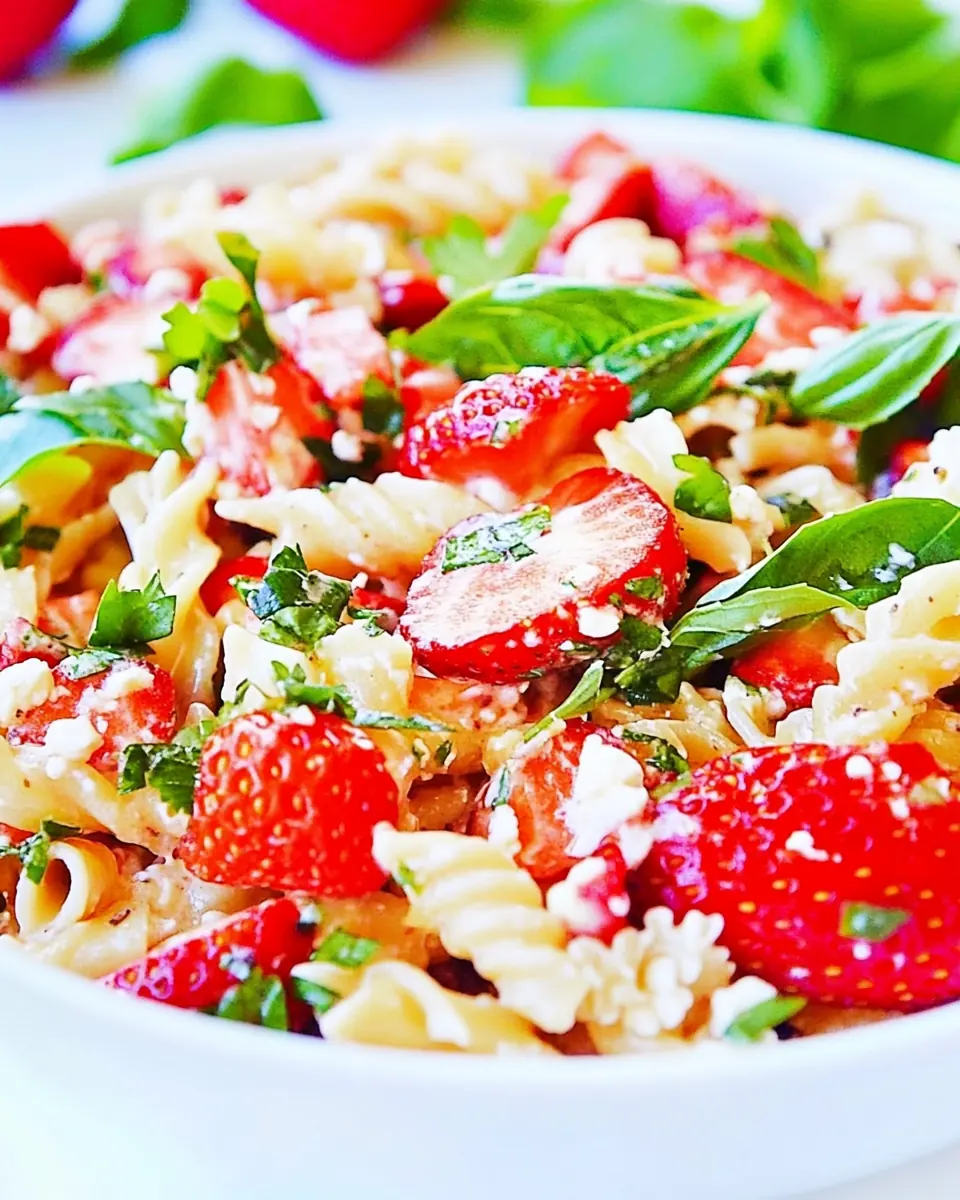
The vibrant red of the strawberries, the green of the arugula and spinach, and the crumbled white of feta make this salad a showstopper on a buffet. I think food that looks appetizing invites people to try it, and this one rarely needs introduction.
Strawberry Balsamic Pasta Salad Ingredients
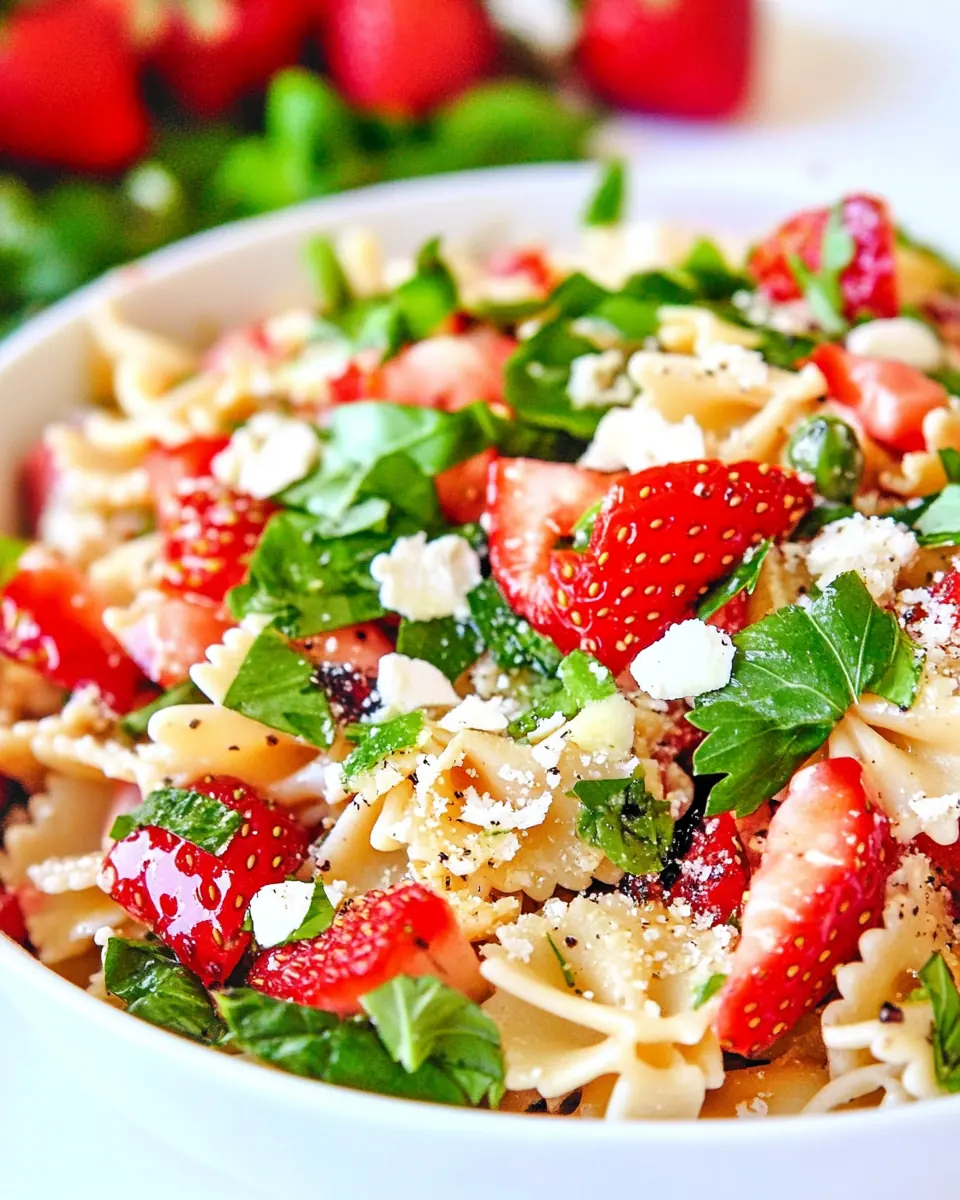
I think of these ingredients as a team. The starch of the bow tie pasta anchors the salad, the strawberries bring sweet acidity, and the mix of arugula and spinach adds peppery and verdant notes. Toasted pine nuts and roughly chopped walnuts introduce crunch, while crumbled feta lends salty creaminess. The dressing, led by olive oil and balsamic vinegar, ties everything together and ensures each bite is coated with flavor.
- 1 tablespoons ea salt for pasta water: Seasoned with salt to enhance the pasta's flavor and to slightly season the boiling water so the pasta absorbs seasoning as it cooks. Use a generous amount to prevent blandness and to bring out the pasta's natural taste. Add to the pot once water reaches a rolling boil for even distribution.
- 1 pound bow tie pasta: Cooked as the main starch component that provides hearty texture and bulk to the salad. Choose bow tie pasta for its shape, which holds dressing and ingredients in its folds, creating balanced bites. Boil until al dente so it remains slightly firm when tossed with the dressing and produce.
- 1/3 cup olive oil: Used as the base for the dressing to add richness and mouth-coating smoothness that balances acidic components. Pour into a mixing bowl before whisking with vinegar and sweeteners to achieve an emulsion. Drizzle over the cooled pasta and greens to bind the salad components together.
- 3 tablespoons balsamic vinegar: Adds tangy, slightly sweet acidity to brighten the dressing and cut through the oil's richness. Combine with maple syrup and balsamic reduction to create layered flavor notes. Whisk into the olive oil to create a balanced vinaigrette for the pasta salad.
- 2 tablespoons maple syrup: Provides sweetness that balances the balsamic vinegar and enhances the strawberries' flavor while contributing to a glossy dressing. Stir into the dressing mixture until dissolved to achieve a harmonious sweet-tangy profile. Adjust quantity to taste if a sweeter dressing is desired.
- 1 tablespoon balsamic reduction: Introduces concentrated sweet-tart flavor and a syrupy texture that deepens the dressing's balsamic notes. Add sparingly to amplify complexity and provide a hint of caramelized tang without thinning the vinaigrette. Use as a finishing touch for richer flavor impact.
- 1/4 teaspoons salt and pepper each: Used to season the salad with a balanced touch of salt and pepper for immediate savory and bright heat. Sprinkle evenly to taste during final tossing to ensure all components are seasoned. Adjust carefully to avoid overpowering the delicate fruits and greens.
- 2 cups strawberries stems removed and sliced: Contributes fresh, juicy sweetness and slight tartness while adding vibrant color and texture to the salad. Slice and fold gently into the pasta and greens to avoid crushing and releasing too much juice. Serve shortly after combining to preserve their texture and freshness.
- 2 cups arugula: Provides a peppery, slightly bitter leafy component that contrasts with sweet strawberries and creamy cheese. Toss with the pasta and dressing so its sturdy leaves hold up and add a lively flavor. Use as part of the salad greens mix for bite and freshness.
- 2 cups spinach: Supplies tender, mild-flavored greens that add bulk and a delicate texture when mixed into the salad. Combine with arugula for a balanced green base that complements the sweeter elements. Wilt slightly if desired by tossing with warm pasta for a gentle meld of flavors.
- 1/2 cup walnuts roughly chopped: Adds crunchy texture and a toasty, slightly bitter nutty flavor that complements the sweet and tangy components. Roughly chop to distribute small clusters throughout the salad for contrast in each bite. Toast lightly if preferred to intensify nuttiness before adding.
- 1/4 cup pine nuts: Provides additional crunch and a buttery, piney nut flavor that pairs well with greens and cheese. Scatter over the salad as whole nuts to maintain texture and visual appeal. Lightly toast if desired to bring out deeper, aromatic notes.
- 1 cup feta crumbled: Offers creamy, salty, and tangy elements that contrast with the fruit and greens, providing savory richness. Crumble over the salad so small pieces are distributed for pockets of flavor. Choose fresh feta for a bright, slightly briny finish.
- Strawberries: Supplies extra fresh fruit for garnish or additional servings, reinforcing the salad's strawberry flavor profile. Slice or quarter as needed and reserve some for topping to maintain visual appeal. Keep chilled until just before serving to preserve firmness.
- Basil: Adds a fragrant herbal note that brightens the salad with aromatic, slightly sweet, clove-like flavors. Tear or chiffonade leaves and scatter over the finished salad to release essential oils. Use sparingly to avoid overpowering other delicate ingredients.
- Pine nuts: Provides extra crunchy garnish and a mild, buttery flavor to enhance texture and visual appeal if additional nuts are desired. Sprinkle as a finishing touch for contrast against greens and cheese. Toast briefly to enhance aroma and crunch before adding.
How to Make Strawberry Balsamic Pasta Salad
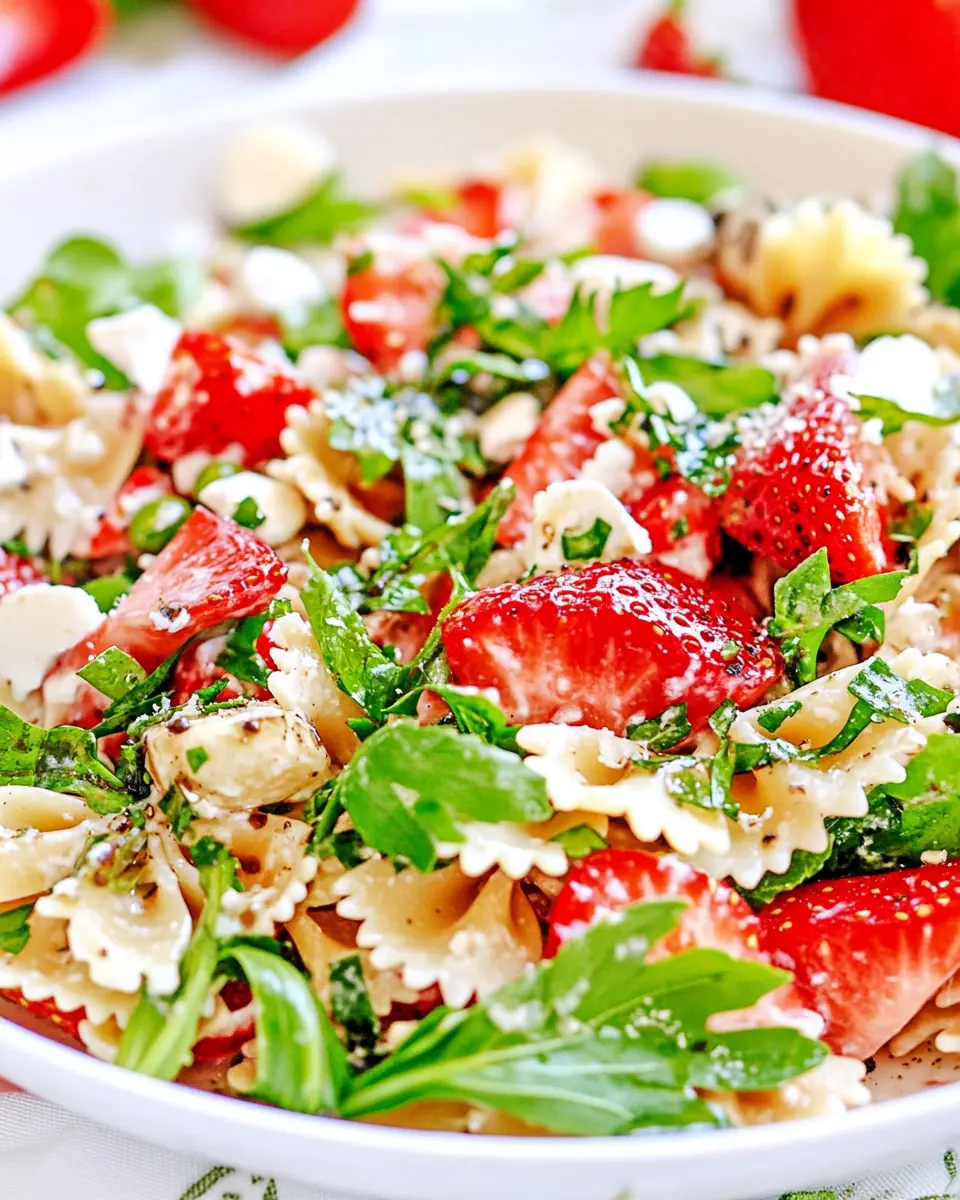
I like to walk you through the steps like we’re cooking side by side. This salad comes together in stages, so prepping and cooling the pasta is the key to a bright, non soggy finish. Follow each step with attention to visual and textural cues for the best result.
- Add enough water to a large pot to boil the pasta, add 1 tablespoon of sea salt, and bring the water to a boil.: The first scent you will notice is the mineral tang of boiling water, and the small sparkle of salt as it dissolves. Boiling vigorously creates movement so the bow tie pasta can tumble freely, preventing sticking. Using the right amount of salted water seasons the pasta from the inside out, which matters because once rinsed and cooled it will no longer absorb dressing the same way. A common mistake is using too little water which causes clumping and uneven cooking; use a large pot so the pasta has room to move.
- Add the pasta, give it a stir, and cook until al dente, about 10 minutes, but read the package instructions. Make sure to stir it often while it cooks.: As the pasta cooks you will hear a steady gentle boil and see the shapes bobbing. Stirring in the first minute prevents the pieces from sticking together. To test doneness, bite into a piece; it should be tender with a slight bite in the center, not chalky. Overcooking will make the salad mushy and less pleasant to eat, so check a minute or two before the package time and taste frequently.
- In a medium mixing bowl add the olive oil, balsamic vinegar, maple, balsamic reduction, salt, and pepper, and stir to combine.: When you whisk these ingredients the dressing should become glossy, and the aroma of the balsamic vinegar will open up, balanced by the sweet maple. The oil should coat the other components for a harmonious glaze that clings to the pasta and strawberries . If the dressing separates, whisk again or add a tiny splash more oil; separation can make the salad unevenly flavored.
- Add the strawberries and toss them in the balsamic mixture. Store in the fridge until ready to use.: As you toss, the juices of the strawberries will mingle with the dressing, creating a fragrant, slightly syrupy coating. This is where the salad starts to come alive, the fruit taking on a glossier, more concentrated note. Chill this mixture if you're not assembling immediately, because warm fruit can make greens limp and pasta absorb too much liquid. Avoid tossing too roughly which can break down the strawberries and make the dressing watery.
- When the pasta is done cooking, drain using a colander and rinse it under cold water to cool it down. Drain well.: The sudden cold rinse stops carryover cooking, firms the texture, and removes excess starch that could gum up the salad. You should see the steam disappear and the pasta cool quickly to the touch. Drain thoroughly because excess water will dilute the dressing and make the salad watery, a common error if you skip this step.
- Add the cooled pasta to a large bowl and add the strawberry mixture and all its juices to the bowl.: The sound here is gentle as the pasta settles, and you will notice the bowl picking up a glossy sheen from the strawberry dressing. The juices help coat each pasta shape, so everything tastes integrated rather than disjointed. If the pasta seems dry, reserve a little dressing to add gradually, rather than dumping too much at once which can make it soggy.
- Next, add the salad greens, walnuts, pine nuts, and half of the feta cheese, toss to combine, and coat everything in the sauce. Taste and adjust for salt, pepper, and balsamic vinegar as needed.: Tossing should be gentle and deliberate, folding rather than mashing, so the arugula and spinach remain crisp and the nuts stay crunchy. You will see ribbons of green and pops of red as they mix. Taste and adjust seasoning at this stage because the cold salad distributes flavors differently than warm dishes. A common mistake is over tossing which bruises the greens and mashes the fruit.
- Before serving garnish with more fresh strawberries, remaining feta cheese, pine nuts, and fresh basil leaves.: The final garnish adds visual contrast and an extra layer of flavor, the basil releasing a perfume when torn and scattered. The salad should look lively, with glossy dressing and scattered crumbles of feta . Serve chilled or at cool room temperature. Avoid adding garnishes too early because delicate herbs will wilt and nuts will soften if they sit too long.
Helpful Notes about Strawberry Balsamic Pasta Salad
This salad rewards small techniques that elevate texture and flavor. The following notes expand on prep, assembly, and storage so you can get consistent results. I share what I actually do when hosting, rather than theoretical steps.
- Prep in stages Practice chopping your strawberries and toasting the nuts the night before, and cook the pasta an hour ahead. This reduces last minute stress and helps flavors relax.
- Control strawberry moisture If your berries look extra juicy, blot them with paper towels before tossing in dressing, it prevents the salad from becoming watery.
- Warm pasta trick Tossing a portion of the dressing with warm pasta allows the sauce to soak in, adding depth. Then cool the pasta and add the rest of the dressing later to brighten the salad.
- Toast nuts carefully Pine nuts brown quickly, so keep them moving in the pan and pull them off as soon as they smell fragrant to avoid bitterness.
- Season last Since feta and the dressing already contain salt, taste before adding more. This helps avoid oversalting the finished dish.
What Goes Well With This Strawberry Balsamic Pasta Salad
This salad pairs well with light proteins, casual gatherings, and seasonal menus. Below are serving ideas, storage tips, and occasions where it shines, written so you can plan a balanced meal. I often build a spread around it for summer lunches or brunches.
- Serve with grilled chicken or fish Complement the sweet and tangy salad with simply seasoned grilled proteins for a fuller plate that still feels light. The salad’s acidity cuts through richness.
- Bring to picnics This salad travels well when chilled and kept in a sealed container, making it a great choice for outdoor meals and potlucks.
- Pair with crusty bread Offer slices of warm bread or rolls so guests can scoop up any dressing, creating a more comforting meal feel.
- Occasions Perfect for lunch, a brunch buffet, summer gatherings, and I often include it in Ramadan iftars as a refreshing starter when dates and heavier dishes are the main focus.
- Storage tips Store leftover salad in an airtight container in the fridge for up to two days. Keep extra dressing separate if you want to refresh the salad before serving to avoid limp greens.
- Seasonal pairings When strawberries are peak season, this salad shines as a center plate. In early summer, add more fresh herbs for an herbaceous lift.
FAQ
Conclusion
This Strawberry Balsamic Pasta Salad stands out because it marries sweet, tangy, and savory elements with contrasting textures in every bite. Give it a try when strawberries are in season so you can enjoy the brightest flavor; prep a few components ahead to make assembly relaxed and easy. I hope this salad becomes one of your favorite summer staples, whether you serve it as a light dinner, a potluck hit, or a colorful side at a family meal. It’s the sort of dish that looks delightful on the table and invites people to linger and enjoy.
Strawberry Balsamic Pasta Salad
Ingredients
Equipment
Method
- Add enough water to a large pot to boil the pasta, add 1 tablespoon of sea salt, and bring the water to a boil.: The first scent you will notice is the mineral tang of boiling water, and the small sparkle of salt as it dissolves. Boiling vigorously creates movement so the bow tie pasta can tumble freely, preventing sticking. Using the right amount of salted water seasons the pasta from the inside out, which matters because once rinsed and cooled it will no longer absorb dressing the same way. A common mistake is using too little water which causes clumping and uneven cooking; use a large pot so the pasta has room to move.
- Add the pasta, give it a stir, and cook until al dente, about 10 minutes, but read the package instructions. Make sure to stir it often while it cooks.: As the pasta cooks you will hear a steady gentle boil and see the shapes bobbing. Stirring in the first minute prevents the pieces from sticking together. To test doneness, bite into a piece; it should be tender with a slight bite in the center, not chalky. Overcooking will make the salad mushy and less pleasant to eat, so check a minute or two before the package time and taste frequently.
- In a medium mixing bowl add the olive oil, balsamic vinegar, maple, balsamic reduction, salt, and pepper, and stir to combine.: When you whisk these ingredients the dressing should become glossy, and the aroma of the balsamic vinegar will open up, balanced by the sweet maple. The oil should coat the other components for a harmonious glaze that clings to the pasta and strawberries . If the dressing separates, whisk again or add a tiny splash more oil; separation can make the salad unevenly flavored.
- Add the strawberries and toss them in the balsamic mixture. Store in the fridge until ready to use.: As you toss, the juices of the strawberries will mingle with the dressing, creating a fragrant, slightly syrupy coating. This is where the salad starts to come alive, the fruit taking on a glossier, more concentrated note. Chill this mixture if you're not assembling immediately, because warm fruit can make greens limp and pasta absorb too much liquid. Avoid tossing too roughly which can break down the strawberries and make the dressing watery.
- When the pasta is done cooking, drain using a colander and rinse it under cold water to cool it down. Drain well.: The sudden cold rinse stops carryover cooking, firms the texture, and removes excess starch that could gum up the salad. You should see the steam disappear and the pasta cool quickly to the touch. Drain thoroughly because excess water will dilute the dressing and make the salad watery, a common error if you skip this step.
- Add the cooled pasta to a large bowl and add the strawberry mixture and all its juices to the bowl.: The sound here is gentle as the pasta settles, and you will notice the bowl picking up a glossy sheen from the strawberry dressing. The juices help coat each pasta shape, so everything tastes integrated rather than disjointed. If the pasta seems dry, reserve a little dressing to add gradually, rather than dumping too much at once which can make it soggy.
- Next, add the salad greens, walnuts, pine nuts, and half of the feta cheese, toss to combine, and coat everything in the sauce. Taste and adjust for salt, pepper, and balsamic vinegar as needed.: Tossing should be gentle and deliberate, folding rather than mashing, so the arugula and spinach remain crisp and the nuts stay crunchy. You will see ribbons of green and pops of red as they mix. Taste and adjust seasoning at this stage because the cold salad distributes flavors differently than warm dishes. A common mistake is over tossing which bruises the greens and mashes the fruit.
- Before serving garnish with more fresh strawberries, remaining feta cheese, pine nuts, and fresh basil leaves.: The final garnish adds visual contrast and an extra layer of flavor, the basil releasing a perfume when torn and scattered. The salad should look lively, with glossy dressing and scattered crumbles of feta . Serve chilled or at cool room temperature. Avoid adding garnishes too early because delicate herbs will wilt and nuts will soften if they sit too long.
Notes
- Prep in stages Practice chopping your strawberries and toasting the nuts the night before, and cook the pasta an hour ahead. This reduces last minute stress and helps flavors relax.
- Control strawberry moisture If your berries look extra juicy, blot them with paper towels before tossing in dressing, it prevents the salad from becoming watery.
- Warm pasta trick Tossing a portion of the dressing with warm pasta allows the sauce to soak in, adding depth. Then cool the pasta and add the rest of the dressing later to brighten the salad.
- Toast nuts carefully Pine nuts brown quickly, so keep them moving in the pan and pull them off as soon as they smell fragrant to avoid bitterness.
- Season last Since feta and the dressing already contain salt, taste before adding more. This helps avoid oversalting the finished dish.