Cake: The kitchen will smell faintly sweet and slightly floral as the oven warms; that scent signals the pan is ready. Make sure your oven registers at 350 F by using an oven thermometer, because many ovens run hot or cold and that can change the crumb. If you skip this, you might find a dome that cracks or a center that sinks. While the pans heat, prepare them with floured cooking spray or grease and flour; this prevents sticking and creates a clean inversion. A common mistake is over flouring which can leave a dry edge, so tap out excess flour. When the pans are set, the batter will be poured in and the warmth from the oven will transform a glossy batter into a golden top and tender interior.
Preheat oven to 350 F. Spray two 9-inch round cake pans (or one 9×13-inch pan) with floured cooking spray, or grease and flour the pans; set aside.: As you preheat, you will hear the faint hum of the oven and notice the warm air smell change; it prepares for even rising and browning. Properly greased pans allow cakes to release cleanly, which helps maintain layer integrity when you invert them. If your pans are not prepared well the cake can stick and tear during removal, so take a moment to coat evenly and flour lightly. Avoid using too much flour which can flake off into the batter and add an unpleasant dry film to the crust. Set the pans aside so they are ready the moment the batter is mixed.
To the bowl of a stand mixer fitted with the paddle attachment (or large bowl and electric handheld mixer), add all ingredients except strawberries, and beat on medium-high speed until well blended, about 3 minutes, stopping to scrape down the sides of the bowl as necessary.: When you mix the wet and dry components, you will see a smooth, slightly glossy batter forming and hear a steady hum from your mixer. Scraping down the bowl ensures pockets of dry mix do not remain, which would create lumps in the baked cake. Mix for the suggested time to develop structure but avoid overbeating which can introduce too much air and cause the cake to collapse. A common error is rushing this step, which results in streaks of dry mix in the finished cake. The batter should be thick but pourable, with no visible pockets of flour.
Add the strawberries and beat to incorporate.: When you fold in the diced strawberries , you'll notice tiny flecks of red and a slight release of bright fruit aroma. Incorporating fruit gently preserves texture and prevents the berries from turning to mush which can create large wet streaks in the batter. Use a low speed or fold by hand, and stop once the fruit is evenly distributed. Overmixing here will break down the fruit and produce a heavy batter with uneven color. A good sign is even red specks through the batter without large pools of juice.
Turn batter out into prepared pans, divided evenly, and bake for about 30 to 34 minutes, or until done and a toothpick inserted in the center comes out clean or with a few moist crumbs.: As the cake bakes you will notice the top set and spring back lightly when touched, and the aroma will become more cake like with a hint of strawberry; those cues indicate progress. Start checking at 30 minutes to avoid overbaking, especially if using convection. A toothpick with a few moist crumbs is preferable to a completely dry toothpick, which signals overbake and drier texture. Avoid opening the oven frequently early in the bake since temperature shifts can cause the layers to sink. If one layer browns faster than the other, rotate pans midway for even coloring.
Allow cakes to cool in pans, on a wire rack, for about 15 minutes before inverting and removing cakes to cool completely on wire racks.: The cakes will release a concentrated aroma as they cool, and the crumb will finish setting. Letting them rest in the pans allows residual steam to redistribute so the cake holds together when inverted. Inverting too soon often causes the cake to crack or tear, while leaving them too long can lead to condensation that makes the surface sticky. After inverting, let them cool fully to room temperature; frosting warm cakes will make the icing melt and slide off, which is a common and avoidable problem.
Make sure cakes are completely cooled before frosting them.: The final cool down is tactile and visual; the tops should feel room temperature and not warm to the touch. Cooling fully prevents the frosting from thinning and losing structure. A hot cake can cause the frosting to separate and become runny, leading to a messy assembly. Patience here preserves your frosting technique and the cake's neat appearance.
Frosting: The aroma of whipped butter and strawberry preserves will start to come together as you whip the frosting, and the texture will shift from dense to light and fluffy as air is incorporated. Use room temperature butter so it creams smoothly; this creates small air pockets that give an airy frosting. If your butter is too cold the mixture will be lumpy, too warm and it will be greasy. Whip until fluffy then adjust consistency with cream slowly. Overbeating vigorously once sugar is added can make the frosting grainy, so stop when it's light and airy.
To the bowl of a stand mixer fitted with the paddle attachment (or large bowl and electric handheld mixer), add the butter, and beat on medium-high speed to smooth it.: When you beat the butter , you will see it change from dense blocks to a pale, smooth mass and the sound will shift as it becomes aerated. Smooth butter creates a silky base so the preserves and sugar incorporate evenly. If you notice oily separation, your butter might be too warm; chill briefly and rewhip. Not smoothing the butter well can result in pockets of unblended fat inside the frosting.
Add the strawberry preserves, extract, 3 cups confectioners’ sugar, and beat on medium-high speed to blend.: The moment the preserves meet the whipped butter the kitchen smells intensely fruity and sweet. The preserves will break up into the butter , adding both flavor and texture; mixing with three cups of sugar starts to build body. If you find large chunks of jam, stir them gently to integrate without overworking the frosting. A common oversight is adding all the sugar at once which makes dust fly and may cause a gritty texture, so add gradually and scrape the bowl as needed.
Add 1 additional cup confectioners’ sugar, and beat for 2 to 3 minutes, or until very well whipped, light, and fluffy. As necessary, drizzle in the cream to thin frosting to a thick, yet spreadable, consistency.: As you finish whipping the frosting it will become visibly lighter and take on a silky sheen. The extra cup of sugar gives structure and volume; whipping for the full time incorporates air that keeps the frosting stable for spreading. Use the cream sparingly to reach a spreadable stage; too much will make the icing droop. If the frosting seems too sweet, chilling briefly tightens it up, but overchilling will make it hard to spread.
Optionally add red food coloring to make the frosting pinker; I added about 10 drops.: Adding coloring concentrates visual appeal; mix it in thoroughly so the pink is even. Small additions are best, because color deepens once the frosting rests. Adding too much dye can alter flavor slightly and may stain hands or cloths, so handle carefully. Stir until uniform and check under natural light to ensure the shade matches your vision.
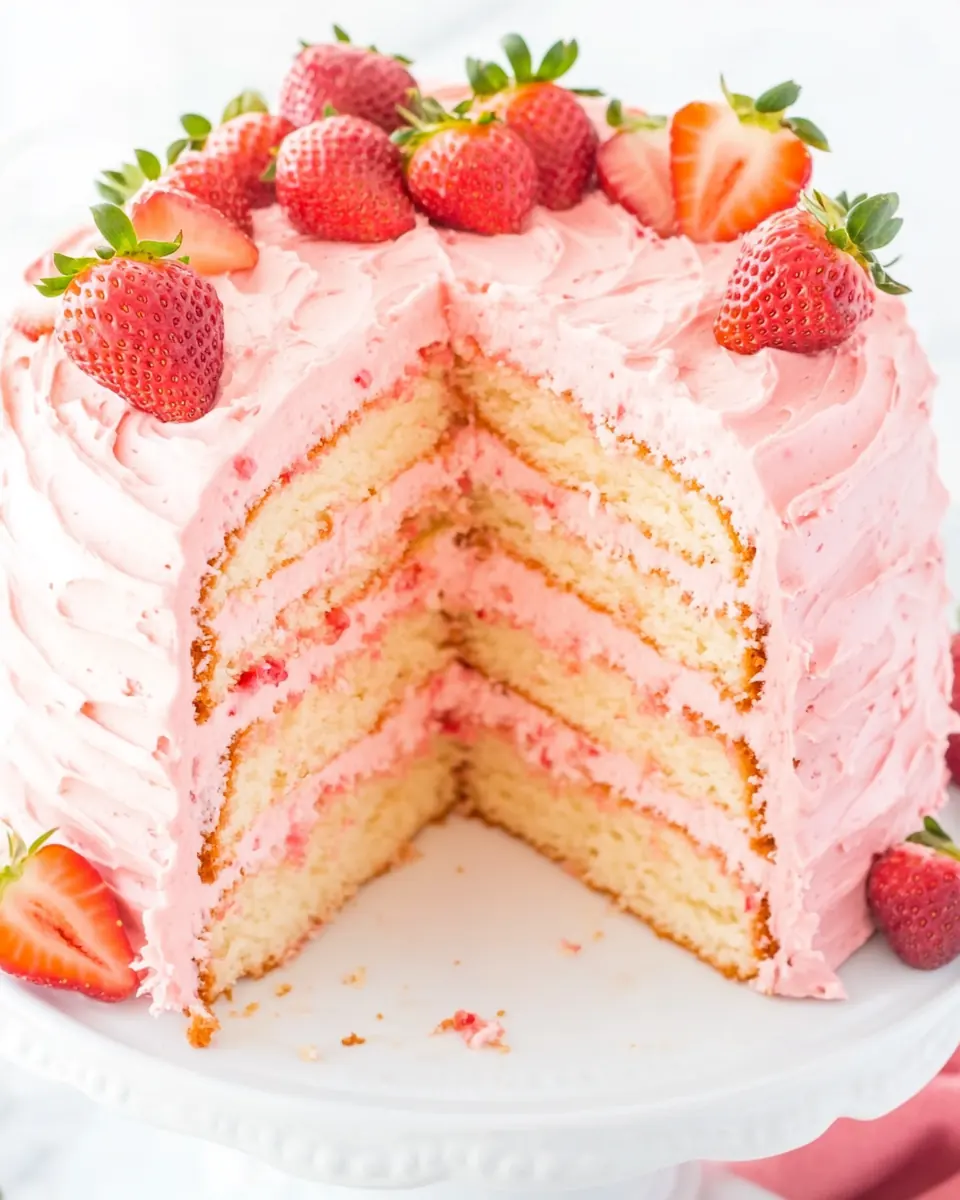
Add about one-third of the frosting to the top of one of the cakes and smooth it with a spatula or knife. Place the other cake on top, add about one-third of the remaining frosting, and smooth it. Add the remaining amount of frosting to the sides of the cake and smooth it.: When assembling, the first layer will give off a soft perfume of strawberries and the texture should be smooth and even. Spreading a thin crumb coat first traps loose crumbs and makes the final coat easier. After placing the second layer, apply the final frosting and smooth with a spatula, using long strokes for a clean finish. A typical mistake is using too much frosting early, which can cause the layers to slide; apply moderate pressure and steady hands.
Optionally add fresh strawberries for garnishing before serving.: Fresh fruit on top adds aroma and visual freshness, and slicing before arranging releases a bright strawberry scent. Place berries just before serving to avoid juice bleeding into the frosting. If you prepare the cake ahead of time, add fruit right before presenting. Overcrowding the top with slices can overwhelm the frosting design, so arrange with spacing for a refined look.