Strawberry Layer Cake with Strawberry Frosting
Strawberry Layer Cake with Strawberry Frosting has been one of my go to celebration cakes for years, and the moment I slice into it I remember summer afternoons filled with laughter and sticky fingertips.
I first made this cake for a neighbor who had just moved in, and carrying that warm, fragrant cake across the driveway felt like handing over a piece of home. The first bite gave us that soft crumb and a burst of fresh strawberries, and everyone asked for the recipe. Since then, I’ve tweaked small things, learning how a touch more butter in the frosting or a bit less mixing in the batter changes texture and mouthfeel, and those tiny observations are tucked into how I make this cake today.
When I bake this cake for a party I always think about contrast, I love the interplay of the pillowy white cake and the jammy strawberry preserves in the frosting. Guests often tell me it tastes like a grown up version of a classic childhood treat, floral and bright but balanced. Over time I’ve learned which signals to watch for while baking and frosting, and those cues keep the process relaxing rather than stressful. It has become my reliable show stopper, one I return to when I want something pretty, nostalgic, and undeniably delicious.
Recipe Snapshot
45 mins
15 mins
30 mins
Medium
350 kcal
American
Gluten-Free, Low FODMAP
Desserts
Stand mixer, Paddle attachment, 9-inch round cake pans, Wire rack, Spatula
What You’ll Enjoy About This Strawberry Layer Cake with Strawberry Frosting
Bright, fresh fruit flavor
I adore how the Strawberry Layer Cake with Strawberry Frosting showcases the natural sweetness and acidity of strawberries. I usually add finely diced fresh strawberries into the batter so every forkful has little pockets of juicy fruit. That fresh fruit note lifts the whole cake, it keeps the flavor from becoming cloying and makes each bite lively.
Simple pantry friendly base
I love that this cake starts with a box of white cake mix and a bit of strawberry gelatin, making it approachable for busy cooks. Using a mix doesn’t mean sacrificing taste, it actually gives a reliably tender crumb that pairs beautifully with a homemade frosting. When I am short on time, I still get a bakery style result without complex technique.
Versatile frosting that sings
The frosting blends softened butter with strawberry preserves and confectioners sugar which yields a richly textured, intensely flavored icing. I find the jam adds real strawberry body while the powdered sugar whips into a light, spreadable cloud. If you like deeper fruit pockets, you can leave bits of jam in the frosting which I often do for extra texture.
Looks beautiful with little fuss
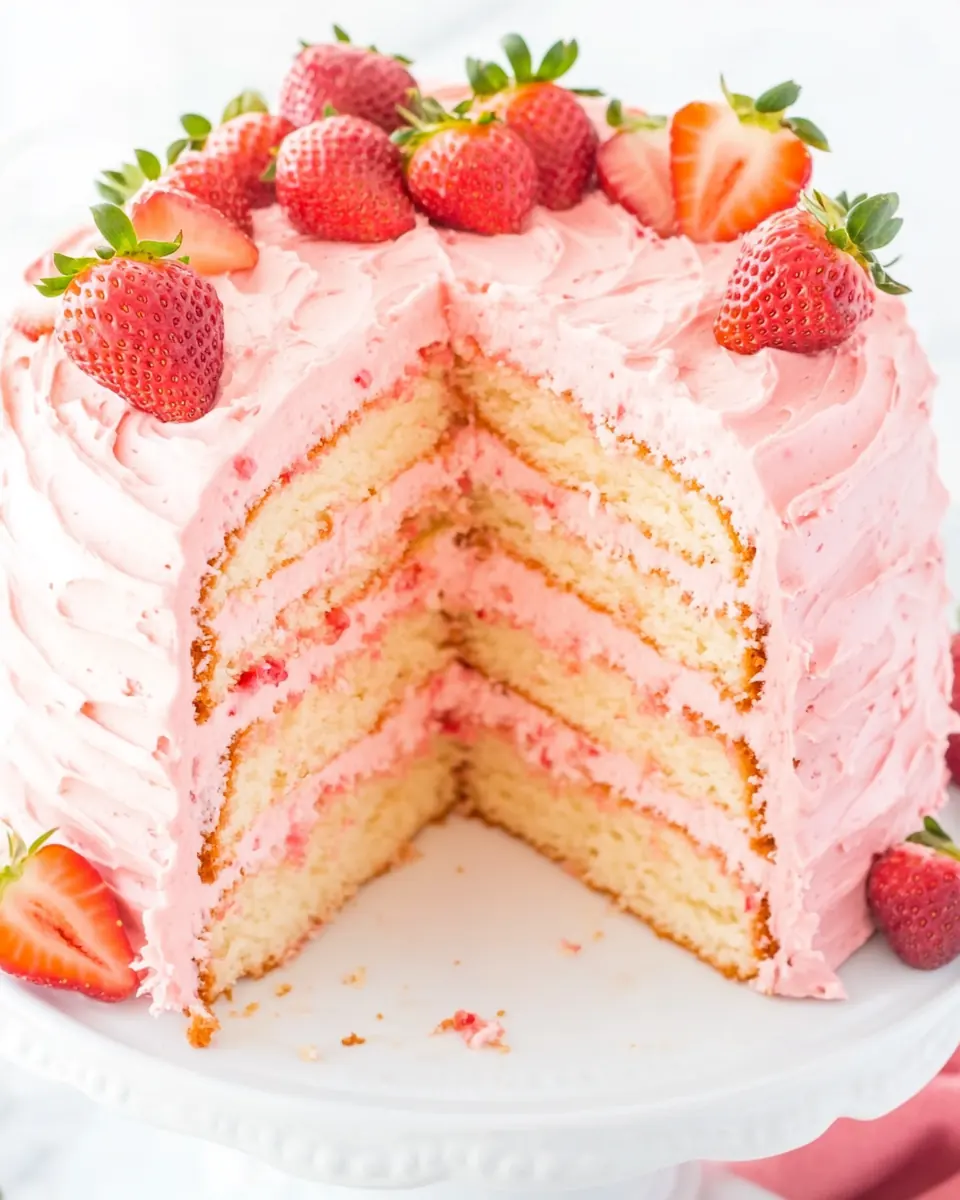
This cake is visually impressive yet forgiving. Layering a thin coat, then a final smooth finish, and topping with sliced fresh strawberries gives it an elegant finish. I typically pipe a few rosettes or leave simple swipe marks with an offset spatula. The color contrast between the white crumb and pink frosting is always a crowd pleaser.
Kid friendly and celebratory
I often make this cake for birthdays and small gatherings because it appeals to lots of palates. Kids love the sweet frosting and adults appreciate the fresh strawberry accents. It travels well to potlucks and keeps in the fridge, which makes planning easier for me when I host.
Strawberry Layer Cake with Strawberry Frosting Ingredients
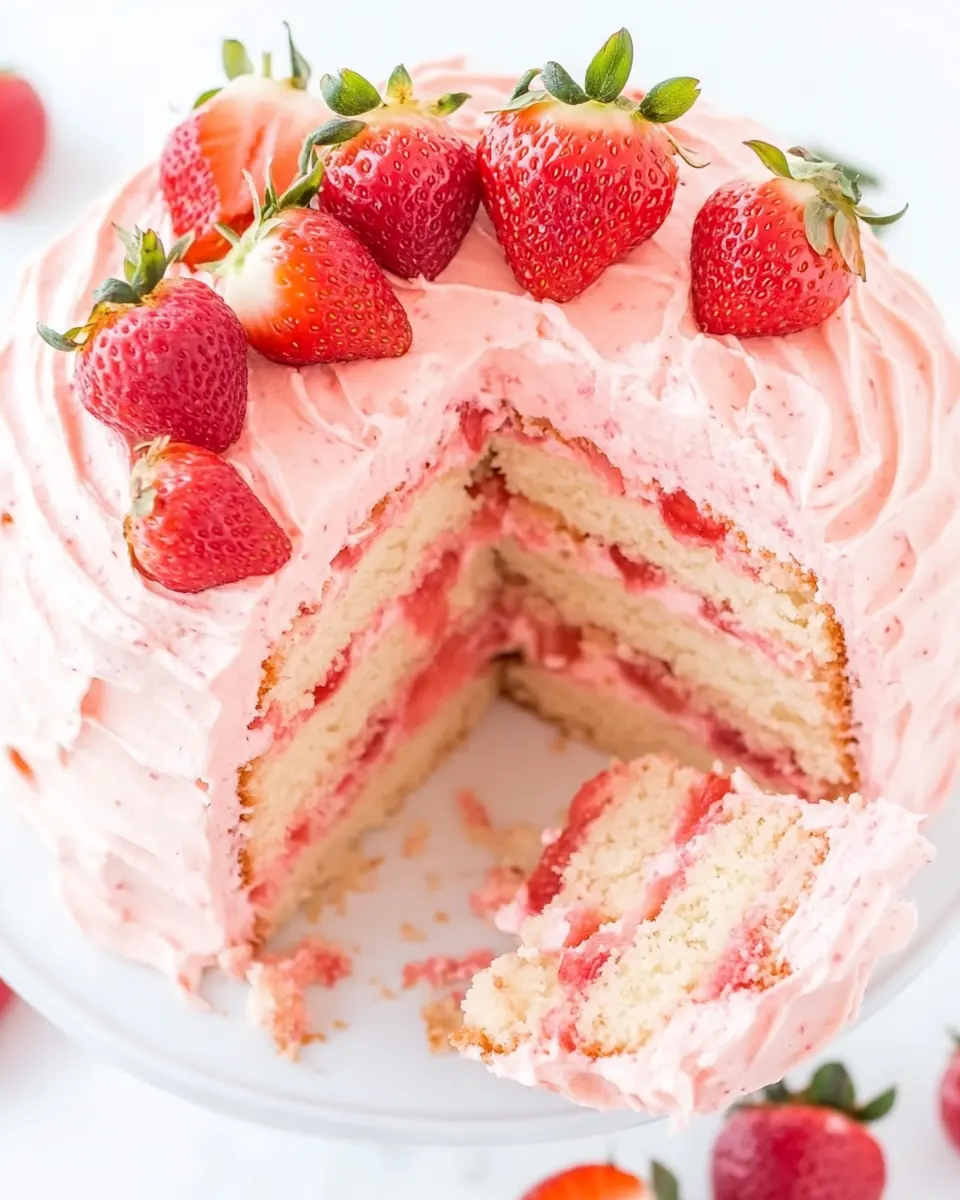
I think of these ingredients as a team where each player has a clear job. The cake mix and strawberry gelatin form the structure and flavor base, while the fresh strawberries add bright juice and texture. The butter and confectioners sugar build the frosting’s body, and a splash of cream controls consistency. Together they create a cake that is both tender and richly flavored without fuss.
- one 15-ounce box white cake mix: Provides a convenient base mix to build the cake batter, supplying flour, sugar, leavening agents, and structure while ensuring consistent texture and rise when combined with the other wet and dry components.
- one 3-ounce box of strawberry gelatin: Adds concentrated strawberry flavor and pink color while contributing to the cake's aroma and subtle sweetness; dissolves into the batter to infuse a uniform fruity note.
- 4 large eggs: Contributes lift, structure, and richness to the cake; beaten into the batter they help trap air and emulsify fats for a tender crumb and stable texture.
- 1 cup canola or vegetable oil: Supplies fat and moisture that tenderize the crumb and create a moist mouthfeel; helps dissolve dry ingredients and promotes even baking when mixed thoroughly with the batter.
- 1 cup finely diced fresh strawberries, from about 1 pint: Introduces fresh strawberry flavor and small fruit pieces that add natural sweetness, moisture, and subtle berry texture to the cake for a fresher strawberry profile.
- 1/4 cup cream or half-and-half, milk or water may be substituted: Adds richness and tenderizes the cake crumb while providing moisture; can be substituted with milk or water for a lighter texture or to adjust batter consistency as noted.
- 1 cup unsalted butter, 2 sticks, softened: Provides a rich, creamy fat base for the frosting, contributing to structure, stability, and smooth texture when beaten until light and fluffy.
- heaping 1/2 cup strawberry preserves, thick jam with strawberry chunks, not runny jelly: Imparts concentrated strawberry flavor, texture, and natural fruit pieces to the frosting; thick preserves also add sweetness and a pleasant jammy mouthfeel without thinning the frosting.
- 1 teaspoon almond or vanilla extract: Enhances aroma and rounds flavor profiles; almond lends a nutty, sweet accent while vanilla provides warm, familiar notes that deepen overall taste.
- 4 cups confectioners’ sugar: Sweetens and stabilizes the frosting while providing body and a silky texture when sifted and beaten with butter and liquids to the desired consistency.
- 1 to 4 tablespoons cream or half-and-half, as needed for consistency: Adjusts frosting consistency and creaminess; small amounts of cream or half-and-half help smooth and loosen the icing for spreadability without making it runny.
- red food coloring, and as necessary (optional): Provides optional color enhancement that intensifies the pink or red hue of the frosting when a brighter or deeper shade is desired; use sparingly to avoid altering flavor.
- fresh strawberries, for garnishing (optional): Offers an optional fresh garnish that adds visual appeal, bright fruity flavor, and textural contrast when sliced or halved on top of the finished cake.
The Process for Making Strawberry Layer Cake with Strawberry Frosting
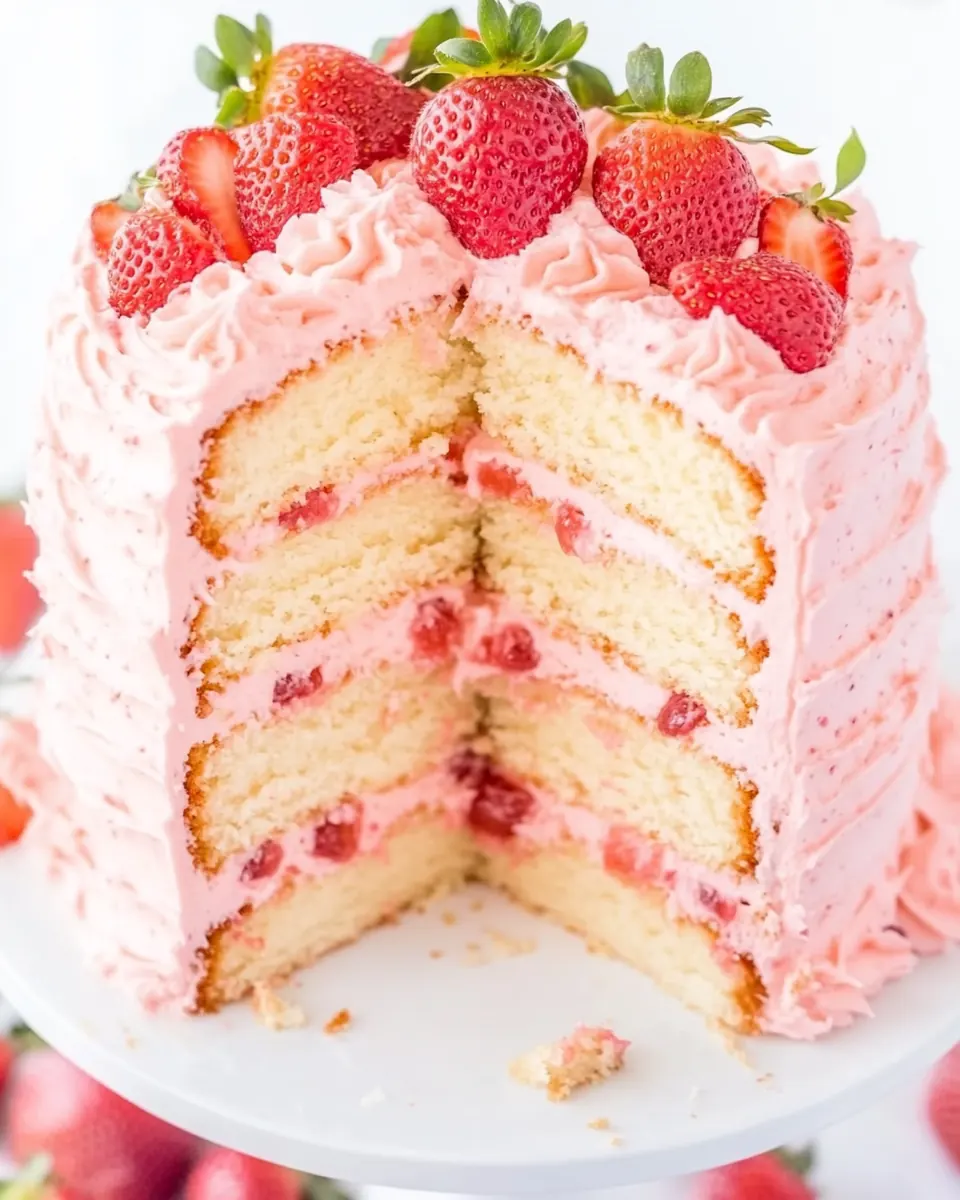
I’ll walk you through the cake and frosting with sensory cues and clear troubleshooting so you can relax at each stage. The steps below expand on the directions to help you achieve an even bake and a silky frosting finish.
- Cake: The kitchen will smell faintly sweet and slightly floral as the oven warms; that scent signals the pan is ready. Make sure your oven registers at 350 F by using an oven thermometer, because many ovens run hot or cold and that can change the crumb. If you skip this, you might find a dome that cracks or a center that sinks. While the pans heat, prepare them with floured cooking spray or grease and flour; this prevents sticking and creates a clean inversion. A common mistake is over flouring which can leave a dry edge, so tap out excess flour. When the pans are set, the batter will be poured in and the warmth from the oven will transform a glossy batter into a golden top and tender interior.
- Preheat oven to 350 F. Spray two 9-inch round cake pans (or one 9×13-inch pan) with floured cooking spray, or grease and flour the pans; set aside.: As you preheat, you will hear the faint hum of the oven and notice the warm air smell change; it prepares for even rising and browning. Properly greased pans allow cakes to release cleanly, which helps maintain layer integrity when you invert them. If your pans are not prepared well the cake can stick and tear during removal, so take a moment to coat evenly and flour lightly. Avoid using too much flour which can flake off into the batter and add an unpleasant dry film to the crust. Set the pans aside so they are ready the moment the batter is mixed.
- To the bowl of a stand mixer fitted with the paddle attachment (or large bowl and electric handheld mixer), add all ingredients except strawberries, and beat on medium-high speed until well blended, about 3 minutes, stopping to scrape down the sides of the bowl as necessary.: When you mix the wet and dry components, you will see a smooth, slightly glossy batter forming and hear a steady hum from your mixer. Scraping down the bowl ensures pockets of dry mix do not remain, which would create lumps in the baked cake. Mix for the suggested time to develop structure but avoid overbeating which can introduce too much air and cause the cake to collapse. A common error is rushing this step, which results in streaks of dry mix in the finished cake. The batter should be thick but pourable, with no visible pockets of flour.
- Add the strawberries and beat to incorporate.: When you fold in the diced strawberries , you'll notice tiny flecks of red and a slight release of bright fruit aroma. Incorporating fruit gently preserves texture and prevents the berries from turning to mush which can create large wet streaks in the batter. Use a low speed or fold by hand, and stop once the fruit is evenly distributed. Overmixing here will break down the fruit and produce a heavy batter with uneven color. A good sign is even red specks through the batter without large pools of juice.
- Turn batter out into prepared pans, divided evenly, and bake for about 30 to 34 minutes, or until done and a toothpick inserted in the center comes out clean or with a few moist crumbs.: As the cake bakes you will notice the top set and spring back lightly when touched, and the aroma will become more cake like with a hint of strawberry; those cues indicate progress. Start checking at 30 minutes to avoid overbaking, especially if using convection. A toothpick with a few moist crumbs is preferable to a completely dry toothpick, which signals overbake and drier texture. Avoid opening the oven frequently early in the bake since temperature shifts can cause the layers to sink. If one layer browns faster than the other, rotate pans midway for even coloring.
- Allow cakes to cool in pans, on a wire rack, for about 15 minutes before inverting and removing cakes to cool completely on wire racks.: The cakes will release a concentrated aroma as they cool, and the crumb will finish setting. Letting them rest in the pans allows residual steam to redistribute so the cake holds together when inverted. Inverting too soon often causes the cake to crack or tear, while leaving them too long can lead to condensation that makes the surface sticky. After inverting, let them cool fully to room temperature; frosting warm cakes will make the icing melt and slide off, which is a common and avoidable problem.
- Make sure cakes are completely cooled before frosting them.: The final cool down is tactile and visual; the tops should feel room temperature and not warm to the touch. Cooling fully prevents the frosting from thinning and losing structure. A hot cake can cause the frosting to separate and become runny, leading to a messy assembly. Patience here preserves your frosting technique and the cake's neat appearance.
- Frosting: The aroma of whipped butter and strawberry preserves will start to come together as you whip the frosting, and the texture will shift from dense to light and fluffy as air is incorporated. Use room temperature butter so it creams smoothly; this creates small air pockets that give an airy frosting. If your butter is too cold the mixture will be lumpy, too warm and it will be greasy. Whip until fluffy then adjust consistency with cream slowly. Overbeating vigorously once sugar is added can make the frosting grainy, so stop when it's light and airy.
- To the bowl of a stand mixer fitted with the paddle attachment (or large bowl and electric handheld mixer), add the butter, and beat on medium-high speed to smooth it.: When you beat the butter , you will see it change from dense blocks to a pale, smooth mass and the sound will shift as it becomes aerated. Smooth butter creates a silky base so the preserves and sugar incorporate evenly. If you notice oily separation, your butter might be too warm; chill briefly and rewhip. Not smoothing the butter well can result in pockets of unblended fat inside the frosting.
- Add the strawberry preserves, extract, 3 cups confectioners’ sugar, and beat on medium-high speed to blend.: The moment the preserves meet the whipped butter the kitchen smells intensely fruity and sweet. The preserves will break up into the butter , adding both flavor and texture; mixing with three cups of sugar starts to build body. If you find large chunks of jam, stir them gently to integrate without overworking the frosting. A common oversight is adding all the sugar at once which makes dust fly and may cause a gritty texture, so add gradually and scrape the bowl as needed.
- Add 1 additional cup confectioners’ sugar, and beat for 2 to 3 minutes, or until very well whipped, light, and fluffy. As necessary, drizzle in the cream to thin frosting to a thick, yet spreadable, consistency.: As you finish whipping the frosting it will become visibly lighter and take on a silky sheen. The extra cup of sugar gives structure and volume; whipping for the full time incorporates air that keeps the frosting stable for spreading. Use the cream sparingly to reach a spreadable stage; too much will make the icing droop. If the frosting seems too sweet, chilling briefly tightens it up, but overchilling will make it hard to spread.
- Optionally add red food coloring to make the frosting pinker; I added about 10 drops.: Adding coloring concentrates visual appeal; mix it in thoroughly so the pink is even. Small additions are best, because color deepens once the frosting rests. Adding too much dye can alter flavor slightly and may stain hands or cloths, so handle carefully. Stir until uniform and check under natural light to ensure the shade matches your vision.
- Add about one-third of the frosting to the top of one of the cakes and smooth it with a spatula or knife. Place the other cake on top, add about one-third of the remaining frosting, and smooth it. Add the remaining amount of frosting to the sides of the cake and smooth it.: When assembling, the first layer will give off a soft perfume of strawberries and the texture should be smooth and even. Spreading a thin crumb coat first traps loose crumbs and makes the final coat easier. After placing the second layer, apply the final frosting and smooth with a spatula, using long strokes for a clean finish. A typical mistake is using too much frosting early, which can cause the layers to slide; apply moderate pressure and steady hands.
- Optionally add fresh strawberries for garnishing before serving.: Fresh fruit on top adds aroma and visual freshness, and slicing before arranging releases a bright strawberry scent. Place berries just before serving to avoid juice bleeding into the frosting. If you prepare the cake ahead of time, add fruit right before presenting. Overcrowding the top with slices can overwhelm the frosting design, so arrange with spacing for a refined look.
Helpful Notes about Strawberry Layer Cake with Strawberry Frosting
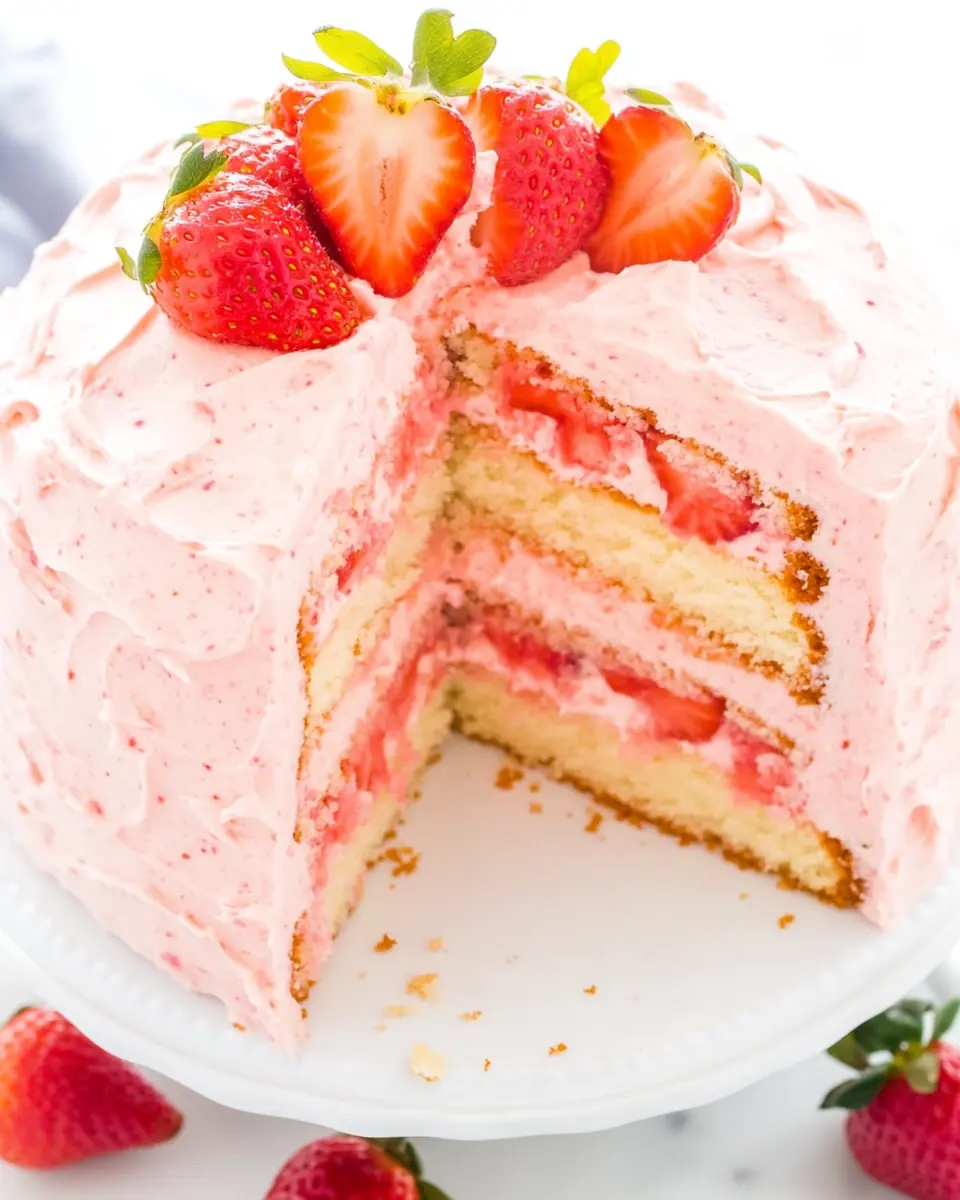
I keep these notes as a reference when I want consistent results. They highlight practical adjustments, storage tips, and presentation suggestions that have saved me time and avoided common pitfalls.
- Sweetness note: The frosting is very sweet by design. If you prefer less sweet frosting, consider using slightly less confectioners sugar or increasing the amount of strawberry preserves to add fruitiness that balances the sugar. Chill the frosting briefly if it feels too soft, then rewhip for texture.
- Storage guidance: Store the assembled cake airtight in the refrigerator for up to five days. Allow the cake to come to room temperature before serving so the crumb and frosting soften and the flavors open up. I usually remove it from the fridge 30 to 60 minutes before serving depending on ambient temperature.
- Jam selection: Choose a thick strawberry preserves with chunks for texture and bold flavor. Runny jelly will not contribute the same body to the frosting and can make the icing looser, so test consistency before adding.
- Color control: If you want a deeper pink frosting, add red food coloring a drop at a time. The preserves already add color, so measure carefully to avoid an artificial hue. Natural light reveals the true shade, so check your color near a window.
- Make ahead options: You can bake the layers a day ahead and keep them wrapped in the fridge. Make the frosting on the day of assembly for optimal texture. If you must assemble early, wait to add fresh strawberries until just before serving to prevent juice bleed.
How to Serve Strawberry Layer Cake with Strawberry Frosting
This cake dresses up any occasion from casual afternoon tea to birthday celebrations. Serve it slightly chilled for neat slices, or at room temperature for softer texture.
- Portioning: Slice into 10 even pieces to match the recipe servings, using a warm, clean knife for smooth cuts. Wipe the blade between slices to maintain neat edges.
- Accompaniments: Serve with a dollop of lightly whipped cream or a scoop of vanilla ice cream for contrast. Fresh strawberries on the side reinforce the fruit theme and provide a refreshing bite.
- Occasions: Perfect for spring gatherings, birthdays, baby showers, or any event where a pretty, fruity cake adds charm. The color and flavor make it especially nice for garden parties and afternoon tea.
- Presentation tips: Garnish with halved fresh strawberries arranged around the top and a light dusting of confectioners sugar if desired. For a polished look, pipe a small rosette border before placing berries.
- Storage after serving: Keep leftovers covered and refrigerated. To refresh slices, bring to room temperature for 30 to 60 minutes, which brightens flavor and softens the frosting for eating.
- Seasonal pairing: In spring use fragrant ripe berries for maximum flavor, and pair with lemon scented desserts or light salads to keep the meal bright. The cake pairs well with herbal teas or light roasted coffees for contrast.
FAQ
Conclusion
This cake stands out for its combination of easy preparation and unmistakable fresh strawberry flavor that still feels celebratory. Try the recipe when you want a dessert that looks impressive but does not require complex techniques, the interplay of fresh berries and jam in a whipped butter frosting creates a balanced, memorable bite. I hope you enjoy bringing this cake to your next gathering and watching it become a new favorite among friends and family.
Strawberry Layer Cake with Strawberry Frosting
Ingredients
Equipment
Method
- Cake: The kitchen will smell faintly sweet and slightly floral as the oven warms; that scent signals the pan is ready. Make sure your oven registers at 350 F by using an oven thermometer, because many ovens run hot or cold and that can change the crumb. If you skip this, you might find a dome that cracks or a center that sinks. While the pans heat, prepare them with floured cooking spray or grease and flour; this prevents sticking and creates a clean inversion. A common mistake is over flouring which can leave a dry edge, so tap out excess flour. When the pans are set, the batter will be poured in and the warmth from the oven will transform a glossy batter into a golden top and tender interior.
- Preheat oven to 350 F. Spray two 9-inch round cake pans (or one 9×13-inch pan) with floured cooking spray, or grease and flour the pans; set aside.: As you preheat, you will hear the faint hum of the oven and notice the warm air smell change; it prepares for even rising and browning. Properly greased pans allow cakes to release cleanly, which helps maintain layer integrity when you invert them. If your pans are not prepared well the cake can stick and tear during removal, so take a moment to coat evenly and flour lightly. Avoid using too much flour which can flake off into the batter and add an unpleasant dry film to the crust. Set the pans aside so they are ready the moment the batter is mixed.
- To the bowl of a stand mixer fitted with the paddle attachment (or large bowl and electric handheld mixer), add all ingredients except strawberries, and beat on medium-high speed until well blended, about 3 minutes, stopping to scrape down the sides of the bowl as necessary.: When you mix the wet and dry components, you will see a smooth, slightly glossy batter forming and hear a steady hum from your mixer. Scraping down the bowl ensures pockets of dry mix do not remain, which would create lumps in the baked cake. Mix for the suggested time to develop structure but avoid overbeating which can introduce too much air and cause the cake to collapse. A common error is rushing this step, which results in streaks of dry mix in the finished cake. The batter should be thick but pourable, with no visible pockets of flour.
- Add the strawberries and beat to incorporate.: When you fold in the diced strawberries , you'll notice tiny flecks of red and a slight release of bright fruit aroma. Incorporating fruit gently preserves texture and prevents the berries from turning to mush which can create large wet streaks in the batter. Use a low speed or fold by hand, and stop once the fruit is evenly distributed. Overmixing here will break down the fruit and produce a heavy batter with uneven color. A good sign is even red specks through the batter without large pools of juice.
- Turn batter out into prepared pans, divided evenly, and bake for about 30 to 34 minutes, or until done and a toothpick inserted in the center comes out clean or with a few moist crumbs.: As the cake bakes you will notice the top set and spring back lightly when touched, and the aroma will become more cake like with a hint of strawberry; those cues indicate progress. Start checking at 30 minutes to avoid overbaking, especially if using convection. A toothpick with a few moist crumbs is preferable to a completely dry toothpick, which signals overbake and drier texture. Avoid opening the oven frequently early in the bake since temperature shifts can cause the layers to sink. If one layer browns faster than the other, rotate pans midway for even coloring.
- Allow cakes to cool in pans, on a wire rack, for about 15 minutes before inverting and removing cakes to cool completely on wire racks.: The cakes will release a concentrated aroma as they cool, and the crumb will finish setting. Letting them rest in the pans allows residual steam to redistribute so the cake holds together when inverted. Inverting too soon often causes the cake to crack or tear, while leaving them too long can lead to condensation that makes the surface sticky. After inverting, let them cool fully to room temperature; frosting warm cakes will make the icing melt and slide off, which is a common and avoidable problem.
- Make sure cakes are completely cooled before frosting them.: The final cool down is tactile and visual; the tops should feel room temperature and not warm to the touch. Cooling fully prevents the frosting from thinning and losing structure. A hot cake can cause the frosting to separate and become runny, leading to a messy assembly. Patience here preserves your frosting technique and the cake's neat appearance.
- Frosting: The aroma of whipped butter and strawberry preserves will start to come together as you whip the frosting, and the texture will shift from dense to light and fluffy as air is incorporated. Use room temperature butter so it creams smoothly; this creates small air pockets that give an airy frosting. If your butter is too cold the mixture will be lumpy, too warm and it will be greasy. Whip until fluffy then adjust consistency with cream slowly. Overbeating vigorously once sugar is added can make the frosting grainy, so stop when it's light and airy.
- To the bowl of a stand mixer fitted with the paddle attachment (or large bowl and electric handheld mixer), add the butter, and beat on medium-high speed to smooth it.: When you beat the butter , you will see it change from dense blocks to a pale, smooth mass and the sound will shift as it becomes aerated. Smooth butter creates a silky base so the preserves and sugar incorporate evenly. If you notice oily separation, your butter might be too warm; chill briefly and rewhip. Not smoothing the butter well can result in pockets of unblended fat inside the frosting.
- Add the strawberry preserves, extract, 3 cups confectioners’ sugar, and beat on medium-high speed to blend.: The moment the preserves meet the whipped butter the kitchen smells intensely fruity and sweet. The preserves will break up into the butter , adding both flavor and texture; mixing with three cups of sugar starts to build body. If you find large chunks of jam, stir them gently to integrate without overworking the frosting. A common oversight is adding all the sugar at once which makes dust fly and may cause a gritty texture, so add gradually and scrape the bowl as needed.
- Add 1 additional cup confectioners’ sugar, and beat for 2 to 3 minutes, or until very well whipped, light, and fluffy. As necessary, drizzle in the cream to thin frosting to a thick, yet spreadable, consistency.: As you finish whipping the frosting it will become visibly lighter and take on a silky sheen. The extra cup of sugar gives structure and volume; whipping for the full time incorporates air that keeps the frosting stable for spreading. Use the cream sparingly to reach a spreadable stage; too much will make the icing droop. If the frosting seems too sweet, chilling briefly tightens it up, but overchilling will make it hard to spread.
- Optionally add red food coloring to make the frosting pinker; I added about 10 drops.: Adding coloring concentrates visual appeal; mix it in thoroughly so the pink is even. Small additions are best, because color deepens once the frosting rests. Adding too much dye can alter flavor slightly and may stain hands or cloths, so handle carefully. Stir until uniform and check under natural light to ensure the shade matches your vision.
- Add about one-third of the frosting to the top of one of the cakes and smooth it with a spatula or knife. Place the other cake on top, add about one-third of the remaining frosting, and smooth it. Add the remaining amount of frosting to the sides of the cake and smooth it.: When assembling, the first layer will give off a soft perfume of strawberries and the texture should be smooth and even. Spreading a thin crumb coat first traps loose crumbs and makes the final coat easier. After placing the second layer, apply the final frosting and smooth with a spatula, using long strokes for a clean finish. A typical mistake is using too much frosting early, which can cause the layers to slide; apply moderate pressure and steady hands.
- Optionally add fresh strawberries for garnishing before serving.: Fresh fruit on top adds aroma and visual freshness, and slicing before arranging releases a bright strawberry scent. Place berries just before serving to avoid juice bleeding into the frosting. If you prepare the cake ahead of time, add fruit right before presenting. Overcrowding the top with slices can overwhelm the frosting design, so arrange with spacing for a refined look.
Notes
- Sweetness note: The frosting is very sweet by design. If you prefer less sweet frosting, consider using slightly less confectioners sugar or increasing the amount of strawberry preserves to add fruitiness that balances the sugar. Chill the frosting briefly if it feels too soft, then rewhip for texture.
- Storage guidance: Store the assembled cake airtight in the refrigerator for up to five days. Allow the cake to come to room temperature before serving so the crumb and frosting soften and the flavors open up. I usually remove it from the fridge 30 to 60 minutes before serving depending on ambient temperature.
- Jam selection: Choose a thick strawberry preserves with chunks for texture and bold flavor. Runny jelly will not contribute the same body to the frosting and can make the icing looser, so test consistency before adding.
- Color control: If you want a deeper pink frosting, add red food coloring a drop at a time. The preserves already add color, so measure carefully to avoid an artificial hue. Natural light reveals the true shade, so check your color near a window.
- Make ahead options: You can bake the layers a day ahead and keep them wrapped in the fridge. Make the frosting on the day of assembly for optimal texture. If you must assemble early, wait to add fresh strawberries until just before serving to prevent juice bleed.