Heat the olive oil in a large skillet over medium-low heat. Add in the garlic, dried basil and red pepper flakes, cooking for 1 to 2 minutes. Add in the tomatoes with a big pinch of salt and pepper and toss them in the oil. Let the tomatoes cook for 20 to 25 minutes, until they begin to burst. Keep an eye on the skillet and low the heat if needed - if the tomatoes aren’t bursting, you can increase the heat just a bit too.: The quiet hiss as the olive oil warms signals the start of flavor building, releasing the oil's fruity scent. Keep the temperature gentle to avoid smoking, which would impart bitterness. If the oil begins to ripple or smoke, lower the heat immediately, because overheating kills delicate aromatics.
While the tomatoes burst, bring a pot of salted water to a boil and cook the pasta.: As the garlic sizzles lightly, a warm, savory aroma will fill the kitchen, and the tiny flecks of dried herb will rehydrate. Stir constantly to prevent the garlic from browning, since browned garlic tastes acrid. The brief cook time blooms the spices and melds them into the oil, which becomes a fragrant sauce base.
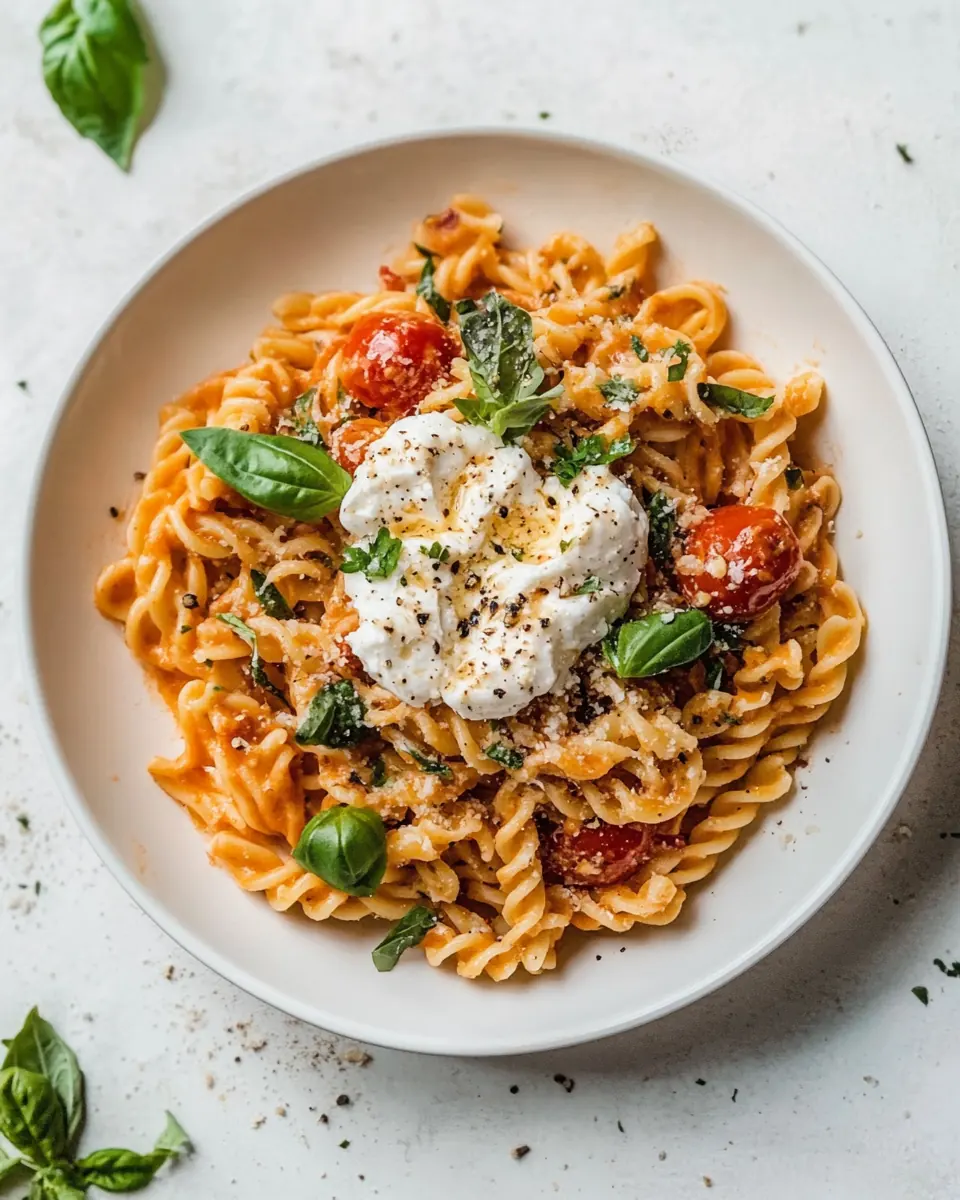
Once the pasta is done, drain it and add it directly to the skillet. Toss the mixture a few times so all the noodles are coated. Turn off the heat and toss in the fresh basil. Add in the burrata cheese, either in pieces or one large ball, and mix it in as much as you’d like (or as little!). Taste the pasta and add in more salt and pepper if needed.: When you add the cherry or grape tomatoes , you will hear a louder pop and see the skins ripple as they heat. The salt helps draw juices from the tomatoes , aiding their breakdown. Toss gently so each tomato is coated, because even contact with the warm oil encourages even blistering and flavor extraction.
Serve immediately, top with parmesan cheese, more fresh basil and red pepper flakes.: Over time the tomatoes will soften, their skins splitting with little pops and releasing a glossy, fragrant juice into the pan. The smell becomes sweeter and more concentrated, almost jammy, which is what you want. Keep the heat moderate, and if you notice the edges browning too much, lower the flame, because you want juice rather than char to form the sauce.
Keep an eye on the skillet and low the heat if needed, if the tomatoes aren’t bursting, you can increase the heat just a bit too: Trust your senses here, the skillet should simmer gently; too cool and the tomatoes will not release their juices, too hot and they will shrivel rather than burst. Adjust gradually, and stir occasionally to prevent sticking. A common misstep is walking away, which can lead to uneven cooking.
While the tomatoes burst, bring a pot of salted water to a boil and cook the pasta: The water should taste like the sea, so it seasons the pasta from the inside out. As the pot reaches a rolling boil you will hear it sing, and the steam will be fragrant. Cook the pasta to al dente so it holds texture when tossed with the hot sauce; overcooking will make the dish soft and cloying.
Once the pasta is done, drain it and add it directly to the skillet: The sound of hot pasta hitting the skillet is satisfying, and the residual starchy water clings to the noodles, helping the sauce adhere. Toss immediately so the pasta is evenly coated in the glossy tomato juices. Avoid rinsing the pasta , as that removes the starch that helps bind the sauce.
Toss the mixture a few times so all the noodles are coated: As you toss you should see the sauce cling and the pasta take on a light sheen. This coating step ensures every bite is flavored. If the sauce seems dry, a splash of reserved pasta water can rescue the texture, because starch helps emulsify the juices into a silky coating.
Turn off the heat and toss in the fresh basil: Adding the fresh basil off the heat preserves its bright color and aromatic oils. You will smell an immediate lift as the herb warms gently without cooking. If basil is added on high heat it will darken and lose that fresh aroma, a small mistake that dulls the final perfume.
Add in the burrata cheese, either in pieces or one large ball, and mix it in as much as you’d like: Tearing the burrata cheese releases its creamy center, which will cascade into the warm pasta and create a silky, luxurious mouthfeel. The contrast between warm sauce and cool, creamy cheese is delightful. Be mindful not to overwork the cheese, because aggressive mixing will fully dissolve the texture rather than leave creamy pockets.
Taste the pasta and add in more salt and pepper if needed: Tasting is the final and most important sense check, where you balance the dish. If the flavors feel flat, a pinch more kosher salt will brighten them, while more pepper can add subtle heat. Resist the urge to over-salt; season gradually and re-taste after each adjustment.
Serve immediately, top with parmesan cheese, more fresh basil and red pepper flakes: As you plate, sprinkle grated parmesan cheese for a nutty finish and scatter extra fresh basil for color. The first bite should offer warm, juicy tomato sweetness, creamy burrata cheese , and a hint of heat from the crushed red pepper flakes . Serve promptly, because the contrast between warm pasta and creamy cheese is at its peak when fresh.