Summer Weeknight Burst Tomato Burrata Pasta
Summer Weeknight Burst Tomato Burrata Pasta is the kind of dish I turn to when the day has been long and I want something honest, bright, and unfussy on the table. The first time I made this, it was after a sweaty afternoon in the garden, fingers stained with tomato juice, and I remember the kitchen filling with the warm, herbal scent of garlic and basil. I smiled as the tomatoes started to pop in the skillet, releasing a sweet, tangy perfume that felt like late summer in a single pan.
Later that week, I invited a friend over with no pomp and only a promise of good food. We opened a window to let in the evening breeze and set a simple pitcher of water on the table. The pasta came together faster than conversation, but it somehow made the evening feel slower, like a deep breath. The silky burrata, when torn into, seeped into the warm noodles and made each bite creamy and indulgent, without heaviness.
What I love is how forgiving this recipe is, it tolerates little improvisations and rewards attention with big flavor. I often catch myself lingering at the stove, nudging a tomato to the edge of the skillet so it will split perfectly. Those little explosions of juice, the whisper of basil, and the final shower of grated cheese are the moments that make weeknights feel special. If you want a fast dinner that still feels celebratory, this dish does the job with charm.
Recipe Snapshot
45 mins
10 mins
35 mins
Medium
600 kcal
Italian
Gluten-Free, Paleo
Dinner
Large skillet, Pot, Colander, Tongs
The Appeal of This Summer Weeknight Burst Tomato Burrata Pasta
Sun soaked flavor in every bite
I adore this recipe because the tomatoes do most of the heavy lifting. As they burst in the skillet you get concentrated, bright tomato flavor without a long simmer. I find it hard to resist a forkful of pasta while the sauce is still warm and glossy.
Effortless weeknight elegance
We can have a dinner that looks and tastes like something from a weekend kitchen, but it comes together in under an hour. The combination of pasta and burrata cheese elevates a simple meal into something you feel proud to serve to friends.
Textural contrast that sings
There is a lovely contrast here, with the soft, creamy burrata cheese against popping, slightly blistered cherry or grape tomatoes, and the chew of good pasta. That play between silky and juicy keeps every bite interesting.
Flexible and forgiving
I appreciate how adaptable this recipe is. You can tweak the heat with extra crushed red pepper flakes, or keep it gentle for kids. It tolerates slight timing differences, so if you are delayed pulling the pasta off the heat, the sauce will still be delicious.
Fresh herbs make a difference
Adding fresh basil at the end brightens the whole dish and makes the flavors pop. It is a small step with a big payoff, and one I never skip when basil is at its peak.
Key Ingredients for Summer Weeknight Burst Tomato Burrata Pasta
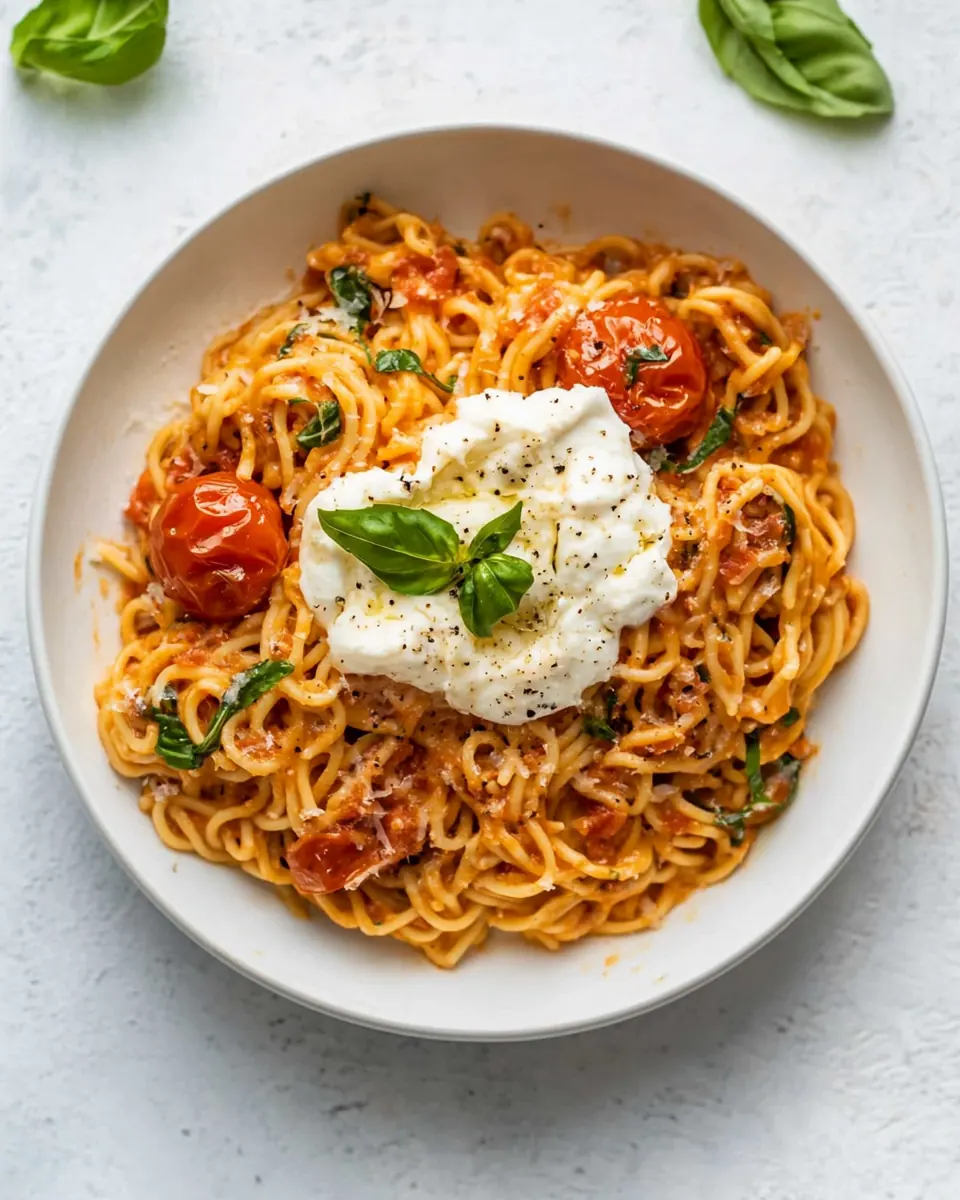
The philosophy here is simple: let a few high quality players shine. Each ingredient has a clear role, whether it is carrying flavor, adding texture, or bringing a finishing note. Together they create a dish that is layered yet approachable, perfect for a warm evening.
- 1/4 cup olive oil: Lightly coats and flavors the pasta and tomatoes while providing a smooth, fruity base for sautéing aromatics and preventing sticking; helps meld flavors and adds richness to the finished dish.
- 6 garlic cloves, minced: Adds a pungent, savory depth and aromatic warmth when sautéed; releases essential oils that infuse the oil and tomatoes for a robust, garlicky backbone.
- 1/2 teaspoon dried basil: Imparts an earthy, slightly sweet herbal note that complements fresh basil and tomatoes; helps round out the sauce with subtle Mediterranean flavor.
- 1/4 teaspoon crushed red pepper flakes, plus more for sprinkling: Provides a bright, spicy kick that balances the sweetness of the tomatoes; can be adjusted to control heat and adds complexity when sprinkled at the end.
- 3 cups cherry or grape tomatoes: Contributes natural sweetness and juiciness, creating a burst of fresh tomato flavor as they blister and break down into a simple sauce; offers texture and vibrant color.
- kosher salt and pepper: Balances and enhances all flavors by seasoning to taste; preserves brightness in the tomatoes and brings out the savory qualities of cheese and pasta.
- 1/2 pound pasta, like spaghetti or bucatini: Serves as the primary starch and vehicle for sauce, providing chewy texture and heartiness; pairs well with long strands or thicker tubes to catch the sauce.
- 1/4 cup chopped fresh basil, plus more for sprinkling: Adds fresh, aromatic brightness and a peppery-green lift to finish the dish; chopped leaves scattered over the pasta brighten flavors and add color.
- 8 ounces burrata cheese: Lends a creamy, milky richness and luxurious mouthfeel when torn over the hot pasta; provides a cool, decadent contrast to warm tomatoes and pasta.
- parmesan cheese, for topping: Finishes the dish with a nutty, salty umami punch when grated over servings; helps add savory depth and a satisfying, slightly granular texture to each bite.
Step by Step Guide for Summer Weeknight Burst Tomato Burrata Pasta
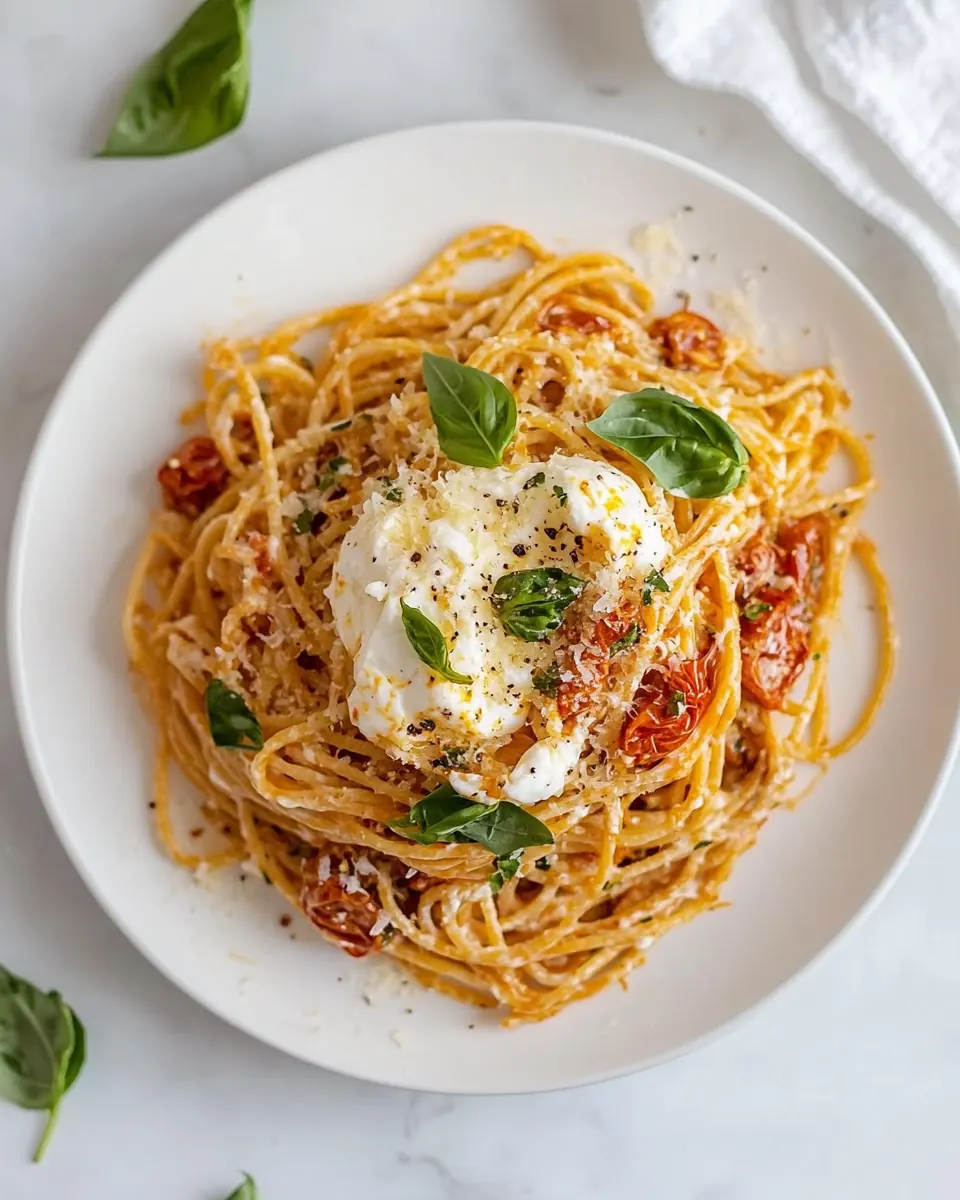
This is a relaxed, sensory-driven guide to help you get the timing and textures right. Read through and then follow along, letting each step guide you by smell, sound, and sight as much as by clock time.
- Heat the olive oil in a large skillet over medium-low heat. Add in the garlic, dried basil and red pepper flakes, cooking for 1 to 2 minutes. Add in the tomatoes with a big pinch of salt and pepper and toss them in the oil. Let the tomatoes cook for 20 to 25 minutes, until they begin to burst. Keep an eye on the skillet and low the heat if needed – if the tomatoes aren’t bursting, you can increase the heat just a bit too.: The quiet hiss as the olive oil warms signals the start of flavor building, releasing the oil's fruity scent. Keep the temperature gentle to avoid smoking, which would impart bitterness. If the oil begins to ripple or smoke, lower the heat immediately, because overheating kills delicate aromatics.
- While the tomatoes burst, bring a pot of salted water to a boil and cook the pasta.: As the garlic sizzles lightly, a warm, savory aroma will fill the kitchen, and the tiny flecks of dried herb will rehydrate. Stir constantly to prevent the garlic from browning, since browned garlic tastes acrid. The brief cook time blooms the spices and melds them into the oil, which becomes a fragrant sauce base.
- Once the pasta is done, drain it and add it directly to the skillet. Toss the mixture a few times so all the noodles are coated. Turn off the heat and toss in the fresh basil. Add in the burrata cheese, either in pieces or one large ball, and mix it in as much as you’d like (or as little!). Taste the pasta and add in more salt and pepper if needed.: When you add the cherry or grape tomatoes , you will hear a louder pop and see the skins ripple as they heat. The salt helps draw juices from the tomatoes , aiding their breakdown. Toss gently so each tomato is coated, because even contact with the warm oil encourages even blistering and flavor extraction.
- Serve immediately, top with parmesan cheese, more fresh basil and red pepper flakes.: Over time the tomatoes will soften, their skins splitting with little pops and releasing a glossy, fragrant juice into the pan. The smell becomes sweeter and more concentrated, almost jammy, which is what you want. Keep the heat moderate, and if you notice the edges browning too much, lower the flame, because you want juice rather than char to form the sauce.
- Keep an eye on the skillet and low the heat if needed, if the tomatoes aren’t bursting, you can increase the heat just a bit too: Trust your senses here, the skillet should simmer gently; too cool and the tomatoes will not release their juices, too hot and they will shrivel rather than burst. Adjust gradually, and stir occasionally to prevent sticking. A common misstep is walking away, which can lead to uneven cooking.
- While the tomatoes burst, bring a pot of salted water to a boil and cook the pasta: The water should taste like the sea, so it seasons the pasta from the inside out. As the pot reaches a rolling boil you will hear it sing, and the steam will be fragrant. Cook the pasta to al dente so it holds texture when tossed with the hot sauce; overcooking will make the dish soft and cloying.
- Once the pasta is done, drain it and add it directly to the skillet: The sound of hot pasta hitting the skillet is satisfying, and the residual starchy water clings to the noodles, helping the sauce adhere. Toss immediately so the pasta is evenly coated in the glossy tomato juices. Avoid rinsing the pasta , as that removes the starch that helps bind the sauce.
- Toss the mixture a few times so all the noodles are coated: As you toss you should see the sauce cling and the pasta take on a light sheen. This coating step ensures every bite is flavored. If the sauce seems dry, a splash of reserved pasta water can rescue the texture, because starch helps emulsify the juices into a silky coating.
- Turn off the heat and toss in the fresh basil: Adding the fresh basil off the heat preserves its bright color and aromatic oils. You will smell an immediate lift as the herb warms gently without cooking. If basil is added on high heat it will darken and lose that fresh aroma, a small mistake that dulls the final perfume.
- Add in the burrata cheese, either in pieces or one large ball, and mix it in as much as you’d like: Tearing the burrata cheese releases its creamy center, which will cascade into the warm pasta and create a silky, luxurious mouthfeel. The contrast between warm sauce and cool, creamy cheese is delightful. Be mindful not to overwork the cheese, because aggressive mixing will fully dissolve the texture rather than leave creamy pockets.
- Taste the pasta and add in more salt and pepper if needed: Tasting is the final and most important sense check, where you balance the dish. If the flavors feel flat, a pinch more kosher salt will brighten them, while more pepper can add subtle heat. Resist the urge to over-salt; season gradually and re-taste after each adjustment.
- Serve immediately, top with parmesan cheese, more fresh basil and red pepper flakes: As you plate, sprinkle grated parmesan cheese for a nutty finish and scatter extra fresh basil for color. The first bite should offer warm, juicy tomato sweetness, creamy burrata cheese , and a hint of heat from the crushed red pepper flakes . Serve promptly, because the contrast between warm pasta and creamy cheese is at its peak when fresh.
Customization Ideas
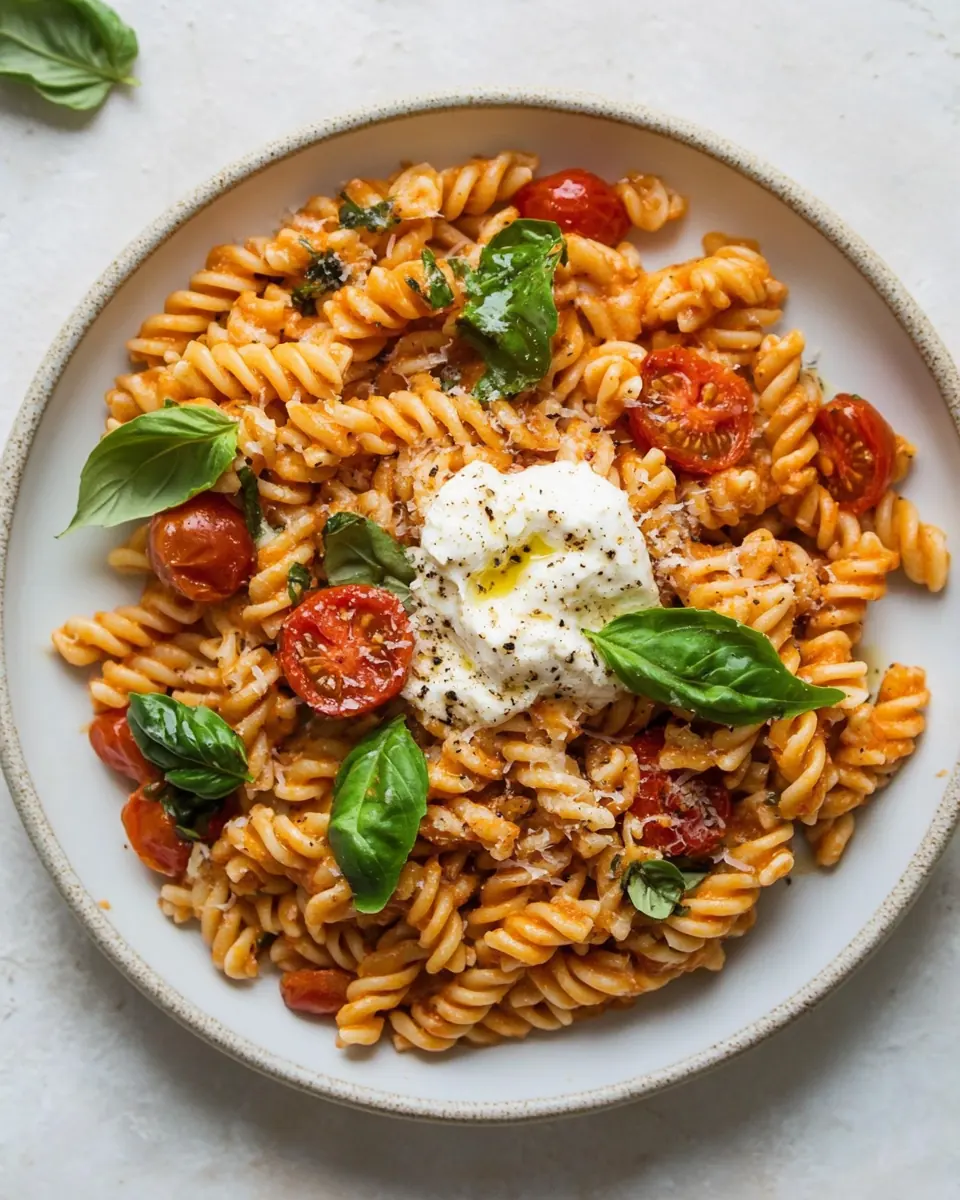
This pasta is a great canvas for small, thoughtful changes that reflect what you have on hand and who you are cooking for. Below are ideas to customize texture, heat, and presentation without changing the core identity of the dish.
- Swap the pasta shape to bucatini or spaghetti for different mouthfeel; longer strands wrap elegantly and carry sauce differently on the fork.
- Adjust the heat by adding more or less crushed red pepper flakes to suit your spice tolerance, letting everyone season at the table.
- When basil is abundant, double the chopped fresh basil folded in at the end to make the dish herbier and more vibrant.
- Use room temperature burrata so it softens quickly when added, creating cream pockets without needing extra stirring that could break the pasta.
- Finish with grated parmesan at the table to add a salty, umami counterpoint that balances the sweet tomatoes and creamy burrata.
Side Dish Ideas for Summer Weeknight Burst Tomato Burrata Pasta
This pasta stands up well to simple sides that complement its fresh, summery profile. Think crisp textures and clean flavors that do not compete with the main dish. The ideas below cover occasions from casual weeknights to relaxed dinner parties.
- Light green salad with lemon vinaigrette, perfect for a weeknight because it adds a bright, acidic contrast to the creamy burrata cheese.
- Grilled vegetables such as zucchini or eggplant, which provide a smoky counterpoint and make the meal feel more rounded for dinner with friends.
- Crusty bread to soak up any leftover tomato juices, ideal when you want a no fuss addition that guests can enjoy while chatting.
- Simple antipasti plate with marinated olives and roasted peppers, suitable for a relaxed, shareable starter before the pasta arrives.
- Occasion pairing for a summer dinner: serve this when basil is at its peak and tomatoes are sweet, it makes a festive but unfussy centerpiece for outdoor meals.
- Storage tips Store leftovers in an airtight container for up to two days, keeping the burrata cheese separate if possible, because the texture changes when refrigerated.
- Seasonal pairing Enjoy this as a light dinner in warm months when tomatoes and basil are abundant; it feels especially right for late summer gatherings.
FAQ
Conclusion
This recipe shines because it transforms simple, seasonal ingredients into something indulgent yet effortless. The combination of blistered tomatoes and creamy burrata creates a luxurious mouthfeel while remaining light and fresh. I encourage you to give it a try on a warm evening when basil and tomatoes are abundant, because the hands on time is small and the payoff is big. It is an ideal weeknight dish that feels special, and I hope it becomes one of your go to summer favorites.
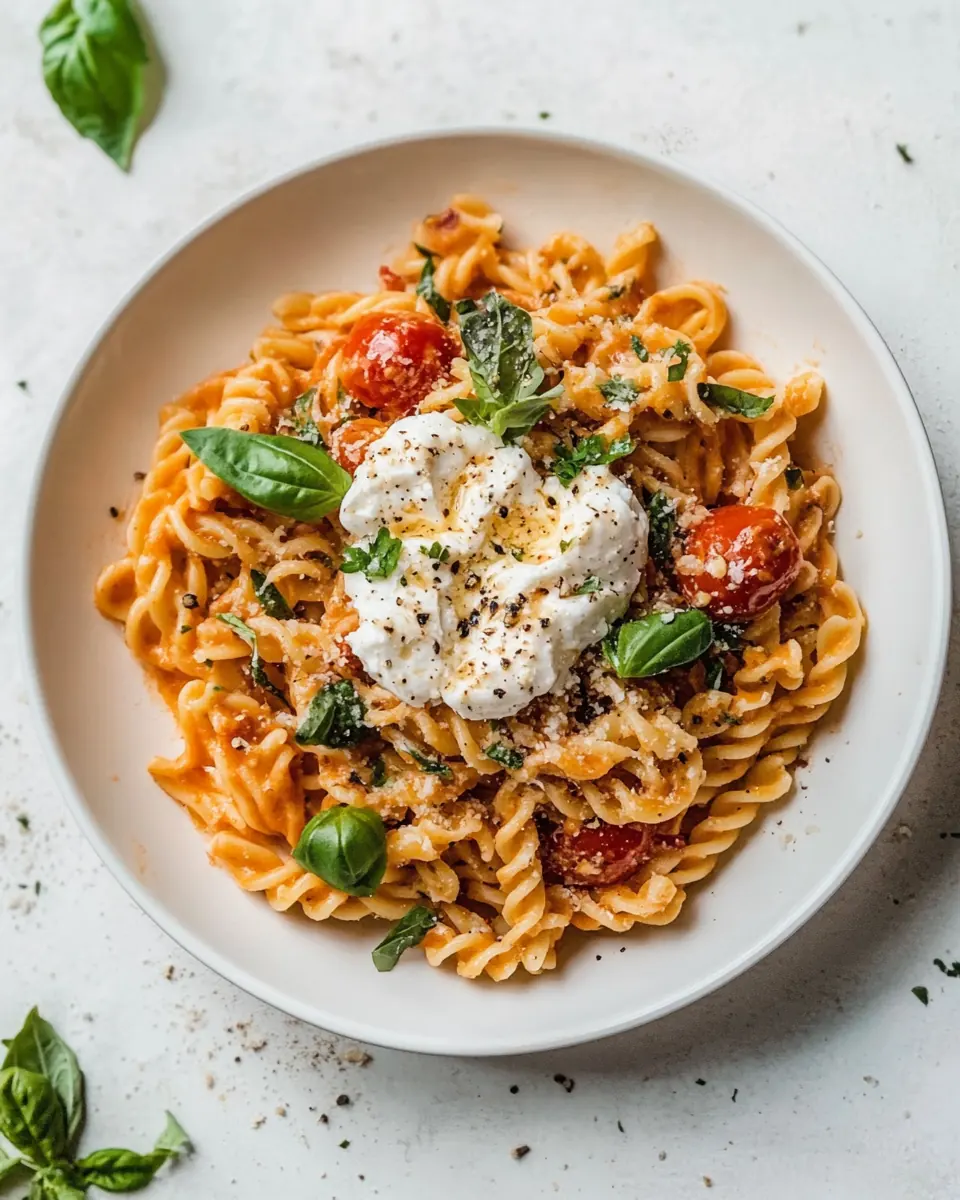
Summer Weeknight Burst Tomato Burrata Pasta
Ingredients
Equipment
Method
- Heat the olive oil in a large skillet over medium-low heat. Add in the garlic, dried basil and red pepper flakes, cooking for 1 to 2 minutes. Add in the tomatoes with a big pinch of salt and pepper and toss them in the oil. Let the tomatoes cook for 20 to 25 minutes, until they begin to burst. Keep an eye on the skillet and low the heat if needed - if the tomatoes aren’t bursting, you can increase the heat just a bit too.: The quiet hiss as the olive oil warms signals the start of flavor building, releasing the oil's fruity scent. Keep the temperature gentle to avoid smoking, which would impart bitterness. If the oil begins to ripple or smoke, lower the heat immediately, because overheating kills delicate aromatics.
- While the tomatoes burst, bring a pot of salted water to a boil and cook the pasta.: As the garlic sizzles lightly, a warm, savory aroma will fill the kitchen, and the tiny flecks of dried herb will rehydrate. Stir constantly to prevent the garlic from browning, since browned garlic tastes acrid. The brief cook time blooms the spices and melds them into the oil, which becomes a fragrant sauce base.
- Once the pasta is done, drain it and add it directly to the skillet. Toss the mixture a few times so all the noodles are coated. Turn off the heat and toss in the fresh basil. Add in the burrata cheese, either in pieces or one large ball, and mix it in as much as you’d like (or as little!). Taste the pasta and add in more salt and pepper if needed.: When you add the cherry or grape tomatoes , you will hear a louder pop and see the skins ripple as they heat. The salt helps draw juices from the tomatoes , aiding their breakdown. Toss gently so each tomato is coated, because even contact with the warm oil encourages even blistering and flavor extraction.
- Serve immediately, top with parmesan cheese, more fresh basil and red pepper flakes.: Over time the tomatoes will soften, their skins splitting with little pops and releasing a glossy, fragrant juice into the pan. The smell becomes sweeter and more concentrated, almost jammy, which is what you want. Keep the heat moderate, and if you notice the edges browning too much, lower the flame, because you want juice rather than char to form the sauce.
- Keep an eye on the skillet and low the heat if needed, if the tomatoes aren’t bursting, you can increase the heat just a bit too: Trust your senses here, the skillet should simmer gently; too cool and the tomatoes will not release their juices, too hot and they will shrivel rather than burst. Adjust gradually, and stir occasionally to prevent sticking. A common misstep is walking away, which can lead to uneven cooking.
- While the tomatoes burst, bring a pot of salted water to a boil and cook the pasta: The water should taste like the sea, so it seasons the pasta from the inside out. As the pot reaches a rolling boil you will hear it sing, and the steam will be fragrant. Cook the pasta to al dente so it holds texture when tossed with the hot sauce; overcooking will make the dish soft and cloying.
- Once the pasta is done, drain it and add it directly to the skillet: The sound of hot pasta hitting the skillet is satisfying, and the residual starchy water clings to the noodles, helping the sauce adhere. Toss immediately so the pasta is evenly coated in the glossy tomato juices. Avoid rinsing the pasta , as that removes the starch that helps bind the sauce.
- Toss the mixture a few times so all the noodles are coated: As you toss you should see the sauce cling and the pasta take on a light sheen. This coating step ensures every bite is flavored. If the sauce seems dry, a splash of reserved pasta water can rescue the texture, because starch helps emulsify the juices into a silky coating.
- Turn off the heat and toss in the fresh basil: Adding the fresh basil off the heat preserves its bright color and aromatic oils. You will smell an immediate lift as the herb warms gently without cooking. If basil is added on high heat it will darken and lose that fresh aroma, a small mistake that dulls the final perfume.
- Add in the burrata cheese, either in pieces or one large ball, and mix it in as much as you’d like: Tearing the burrata cheese releases its creamy center, which will cascade into the warm pasta and create a silky, luxurious mouthfeel. The contrast between warm sauce and cool, creamy cheese is delightful. Be mindful not to overwork the cheese, because aggressive mixing will fully dissolve the texture rather than leave creamy pockets.
- Taste the pasta and add in more salt and pepper if needed: Tasting is the final and most important sense check, where you balance the dish. If the flavors feel flat, a pinch more kosher salt will brighten them, while more pepper can add subtle heat. Resist the urge to over-salt; season gradually and re-taste after each adjustment.
- Serve immediately, top with parmesan cheese, more fresh basil and red pepper flakes: As you plate, sprinkle grated parmesan cheese for a nutty finish and scatter extra fresh basil for color. The first bite should offer warm, juicy tomato sweetness, creamy burrata cheese , and a hint of heat from the crushed red pepper flakes . Serve promptly, because the contrast between warm pasta and creamy cheese is at its peak when fresh.
Notes
- Swap the pasta shape to bucatini or spaghetti for different mouthfeel; longer strands wrap elegantly and carry sauce differently on the fork.
- Adjust the heat by adding more or less crushed red pepper flakes to suit your spice tolerance, letting everyone season at the table.
- When basil is abundant, double the chopped fresh basil folded in at the end to make the dish herbier and more vibrant.
- Use room temperature burrata so it softens quickly when added, creating cream pockets without needing extra stirring that could break the pasta.
- Finish with grated parmesan at the table to add a salty, umami counterpoint that balances the sweet tomatoes and creamy burrata.