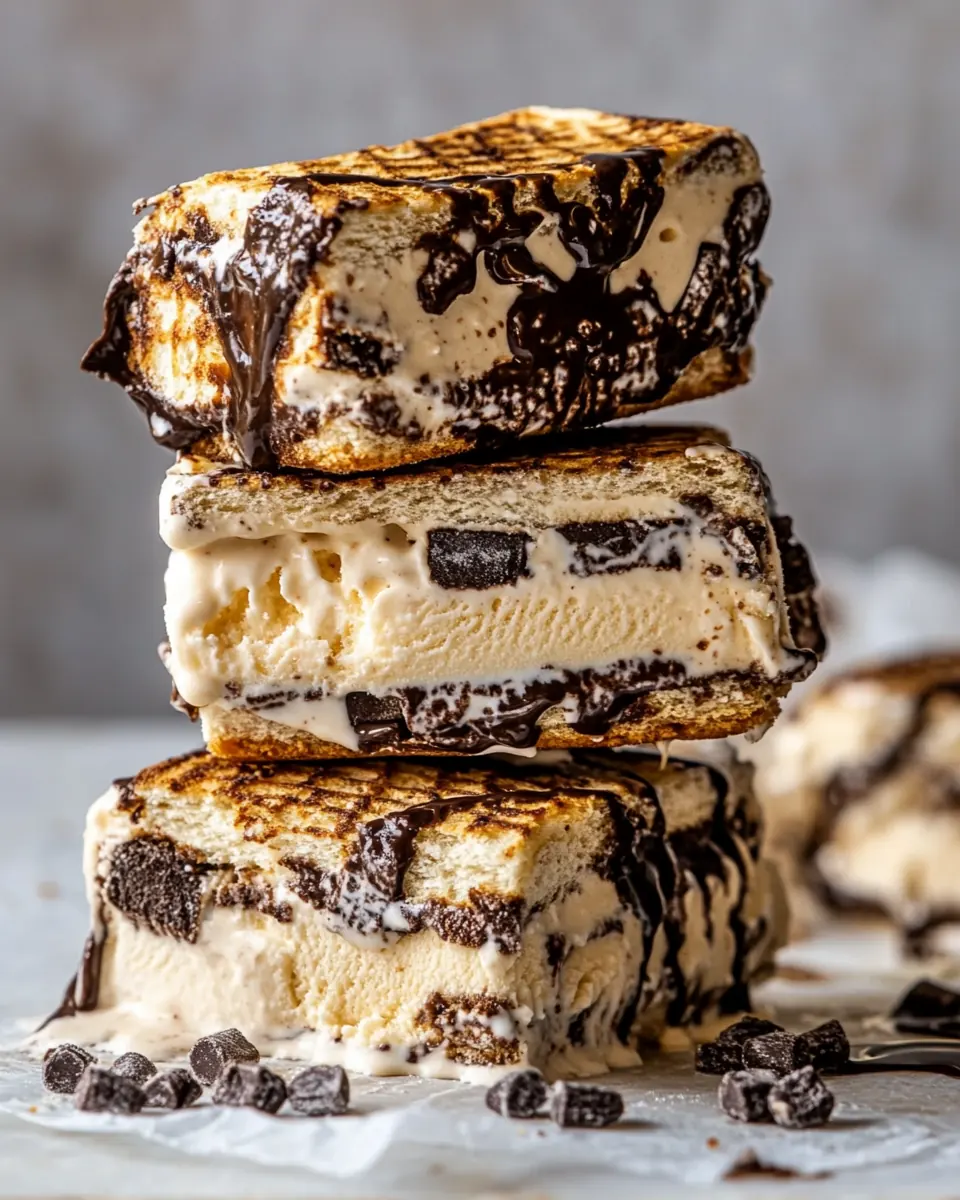
Line a 9×13 inch pan with parchment paper. Preheat the broiler. Arrange the marshmallows on a baking sheet. Broil 1-2 minutes, until toasted. Watch closely, the marshmallows will toast FAST. Don't walk away. Remove the pan from the broiler. Let cool.: You will notice a tactile shift as the pan becomes easier to lift and slide after lining, and the parchment protects the finished bars from sticking. The parchment also gives you neat edges when you lift the entire block from the pan, which matters for clean slicing. A common mistake is using too small a piece of parchment, which can bunch and tear; make sure there is enough overhang to grasp easily.
In the bottom of the prepared pan, spread 3/4 of the ice cream in an even layer, then drizzle over the fudge sauce. Add the toasted marshmallows, then the remaining ice cream on top. Cover and freeze until firm, at least 4 hours.: The broiler should be hot and fierce so the marshmallows toast quickly and develop bronzed spots without collapsing into a single pool. You will hear a faint crackle and see the tops swell and blister in moments, which is the visual cue you want. If the broiler is underpreheated, the marshmallows will brown unevenly and may stick, so always allow a minute for the element to reach full heat.
Arrange the marshmallows on a baking sheet: Lay the marshmallows in a single layer so each one gets exposure to the heat, which encourages even toasting and those molten pockets. If you crowd them, they will fuse into a single mass and will be harder to distribute later. Avoid using a thin sheet that warps under high heat, which can cause uneven browning.
Broil 1 to 2 minutes until toasted: Under the broiler the marshmallows will swell, take on gold to deep amber hues, and emit a warm, caramel aroma that signals readiness. Keep the oven door slightly ajar if your broiler manual suggests it, and watch continuously, because those few seconds make the difference between perfectly bubbly toasts and burnt sugar. Turning your head away to do another task is the mistake most people make here.
Watch closely the marshmallows will toast fast: You will observe rapid color changes, so stay present; the smell will deepen toffee notes as sugars caramelize. This step's care ensures the marshmallows have that smoky, slightly charred edge that complements the cool vanilla ice cream . A typical error is underestimating the speed of broiling, which leads to char that tastes bitter rather than pleasantly smoky.
Don't walk away: During broiling the visual cues are everything, from bubbling to the sudden darkening at edges, so remain by the oven. The marshmallows are forgiving when monitored, but neglect leads to uneven bites and a disappointed crowd. If you do overtoast, you can trim the darkest bits, but the best approach is vigilance.
Remove the pan from the broiler: Take the sheet out carefully, and you will feel the immediate change as steam rises and the surface settles into golden blisters. Let the sheet rest briefly on a heatproof surface so the tops set slightly, which helps when transferring them into the pan. A common slip is trying to move them while too hot, which can cause sticking and misshapen pieces.
Let cool: Allow the toasted marshmallows to cool until they are still soft but not burning hot, which makes them easier to spread and handle. Cooling preserves those airy pockets while letting them firm enough to layer, and it reduces the risk of melting your ice cream prematurely. Rushing this stage can cause the ice cream to weep and ruin texture.
In the bottom of the prepared pan spread 3/4 of the ice cream in an even layer: The sensation here should be smooth, with the vanilla ice cream gliding as you press it into an even bed; aim for uniform thickness so slices set consistently. Use an offset spatula or the back of a spoon warmed slightly to smooth without melting. If you press too hard you may compact the texture, leading to a dense bar rather than a creamy one.
Then drizzle over the fudge sauce: Add the chocolate fudge sauce in thin ribbons to create chocolate pockets that remain gooey after freezing. The rich aroma of chocolate will contrast with the cool creaminess and toasted sugar and give each bite complexity. A common error is adding too much sauce in one spot, which creates overly soft pockets that make slicing messy.
Add the toasted marshmallows: Scatter the cooled toasted marshmallows in an even layer so they nestle into the ice cream and chocolate ribbons, forming textural islands. The marshmallows will slightly adhere to the ice cream and chocolate, creating bonds that hold the bars together when frozen. Overcrowding the layer will make it lumpy, while too sparse placement loses the toasty character.
Then the remaining ice cream on top: Spread the rest of the vanilla ice cream gently to enclose the marshmallow and chocolate layers, creating a smooth top for freezing. Aim for a neat finish so the final tray slices into tidy sandwiches; a warm metal spatula helps smooth without melting. Avoid gouging down to the crackers below, which can cause uneven portions.
Cover and freeze until firm at least 4 hours: The freezing stage is where everything sets into a single block, firm enough to slice yet still tender to bite. Four hours is the minimum to ensure structural integrity, but overnight gives the best clean slices. The mistake I see most is underfreezing then trying to slice, which creates squashed, messy servings; patience pays off here.